


A single splash of red wine hits your favorite tablecloth just as the dinner party reaches its peak. It’s a moment every host knows well. You want your home to feel sophisticated and welcoming, yet the fear of ruining premium fabrics often keeps your best pieces tucked away in a dark drawer. Mastering table linens care is the secret to hosting without the stress. It’s about more than just cleaning; it’s about preserving the craftsmanship and beauty that make your gatherings so special.
You deserve to feel confident every time you set the table for friends and family. We’ve curated this guide to help you manage everything from stubborn grease spots to delicate linen hems. You’ll learn professional techniques for washing, stain removal, and storage to keep your essentials looking brand new for years. We’ll walk through specific fabric requirements, the ironing versus steaming debate, and a simple routine that makes maintenance feel like a breeze. Let’s turn your post-party cleanup into a quick, repeatable ritual of curated simplicity.
Key Takeaways
- Master the essential first steps of table linens care to protect your washing machine and delicate fibers before the wash cycle starts.
- Discover the "damp ironing" secret for a crisp, professional finish that eliminates wrinkles without risking heat damage.
- Tackle stubborn red wine and grease spills with confidence using simple, host-approved blotting techniques and pantry-staple treatments.
- Learn whether to fold or roll your linens to prevent permanent creasing and keep your collection ready for any occasion.
- Understand the balance between cycle settings and water temperature to prevent catastrophic shrinkage of your favorite premium fabrics.
Preparing Your Table Linens for the Wash
Proper table linens care starts the moment the last guest says goodbye. It's tempting to rush the cleanup after a long evening of hosting. However, taking ten minutes to prep your fabrics prevents permanent damage and keeps your collection looking pristine. This phase is about protection and precision. It sets the stage for a successful wash and ensures your favorite pieces last for decades.
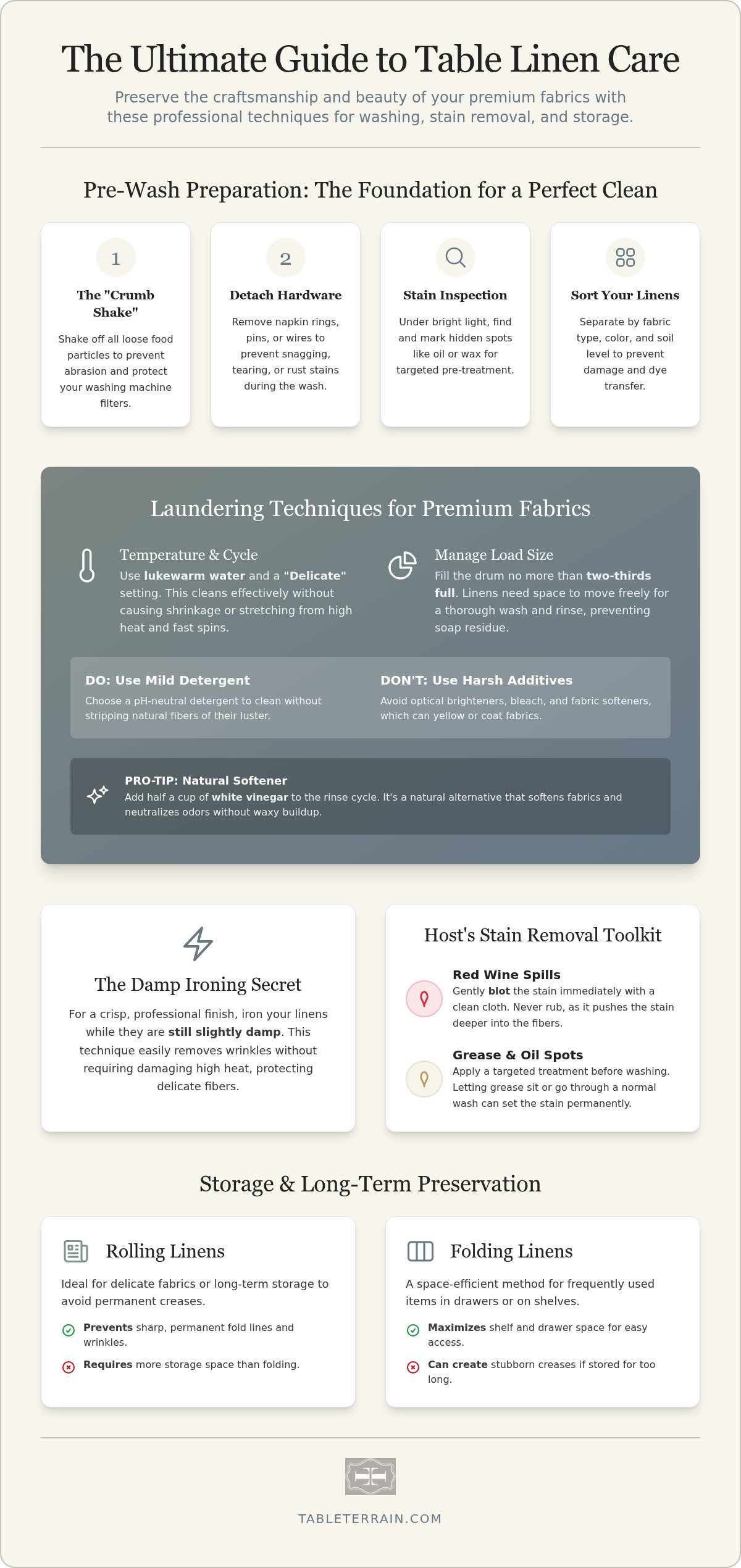
Begin with the "crumb shake." Take your tablecloths and runners to an open space or shake them over a large sink. Manual debris removal is vital. Small food particles and dried garnishes act as abrasives during the agitation cycle. They can scratch delicate fibers or get trapped in your machine's drainage filters. A quick, vigorous shake ensures only the fabric and the stains enter the water.
Removing Tabletop Accessories
Before sorting, you must strip the fabric of all hardware. Detach your napkin rings and set them aside. Metal, glass, or wooden rings can snag fine threads during the wash, causing irreversible pulls. Check for hidden floral wire or pins used to secure elaborate centerpieces. These small items can rust or tear holes in premium linens when wet. Wipe down any non-washable accents, like beaded placemats or metallic runners, with a damp cloth instead of submerging them.
Perform a pre-wash inspection under bright light. Spread each piece out and look for hidden spots of oil, candle wax, or clear spirits. If you find a stain, mark it with a plastic clip or a loose thread. Identifying these areas now allows for targeted treatment before the water sets the stain. This is a critical step in professional table linens care that many homeowners overlook.
The Sorting Framework
Organization is your best tool for fiber preservation. Never wash heavy items with delicate ones. A thick, textured tablecloth can create enough friction to fray the edges of a light silk or linen runner. Separate your natural fibers from synthetic blends. Cotton and linen often require different temperature settings than polyester or rayon to avoid shrinking or melting fibers.
Group your items by color family. Even high-quality dyes can migrate in warm water, leading to muddy tones. Keep whites strictly separate to maintain their brilliance. Finally, isolate heavily soiled items. You don't want a grease-heavy napkin to share a cycle with a lightly used placemat. This separation prevents cross-contamination and ensures every piece gets the specific attention it needs for a deep, safe clean.
Laundering Techniques for Premium Fabrics
Once you've prepped your fabrics, the actual wash cycle determines their lifespan. Effective table linens care relies on gentle agitation and controlled temperatures. High heat might tackle a grease spot, but it often leads to irreversible shrinkage in natural fibers. Opt for lukewarm water for most cotton and linen blends. This provides enough energy to activate detergents without stressing the weave. If you're dealing with deep-set stains, a longer soak in cool water is often safer than a high-heat wash.
Always select the "Delicate" or "Hand Wash" setting on your machine. These cycles use a slower spin speed. This prevents the fabric from stretching, twisting, or developing heavy friction against the drum. Load management is equally important. Never pack the drum to capacity. Your linens need space to move freely to ensure a thorough rinse. If soap stays trapped in the fibers, it can make the fabric feel stiff and attract dust over time. Aim for a drum that is no more than two-thirds full.
Machine Washing vs. Hand Washing
Most modern table linens are designed for machine durability. However, vintage lace or heavily embroidered runners still require a personal touch. For these delicate heirlooms, fill a basin with cool water and gently squeeze the suds through the fabric. Avoid wringing or scrubbing, as this can break the fine threads. For smaller items like cocktail napkins, use a mesh laundry bag. This prevents them from getting lost in the machine or tangled around larger tablecloths during the spin cycle.
Choosing the Right Cleansers
The chemicals you choose are just as vital as the water temperature. Avoid detergents with optical brighteners or harsh bleaches. These can yellow natural fibers over time and dull the vibrancy of colored patterns. Use a mild, pH-neutral detergent instead. These formulas clean effectively without stripping the natural luster from high-quality craftsmanship.
Skip the fabric softener entirely. It leaves a waxy coating that reduces the natural absorbency of linen and cotton. If you want to soften your fabrics or neutralize lingering food odors, add half a cup of white vinegar to the rinse cycle. It’s a natural, effective alternative that keeps your pieces feeling fresh and looking crisp. If you’re looking to refresh your hosting kit, explore our curated linen collections for pieces designed for both beauty and longevity.
Drying and Wrinkle Management for a Crisp Look
The drying process is where many hosts inadvertently damage their collection. High heat in a dryer is the fastest way to cause catastrophic shrinkage, especially with natural fibers. For professional table linens care, air drying is the gold standard. It preserves the integrity of the weave and prevents the harsh friction that leads to pilling. If you must use a dryer, limit it to a short, low-heat cycle to release the deepest wrinkles before transitioning to the air.
The Air-Drying Advantage
Shape is everything. Lay your placemats flat on a clean, white towel to dry. This prevents the edges from curling and ensures they sit perfectly flush against your table during the next event. For large tablecloths, hang them over a sturdy, padded rod to minimize heavy creases. Avoid thin wire hangers; they can leave permanent "shoulder" marks in the fabric that are difficult to iron out later.
There is a middle ground for those who prefer a softer feel. A brief 10-minute tumble on the lowest setting can relax the fibers and make them more pliable. Once the time is up, remove the items while they are still significantly damp. If you're drying items outdoors, keep them in a shaded, well-ventilated area. Direct sunlight can cause rapid sun-bleaching, turning vibrant colors into muted shadows in just a few hours. Mastering these nuances of table linens care keeps your favorite pieces looking vibrant for years.
Pressing and Steaming Techniques
The "Damp Ironing" secret is the most effective tool in your kit. Pressing your linens while they are about 15 percent damp allows the heat to turn that moisture into steam, smoothing out even the most stubborn linen folds with ease. Set your iron to the appropriate heat: high for linen and cotton, and a cooler setting for synthetic blends. For a truly heritage finish, mangling is a professional technique where damp linen is pressed between heavy rollers to achieve a glass-like luster and exceptional smoothness.
Modern hosting requires flexibility. Handheld steamers are a game-changer for last-minute touch-ups on runners already draped over the table. Vertical steaming allows you to remove fold lines without the need for an ironing board. It’s fast, efficient, and perfect for the busy host who values curated simplicity. Simply hold the steamer an inch away from the fabric and move in slow, downward strokes to watch the wrinkles vanish.
Mastering Stain Removal: The Host’s Toolkit
Spills are an inevitable sign of a successful evening. Whether it's a splash of Cabernet or a drop of buttery sauce, your response determines if the mark becomes a memory or a permanent scar. The absolute golden rule of table linens care is to blot, never rub. Rubbing creates friction that drives pigments deeper into the weave and can permanently distort the texture of your fine fabrics. Use a clean, white cloth to lift as much liquid as possible. Work from the edges toward the center to prevent the spot from spreading further across your tabletop.
For the classic red wine emergency, reach for salt or club soda immediately. Salt acts as a natural desiccant, pulling the wine out of the fibers before it has a chance to set. If you're dealing with grease from gravy or butter, a small drop of clear dish soap is your best ally. It's specifically formulated to break down oils on contact. For festive candle wax drips, let the wax harden completely. You can place the item in the freezer to make the wax brittle, snap off the bulk, and then iron the remaining residue between two paper towels on a low setting to wick away the oil.
Immediate Action During the Meal
A prepared host remains calm and decisive. Keep a small "stain kit" tucked away in a sideboard. It should contain white cloths, salt, and a gentle stain stick. You can address minor spills with a quick, discrete blot without drawing attention away from the conversation or dampening the mood. If a stain is large or particularly stubborn, don't let it derail the event. Simply cover the area with a fresh napkin or a strategically placed serving dish. Wait until your guests have departed to begin a deeper treatment. This approach maintains the flow of the evening while ensuring your table linens care remains effective.
Tackling Set-In Stains
If you discover a spot the next morning, hope isn't lost. Oxygen-based bleaches are excellent for brightening whites and removing organic residue without the fiber-weakening effects of chlorine. For pure white cotton or linen, the old-world method of sun-bleaching still works wonders. Lay the damp fabric in direct sunlight; the UV rays act as a natural, gentle whitener. However, if you're dealing with delicate silk or a cherished heirloom, it’s often best to consult a professional cleaner who specializes in luxury fabrics. Ready to refresh your dining room for the next gathering? Browse our latest collection of linens and accessories to find pieces that combine effortless style with durable craftsmanship.
Storage and Long-Term Preservation
Proper storage completes the cycle of table linens care. It’s the difference between a pristine setup and a frantic morning spent struggling with permanent creases. How you store your collection determines its lifespan and readiness for the next spontaneous gathering. Think of your storage routine as an investment in your hosting future. It ensures that every piece remains as vibrant and crisp as the day you first laid it across your table.
The debate between folding and rolling often comes down to space. Rolling is the professional's choice for long-term preservation. It prevents the permanent fiber breakage that occurs at heavy fold lines, especially in stiff linen. If you prefer folding, use acid-free tissue paper between layers to cushion the edges. This is especially vital for your best table linens, as it prevents the acidic gasses from wood or cardboard shelves from yellowing white fabrics over time. Never store natural fibers in plastic bins. Plastic traps residual moisture and leads to mildew or a stale storage scent. Choose breathable cotton bags or old pillowcases instead to allow the fibers to breathe.
Ideal Storage Environments
Location is everything. Choose a cool, dry spot for your collection. A dedicated linen closet is perfect, but avoid damp basements or sweltering attics where temperature fluctuations damage delicate threads. Use lavender sachets or cedar blocks to deter pests naturally. These provide a subtle, fresh aroma without the chemical harshness of mothballs. Every few months, take a moment to refold your large tablecloths. This simple act prevents "fold-line" wear and tear, ensuring the fabric remains strong and supple for years to come. This practice embodies the curated simplicity that makes high-end table linens care feel rewarding rather than burdensome.
Preparing for the Next Gathering
Organizing by size and occasion makes hosting effortless. Group your seasonal runners and holiday napkins together so you aren't hunting for a matching set minutes before guests arrive. Before the party, give your linens a "refresh" steam. This removes any storage odors and relaxes light creases from the shelf. Perform one final check for overlooked stains. Some oils can darken over months of storage, becoming visible only when you set the table under bright lights. Catching these spots early ensures your presentation is always flawless. A well-organized linen collection is the hallmark of a confident, prepared host who values the art of the gathering.
Host Every Event with Absolute Confidence
You now have the professional tools to protect your dining investment. From the immediate "blot, don't rub" rule for unexpected spills to the "damp ironing" secret for a crisp finish, your maintenance routine is now a simple, repeatable ritual. Proper storage in breathable fabrics ensures your favorite runners and tablecloths remain centerpiece-ready for years to come. Effective table linens care is about more than just cleaning. It's an extension of the art of hosting that allows you to focus on the joy of gathering.
If you're ready to upgrade your dining essentials, explore the Table Terrain collection for linens that are as durable as they are beautiful. Our offerings are carefully curated for sophisticated dining and crafted from high-quality natural or blended fibers. We provide national shipping across the United States to help you build a stunning, long-lasting tablescape. Go ahead and pour that extra glass of wine. With these techniques in your toolkit, you can focus on the conversation and the company, knowing your linens will stay beautiful through every toast.
Frequently Asked Questions
How often should I wash my table linens if I only use them occasionally?
Wash your linens after every single use, regardless of how clean they appear to the naked eye. Invisible food particles and skin oils can oxidize over time, leading to permanent yellow spots or stubborn odors. Consistent table linens care requires removing these residues before they set into the fabric during months of storage. Freshly laundered items always feel more inviting and sophisticated for your next gathering.
Can I put 100% linen tablecloths in the dryer?
Avoid putting 100% linen in a full dryer cycle. High heat is the primary cause of catastrophic shrinkage and brittle fibers in natural materials. You can tumble them on a low setting for 10 minutes to relax the weave and soften the texture. Always remove them while they are still damp to finish air drying. This method preserves the natural drape and elegant luster of the material.
What is the best way to remove old, set-in grease stains from a runner?
Tackle set-in grease on a runner with clear dish soap and lukewarm water. Apply the soap directly to the spot and gently work it in with a soft-bristled brush or your fingertip. Let it sit for at least 20 minutes before laundering as usual. This targeted approach breaks down the lipids without damaging the delicate craftsmanship or global inspiration of the piece.
Is it better to iron or steam napkins for a formal dinner party?
Ironing is the superior choice for formal dinner parties. While steaming is highly efficient for quick touch-ups on runners, only a hot iron delivers the sharp, crisp edges required for sophisticated napkin folds. Use the damp ironing technique to achieve a professional finish. It creates a polished, curated look that immediately elevates your entire tablescape and impresses every guest at your table.
How do I prevent my white linens from turning yellow in storage?
Prevent yellowing by wrapping your whites in acid-free tissue paper before storing them. Avoid plastic storage bins at all costs. These containers trap moisture and harmful gases that degrade natural fibers and cause discoloration. Choose a cool, dark linen closet and use breathable cotton bags. This simple step in table linens care keeps your heirloom pieces brilliant and ready for any special occasion.
Can I use bleach on white linen napkins to remove food stains?
Never use harsh chlorine bleach on premium linen. It weakens the natural fibers and can actually lead to a permanent yellow or grey tint over time. Reach for a mild oxygen-based whitener instead. These formulas are much gentler on the fabric while remaining highly effective at lifting organic food stains. It’s the safest way to maintain a bright, clean aesthetic without compromising durability.
What should I do if candle wax drips onto my favorite tablecloth?
Let the wax harden completely before attempting removal. You can speed this up by placing an ice pack over the drip or putting the item in the freezer for 15 minutes. Once the wax is brittle, gently scrape off the excess with a dull knife. Place the fabric between two paper towels and press with a warm iron to wick away the remaining oily residue.
Do I need to wash new table linens before using them for the first time?
Always wash new linens before their first appearance on your table. This process removes manufacturing starches and any chemical residues from the shipping and handling process. It also allows the natural fibers to settle into their true shape and size before you set the table. A quick initial wash ensures your napkins and tablecloths feel soft and welcoming for your guests. This practice of prepping natural fibers is also recommended for premium bedding, such as the earthing products from Sleep Earthed, to maximize comfort and performance from the very first night.