


A stunning table isn't the result of buying more things; it's the result of choosing the right ones. Many hosts feel overwhelmed by endless options, ending up with dining room table decorations that feel cluttered rather than curated. You've probably experienced the frustration of trying to match fine linens with specific flatware, only to feel like the elements are fighting each other. It's a common pain point that turns the joy of hosting into a stressful chore.
This guide changes that narrative. Discover how to transform your dining space with professional layering techniques, curated linens, and sophisticated accents that create a cohesive, high-end look. We'll show you how to build a versatile decor collection featuring elegant wine glasses and designer napkin rings that work year-round. From selecting the perfect runner to mastering the art of the centerpiece, you'll gain the confidence to host dinner parties that leave a lasting impression. Let's move from inspiration to implementation with a methodical approach to modern tablescaping.
Key Takeaways
- Establish a sophisticated foundation with premium linens that set the emotional tone and anchor your entire aesthetic.
- Use vases and containers to add vertical dimension, following the "rule of three" for perfectly balanced dining room table decorations.
- Elevate the guest experience with napkin rings and small accents that act as the finishing "jewelry" for a personalized touch.
- Incorporate glassware and goblets of varying heights to play with light and create a sense of airy transparency on the tabletop.
- Master professional layering techniques and embrace negative space to achieve a curated look that feels both lush and organized.
The Foundation of Style: Choosing the Right Table Linens
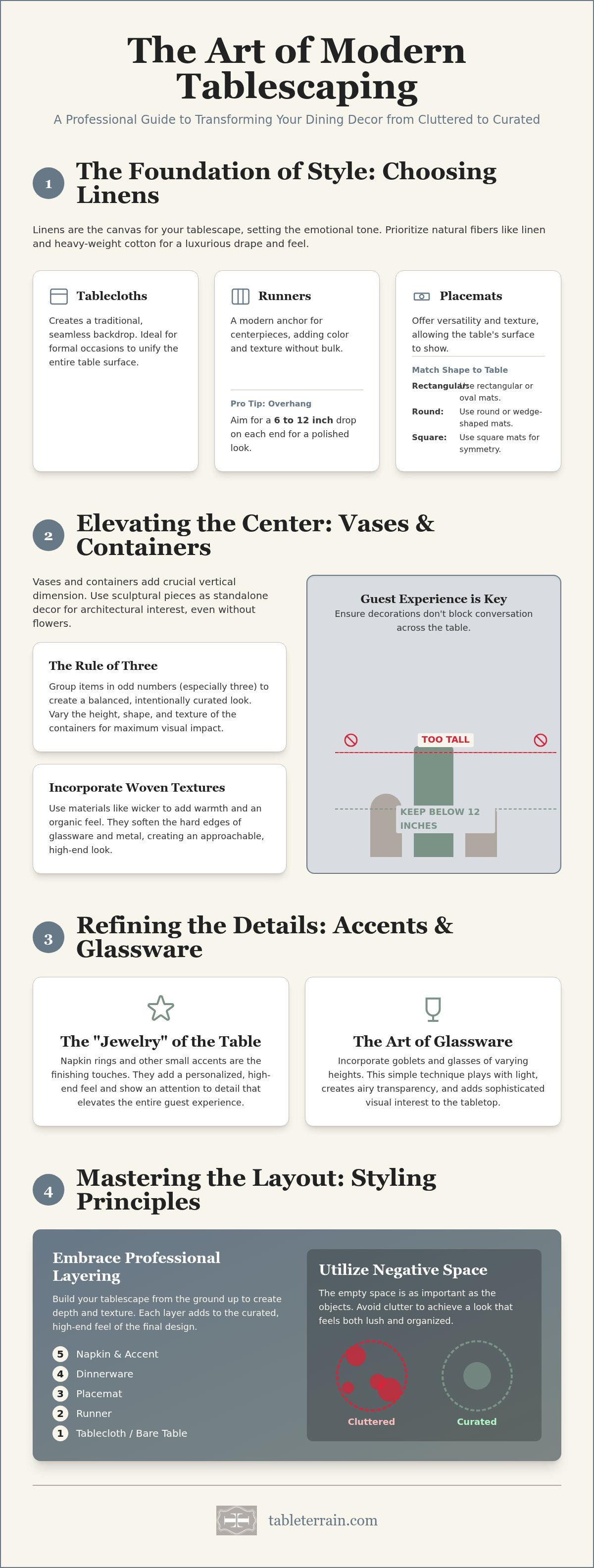
Every memorable meal begins with a thoughtful foundation. Table linens are the essential base layer for any tablescape; they act as the canvas for your creative vision. When you select high-quality linens, you aren't just protecting a surface. You're setting the emotional tone of the gathering. A crisp, white tablecloth signals a formal celebration, while a textured linen runner suggests a relaxed, organic afternoon with friends.
Fabric quality is the silent language of luxury dining. Professional stylists prioritize natural fibers like linen and heavy-weight cotton because they drape beautifully and feel substantial to the touch. These materials absorb light rather than reflecting it, which creates a warm, inviting atmosphere. Choosing the right base layer is the first step in mastering dining room table decorations that feel curated rather than cluttered.
Placemats vs. Tablecloths: Finding Your Flow
Deciding between a full tablecloth and placemats depends on the architecture of your table and the vibe of your event. Tablecloths offer a traditional, seamless look that hides the table's surface entirely. This is ideal for formal occasions where you want a unified backdrop. In contrast, placemats offer modern versatility. They allow the natural beauty of your wood or stone tabletop to peek through, adding an extra layer of visual interest.
For a high-texture, layered look, try using both. Lay a neutral tablecloth down first, then stack placemats in a contrasting material like woven seagrass or beaded fabric. This technique adds depth and protects your linens from spills. When selecting placemats, consider your table shape:
- Rectangular tables: Use standard rectangular or oval mats to mirror the table's lines.
- Round tables: Opt for wedge-shaped or round mats to prevent overlapping in the center.
- Square tables: Square mats create a clean, architectural symmetry.
The Versatility of Stylish Table Runners
Stylish runners are the secret weapon of modern dining room table decorations. They provide a visual anchor for your centerpieces, drawing the eye down the length of the table without overwhelming the space. A runner is particularly effective in small dining areas because it adds color and texture without the bulk of a full cloth.
To achieve a polished finish, pay attention to the overhang. A standard runner should hang 6 to 12 inches off each end of the table. If you're layering a runner over a tablecloth, choose contrasting colors or textures to make the center of the table pop. For example, a charcoal grey runner over a light grey tablecloth creates sophisticated tonal depth. This simple addition transforms a basic meal into a professional-grade dining experience.
Elevating the Center: Vases and Decorative Containers
Vases act as the primary vertical interest for your tabletop. While many traditional guides suggest you need professional floral arrangements to make an impact, the vessel itself is often the star of the show. Using sculptural vases as standalone decor is a significant trend for 2026. These pieces provide architectural beauty and visual weight without the constant maintenance of fresh blooms. When arranging your dining room table decorations, apply the "rule of three." Grouping three containers of varying shapes or textures creates a curated, balanced look that feels intentional rather than random.
Always consider the guest experience when choosing your centerpiece. A decoration that's too tall blocks conversation and creates a physical barrier between friends. Aim to keep your arrangements below chin level, typically around 12 inches high, or use very tall, thin pedestals that guests can easily see around. This ensures your table looks professional while remaining functional for social interaction. If you're looking for the perfect vessel to anchor your next gathering, explore our curated collection of decorative containers designed for effortless hosting.
Incorporating Wicker and Woven Textures
Wicker and woven materials bring an organic, grounded feel to the modern dining room. These natural textures are essential for softening the cold, hard edges of crystal glassware and polished metal flatware. Pairing a woven vase with refined linens creates a sophisticated "coastal chic" vibe that feels both high-end and approachable. It's a simple way to introduce warmth and craftsmanship into a contemporary setting, making the environment feel more inclusive and relaxed.
Balancing Height and Scale
Mastering scale is about creating a "staircase" effect with your vessels. Start with a taller focal point and flank it with lower-profile items to guide the eye across the entire length of the table. This movement makes even a small table feel expansive and well-planned. Consider these styling tips:
- Mix tall, slender vases with squat, round bowls to vary the silhouette.
- Incorporate low-profile decorative containers to hold salt or small accents.
- Use varying vessel sizes to create depth without cluttering the surface.
By mixing different heights, you prevent the table from looking flat. This methodical approach ensures every element has room to breathe, maintaining that essential sense of harmony and professional polish.
Refining the Details: Napkin Rings and Functional Accents
Small details define the hosting experience. While larger elements like runners and vases provide the structural layout, it's the smaller accents that infuse the setting with a sense of personalized luxury. Think of napkin rings as the jewelry of your dining room table decorations. They add a finished, polished look that tells your guests you've considered every touchpoint. These items bridge the gap between your purely decorative centerpieces and the functional tools used during the meal.
Coordination across these elements creates a professional, intentional atmosphere. If you've chosen a brass vase or a gold-rimmed goblet, matching those metal finishes with your napkin rings and flatware establishes a cohesive visual thread. This consistency prevents the table from looking like a collection of random objects. It transforms the setting into a curated system where every piece has a purpose and a place.
Styling Napkin Rings for Every Occasion
Choose your napkin ring materials based on the specific mood of your gathering. Warm wood or woven stone rings suit a relaxed, weekend brunch. Polished chrome or brushed gold options elevate a formal dinner party. For a truly professional look, experiment with creative folds that highlight the ring's design. A simple "roll and ring" technique works beautifully for ornate, sculptural rings, while a "flat fold" provides a clean backdrop for minimalist bands. You can find more specific styling hacks in the ultimate guide to table linens and napkin rings.
Coordinating Designer Flatware
Modern flatware is a decorative element, not just a tool for eating. The silhouette of your cutlery contributes significantly to the overall aesthetic of the dining room table decorations. Elongated handles or matte black finishes offer a contemporary, architectural feel that complements minimalist vases. Don't be afraid to mix and match styles for an eclectic look, provided you maintain a consistent metal finish to ground the design.
Proper placement is the final step in achieving a high-end look. Follow modern table setting rules to ensure your layout is both beautiful and functional. Keep forks on the left and knives on the right, ensuring the blade faces the plate. This attention to detail respects tradition while allowing your modern pieces to shine. It creates a sense of order that makes guests feel truly cared for from the moment they sit down.
The Art of the Pour: Glassware and Goblets as Decor
Glassware is the secret to adding light and transparency to your table. Unlike solid ceramics or opaque metals, glass allows light to pass through freely. This quality makes even elaborate dining room table decorations feel airy and inclusive rather than heavy. It's especially effective in small dining rooms where you want to avoid visual clutter. High-quality glassware catches the evening light, creating a shimmering effect that elevates the entire dining atmosphere. It's about more than just utility; it's about the play of light across the surface.
Visual rhythm comes from purposeful variation. By using glasses of different heights, you create a dynamic skyline on your tabletop. Goblets add a vintage or global feel that clear, modern wine glasses sometimes lack. They ground the color palette and provide a tactile experience that guests appreciate. This combination of transparency and texture ensures your table looks curated and intentional. This variety also helps guests distinguish their water glass from their wine glass at a glance.
The Rise of the Green Water Goblet
Green is the new neutral for 2026. Green goblets are becoming a staple because they bridge the gap between organic greenery and hard tabletop materials. They look stunning when paired with natural wood surfaces and crisp white linens. This pop of color adds depth without clashing with other decorative elements. It's a sophisticated way to introduce nature-inspired tones into your hosting repertoire. Using colored glass is a clever trick to ground a palette without needing a colored tablecloth.
Mixing Wine Glasses and Goblets
Layering your glassware at each place setting is a hallmark of professional styling. Place your water goblet to the right of the dinner plate, followed by the wine glass. Don't be afraid to mix stemmed and stemless options for a more relaxed, modern vibe. A tall, elegant wine glass paired with a shorter, weighted goblet creates a beautiful contrast in silhouette. Keep the look cohesive by choosing pieces with similar design details, such as a subtle ribbing or a specific rim style. This methodical approach to dining room table decorations ensures every guest has exactly what they need while maintaining aesthetic harmony.
Explore our curated collection of wine glasses and goblets to find the perfect pieces for your next gathering.
Mastering the Layout: Professional Styling Principles
Professional tablescaping isn't about clutter; it's about a systematic build. Styling experts use a technique called layering to create visual depth and interest. This method ensures every piece of dining room table decorations feels integrated rather than just placed. While you want a lush look, negative space is your best friend. Leave enough room for the meal itself and for guests to move comfortably. A table that is too crowded feels chaotic; a curated table feels intentional and welcoming.
You don't need a complete overhaul to transition from daily use to formal hosting. Keep your high-quality runner or a sculptural vase as a daily staple. When it's time to host, simply add layers like placemats, designer napkin rings, and elegant wine glasses. This transition saves time while maintaining a sophisticated home environment. Experiment with contrasting textures like smooth glass, soft fabric, and cold stone to keep the setting dynamic. These sensory details invite guests to touch and engage with the environment.
A 5-Step Process for a Layered Tablescape
Follow this logical workflow to build a professional-grade layout without the guesswork. This methodical approach ensures you don't miss a single detail.
- Step 1: Lay the base. Start with your primary tablecloth or runner to establish the color palette and protect the surface.
- Step 2: Anchor the center. Place your primary vases or containers. Use the rule of three to group items of varying heights.
- Step 3: Define the settings. Arrange placemats and flatware to create individual zones for each guest.
- Step 4: Add the accents. Slide on your napkin rings and position your glassware to add light and shimmer.
- Step 5: Final touch. Incorporate small elements like tea lights or tiny sprigs of greenery for a sensory finish.
Minimalist vs. Maximalist Table Decor
Choosing a style depends on the occasion and your personal taste. For those who prefer a clean, modern look, explore minimalist table setting ideas. This approach focuses on high-quality materials and stripping away the unnecessary. It's perfect for intimate weeknight dinners or modern, architectural spaces.
On the other hand, maximalism works beautifully for festive holidays or grand celebrations. This involves richer textures, more layers, and bolder color combinations. Whether you lean toward simplicity or abundance, maintain balance by keeping a consistent color thread throughout your dining room table decorations. Mix stone coasters with linen runners or glass vases with woven placemats to keep the eye moving and the atmosphere vibrant.
Ready to Elevate Your Next Gathering?
Creating a professional tablescape is a methodical journey of intentional layers rather than a collection of random additions. You've discovered how to anchor your style with premium linens and build vertical interest using sculptural vases. By focusing on the refined "jewelry" of the table through designer napkin rings and shimmering glassware, you transform a simple meal into an immersive sensory experience. These dining room table decorations provide the essential structure for memorable gatherings that feel both curated and comfortably inclusive.
For those looking to pair their stunning tablescape with an equally refined culinary experience, you can explore Tsarine Caviar Luxury Gift Set to add a touch of ultimate indulgence to your next event.
Now it's time to move from inspiration to implementation and bring your creative vision to life. Shop the Table Terrain Collection for Curated Decor to discover expertly selected linens and glassware designed for modern, sophisticated hosting. We simplify your selection process with free shipping on select curated bundles, ensuring your collection is as functional as it is beautiful. Whether you're planning an intimate weekend brunch or a grand holiday dinner, you now have the professional principles to host with absolute confidence. Your table is ready for its debut; enjoy the art of the gather.
Frequently Asked Questions
How do I choose the right size centerpiece for my dining table?
Aim for a centerpiece that stays below 12 inches to ensure guests can see each other clearly. A good rule is to keep the arrangement within the center one-third of the table's width. This prevents the surface from feeling crowded and leaves plenty of room for plates. For smaller tables, a single sculptural vase often makes a stronger statement than multiple small items.
What are the most essential dining room table decorations for beginners?
Beginners should start with three core dining room table decorations: a neutral runner, a set of quality napkin rings, and a statement vase. These pieces are incredibly versatile and work for both casual brunches and formal dinners. Once you're comfortable with these basics, you can expand your collection with designer flatware and colored wine glasses to add more personality to your settings.
Can I mix different metal finishes in my table decor?
You can definitely mix metal finishes to create a more curated, modern look. The trick is to choose one dominant metal, such as polished gold, and use a secondary finish like matte black for smaller accents. This prevents the table from looking too matched or "store-bought." Aim for a 70/30 split between your primary and secondary metals to maintain a sense of visual harmony.
How do I decorate a dining table when it is not in use?
Treat your table like a display surface when you aren't hosting. A single, large decorative container or a trio of varied vases keeps the room looking polished and intentional. Avoid leaving a full place setting out, as it can collect dust and feel stagnant. Instead, focus on one high-impact centerpiece that complements your room's overall aesthetic and draws the eye.
What is the difference between a table runner and a tablecloth?
A tablecloth provides full coverage and a traditional, formal foundation for your meal. In contrast, a runner is a narrow fabric strip that runs down the center of the table. Runners are perfect for showing off a beautiful wood or stone tabletop while still providing a visual anchor for your centerpieces. Many modern hosts layer a runner over a tablecloth for added texture and depth.
How many colors should I use in a single table setting?
Stick to a palette of three colors to keep your dining room table decorations looking professional. Start with a neutral base like cream or charcoal, add a secondary shade for your linens, and finish with a single pop of color in your glassware or flowers. This "60-30-10" rule ensures your table feels vibrant and energetic without becoming visually overwhelming for your guests.
Are napkin rings still in style for 2026?
Napkin rings are a major trend for 2026, serving as the essential finishing touch for any sophisticated table. Current styles favor organic materials like carved stone, light woods, and textured metals. They act as the jewelry of the table, instantly elevating a simple linen napkin into something special. Using them shows your guests that you've put thought into every single detail of their experience.
How do I clean and store luxury table linens?
Always check the care label, but most luxury linens benefit from a gentle wash in cool water. Use a mild, liquid detergent and avoid bleach, which can weaken natural fibers over time. To store them, iron while slightly damp and then roll them around a clean cardboard tube. This prevents permanent creases and keeps your linens ready for your next dinner party without extra work.