


A single piece of fabric is the secret to turning a quiet Tuesday dinner into a high-fashion event. While some see runners as just a decorative strip, they are the architectural foundation of a modern tablescape. You have likely felt the frustration of a table that looks flat, or perhaps you are unsure how to handle the perfect 12-inch overhang. It is easy to feel stuck when trying to mix bold textures like velvet with airy, crushed sheer fabrics.
We believe that hosting should be beautiful and effortless. This guide will show you how to use versatile linens to create a Pinterest-worthy look that works for every season. You will discover the professional rules for layering and how to pick the right dimensions for your space. We are exploring five chic ways to style your table in 2026, moving from minimalist daily setups to rich, textured designs that feel both aspirational and achievable.
Key Takeaways
- Understand the evolution of the table runner from a protective covering to a modern design anchor for any gathering.
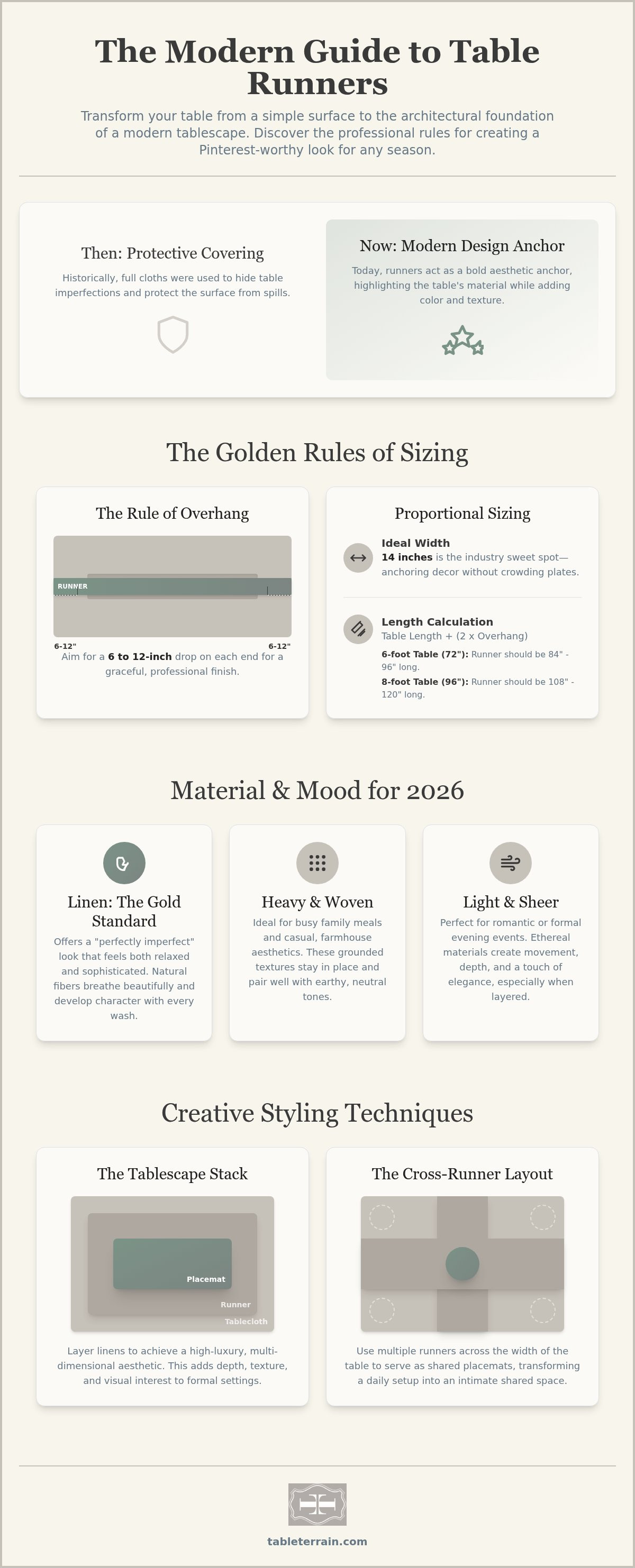
- Master the "Golden Rule of Overhang" to ensure your runners have the perfect 6 to 12-inch drop for a professional finish.
- Learn creative styling techniques like the Cross-Runner layout to transform your daily dining setup into an intimate shared space.
- Discover the "Tablescape Stack" method for layering linens to achieve a high-luxury, multi-dimensional aesthetic.
- Pick the right materials and textures to create a versatile decor foundation that works for any 2026 trend with minimal effort.
What are Table Runners and Why Every Host Needs Them
A table runner is a narrow length of fabric designed to accent your dining surface. While the history of table linens often focuses on full-coverage cloths used to hide imperfections, the modern runner serves as a bold aesthetic anchor. It defines the center of your table without concealing the character of the material beneath it. If you have a beautiful live-edge oak table or a sleek marble slab, covering it completely feels like a missed holiday for your home's architecture. Runners offer a "less is more" approach. They provide a sophisticated layer that highlights your table's texture while adding a pop of color or a touch of global craftsmanship.
These versatile pieces aren't just for the dining room. Use them on consoles in the entryway to welcome guests with a touch of softness. Drape one over a sideboard in the kitchen to balance the hard lines of cabinetry. A well-placed runner instantly makes a space feel intentional. It tells a story of a home that's lived-in but carefully curated. It bridges the gap between raw furniture and a finished, inviting home.
The Functional Benefits of Using Runners
Think of a runner as a protective shield that doesn't compromise on style. It guards your table surface from heat marks and accidental spills during a lively dinner. Beyond protection, it creates a visual "runway." This guided path naturally draws the eye toward your centerpieces, vases, and serving items. It anchors your decor. Without it, candles and bowls can look like they're floating aimlessly on a large surface. If your table feels too vast or empty, a runner reduces that visual "noise." It makes the setting feel intimate and grounded. It's the easiest way to give your dining room a professional, finished look without a complete furniture overhaul.
Setting the Mood: Formal vs. Casual
The material you choose dictates the energy of the room. A crisp, high-end linen runner instantly elevates a formal dinner party. It signals to your guests that the occasion is special and well-considered. For a more relaxed, farmhouse aesthetic, opt for woven textures or heavier fabrics. These choices feel grounded and approachable for everyday use. Seasonality also plays a massive role. Switch to light cotton or airy sheers for summer gatherings to keep things feeling fresh and breezy. Move toward heavy linens or rich jewel tones when winter arrives. This simple swap allows your dining space to evolve throughout the year with minimal effort. You don't need a total room makeover to stay on-trend for 2026.
Choosing the Right Length and Material for Your Runners
Getting the dimensions right is the difference between a polished tablescape and an accidental mess. The golden rule of overhang is simple. Aim for 6 to 12 inches of fabric hanging over each end. This creates a graceful drop that adds vertical interest to your room. If the fabric is too short, the table looks unfinished. If it's too long, it becomes a tripping hazard or bunches in guests' laps. A clean, intentional drop signals that every detail was carefully considered.
Measure your table before you shop. For a 6-foot table, look for runners between 84 and 96 inches long. An 8-foot table demands a longer reach, usually between 108 and 120 inches. Keep the width proportional as well. A width of 14 inches is the industry sweet spot. It provides enough coverage to anchor your centerpiece but leaves ample space for your plates and glassware. You want your setting to feel balanced, not crowded. This ensures your flatware doesn't overlap with the fabric, maintaining a tidy and functional dining area.
Linen: The Gold Standard for 2026
Linen remains the premier choice for high-quality table linens. It offers a perfectly imperfect look that feels both relaxed and sophisticated. Natural fibers breathe beautifully and develop more character with every wash. To maintain that effortless 2026 aesthetic, don't over-iron your linen. A few soft ripples add to the organic charm. If you want a crisper look, iron the fabric while it's still slightly damp. You can find a variety of these textures when you explore our curated linen collection for your next event.
Texture and Weight: Woven vs. Smooth
The weight of your fabric should match the mood of your gathering. Heavy, woven runners are ideal for busy family meals because they stay in place and resist shifting. They pair perfectly with earthy neutrals like terracotta or sage green, which are trending for the upcoming year. For romantic or evening events, sheer and lightweight fabrics are gaining popularity. These ethereal materials create movement and depth, especially when layered over a solid tablecloth. Match the weight of your runner to your seasonal accessories to ensure a cohesive design that feels right for the time of year.
5 Creative Examples of How to Style Runners
A single piece of fabric can change the entire geometry of your room. Styling runners is about more than just laying them flat. It is about creating movement, directing the eye, and setting the stage for connection. While the classic vertical look is a staple, modern hosting in 2026 encourages a bit of experimentation. Whether you are aiming for a quiet, minimalist breakfast or a high-fashion dinner party, these five frameworks provide the structural foundation you need.
Style 1: The Traditional Center Anchor
This is the definitive choice for long rectangular tables. Running the fabric vertically down the center creates a clean, symmetrical line that grounds the entire room. It is the perfect backdrop for a lush floral arrangement or an elegant thanksgiving centerpiece. To achieve a professional finish, ensure the line is perfectly straight. Use the table edges as a guide. This placement works best when you want the decor to be the star of the show while still showcasing the beautiful wood or stone of your table surface.
Style 2: The Modern "Tête-à-Tête" Placement
Break the rules by placing shorter runners horizontally across the table. This "X-shape" or cross-runner style connects diners sitting opposite each other, creating an intimate, shared experience. It acts as a shared placemat for two people. This style is incredibly effective for date nights or small groups where you want to foster conversation. You can coordinate this look with individual placemats at the heads of the table to maintain a cohesive, designer feel. It is a fresh, architectural approach that feels modern and intentional.
Style 3: The Bare Minimalist
Sometimes, less truly is more. On a raw wood or high-quality stone table, use a single, high-end linen runner without any other textiles. Skip the placemats and the tablecloth. This look relies on the quality of the fabric and the natural beauty of the furniture. It creates a serene, gallery-like atmosphere that is perfect for contemporary homes. Focus on a neutral palette like warm beige or soft charcoal to keep the vibe sophisticated and calm.
Style 4: The Diagonal Statement
Square and round tables often present a styling challenge. Solve this by angling the runner diagonally across the surface. This asymmetrical look breaks up the rigid shapes of the room and adds a sense of dynamic movement. It is a bold, artistic choice that works well for casual brunches or creative gatherings. Pair it with a single, off-center vase to complete the modern aesthetic.
Style 5: The Layered Duo
For maximum luxury, use two different fabrics together. Layer a textured, woven piece over a smooth, solid-colored base. This creates depth and visual interest that a single layer cannot achieve. You might pair a rich velvet with a crisp linen or a metallic accent with a matte cotton. This "tablescape stack" is the secret to those multi-dimensional looks seen in high-end design magazines. It allows you to play with the 2026 trend of mixing earthy neutrals with bold jewel tones effortlessly.
Advanced Styling: Layering Runners with Placemats and Centerpieces
Elevate your dining room with the "Tablescape Stack." This technique involves layering a runner over a full-length tablecloth. It creates a sense of deep luxury and intentionality. While a bare table showcases the raw material of your furniture, this maximalist approach showcases your personality as a host. It is the ultimate way to signal a high-fashion event. It adds weight and presence to the room, making even a simple meal feel like a curated experience.
Mixing patterns and textures is where your creativity truly shines. Pair a patterned textile with solid, textured placemats to keep the look balanced and sophisticated. Runners act as a structural anchor for your centerpiece. Vases, containers, and decorative bowls look more grounded when placed on fabric rather than bare wood. This layer softens the hard lines of your furniture and creates a cohesive focal point for the entire room. It prevents your decor from feeling scattered or accidental.
The 2026 trend is all about the organic and the tactile. Incorporate elements like living moss, smooth river stones, or weathered branches along the length of the fabric. This nature-inspired palette feels both grounding and modern. It invites guests to lean in and appreciate the small, sensory details. This approach turns your dining table into a living piece of art that changes with the light and the season.
Color Theory for Your Table
Sophistication often comes from monochromatic simplicity. Try using different shades of the same color family to create a layered, professional look. A deep forest green runner over a sage tablecloth creates a rich, moody environment. Alternatively, use your linens to introduce a sharp "pop" of seasonal color. A terracotta runner is the perfect transition into autumn, while a dusty blue feels fresh for spring. Balance these bold choices with neutral glassware and simple flatware to ensure the table remains inviting and uncluttered.
Adding Height and Dimension
Dimension is the secret to a professional tablescape. Combine your runners with tapered candles in varying heights to create a sense of rhythm. Use vases of different sizes to keep the eye moving across the setting. For a more relaxed feel, try "scrunching" or artfully draping a soft linen runner rather than laying it perfectly flat. This adds a sense of movement and effortless charm that feels achievable yet aspirational. Table runners act as a visual guide that leads the eye across the table and connects every guest at the gathering.
Ready to build your own masterpiece? Shop our curated collection of runners and placemats to start your tablescape stack today.
Elevate Your Next Gathering with Table Terrain Runners
A table runner is the single most effective tool in a host's arsenal. It provides the texture and architectural focus needed to turn a house into a home. By now, you have seen how runners can define a space, protect your surfaces, and set a specific mood. Whether you choose the intimate "tête-à-tête" placement or the high-fashion "tablescape stack," the goal remains the same. You are creating a space where people feel invited to linger. Experiment with these five styles. Mix your textures. Play with the 2026 trends of earthy neutrals and organic accents. Hosting should be an art, not a chore.
Quality You Can Feel
There is a significant difference between boutique-quality linens and mass-market alternatives. Mass-produced fabrics often lack the weight and drape required for a professional look. They might fray after a single wash or feel thin to the touch. Table Terrain runners are designed with a focus on both beauty and longevity. We curate our selection so you don't have to guess about quality. Investing in a single, high-end linen piece is always better than buying multiple low-quality sets. It hangs better. It holds its color. It tells your guests that you value the details of the gathering. Our linens are crafted to be the silent heroes of your dining room for years to come.
Complete Your Tablescape
A runner is the foundation, but the magic is in the finishing touches. To achieve a truly polished look, pair your linens with sophisticated napkin rings. This simple addition pulls the entire design together and adds a final layer of texture. Once your textiles are in place, consider the rest of your setting. Browse our full collection of flatware, serving items, and elegant glassware. From crystal-clear wine glasses to textured placemats, every piece we offer is chosen to complement our premium linens. We have done the hard work of selection so you can focus on the conversation.
Your next memorable gathering starts with the right foundation. It is time to move from inspiration to implementation. Don't be afraid to mix a bold jewel tone with a minimalist wood surface. Explore the Table Terrain Collection and find the perfect pieces to transform your dining space today.
Transform Your Next Gathering
Styling a memorable table doesn't require a professional designer. It starts with a clear vision and the right foundation. You now have the tools to master the perfect 12-inch overhang and the confidence to layer textures for a high-fashion look. Whether you choose a minimalist single line or a complex "tablescape stack," these runners serve as the architectural anchor for your entire dining space. They bridge the gap between simple furniture and an inviting, curated environment.
At Table Terrain, we do the hard work of selection so you don't have to. Our high-quality natural linen options are curated for sophisticated hosting. Each piece is designed to pair seamlessly with our premium glassware and flatware. You deserve a home that feels both aspirational and achievable. It is time to step away from the screen and start creating. Your guests will notice the difference that quality and intentionality make.
Shop the Table Terrain Runner Collection and start building your Pinterest-worthy table today. We can't wait to see the beautiful spaces you create.
Frequently Asked Questions
How long should a table runner be compared to the table?
Aim for a total length that allows 6 to 12 inches of overhang on each end. For a standard 6-foot table, look for runners that are 108 to 120 inches long. This drop creates a graceful, professional silhouette. If you prefer a modern, clean-lined look, a shorter 6-inch drop works best. For formal events, a longer 12-inch drop adds a sense of high-fashion drama.
Can I use a table runner on a round table?
You can style a round table by placing two runners in an "X" shape across the center. This creates four distinct sections for place settings while anchoring a central floral arrangement. Alternatively, a single runner draped across the diameter works well for a casual, asymmetrical look. This technique breaks up the circular lines of the furniture and adds a modern, architectural feel to the room.
Do I need to use placemats if I already have a table runner?
You don't strictly need placemats, but layering them adds depth and protects your table surface from individual plates. If you skip placemats, ensure your runner is wide enough to catch center spills. For a minimalist 2026 aesthetic, use a high-quality linen runner alone to showcase the table's material. If you choose to layer, pair a patterned runner with solid-colored placemats to avoid a cluttered visual.
What is the best fabric for an everyday table runner?
Linen is the gold standard for daily use because it's durable and gains character with every wash. It offers a relaxed elegance that fits both casual breakfasts and impromptu dinner parties. Cotton is another excellent choice for its easy maintenance and soft drape. Synthetic blends can offer stain resistance, but natural fibers provide a sensory quality that makes your home feel more grounded and intentional.
How do I clean and store linen table runners?
Wash your linen runners in cool or lukewarm water on a gentle cycle to preserve the fibers. Air drying is best to prevent shrinkage, though you can tumble dry on low for a softer feel. To avoid deep creases, iron while the fabric is still slightly damp. Store them rolled rather than folded to prevent permanent lines. This keeps them ready for your next gathering with minimal prep time.
Should the table runner match the napkins exactly?
They don't need to be an exact match. Mixing complementary colors or textures often looks more sophisticated and curated. Try pairing a terracotta runner with sage green napkins for a trendy, nature-inspired palette. If you prefer a monochromatic look, use different shades of the same color family. The goal is aesthetic harmony rather than strict uniformity, which keeps the setting feeling fresh and modern.
Can I use a runner on a kitchen island or coffee table?
Runners are incredibly versatile decor pieces that work well on kitchen islands, sideboards, and coffee tables. On an island, they soften the hard surfaces of stone or laminate. For a coffee table, a shorter runner can anchor a stack of books or a decorative tray. This simple addition brings a touch of warmth and texture to areas of the home beyond the formal dining room.