


A naked table isn't a minimalist design choice; it's a missed opportunity for both protection and style. You've likely invested in a beautiful wood or stone surface, only to feel a pang of anxiety every time a hot plate or a glass of red wine touches it. It's a common struggle to find placemats that offer genuine protection without looking cheap or feeling impossible to clean. You want a dining space that feels professionally styled but remains practical for everyday life.
We're here to help you bridge that gap between high-end aesthetics and real-world durability. You'll discover how to choose the right materials, from the "invisible functionality" of stain-resistant linens to the rich textures of woven natural fibers. This guide previews everything you need to know about layering your table for any occasion. We'll cover the nuances of formal versus casual styling and show you how to create a sophisticated dining experience that's as easy to maintain as it is beautiful to look at.
Key Takeaways
- Master the modern versatility of placemats to define individual guest spaces and create a personalized dining feel.
- Compare the durability and sensory appeal of cotton, linen, and woven textures to find your ideal aesthetic.
- Understand how rectangular, round, and oval shapes influence the flow and visual weight of your table.
- Create a framework for daily elegance and special events by mastering the balance of neutral and bold tones.
- Protect your investment in fine furniture with premium materials that offer both beauty and effortless maintenance.
Placemats vs. Tablecloths: Defining Your Dining Style
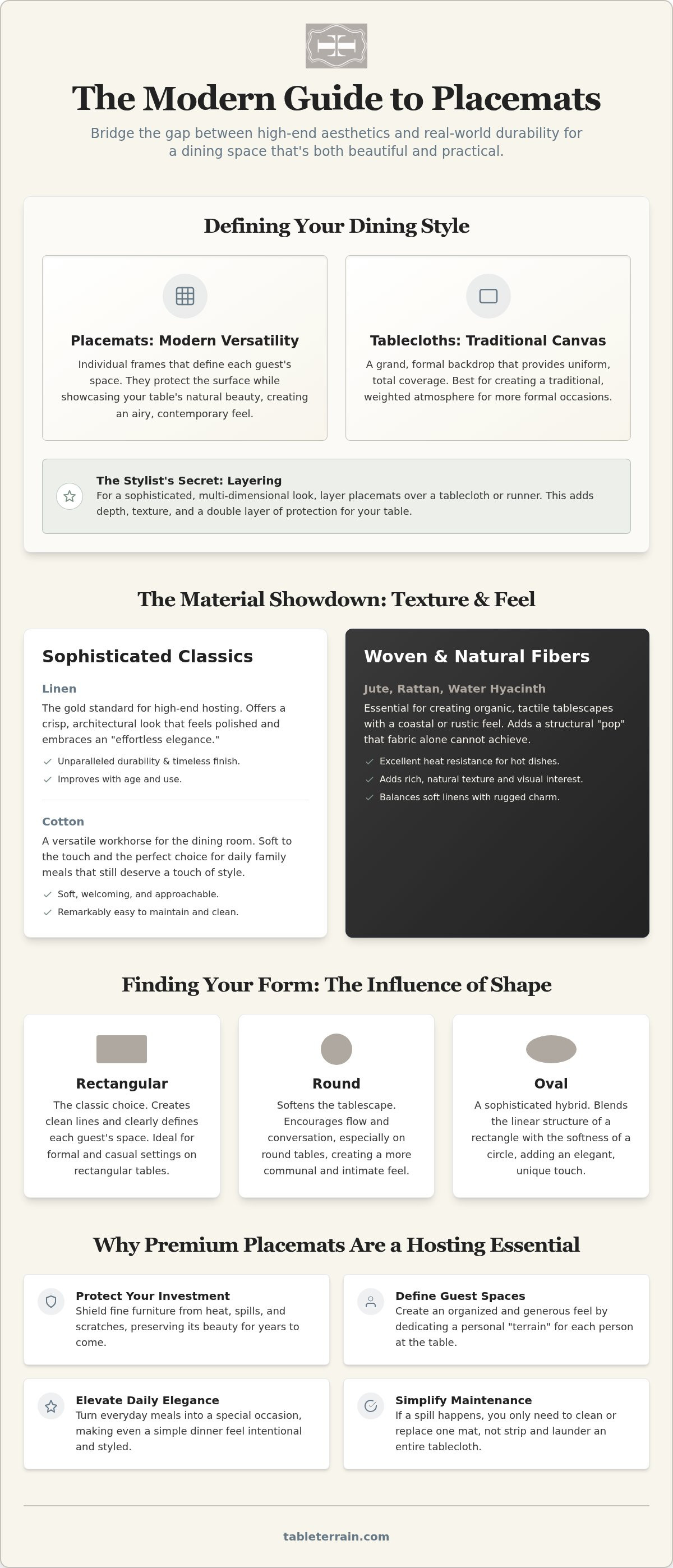
Choosing between a full tablecloth and individual placemats isn't just a matter of laundry. It's a decision about the architecture of your table. Think of a tablecloth as a grand, formal canvas. It provides a uniform backdrop that feels traditional and weighted. In contrast, placemats offer modern versatility. They act as individual frames for your guests, defining a personal "terrain" for every person at the table. This approach allows you to protect your surface while keeping the overall dining environment feeling airy and open. It's about curated simplicity rather than total coverage.
Sometimes, the best design choice is a hybrid one. Professional stylists often layer placemats on top of a tablecloth or a runner to add depth and tactile interest. This creates a sophisticated, multi-dimensional look that a single layer simply can't achieve. By mixing materials, you introduce a sense of craftsmanship and intentionality to the setting. Most importantly, this setup offers a double layer of protection for your expensive wood, stone, or glass surfaces without completely obscuring their natural character.
When to Choose Placemats
Opt for individual settings when you want your table's natural beauty to take center stage. If you've invested in a hand-crafted oak table or a sleek marble surface, don't hide it under yards of fabric. These pieces are ideal for daily use because they simplify the transition from a busy morning to a relaxed evening meal. In a minimalist or modern home, the clean lines of an individual setting feel focused and intentional. They provide enough protection for heat and spills while maintaining a light, contemporary aesthetic that feels approachable for any guest.
The Benefits of Individual Settings
Each mat creates a dedicated zone for your guest. It defines their personal space, making the seating arrangement feel organized and generous even in smaller dining rooms. There's a significant practical advantage here, too. If a guest spills a drop of wine, you only need to clean or replace one mat. You don't have to strip the entire table and launder a six-foot cloth. This flexibility works across all table shapes, from narrow breakfast bars to expansive banquet tables. It's a solution-oriented approach that values your time and your home's aesthetic harmony equally.
The Material Showdown: Cotton, Linen, and Woven Textures
Texture is the silent language of a well-set table. The fabric you choose for your placemats sets the emotional temperature of the room, turning a simple meal into a sensory experience. While aesthetics matter, your choice of material also dictates how your table handles the heat of a serving dish or the inevitable splash of a cocktail. Choosing high-quality materials ensures your table stays protected while radiating a sense of warmth and hospitality. Investing in premium linens is a long-term commitment to better hosting. These pieces don't just last longer; they actually improve with age and use.
Cotton and Linen: The Sophisticated Classics
Linen and cotton are the undisputed heavyweights of the dining room. Linen offers a crisp, architectural look that feels inherently formal and polished. If you're hosting a summer lunch, don't be afraid of the "effortless elegance" that comes with slightly wrinkled linen. It suggests a relaxed, worldly atmosphere that's both aspirational and grounded. Cotton, by contrast, is a versatile workhorse. It's soft to the touch and remarkably easy to maintain, making it the perfect choice for daily family meals that still deserve a touch of style. Premium linen is the gold standard for high-end hosting because of its unparalleled durability and timeless, lustrous finish.
Woven and Natural Fibers: Adding Organic Texture
There's a growing appreciation for organic, tactile elements like jute, rattan, and water hyacinth. These woven textures are essential for creating coastal or rustic tablescapes that feel connected to the natural world. Beyond their beauty, thicker natural weaves provide excellent heat resistance, acting as a sturdy barrier between hot plates and your table's finish. They bring a structural "pop" to the setting that fabric alone sometimes lacks. For a truly professional look, try layering these table linens with softer napkins to balance the rugged texture with refined softness. It's an easy way to build visual interest through contrast.
Whether you prefer the smooth touch of fabric or the rustic charm of a weave, the right material makes every meal feel intentional. You can explore our curated selection of dining essentials to find the perfect match for your home's unique character.
Finding Your Form: Comparing Rectangular, Round, and Oval Shapes
Shape isn't just a design preference. It's the blueprint for your table's flow. The geometry of your placemats determines how much space each guest enjoys and how the overall room feels. In a large, grand dining room, heavy rectangular mats anchor the space with a sense of permanence. In smaller, more intimate settings, rounded edges can prevent the table from feeling cluttered or overwhelming. Finding the right balance ensures your tablescape looks curated rather than crowded. It's about understanding the visual weight of each piece in relation to your furniture and the room's architecture.
Rectangular Placemats: The Timeless Standard
Rectangular placemats are the timeless standard for a reason. They mirror the lines of traditional long dining tables perfectly, creating a sense of order and symmetry. Align them precisely with the table edge for a clean, architectural look that feels balanced and professional. These mats offer the maximum surface area, providing ample room for a full place setting. You'll have plenty of space for your dinner plate, a full set of flatware, and multiple glasses without anything feeling cramped. This form is particularly effective for formal dinners where the presentation of each course is paramount and every detail requires its own dedicated space.
Round and Oval: Softening the Lines
Soften the hard angles of your dining room with round or oval shapes. Round placemats are the essential choice for circular or pedestal tables. They follow the natural curve of the furniture, creating a harmonious visual loop that feels effortless. This shape naturally draws guests closer, fostering a more intimate and conversational atmosphere. Oval mats act as a sophisticated bridge. They provide the structured length of a rectangle while incorporating the gentle curves of a round mat. It's a clever way to add visual interest without sacrificing the space needed for a formal meal. These shapes are also excellent for maximizing seating on smaller tables, as the lack of corners prevents mats from overlapping when guests sit close together.
Don't be afraid to experiment with your layout. Mixing different shapes can create a playful, eclectic dining atmosphere that feels deeply personal and curated. Try using rectangular mats at the heads of the table to denote a position of honor, then place round ones along the sides to break up the visual monotony. This layered approach adds a touch of worldly inspiration and craftsmanship to your home. It shows you've done the hard work of selection to create a setting that is uniquely yours. By varying the forms, you create a dynamic landscape that invites guests to linger long after the meal has ended.
Styling Scenarios: How to Match Your Placemats to the Occasion
Styling isn't a chore; it's an invitation. To master your table, you need a framework that distinguishes between daily elegance and special occasion hosting. For everyday use, lean on neutrals like soft greys, creams, or oatmeal tones. These shades offer maximum versatility and blend seamlessly into your home's existing palette. When a special event arrives, switch to bold tones or rich jewel colors to make a definitive statement. Placemats act as the architectural anchor for these shifts, allowing you to change the room's mood in seconds. To truly elevate the setup, coordinate your mats with stylish table runners. This pairing creates a cohesive visual line down the center of the table while framing each guest's personal space with precision.
The Layered Tablescape: A Modern Masterclass
Think of your setting as a vertical stack of textures. Start with the base mat, add the dinner plate, and top it with a folded napkin secured by a curated ring. This stacking method creates visual depth and a sense of luxury. Use contrasting colors between the mat and the table surface to make the setting "pop." For instance, a dark navy mat on a light oak table creates an immediate focal point. A balanced table is one that artfully mixes high-end linens with organic elements like raw wood, stone, or fresh greenery. This contrast ensures the environment feels sophisticated but never stiff or unapproachable.
Seasonal Transitions with Placemats
Your dining room should breathe with the seasons. In spring and summer, choose lighter fabrics like thin linens and airy woven textures. These materials mirror the brightness of the season and feel cool to the touch. As the year turns, move toward deep tones and heavier weights for autumn and winter hosting. Think of rich terracotta, forest green, or charcoal. Swapping your placemats is the fastest, most efficient way to refresh the entire room without changing a single piece of furniture. It's a high-impact update that keeps your hosting feeling fresh, inspired, and perfectly timed for the weather outside.
The final touch lies in the harmony between your linens and your accessories. Match your napkin rings and glassware to the specific tones in your mats to create a unified, professional look. This attention to detail signals to your guests that the evening was prepared with genuine care and intentionality. Whether you are prepping for a quiet Tuesday dinner or a grand holiday feast, the right foundation makes all the difference. Browse our curated collection of premium placemats to find the essential first layer for your next gathering.
Curating Quality: Why Premium Placemats are a Hosting Essential
Investing in quality isn't just about aesthetics. It's about longevity. Cheap, mass-produced alternatives often lose their shape after a single wash or fray at the edges. Premium placemats, however, are designed to endure the rigors of frequent hosting while maintaining their structural integrity. They offer a superior tactile experience that your guests will notice the moment they sit down. The weight of the fabric and the precision of the weave signal a level of care that disposable options simply cannot match. High-quality materials feel substantial and intentional, grounding the entire dining experience in a sense of craftsmanship.
The Table Terrain philosophy focuses on effortless sophistication. We believe that your home should be a reflection of your unique style, achieved through pieces that are as practical as they are beautiful. By selecting curated, high-end linens, you remove the guesswork from hosting. You don't need a professional stylist to create a stunning table when your foundations are already exceptional. Use this final checklist to build a versatile and enduring collection:
- One set of neutral linens in cream or grey for daily versatility.
- Two sets of textured woven mats for seasonal transitions and rustic charm.
- One set of bold, deep-toned mats for formal holiday celebrations.
- Coordinated napkin rings to provide a polished, unified finish.
Caring for Your Investment
Maintaining your linens ensures they remain a staple of your hosting kit for years. For most premium cloth mats, a gentle machine wash in cold water preserves both the fibers and the color. Always air dry to prevent shrinkage and maintain the original shape. Spot clean woven natural fibers with a damp cloth immediately after a spill to prevent deep staining. When it comes to storage, avoid tight folds that create permanent, stubborn creases. Lay them flat or roll them gently in a dedicated linen drawer to keep them crisp and ready for your next gathering.
The Final Polish: Completing the Look
View your table as a creative canvas. The mat is the first layer, but the final polish comes from the accessories you choose to layer on top. Pair your placemats with designer flatware and serving items to create a cohesive landscape. The harmony between a beautiful fabric and polished cutlery creates a professional, high-end feel that invites guests to linger long after the meal ends. It's these small, curated details that transform a simple dinner into a memorable event. Ready to start building your collection? Explore the Table Terrain collection to find your next favorite tablescape foundation.
Create Your Perfect Dining Terrain
Transforming your dining room starts with the foundation. You now understand how the right material and shape can dictate the flow of a conversation and the protection of your surfaces. Whether you choose the crisp architectural lines of linen or the organic texture of woven fibers, your selection creates a personalized space for every guest. High-quality placemats are more than just protective layers; they are the architectural anchors of a sophisticated home. They turn every meal into a curated event.
By focusing on curated quality rather than mass-produced alternatives, you ensure your table always feels intentional and welcoming. It's about finding that perfect balance between daily practicality and special occasion elegance. Remember that a balanced table mixes high-end linens with organic elements to create a setting that feels sophisticated yet approachable. We've done the hard work of selection so you can focus on the art of gathering. Your next memorable meal is just one layer away. Embrace the beauty of the well-set table.
Shop Premium Placemats and Linens at Table Terrain to discover pieces designed for elegant, effortless hosting.
Frequently Asked Questions
Are placemats out of style in 2026?
Placemats are currently experiencing a significant resurgence as the foundation of modern dining. In 2026, the global placemats market is projected to grow at a compound annual rate of 5.2 percent through 2034. Designers now favor individual settings over full cloths because they highlight the craftsmanship of the table itself. They offer a tailored look that feels both contemporary and intentional for today's hosting styles.
What is the standard size for a dining table placemat?
The standard size for a rectangular placemat is approximately 12 inches by 18 inches. This dimension provides enough surface area to hold a dinner plate, flatware, and a water glass comfortably. For round versions, a diameter of 14 to 15 inches is the industry norm. These sizes ensure each guest has a defined personal space without making the table feel overcrowded or cluttered.
Can you use placemats and a table runner together?
Layering placemats over a table runner is a masterclass in table styling. This combination adds vertical depth and visual interest to your setup. Place the runner down the center to anchor your centerpiece, then align the mats at each seat to frame the individual settings. It's an easy way to mix textures, such as pairing a smooth linen runner with rugged woven mats for a sophisticated contrast.
What is the best placemat material for heat protection?
Thick, woven natural fibers like rattan, water hyacinth, or cork offer the best heat resistance. These materials provide a sturdy, breathable barrier that protects delicate wood or stone surfaces from hot plates. While cotton and linen are beautiful, they're thinner and may require a charger underneath for very high temperatures. Stick to dense weaves when you're serving family-style dishes straight from the oven.
How many placemats should I buy for a standard set?
Always buy at least two more mats than your table has seats. If you have a six-person table, purchase a set of eight. This ensures you have immediate replacements if one mat is stained during a meal. It also gives you the flexibility to expand your seating for extra guests without breaking the visual theme of your dining room.
Should placemats match the napkins exactly?
Coordinating your linens is far more sophisticated than matching them exactly. Choose napkins in a complementary color or a different texture to create a curated, professional look. For instance, pair a navy linen mat with a pale blue cotton napkin. This subtle variation adds complexity to your tablescape and prevents the setting from looking like a mass-produced, pre-packaged set.
How do I choose the right color placemat for a dark wood table?
Contrast is your best friend when styling a dark wood surface. Opt for lighter neutrals like cream, oatmeal, or soft grey to make the rich wood grain pop. If you prefer color, vibrant jewel tones like emerald or mustard create a stunning, high-energy atmosphere. Avoid dark browns or charcoals that might disappear against the table and make the setting feel heavy or muddy.
Are round placemats better than rectangular ones for small tables?
Round placemats are the superior choice for small or circular tables. Their curved edges prevent the corners from overlapping, which is a common problem with rectangular mats in tight spaces. This shape naturally follows the geometry of a pedestal table, creating a harmonious flow. They allow you to fit more guests comfortably while maintaining a clean, organized aesthetic that feels spacious and light.