


A table runner is the architectural spine of your dining experience. It is the singular element that dictates the flow of your decor and the energy of your conversation. Many hosts hesitate because they worry about precise overhang lengths or matching patterns with existing linens. You might even fear that adding a runner will make your table look too stiff or formal for a relaxed gathering. Mastering how to style a table runner doesn't have to be a design challenge. It is an invitation to play with texture and color to create a space that feels both aspirational and achievable.
We understand that you want a balanced, Pinterest-worthy tablescape that reflects your personal style. This guide will help you master the art of runner placement, from choosing the right materials to layering with designer flatware and organic accents. You will gain the confidence to mix textures like cheesecloth and velvet while maintaining a cohesive look. We will walk through everything you need to know about sizing, seasonal transitions, and coordinating with your favorite glassware for a truly sophisticated result. From casual morning brunches to moody, jewel-toned dinner parties, your table is about to become your favorite creative canvas.
Key Takeaways
- Master how to style a table runner by applying the "Overhang Rule" to ensure a balanced, professional look for any table size.
- Explore diverse placement techniques like the Tête-à-Tête to transform your runner into shared placemats for more intimate gatherings.
- Coordinate your wine glasses and goblets using the "Triangle Rule" to ensure your table feels organized rather than cluttered.
- Elevate your aesthetic by layering napkin rings and vases that complement the textures and colors of your curated linens.
- Learn to adapt your tablescape for any occasion by choosing between high-end fabrics for formal events or woven textures for relaxed meals.
The Art of the Table Runner: Defining Your Dining Aesthetic
A table runner is the architectural foundation of a modern tablescape. It is a narrow length of fabric designed to anchor your decor while leaving the table's natural surface exposed. While tablecloths and runners originally focused on protection, the modern runner is a stylistic powerhouse. It serves a dual purpose: it shields your table from heat and spills while providing a necessary visual focal point. Think of the runner as the spine of your arrangement. It creates a central axis that organizes your vases, containers, and serving items. This line draws the eye and directs the energy of the conversation down the table. For those who prefer a minimalist or contemporary look, the runner is a versatile alternative to full coverage. It offers the elegance of linens without the weight of a traditional cloth.
Why a Runner is the Secret to a Pro Tablescape
Runners introduce depth and texture without obscuring a beautiful wood grain or marble finish. They act as a grounding force for your centerpieces. Without a runner, a large vase can look isolated or out of place. With one, it becomes part of a cohesive story. Learning how to style a table runner starts with understanding this spatial balance. It allows you to style a dining table like a pro by defining the boundaries of your decor. This simple layer transforms a flat surface into a multi-dimensional stage for your meal.
Choosing Materials: From Crisp Linen to Textured Woven
Material choice is the primary driver of your dining room's atmosphere. High-quality linens provide a sophisticated, polished aesthetic that suits formal occasions. They feel cool to the touch and pair perfectly with designer flatware. Conversely, cotton or woven textures offer a casual, inviting appeal for everyday use. These materials are durable and add a sense of organic warmth. Your choice of fabric is the first decision in your design process. It sets the mood of the meal before a single plate is placed. Crisp linen whispers elegance, while a textured weave invites guests to lean in and stay a while.
Mastering Sizing and Placement: Length, Width, and Overhang Rules
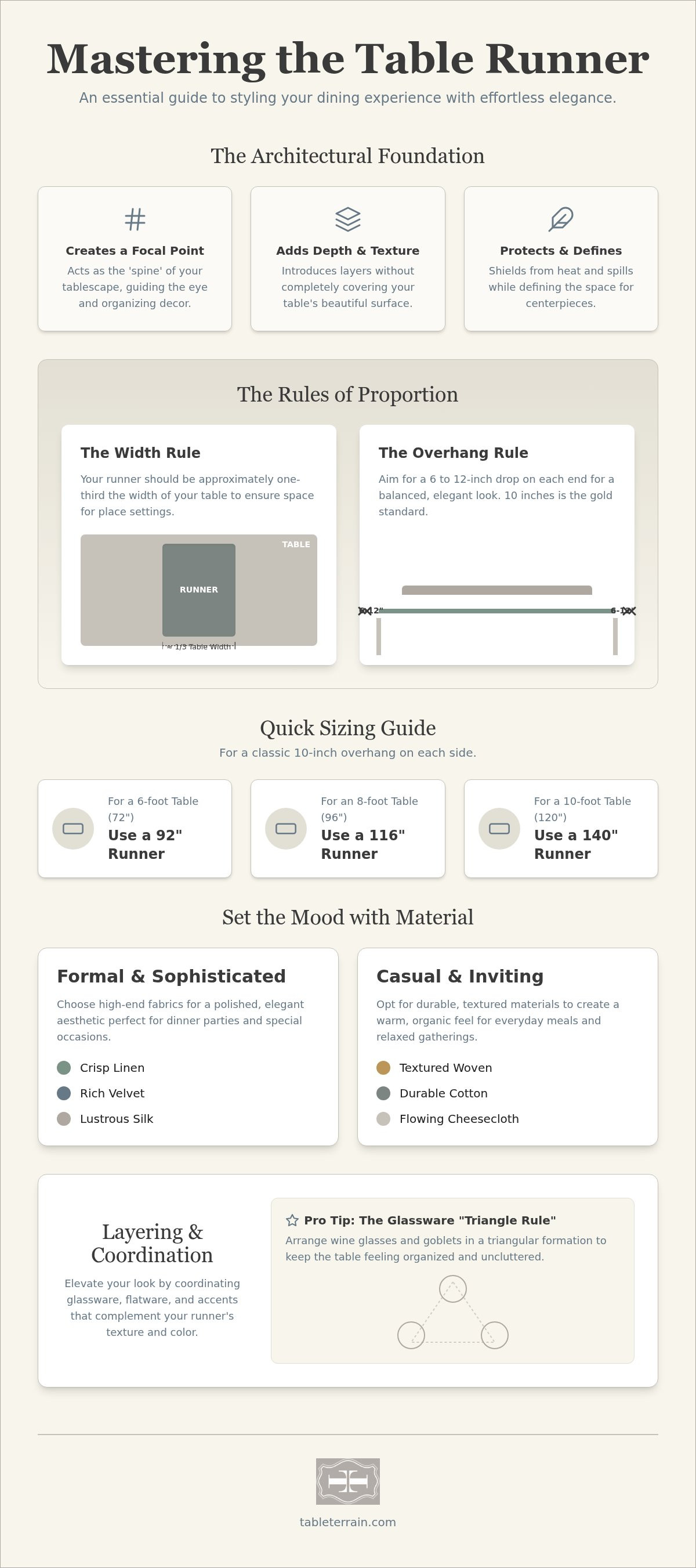
Achieving a professional look begins with the right proportions. A standard table runner should be roughly one-third the width of your dining table. This ratio ensures that your dinnerware has enough space while the runner anchors the center. If your runner is too wide, it will crowd your guests; if it's too narrow, it will look like a ribbon rather than a design element. Before you purchase premium linens, measure your table's length and width precisely. Add 12 to 24 inches to the total length to account for the necessary overhang on both ends. This preparation is the first step in learning how to style a table runner with confidence.
The visual impact of your runner depends heavily on its length. A long runner that drapes over the sides feels traditional, grand, and intentional. This is the preferred choice for formal dinner parties. Conversely, a short runner that ends before the table edge creates a modern, minimalist vibe. Short runners are excellent for casual brunches where you want the focus to remain on a beautiful wood grain or marble surface. Both styles have their place, but the long drape remains the gold standard for sophisticated hosting.
The Math of the Perfect Overhang
The "Overhang Rule" is your guide to a balanced aesthetic. Aim for a drop of 6 to 12 inches on each side of the table. Drop length is the fabric that hangs vertically past the table edge. For most formal hosting scenarios, a 10-inch drop is the "Goldilocks" zone. It's long enough to look elegant but short enough to stay clear of your guests' laps. Use this quick reference for common table sizes:
- 6-foot table (72 inches): Choose a 92-inch runner for a 10-inch drop.
- 8-foot table (96 inches): Look for a 116-inch runner to maintain symmetry.
- 10-foot table (120 inches): Select a 140-inch runner for maximum impact.
Styling for Round, Square, and Rectangular Tables
Rectangular tables are the classic canvas for the lengthwise "spine" placement. This orientation creates a clear central axis for your centerpieces. Square tables offer more flexibility. You can center a single runner or use multiple runners placed across the table in a "bed-style" arrangement to create individual zones for guests. Round tables present a unique opportunity for creativity. Try using two runners in an "X" pattern. This geometric look is sophisticated and provides a shared surface for pairs of guests sitting opposite each other. To find the perfect foundation for these layouts, explore the curated runners available at Table Terrain. Choosing the right shape and size ensures your tablescape feels curated rather than cluttered.
5 Professional Styling Techniques to Transform Your Tablescape
Styling is where your creative vision truly comes to life. While dimensions provide the framework, your placement choice defines the room's energy and the flow of the meal. You aren't limited to a single path. Modern hosting encourages experimentation with traditional forms to create something fresh and inviting. Whether you want to highlight a beautiful furniture piece or create a plush, layered environment, these techniques offer the versatility you need to succeed. Mastering how to style a table runner means understanding how these different layouts change the guest experience.
The Lengthwise Classic remains the most popular choice for a reason. It runs the full length of the table, creating a perfect stage for a curated row of vases and containers. This placement is clean and traditional, keeping the focus on a strong central axis. For wider dining surfaces, consider the Double Runner technique. Place two runners parallel to each other rather than one in the center. This creates distinct zones for your guests and adds a modern, architectural feel to the room. If you own a stunning marble or reclaimed wood table, use the Bare Table Approach. A single runner adds a splash of color and texture while letting the high-end furniture material remain the star of the show.
The Tête-à-Tête Placement for Intimate Dinners
The Tête-à-Tête involves placing shorter runners widthwise across the table. This technique creates a visual "bridge" between guests sitting opposite each other. It's an excellent choice for casual brunches or modern minimalist settings where you want to skip traditional placemats. This arrangement feels intimate and deliberate. Pair this layout with elegant table settings for dinner parties to elevate the experience further. It encourages eye contact and shared conversation by framing each couple's personal dining space.
Layering Runners Over Tablecloths
Layering offers the most depth and sophistication for a formal event. Place a solid runner over a subtle patterned tablecloth to create a rich, multi-dimensional look. This color contrast makes your centerpiece "pop" against the fabric. For evening events, try a darker runner over a lighter cloth for a dramatic, moody effect. Success lies in the preparation. Always iron both layers for a crisp, high-end finish. A wrinkled base ruins the luxury feel of even the finest linens. This method is the ultimate way to learn how to style a table runner for high-stakes hosting where every detail matters.
Layering Beyond the Fabric: Coordinating Linens, Glassware, and Flatware
A runner is the foundation, but the true artistry of tablescaping lies in the layers you build upon it. Coordinating your accessories ensures the runner doesn't feel like an isolated strip of fabric. Every item on the table should speak to that central axis. Designer flatware should be aligned precisely to maintain the clean lines of the runner's edge. This parallel arrangement reinforces the "spine" of the table, creating a sense of order and intentionality. To break the horizontal plane, introduce decorative vases and containers. These elements add necessary height and prevent the arrangement from looking flat or two-dimensional. Learning how to style a table runner effectively means managing the interaction between these various heights and textures.
Integrating Glassware and Goblets
Glassware acts as the jewelry of your table. To keep your design organized, apply the "Triangle Rule." Position your wine glasses and goblets in a tight triangular formation near the top right of the place setting. The lead glass should align with the outer edge of the runner. This prevents your glassware from crowding the central decor spine and keeps the workspace clear for diners. Color coordination is equally vital. A green goblet can pull a specific earthy tone out of a patterned runner, creating a sophisticated visual link. Use height variations in your glassware to complement the horizontal flow of the fabric, ensuring the eye moves naturally across the table.
Napkin Rings and Placemats: The Supporting Cast
Napkin rings and placemats provide the final touch of professional polish. Choose napkin rings that echo the texture or color of your runner. If you're using a heavy linen runner, a textured metal ring adds a modern, industrial contrast. If you prefer the "full coverage" look, you can use placemats alongside a runner. This layering technique is perfect for formal events where you want to protect the table while maximizing the textile presence. Visual weight is the aesthetic balance achieved between the softness of fabric, the shimmer of metal, and the transparency of glass. When these elements harmonize, the table feels complete. Elevate your next gathering by exploring the curated glassware and linens at Table Terrain to find your perfect match.
Elevating Every Occasion: Seasonal and Formal Runner Inspiration
Your runner is the most versatile tool in your hosting toolkit. It allows you to shift the entire energy of a room without investing in new furniture. For formal events, prioritize silk or high-end linen fabrics. These materials offer a natural sheen and a crisp drape that signals sophistication. Keep the overhang minimal, around 6 inches, to maintain a tailored appearance. Pair these luxury textiles with polished designer flatware to create a refined, cohesive look. It's the easiest way to signal a special occasion to your guests.
Casual gatherings invite more playfulness. Opt for woven textures, frayed edges, or shorter lengths that highlight the table's surface. Mix in eclectic glassware to keep the vibe relaxed and approachable. Don't worry about perfect symmetry here. Knowing how to style a table runner for daily life means embracing organic materials like:
- Frayed edge cotton for a relaxed, coastal feel
- Jute or seagrass for earthy, rustic texture
- Soft gauze for a romantic, bohemian touch
This approach makes your home feel lived-in yet curated. It encourages guests to relax and enjoy the moment without the pressure of a stiff, formal environment.
The Minimalist Modern Runner
Clean lines and neutral tones define the modern minimalist approach. Choose a runner in slate, oatmeal, or charcoal to create a calm, sophisticated base. Avoid cluttered decor. Instead, use a single, sculptural vase as your only centerpiece. This focused arrangement makes a decisive aesthetic statement. Combine this with sleek, modern flatware to reinforce the contemporary feel. This style values breathing room and highlights the quality of each individual piece.
Seasonal Styling: From Summer Linens to Autumn Textures
Think of your dining table as a rotating canvas for your home decor. Summer calls for light, airy fabrics like thin cotton or gauzy linen. Stick to bright whites, soft pastels, or sun-bleached tones to mirror the season's energy. As the weather cools, transition to heavier textures. Autumn and winter are the perfect times for deep jewel tones like burgundy or emerald. Introduce metallic accents through your napkin rings or flatware to add warmth to the setting.
Holiday hosting provides the ultimate opportunity for specific styling. Use an elegant thanksgiving centerpiece to anchor a festive runner. This central focal point draws the eye and provides a foundation for seasonal greenery or gourds. Learning how to style a table runner for the holidays is about layering your favorite textures to create a space that feels celebratory and warm. Whether you're planning a grand gala or a quiet Tuesday dinner, the right runner makes every moment feel intentional.
Bring Your Design Vision to Life
You now have the professional tools to transform any dining area into a curated masterpiece. By applying the "Overhang Rule" and experimenting with Tête-à-Tête placements, you can create a balanced space that invites connection. Remember that the runner acts as your architectural spine. It grounds your centerpieces and keeps your glassware organized while allowing your table's natural beauty to shine through. Mastering how to style a table runner gives you the creative freedom to transition between casual morning brunches and formal holiday galas with absolute ease.
Our selection is curated by expert stylists to provide premium materials for lasting elegance. We provide national shipping across the US to bring high-end design directly to your door. Shop the Table Terrain Runner Collection to find the perfect foundation for your next gathering. It's time to gather with confidence. Your table is ready for its transformation.
Frequently Asked Questions
Should a table runner hang over the edge of the table?
Yes, a standard overhang of 6 to 12 inches on each side is ideal for a balanced, professional look. This "drop length" ensures the runner feels intentional rather than like an afterthought. For formal events, a 10-inch drop is often considered the perfect middle ground for hosting. If you prefer a modern, minimalist aesthetic, you can choose a shorter runner that ends just before the table edge for a clean finish.
Can you use a table runner on a round table?
Absolutely, round tables offer a unique canvas for creative runner placement. You can place a single runner across the diameter to anchor a central vase or container. For a more sophisticated, geometric look, try using two runners in an X pattern. This technique creates shared dining zones for pairs of guests sitting opposite each other. It's a great way to introduce structure to a circular space while keeping the atmosphere warm and inclusive.
What is the best material for a daily-use table runner?
Cotton and woven textures are the best choices for daily use because they offer durability and a relaxed feel. These materials are typically easier to clean and maintain than delicate silks or heavy high-end linens. Woven runners add organic warmth to your dining area, making it feel inviting for morning coffee or family meals. They provide a beautiful foundation that stands up to the practicalities of everyday life while still looking polished and fresh.
How wide should a table runner be compared to the table?
A table runner should be approximately one-third the width of your dining table. This ratio leaves enough space for place settings while ensuring the runner remains a clear visual focal point. If the runner is too wide, it will interfere with your plates and glassware. If it's too narrow, it loses its ability to anchor your centerpieces. Learning how to style a table runner requires measuring your table width before shopping to maintain this crucial aesthetic balance.
Do I need to use placemats if I have a table runner?
You don't need to use placemats, but layering them can add significant depth to your tablescape. A runner alone highlights the beauty of your table's surface, which is perfect for showing off wood or marble. If you want a full coverage or more formal look, adding coordinating placemats provides extra protection and texture. This combination is particularly effective when you want to mix materials like crisp linen and organic woven seagrass for contrast.
Can you put a table runner over a tablecloth?
Yes, layering a runner over a tablecloth is a classic technique for adding dimension and color contrast to your dining room. This approach is perfect for formal dinner parties where you want a lush, multi-textured environment. Try placing a solid-colored runner over a subtly patterned tablecloth to make your centerpiece pop. Always ensure both layers are crisply ironed to maintain a high-end, professional finish that feels both aspirational and achievable for your guests.
How do I style a table runner for a casual brunch?
Focus on relaxed textures and shorter lengths to create an unfussy, inviting atmosphere for your guests. Use a cotton or gauze runner that doesn't necessarily hang over the edges for a modern, breezy feel. Pair it with eclectic glassware and a simple row of small vases filled with seasonal blooms. Learning how to style a table runner for casual events is about embracing a bare table approach that feels both curated and comfortable.
Should the table runner match the napkins exactly?
Your runner and napkins don't have to match exactly; in fact, coordinating different textures or colors often looks more sophisticated. You can pick up a secondary color from a patterned runner and use it for your napkins. Alternatively, use napkin rings to bridge the gap between two different fabrics. This curated approach avoids a stiff, store-bought look and reflects a more personalized, professional design aesthetic that feels warm and inviting for any guest.