


Your centerpiece shouldn't be a barrier between your guests and their conversation. You've likely sat at a dinner party where you had to crane your neck or lean sideways just to see the person across from you. It’s frustrating when a beautiful floral arrangement feels like an obstacle rather than an invitation. You want a table that looks professionally styled, but you also want it to feel intimate and effortless. We understand the struggle of trying to make a setting look full without it feeling cluttered or unfinished.
This guide will show you how to master using small vases for tablescape design to create a balanced, layered look that invites genuine connection. You'll learn the essential "Rule of Three" for floral clusters and how to mix materials like glass and woven textures for a curated, modern aesthetic. We'll explore the best low-profile vessels for every table shape, ensuring your design works perfectly for both round and long rectangular settings. From sculptural ceramic forms to organic glass bowls, we are previewing the 2026 trends that transform these miniature arrangements into high-impact style statements.
Key Takeaways
- Prioritize guest interaction by choosing low-profile designs that keep sightlines clear across the table.
- Learn how to mix glass and woven textures to add depth when selecting small vases for tablescape arrangements.
- Master the Rule of Three and the Linear Path formula to create intentional, professional clusters on any table shape.
- Discover how to bridge the gap between placemats and centerpieces by layering vessels with your favorite linens and accents.
- Build a versatile capsule collection of six to eight vases to ensure you're always ready for an intimate gathering.
The Rise of the Low-Profile Tablescape: Why Small Vases Win
Hosting in 2026 prioritizes the guest experience over grandiosity. The low-profile tablescape is the ultimate expression of this shift. It defines a setting where decor stays below the eye level of seated guests, ensuring that laughter and stories flow without physical barriers. While a single, towering arrangement commands attention, it often kills the conversation. Choosing small vases for tablescape layouts allows you to create a sense of abundance that remains approachable and intimate.
This approach relies on the layering potential of multiple small containers. Instead of one focal point, you distribute visual interest. It creates a rhythmic movement down the center of the table. You can mix textures, such as clear glass with woven vases, to build a narrative that feels collected rather than staged. By applying basic principles of floral design like scale and balance, you can turn a simple meal into a curated event. Small vessels offer a level of detail that large arrangements simply cannot match.
The Sightline Strategy: Hosting Without Obstructions
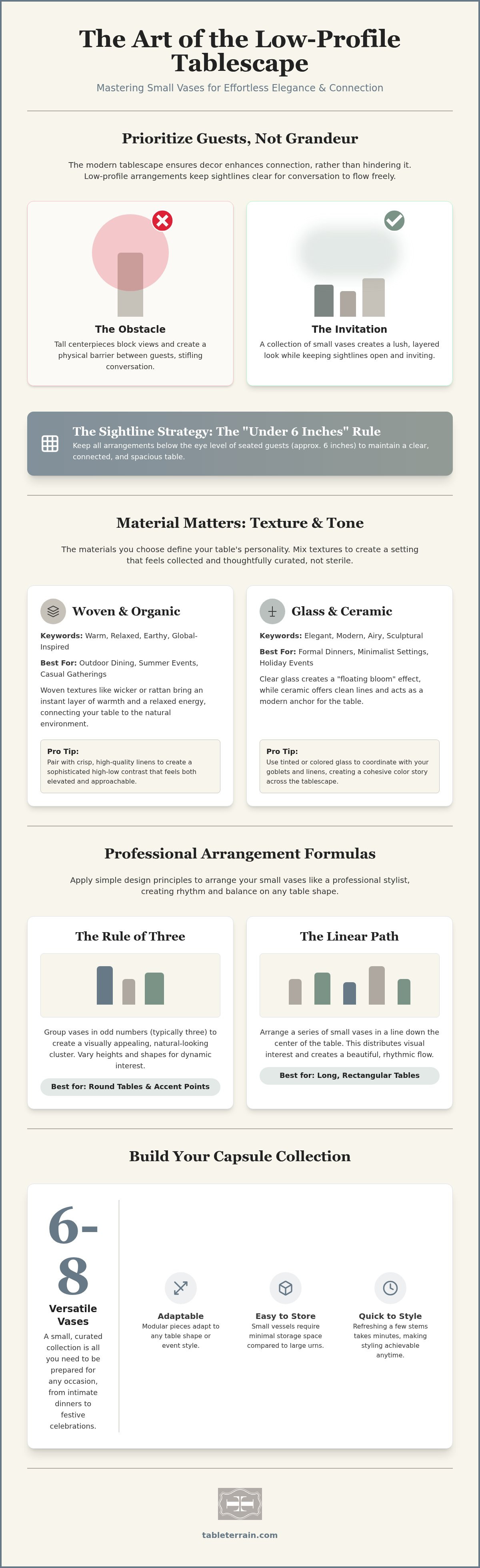
The most effective hosting secret is the "under 6 inches" rule. Keep your arrangements below this height to maintain clear sightlines. Small vases excel here. They provide a lush, finished look without the visual bulk that blocks your view of the person across from you. This strategy also serves a practical purpose. Lower decor leaves more room for shared serving platters, wine glasses, and flatware. It makes the table feel organized and spacious even when the menu is extensive.
Versatility Across Occasions
A curated collection of small vessels is a modular toolkit for any host. These pieces transition effortlessly from a sunny Sunday brunch to a sophisticated holiday dinner. You don't need a different centerpiece for every event. Move your vases into tight clusters for a round table or stretch them into a long, linear path for a grand dining hall. They are the ultimate capsule decor. They adapt to your needs rather than forcing you to design around them.
Beyond the aesthetic, the practical benefits are clear. Small vases are incredibly easy to store. They don't require the massive cupboard space that heavy urns or tall glass cylinders demand. Maintenance is simpler, too. Refreshing a few stems in a bud vase takes minutes. This makes professional-level styling achievable even on a busy weeknight. It's about curated simplicity that fits into your actual lifestyle.
Choosing Your Material: Glass vs. Wicker and Woven Vases
Material selection is the foundation of your table's personality. While clear glass is a timeless staple, current trends emphasize tactile, organic elements. Choosing the right small vases for tablescape design means balancing visual weight with the occasion's formality. Transparent glass feels light and airy. It’s perfect for formal events where you want elegance without clutter. Opaque materials like ceramic or wicker provide a grounded, earthy presence. Mixing these textures prevents your setting from looking like a sterile showroom display. It feels like a thoughtful collection built over time.
The Appeal of Woven and Wicker Textures
Woven vases bring a relaxed, global-inspired energy to the dining experience. They are especially effective for summer entertaining or outdoor dining where you want to mirror the surrounding environment. These containers add an instant layer of warmth that glass simply can't replicate. Pair these organic textures with crisp, high-quality linens to create a sophisticated high-low contrast. This combination feels both elevated and approachable. To keep your wicker containers looking fresh for years, avoid soaking the material during cleaning. Simply wipe them with a soft, damp cloth and ensure they dry completely before storing them away.
Clear Glass and Ceramic: The Modern Classics
Clear glass remains the preferred choice for a "floating bloom" effect. It allows the focus to stay entirely on the delicate stems and vibrant petals. This is ideal for minimalist settings where you want the florals to feel weightless. If your aesthetic is more architectural, ceramic small vases offer clean lines and interesting matte finishes. They anchor the table with a modern, sculptural feel that works well in contemporary homes. These pieces act as small sculptures even when they aren't holding flowers.
Don't be afraid to lean into color. Using tinted or colored glass vases is a brilliant way to coordinate with your colorful glassware and goblets. This creates a cohesive color story that pulls the entire tablescape together. Whether you're aiming for a moody monochromatic theme or a vibrant, eclectic mix, the material you choose dictates the energy of the room. If you're ready to refresh your hosting toolkit, explore our curated selection of vases and containers to find the perfect pieces for your next gathering.
Arrangement Formulas: The Rule of Three and Beyond
Arranging your table shouldn't feel like a puzzle. Using specific formulas helps you place small vases for tablescape designs with confidence. The most effective method is the "Rule of Three." Our brains naturally seek patterns, and odd numbers feel more organic and less rigid than even pairs. Even within the low-profile category, slight height variations are key. Mixing a four-inch vessel with a six-inch one creates visual movement. This prevents the setting from looking flat or stagnant.
Negative space is just as vital as the decor itself. Don't feel pressured to fill every square inch. Leaving room between your clusters allows the eye to rest. It also ensures there's practical space for wine glasses and serving spoons. A crowded table feels chaotic; a layered table feels curated. By balancing your floral clusters with open space, you highlight the beauty of each individual vessel.
Clustering for Round and Square Tables
For round or square tables, a centralized cluster works best. Start with a central "anchor" vase. This should be your slightly taller piece, perhaps a textured ceramic or a bold colored glass. Next, place two smaller vases at the 4 o’clock and 8 o’clock positions relative to the center. This creates a triangular footprint that looks beautiful from every seat around the table. Finish the look by interspersing small table accents or votive candles. This adds a layer of light and detail without adding physical bulk.
The Linear Run for Rectangular Tables
Long rectangular tables require a different strategy. Instead of a single cluster, create a "Linear Path" down the center of a stylish table runner. Space your vases evenly, roughly 8 to 12 inches apart, depending on the length of your table. You can create a sense of rhythm by alternating vase shapes or floral colors. This repetition draws the eye down the length of the table, making the setting feel cohesive and grand.
This linear arrangement is particularly functional for multi-course meals. As large serving platters come and go, small vases stay tucked neatly in the center. They don't interfere with the movement of food or the passing of wine. If the table gets crowded, you can easily shift a single small vessel to make room for a bread basket. This modularity is why small containers are the preferred choice for modern hosts who value both style and practicality.
Layering Small Vases with Linens and Table Accents
A truly sophisticated table is a conversation between textures. When you select small vases for tablescape styling, the process begins with your textile foundation. Your floral choices should naturally complement your table linens and napkin rings to ensure a cohesive aesthetic. If you're using a runner with an intricate pattern, pick one dominant color from the fabric and mirror it in your blooms. This creates a visual anchor that feels intentional. For a more modern look, pair neutral linens with a pop of bright, seasonal flowers in a series of identical vessels. It’s about curated harmony.
Small vases are perfect for bridging the space between placemats and the center of the table. Often, the area near a guest's water glass feels neglected or sparse. A single bud vase placed just beyond the flatware makes each seat feel personalized and special. You can enhance these moments with non-floral elements to add depth. Try scattering smooth river stones, bits of dried moss, or even seasonal fruit like deep red cherries or small citrus. These additions provide a sensory experience that goes beyond just sight, making the setting feel grounded and organic.
Vases and Runners: A Match Made in Heaven
A runner provides the ideal stage for your collection. It focuses the eye and creates a clear boundary for your decorative elements. You can choose a centered line for a formal feel or a playful zig-zag arrangement that moves across the fabric. This movement keeps the table from looking static or overly symmetrical. For outdoor events, utilize your heavier small vases for tablescape needs to hold down lightweight fabrics. It's a practical hosting hack that keeps your setting looking flawless even in a light breeze. The fabric provides the color, while the vases provide the architecture.
Integrating Candles and Accents
Elevate your arrangement by using the "Trio Technique." Group one small vase with one candle and one decorative object, such as a unique shell or a sculptural paperweight. This creates a miniature landscape that feels rich and lived-in. Pay attention to how your metal flatware tones interact with the vase materials. A gold-toned fork pairs beautifully with the warm texture of a woven vase, while silver feels crisp against clear glass. By mixing the heights of your tapers or votives with your vessels, you create a tiered, professional look. It turns a simple meal into an atmospheric, layered gathering.
Ready to build your masterpiece? Shop our curated vases and containers to find the perfect accents for your next event.
Curating Your Collection: Essential Vases for Every Host
Every host needs a reliable toolkit. Stop buying bulk packs of identical vessels. They often feel generic and sterile. Instead, build a capsule collection of six to eight small vases for tablescape styling. This range allows you to scale your decor based on the size of your guest list. Buying in pairs or trios of different shapes adds immediate depth. It creates a collected, high-end feel that bulk sets simply cannot replicate. These pieces should be timeless. A well-chosen vessel works for elegant Thanksgiving centerpieces as easily as it does for a casual poolside brunch. It’s about versatility and longevity.
We've done the hard work of selection for you. Our curated containers simplify the styling process. You don't need to be a professional florist to achieve a polished look. You just need the right foundations. By selecting pieces with global inspiration and distinct textures, you ensure your table always tells a story. These vessels are small in scale but high in impact. They anchor your design and provide a sense of finished, professional styling every time you gather.
The "Must-Have" Shapes for Your Cabinet
Your collection needs variety to handle different floral types. Start with the bud vase. It's perfect for a single garden rose or a delicate sprig of greenery. Next, add a compote vase. These are wider and shallower. They allow for lush, overflowing arrangements that stay low to the table. Finally, include a textured cylinder. Our woven vases are ideal for this. They add organic texture and a tactile quality that glass cannot match. These three shapes give you total creative freedom to design for any mood or menu.
Building Your Tablescape with Table Terrain
We make it easy to find a cohesive look. Browse our site by aesthetic or season to find pieces that naturally work together. Don't be afraid to mix and match individual pieces. A personalized home feel comes from combining different materials, such as ceramic and wicker. You are the curator; we provide the palette. Every piece in our collection is chosen for its craftsmanship and unique character. They are designed to be used, loved, and passed around the table for years to come. Your table is a reflection of your hospitality, and the right vases make that reflection shine.
Explore our curated collection of vases and containers to finish your next tablescape.
Elevate Your Next Gathering with Curated Detail
Creating a memorable dining experience starts with clear sightlines and thoughtful textures. By mastering the use of small vases for tablescape design, you ensure your guests remain the focus of every gathering. You've learned how to mix organic woven materials with classic glass to build depth; you also know how to apply simple arrangement formulas for professional results. These small choices transform a standard meal into a curated event that feels both high-end and deeply personal. It's about finding that perfect balance between style and substance.
Our collection is curated by expert stylists who prioritize quality and aesthetic harmony. We offer a range of premium glass and hand-woven wicker containers that simplify your hosting journey. With national shipping across the United States, your next tablescape foundation is only a few clicks away. Don't let your decor be a barrier to conversation. Choose pieces that invite connection and celebrate the art of gathering.
Shop Table Terrain’s Curated Vases & Containers and start building your capsule collection today. We can't wait to see the beautiful environments you create.
Frequently Asked Questions
How many bud vases do I need for an 8-foot rectangular table?
For an 8-foot rectangular table, plan for seven to nine vases. This quantity allows you to cover the central five to six feet of the table while leaving ample room for place settings at the ends. Space them roughly 8 to 10 inches apart in a linear run. This creates a lush, rhythmic look without crowding. You can group them in small clusters of three or space them evenly to match your chairs.
What are the best flowers for small vases that won’t wilt quickly?
Hardy varieties like ranunculus, carnations, and orchids are excellent choices. These blooms have sturdy stems and can last several days with minimal water. Succulents and sprigs of eucalyptus or rosemary also provide long-lasting greenery that stays fresh throughout a long dinner party. Avoid delicate field flowers like poppies or sweet peas if you need the arrangement to last more than a few hours without wilting in a warm, indoor environment.
Can I mix different materials, like glass and wicker, on the same table?
Yes, mixing materials is the best way to achieve a curated, professional look. Pairing the transparency of glass with the organic texture of small vases for tablescape designs made from wicker adds visual interest. This high-low contrast prevents the table from looking too matched or formal. Keep a common thread, such as a consistent color palette or similar flower types, to ensure the different materials feel like a cohesive and intentional collection.
How do I clean small vases with narrow necks?
Use a mixture of warm water, a drop of dish soap, and a tablespoon of uncooked rice or coarse salt. Swirl the mixture vigorously to allow the abrasive particles to scrub away any residue from the glass or ceramic interior. For stubborn stains, a denture cleaning tablet or a bit of white vinegar works wonders. Rinse thoroughly and let the vessel air dry upside down on a clean towel to prevent unsightly water spots or mineral buildup.
What height should a small vase be to avoid blocking conversations?
Aim for a total height of six inches or less, including the flowers. This "sightline rule" ensures that guests can see one another comfortably across the table without leaning or craning their necks. When selecting small vases for tablescape arrangements, choose vessels that are three to four inches tall. This leaves room for the blooms to peak out just enough to add beauty without creating a physical barrier that interrupts the flow of guest conversation.
Should all the flowers in my small vases be the same color?
It depends on the mood you want to create. A monochromatic palette feels modern and sophisticated, while a mix of colors creates a vibrant, garden-inspired atmosphere. If you're using different vase materials, keeping the flowers in the same color family can help unify the look. Conversely, if all your vases are identical, using a variety of complementary floral tones adds necessary texture and prevents the setting from looking repetitive, flat, or overly staged for your guests.
How do I keep small vases from tipping over on a table runner?
Ensure your table runner is pressed flat so there aren't any ripples or bumps in the fabric. If the vases feel light, you can add a few decorative stones or clear glass marbles to the bottom to lower the center of gravity. For outdoor events where wind is a factor, choose heavier materials like ceramic or weighted glass. Placing vases in the center of the fabric, away from the edges, also provides a more stable and secure foundation.