


What if the secret to a flawless dinner party isn't following every rigid rule in a vintage etiquette book, but knowing exactly which ones to break? Many hosts worry that a traditional layout will feel cold or outdated. It's common to feel a bit of etiquette stage fright when you're looking for formal dinner table setting ideas that actually feel inviting. You want your guests to be impressed, but you also want them to feel comfortable enough to linger over dessert.
We're here to help you bridge that gap. You'll learn how to blend timeless principles with the bold, organic textures defining 2026. We will look at how to use saturated jewel tones, sculptural glassware, and curated napkin rings to build a table that tells a story. We'll explore the art of layering linens and the rule of three for centrepieces to help you find your signature hosting style. By the end of this guide, you'll have the confidence to create a stunning, cohesive environment that feels both curated and warm.
Key Takeaways
- Learn how to balance traditional symmetry with contemporary textures for a look that's sophisticated but never stuffy.
- Discover the most inspiring formal dinner table setting ideas for 2026, including the rise of saturated jewel tones and organic materials.
- Master the art of layering to create architectural depth using high-end runners, placemats, and tablecloths.
- Understand how to use napkin rings and glassware as the "jewellery" of your table to add light-play and height.
- Follow a simple, methodical plan to organise your aesthetic vision from the initial colour palette to the final decorative flourish.
What Defines a Modern Formal Dinner Table Setting?
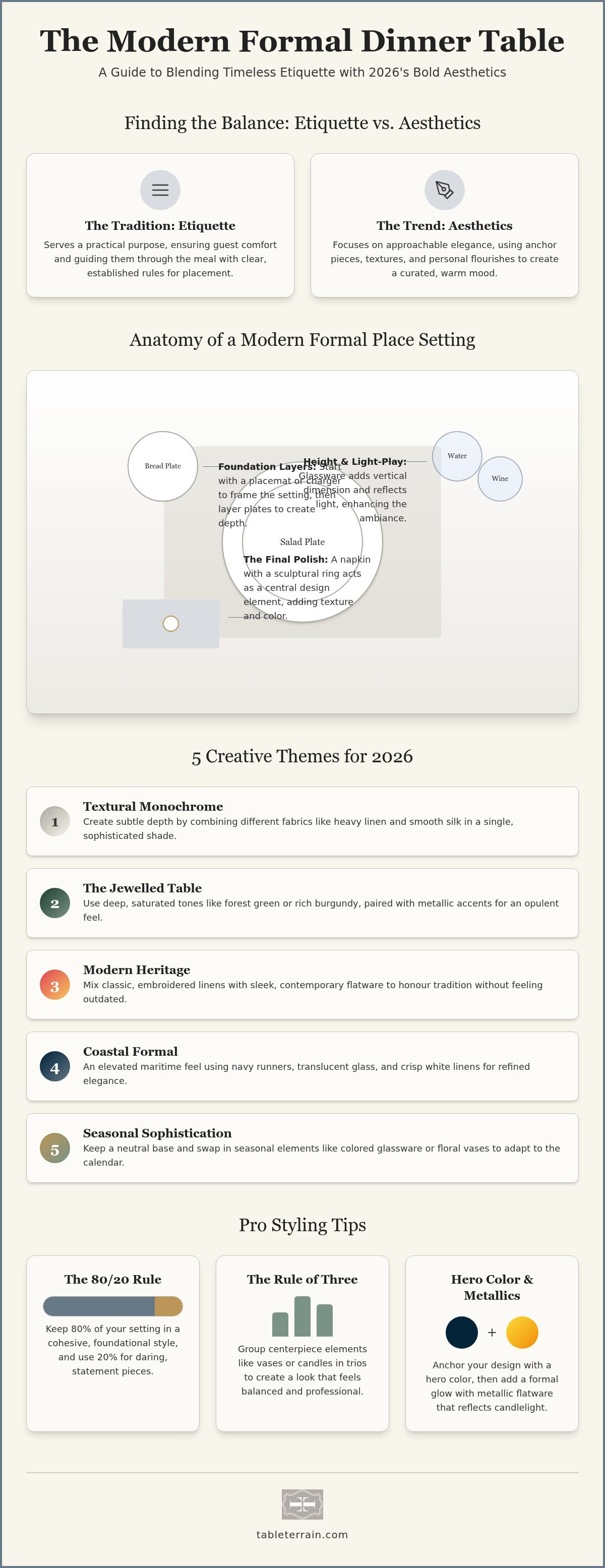
A truly memorable evening starts long before the first course is served. It begins with the visual impact of your arrangement. Modern formality isn't just about following rigid rules; it's about intentionality, symmetry, and the tactile pleasure of premium materials. Today's formal dinner table setting ideas focus on creating a sense of occasion while making guests feel completely at ease. A modern formal tablescape is a thoughtful blend of functional placement and artistic layering. It's about using the right tools to set a mood that feels curated rather than stiff.
Etiquette vs. Aesthetics: Finding the Balance
Some might think etiquette is old-fashioned, but it serves a practical purpose. The technical placement of flatware ensures guest comfort by guiding them through the meal. You don't want your friends guessing which fork to use for the salad. However, 2026 has ushered in a shift toward approachable elegance. We're seeing a departure from the cold, high-end luxury of the past. Instead, hosts are using "anchor pieces" like oversized placemats or chargers to frame each seat. These elements create a clear boundary for the setting and provide a stage for your dinnerware. By understanding various table setting styles, you can decide when to stick to the classics and when to introduce a personal flourish.
The Essential Components of the Formal Place Setting
Building your setting requires a clear hierarchy of pieces. Start with your foundation layer. This could be a crisp linen tablecloth or a structured runner that adds architectural lines to the table. Next, layer your plates to create depth. A standard formal setting typically includes:
- The dinner plate as the primary foundation.
- A salad plate or soup bowl stacked neatly on top.
- A bread plate placed to the upper left of the main setting.
Glassware is where you add height and light-play. A full service requires both water goblets and specific wine glasses tailored to your pairings. Don't overlook the napkin. In a modern setting, it acts as a central design element. Whether it's draped elegantly under a plate or secured with a sculptural napkin ring, it adds the final touch of texture that brings the entire look together. It's these small, deliberate choices that transform a simple meal into a sophisticated event.
5 Creative Themes for Your Next Formal Dinner
Traditional hosting often defaults to a sterile, all-white palette. To truly elevate your gathering, explore formal dinner table setting ideas that embrace depth and character. 2026 is the year of the modern maximalist. This approach values layers and bold choices to create a welcoming atmosphere. Your table should tell a story. It should move beyond generic layouts to reflect your unique personal taste.
- Textural Monochrome: Combine different fabrics like heavy linen and smooth silk in a single shade. This creates a sophisticated, subtle depth.
- The Jewelled Table: Use deep forest greens or rich burgundies. These saturated tones feel opulent when paired with metallic accents.
- Modern Heritage: Mix classic, embroidered linens with sleek, contemporary flatware. It's a perfect way to honour tradition without feeling outdated.
- Coastal Formal: Move beyond the beach. Use elevated navy runners, translucent glass goblets, and crisp white linens for a refined maritime feel.
- Seasonal Sophistication: Keep your base neutral. Swap in seasonal vases or coloured glassware to adapt to the calendar.
The Power of a Colour Palette
Start with one hero colour to anchor your design. If you choose a deep navy, carry that hue through your linens and wine glasses. This creates a cohesive visual thread. Use metallic flatware to add a formal glow to the table. Metals reflect candlelight beautifully; they provide a warm shimmer that makes your table feel special. Balance these bold, saturated colours with neutral runners or placemats. This technique prevents visual clutter and ensures your hero elements truly shine. For your centrepiece, apply the rule of three. Grouping vases or containers in trios creates a balanced, curated look that feels professional yet effortless.
Mixing Styles Without Clashing
Successful styling relies on the 80/20 rule. Keep 80% of your setting in a cohesive, foundational style. Use the final 20% for daring statement pieces. Try pairing vintage-inspired goblets with minimalist modern plates. This contrast creates interest and invites conversation. A well-chosen napkin ring acts as the glue for your design. It bridges the gap between different patterns and eras, acting like a piece of jewellery for your linens. These small choices are the secret to a professional finish. By focusing on these refined details, you can mix eras and materials with total confidence. Your table will feel like a unique composition rather than a matched set.
Mastering the Layered Look: Linens, Runners, and Placemats
A sophisticated tablescape is built from the bottom up. While technical placement is vital, the true secret to professional-level formal dinner table setting ideas lies in the art of the layer. Think of your tablecloth as the canvas for your design. It provides a clean, unified background that allows your finer details to pop. Choosing the right table linens is essential for setting the tone; a heavy, high-quality fabric immediately signals that the evening is a special occasion.
Table runners are your best tool for adding architectural lines to a setting. They break up the expanse of a large table and draw the eye toward the centre. For a modern twist, consider choosing a runner that offers a tactile contrast to your tablecloth. If your cloth is a smooth, fine cotton, a runner with a visible weave or subtle metallic thread adds instant visual depth. This layering technique prevents the setting from looking flat or one-dimensional.
Layering Runners for Visual Depth
There are several ways to style a runner beyond the traditional vertical path. For more intimate formal dinners, try placing shorter runners horizontally across the table to connect pairs of guests. This creates a shared zone that feels personal and curated. Runners also serve a functional purpose by framing your centrepiece and glassware. They provide a designated stage for your vases and containers; this ensures your decor feels integrated rather than just placed on the surface.
Placemats as a Formal Foundation
In 2026, many hosts are choosing premium placemats over a full cloth for a look that feels modern yet strictly formal. The key is to select high-quality materials. Look for woven textures or fine linens that feel substantial underhand. To achieve a truly pro look, layer a charger plate directly on top of your placemat. This creates a tiered effect that adds weight and importance to each seat. Maintaining symmetry is crucial here. Use precise placement to ensure every setting is perfectly aligned across the table. This disciplined approach to geometry is what separates a casual meal from a sophisticated formal gathering. It shows your guests that every detail has been considered with their experience in mind.
The Final Polish: Napkin Rings, Glassware, and Flatware
Once you have established your foundation and layered your linens, it's time to focus on the intricate details. These small elements act as the final polish for your arrangement. They transform a beautiful table into a truly professional tablescape. A statement napkin ring acts as a tactile, artistic focal point that signals the start of the dining experience for each guest. It's the first thing they touch; it sets the standard for the quality of the evening.
Styling Napkin Rings Like a Pro
Think of your napkin rings as the jewellery of your table. Just as a necklace completes an outfit, a ring completes a place setting. You can choose a classic roll for a timeless, structured look, or experiment with a sculptural fold to add height and drama. The material you select should echo your overall theme. Textured metals bring a modern shimmer, while carved stone or light woods add an organic, grounded feel. Coordinating these materials with your flatware creates a seamless transition across the plate. If you are using brushed gold cutlery, a matching metallic ring ensures a cohesive finish that feels intentional.
Elevating the Glassware Experience
Glassware provides the necessary height to balance the horizontal lines of your linens. It also plays a vital role in light-play; the way crystal or tinted glass catches candlelight adds a magical dimension to the room. Water goblets are a non-negotiable requirement for a truly formal table. They provide a sense of weight and importance that standard tumblers lack. For a contemporary touch, try mixing clear wine glasses with textured or tinted goblets. This breaks up the uniformity and adds a pop of personality. We often suggest using green goblets to introduce a nature-inspired accent that works beautifully with both neutral and bold palettes.
The key to successful formal dinner table setting ideas is ensuring every element speaks the same language. Your flatware should complement the weight of your linens. If you have chosen heavy, artisanal napkins, pair them with substantial, well-balanced cutlery. These small details might seem minor, but they are what guests remember. You can find everything you need to perfect these details by browsing the curated selection at Table Terrain.
How to Implement Your Formal Table Setting Plan
Turning your vision into reality requires a methodical approach. It's one thing to have great formal dinner table setting ideas, but execution is where the magic happens. Start by defining your theme and core colour palette. Whether you've chosen a moody jewel-toned aesthetic or a crisp textural monochrome, having a clear direction prevents last-minute styling fatigue. Once your vision is set, lay your foundation linens. Ensure your tablecloth or runner is perfectly centred. This provides the structural grid for everything that follows.
Building the setting should feel like an intentional layering process. Follow these steps for a flawless result:
- Build from the charger up: Use the charger as the anchor for each guest and stack plates with precision.
- Place glassware and flatware: Arrange these according to course order, working from the outside in.
- Finalise with details: Add your chosen napkin rings and a low-profile centrepiece.
A low arrangement is essential. It ensures that the decor never obstructs the view of the person sitting opposite. This keeps the focus on the meal and the company.
The Night-Before Checklist
Preparation is the key to a stress-free evening. Iron your linens the night before to ensure a crisp, professional finish that catches the light beautifully. Take a moment to polish your glassware and flatware with a lint-free cloth to remove any lingering water spots. Setting the table early allows you to step back and make creative adjustments. You might find that a goblet needs shifting or a runner needs a slight tuck to look its best. This extra time allows you to perfect the symmetry that defines a formal setting.
Personalizing the Guest Experience
Small, thoughtful details make your guests feel truly seen. Use place cards that match the weight and style of your linens to guide people to their seats. You can add a small sprig of fresh greenery, like rosemary or eucalyptus, to the napkin ring for a natural touch. This adds a subtle fragrance and a pop of organic colour to the setting. Most importantly, ensure your centrepiece is low enough to encourage cross-table conversation. A formal dinner is ultimately about the art of gathering. Your design should always support the flow of connection while maintaining an atmosphere of sophisticated elegance.
Design Your Signature Hosting Style
Creating a memorable event is about more than just following tradition. It's about using intentional layers and curated textures to tell your own story. You now have the tools to master formal dinner table setting ideas that feel modern, inviting, and professional. By focusing on the art of the layer with premium linens and adding the final polish with sculptural accessories, you can transform any meal into a sophisticated occasion. Remember that symmetry and high-quality materials are your best allies in alleviating hosting stress.
Our design experts have done the hard work of selection so you don't have to. You can find high-quality linens and unique accessories designed specifically for effortless hosting. Explore the Table Terrain collection to find your perfect formal accents and start planning your next stunning tablescape today. Hosting a formal dinner is a beautiful opportunity to connect with those you value most. With a clear plan and a few curated pieces, you're ready to welcome your guests with effortless grace and style.
Frequently Asked Questions
What is the difference between a formal and informal table setting?
A formal setting is defined by intentionality, symmetry, and a complete set of service pieces for every course. You will typically see a charger plate, multiple wine glasses, and a full suite of flatware. Informal settings are more relaxed, often omitting the bread plate or specific dessert spoons. While both styles benefit from beautiful linens, the formal approach requires a disciplined adherence to geometry and a higher count of specialised glassware.
Where should the napkin be placed in a formal setting?
You can place the napkin in three traditional locations: to the left of the forks, directly on the dinner plate, or tucked under the forks. In modern formal dinner table setting ideas, placing a folded napkin in the centre of the plate is the most popular choice. This allows you to showcase a sculptural napkin ring as a central design element. Ensure the fold is crisp and the placement is consistent across every seat.
Do I need a tablecloth for a formal dinner?
You don't strictly need a full tablecloth to achieve a formal look in 2026. While a crisp linen cloth is the traditional choice, many modern hosts prefer layering a high-end runner or premium placemats over a polished wood or stone table. This approach feels more contemporary and less stuffy. If you choose to skip the cloth, ensure your placemats are made from substantial materials like fine linen or woven textures to maintain a sophisticated atmosphere.
How many wine glasses should be on a formal table?
A standard formal table typically features two to three wine glasses alongside a dedicated water goblet. You should provide a specific glass for each wine you intend to serve, such as a large-bowled glass for red and a narrower one for white. Arrange them in a diagonal line or a small cluster to the upper right of the plate. This variety adds height and beautiful light-play to your overall design.
Can I mix different styles of flatware on a formal table?
You can certainly mix flatware styles if the combination feels intentional rather than accidental. A popular modern technique is pairing vintage-inspired pieces with minimalist contemporary designs. Use the 80/20 rule to maintain harmony: keep 80% of the setting cohesive and use 20% for statement accents. For instance, you might use a modern main set but introduce ornate dessert spoons to add a layer of historical charm and visual interest.
What is the proper height for a formal table centrepiece?
Your centrepiece should either be lower than 30 centimetres or tall enough that the arrangement begins above eye level. Most hosts find that a low-profile design is the most practical choice for encouraging cross-table conversation. It ensures that guests can see one another clearly without leaning around tall vases. If you prefer a larger display, use slender stands that don't block the line of sight between your guests.
How far should the flatware be from the edge of the table?
Every piece of flatware should be placed approximately 2.5 centimetres from the edge of the table. Align the bottom handles of your forks, knives, and spoons in a perfectly straight horizontal line. This precise spacing creates the sense of order and discipline that defines a professional tablescape. Use your thumb as a quick guide to ensure the distance is consistent for every guest around the entire table.
Are placemats acceptable for a formal wedding or dinner party?
Placemats are absolutely acceptable for formal events when they are made from premium, high-quality materials. In fact, many formal dinner table setting ideas feature structured placemats to create a clean, architectural look at each seat. To keep the vibe sophisticated, avoid casual plastic or thin cotton mats. Instead, choose thick linens or woven textures that provide a substantial foundation for your plates and add a tactile element to the design.