


What if the most memorable part of your holiday dinner isn't the turkey, but the atmosphere you create around it? We've all sat at tables where a towering floral arrangement forces guests to play peek-a-boo just to have a conversation. Or perhaps you've felt stuck in a sea of generic orange pumpkins and brown felt leaves. Designing an elegant thanksgiving centerpiece shouldn't feel like a chore or a compromise. You want a setting that reflects your personal style while honoring the warmth of the season.
It's time to move beyond the tropes and embrace a more sophisticated approach to holiday hosting. Rich textures. Muted metallics. A sense of curated ease. This guide will show you how to anchor your table with a centerpiece that balances seasonal warmth with high-end designer appeal. You'll learn the expert rules for layering linens, choosing the right vases, and selecting flatware that complements your vision. We'll explore how to transition your decor from casual afternoon appetizers to a formal dinner setting with ease. Discover how to create a cohesive tablescape that wows your guests without ever blocking their view.
Key Takeaways
- Define a clear focal point to anchor your table while maintaining a sense of curated sophistication.
- Choose between modern minimalist or lush abundance aesthetics to match your specific hosting style.
- Learn the professional techniques for layering linens and glass to create an elegant thanksgiving centerpiece that feels rich and multi-dimensional.
- Apply the "12-Inch Rule" to ensure your decor height never blocks guest views or interrupts the flow of conversation.
- Discover how to pair curated vases with designer flatware for a cohesive finish that carries through the entire meal.
The Anatomy of an Elegant Thanksgiving Centerpiece
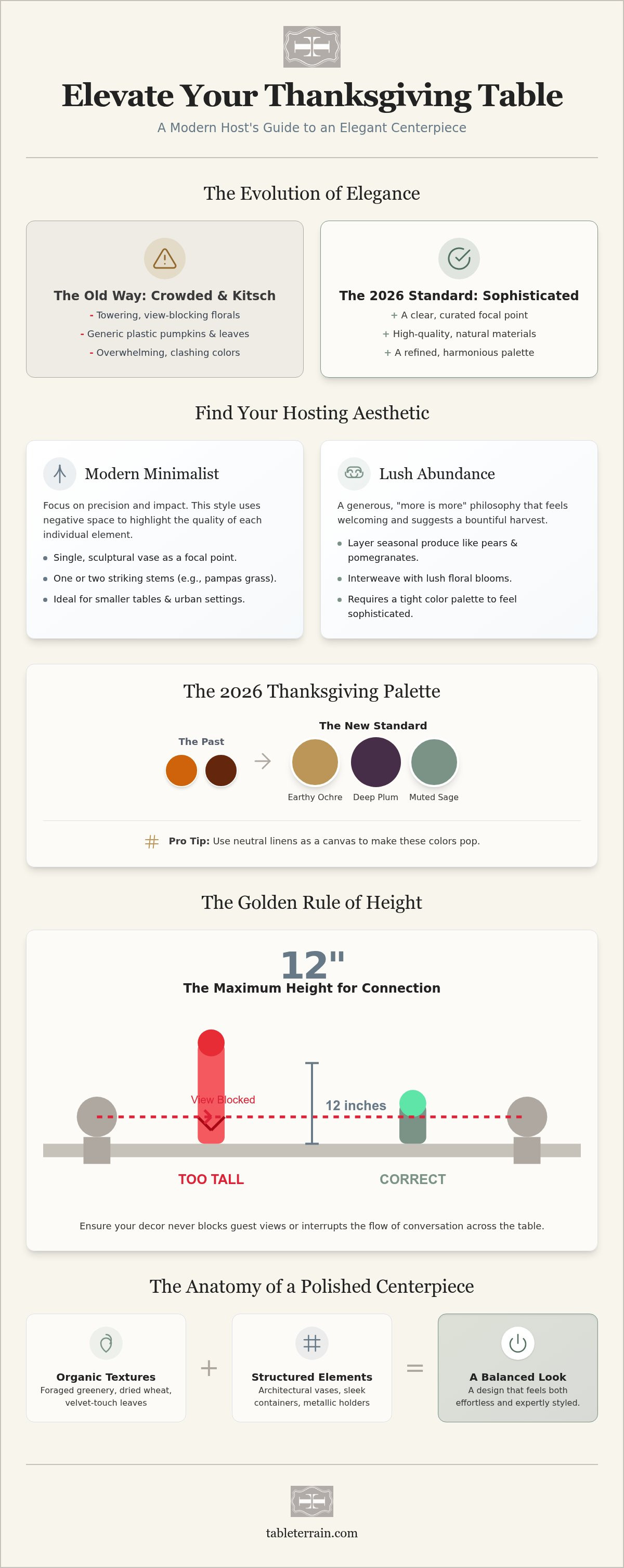
Elegance in 2026 is defined by restraint and curation. It's a departure from the crowded, kitschy tables of the past. Today, a sophisticated host focuses on a few high-quality pieces rather than a mountain of plastic pumpkins. Understanding The Anatomy of an Elegant Thanksgiving Centerpiece starts with recognizing its role as a visual anchor. It should draw the eye without overwhelming the table or blocking the person sitting across from you. Your centerpiece must act as a bridge between your seasonal menu and your guest list, reflecting the level of formality you've planned for the evening.
A successful elegant thanksgiving centerpiece balances raw, organic textures with refined materials like glass and metal. This contrast creates visual interest. Think of a sleek glass vase holding wild, architectural branches. The structure of the container provides a necessary boundary for the natural elements. This prevents the decor from looking messy or unkempt. When you pair these elements with designer flatware and premium linens, the entire tablescape feels intentional and polished. It's about selecting individual pieces that tell a story of craftsmanship and hospitality.
Organic vs. Structured Elements
Mixing foraged greenery with professional arrangements is a hallmark of modern design. You don't need a perfectly symmetrical bouquet to achieve a high-end look. Incorporate living textures like velvet-touch leaves or dried wheat to bring in seasonal warmth. Use architectural vases and containers to provide a sturdy frame for these wilder shapes. This structure keeps the table organized while allowing the natural beauty of the foliage to shine. It's a simple way to create a look that feels both effortless and expertly styled. Professional styling often relies on these subtle contrasts between the wild and the refined.
The 2026 Thanksgiving Color Palette
The traditional orange and brown trope is evolving into a more nuanced palette. For 2026, there's a shift toward earthy ochre, deep plum, and muted sage green. These tones feel sophisticated and grounding. Use neutral runners and placemats as a canvas for your design. This allows a vibrant arrangement to pop without clashing with your table linens. You can integrate metallic accents through your flatware and candle holders to add a layer of light and luxury. This approach ensures your table feels festive but remains firmly rooted in modern elegance. Consider these specific color shifts:
- Earthy Ochre: A sophisticated alternative to bright yellow, offering a golden, harvested feel.
- Deep Plum: Provides a rich, moody contrast to lighter linens and glassware.
- Muted Sage: Acts as a natural neutral that bridges the gap between floral elements and table settings.
Choosing Your Thanksgiving Design Aesthetic
Selecting a specific theme is the first step toward a professional result. It prevents the table from feeling like a collection of random objects. When choosing your Thanksgiving design aesthetic, consider the architecture of your home and the mood of your gathering. An elegant thanksgiving centerpiece should feel like a natural extension of your dining room's existing personality. Whether you crave the clean lines of a city loft or the lush warmth of a countryside manor, your choice sets the tone for the entire evening.
The Modern Minimalist Approach
Minimalism isn't about absence. It's about precision. Start with a single, sculptural vase as your primary focus. Choose one or two striking stems, like a dried magnolia branch or a few stalks of pampas grass. This creates a high-impact look without cluttering the surface. Negative space is your ally. It allows the beauty of your table runner and the quality of your sleek, modern flatware to stand out. This style works exceptionally well for smaller tables where every inch of space is valuable. It feels intentional, curated, and effortlessly cool.
If you prefer a richer look, Autumn Abundance offers a "more is more" philosophy. Layer seasonal produce like artichokes, pears, and pomegranates directly onto a linen runner. Interweave these with lush floral blooms in earthy tones. This approach feels generous and welcoming. It suggests a bountiful harvest and encourages guests to linger over their meal. To keep it sophisticated, stick to a tight color palette to avoid a messy appearance.
Creating a Moody Luxe Atmosphere
Dramatic settings are perfect for late-afternoon dinners that stretch into the evening. Pair deep plum or charcoal linens with polished gold or brass accents. The lighting is critical here. Use tapered candles in varying heights to create a rhythmic dance of shadows across the table. Colored glassware adds a layer of depth that clear glass cannot match. Incorporating jewel-toned green goblets can transform the perception of your entire centerpiece. It catches the candlelight and adds a sophisticated pop of color. This aesthetic is all about intimacy and luxury.
For a lighter, airier feel, Coastal Harvest blends light woods with sea-grass textures. Use airy greenery like eucalyptus or olive branches. This aesthetic feels fresh and modern. It's a great choice if you want to avoid the traditional heaviness of holiday decor. You can explore our curated collection of vases and containers to find the perfect foundation for any of these styles.
Layering Textures: The Foundation of the Tablescape
Think of your dining table as a landscape. An elegant thanksgiving centerpiece shouldn't sit in isolation on a bare surface. It needs a foundation to anchor its presence and provide visual context. Many hosts make the mistake of treating the centerpiece as an island, but a truly sophisticated setting relies on the "terrain" beneath it. This is where layering textures becomes vital. By mixing materials like soft linen, cool glass, and warm wood, you create a multi-dimensional look that feels rich and intentional. A crisp linen runner provides a tactile contrast to a smooth glass vase or polished designer flatware, adding immediate depth to your design.
Creating depth also requires a thoughtful approach to height and scale. Don't simply line objects up on a flat plane. Use small risers or vary your container sizes to draw the eye upward and keep the arrangement dynamic. The "touch" factor is just as important as the visual appeal. Your table linens should feel as good as they look, inviting guests to settle in and get comfortable. High-quality fabrics signal that the meal is a special occasion worth savoring. When you understand how these elements interact, your centerpiece stops being a standalone object and starts being the heart of a curated experience.
The Essential Role of Table Runners
A runner acts as the stage for your decor. It defines the boundaries for your elegant thanksgiving centerpiece and protects your table's surface. For long, rectangular tables, a centered runner creates a classic, linear flow that guides the eye. If you're hosting a larger group, consider cross-table runners. These act as shared placemats and break up the visual weight of a long table. Always match your runner material to the overall vibe of your theme. A heavy, textured jute runner suits a rustic "Autumn Abundance" look, while a smooth, neutral linen fits a modern minimalist aesthetic perfectly.
Napkin Rings and Linens as Supporting Decor
Small details often make the biggest impact. Your napkin rings should echo the textures found in your centerpiece. If you've chosen brass candle holders, select metallic rings to tie the look together. Color-coordinate your napkins with the primary floral tones in your arrangement to create a sense of harmony. Professional stylists know that ironed linens are a non-negotiable step for achieving a polished finish. Wrinkles distract from the beauty of your curated pieces. Understanding the evolution of historic decorations for the table can inspire you when Curating the Final Look with Table Terrain, ensuring every fold and finish contributes to a timeless atmosphere.
Proportional Styling: Size, Scale, and Sightlines
Proportion is the technical foundation that separates a designer setting from a cluttered one. The 12-Inch Rule is your most important guideline. Keep your elegant thanksgiving centerpiece below twelve inches in height. This ensures guests can maintain eye contact and conversation without peering through a forest of foliage. Beyond height, you must manage the footprint of your decor. A table that is too crowded feels stressful for guests. Always leave enough "breathing room" for heavy serving platters and your curated wine glasses. Visual harmony often relies on the Rule of Three. Grouping your decor in odd numbers creates a natural rhythm that feels organic and sophisticated.
Centerpieces for Long Rectangular Tables
Rectangular tables require a layout that spans the length of the surface without creating a literal wall. The "trough" style is a popular choice. It involves creating a continuous line of decor down the center of the table. To prevent this from looking monotonous, break the line into three distinct clusters of interest. This technique allows the eye to travel and rest, while also providing practical spaces for salt cellars or butter dishes. You can incorporate modern table decor ideas like scattering miniature white pumpkins or polished acorns between your primary vases. This fills the gaps with texture while maintaining a high-end, intentional look.
Designing for Round and Square Tables
Round and square tables demand a 360-degree design approach. Every guest should have a perfect view, regardless of where they are seated. There is no "back" to these arrangements. Use circular flow to your advantage. Round placemats and curved vases help soften the architectural lines of a square dining room. For these shapes, focus on a singular, high-impact vertical element in the dead center. This creates a powerful focal point that anchors the entire room. It's about maximizing visual impact within a concentrated space without hogging the surface area needed for goblets and flatware.
Mastering scale is the secret to a professional tablescape. If you are ready to find the perfect anchor for your holiday meal, explore our collection of curated vases and containers to find the ideal size for your table shape.
Curating the Final Look with Table Terrain
The final stage of styling is where your vision becomes a reality. You've mastered the rules of proportion and selected your aesthetic; now you must choose the individual pieces that will carry the weight of the design. At Table Terrain, we believe the vase is the structural heart of any elegant thanksgiving centerpiece. A sculptural container doesn't just hold flowers. It dictates the movement and height of your entire table. Whether you choose a sleek, modern container or a more traditional vessel, ensure it complements the "terrain" of your runner and placemats. This cohesion creates a professional, designer-led atmosphere that feels curated rather than cluttered.
Completing the look requires a shift in focus from the center of the table to the individual place settings. Your designer flatware and premium serving items should feel like an extension of the centerpiece itself. This is the secret to a "tablescape in a box" feel. Every fork, knife, and serving spoon should share a common design language with your vases and containers. When these elements align, the transition from the decorative center to the functional dining area is seamless. It's about achieving aesthetic harmony through every layer of the experience.
Elevating the Center with Glassware
Glassware is often the most overlooked element of a centerpiece. However, height and color often come from your goblets and wine glasses rather than the flowers themselves. Most elegant table settings use glassware to catch and reflect candlelight, adding a rhythmic sparkle to the dinner. Mix wine glasses with taller water goblets to create a tiered visual effect around your floral arrangement. If your centerpiece features deep plum or sage green, choose glassware in complementary tones to pull the color palette across the entire surface. This technique adds a layer of sophistication that clear glass simply cannot provide.
The Finishing Touch: Flatware and Serving Items
Your serving items must be functional, but they shouldn't disrupt the flow of your decor. Place larger serving platters at the ends of the table or integrated into the clusters of your centerpiece. You can even use decorative bowls as functional parts of the arrangement, filling them with seasonal fruit or nuts that guests can enjoy between courses. Before your guests arrive, run through this final styling checklist to ensure every detail is in place:
- The Foundation: Ensure your runner is centered and your placemats are aligned.
- The Heart: Position your primary vases and check that they follow the 12-inch rule.
- The Layers: Distribute smaller accents like scattered gourds or candles.
- The Frame: Set your designer flatware and polish your glassware to remove any prints.
- The Detail: Slide your ironed napkins into their rings and place them precisely.
By following these steps, you create a setting that is both beautiful and welcoming. Your table is now ready to transition from a visual masterpiece to the site of a memorable holiday meal.
Elevate Your Holiday Hosting
Creating a memorable holiday table is about more than just the food. It's about the intentional layers you build from the runner up to the final floral stem. By following the 12-inch rule for sightlines and embracing a curated color palette, you ensure your guests feel both wowed and comfortable. Remember that your centerpiece is the heart of the table, but it relies on the textures of your linens and the sparkle of your glassware to truly shine. You've learned how to balance organic elements with structured design to create a look that is both timeless and modern.
Designing an elegant thanksgiving centerpiece is now within your reach. You don't need to be a professional stylist to achieve a high-end look; you just need the right tools. We've done the hard work of selection so you can focus on the joy of gathering. Ready to transform your dining room? Shop Table Terrain's curated collection of linens and vases to build your perfect centerpiece. From high-quality designer flatware to our premium selection of vases, we offer everything you need with national shipping for all your holiday essentials. Happy hosting. Your perfect table is waiting.
Frequently Asked Questions
How tall should a Thanksgiving centerpiece be?
Keep your centerpiece under 12 inches to maintain clear sightlines across the table. This height ensures guests can converse easily without dodging branches or flowers. If you prefer a taller element, use a narrow, sculptural vase that doesn't block the visual field. Always test the height by sitting in a chair before your guests arrive to ensure the view remains unobstructed.
Can I use artificial flowers for an elegant centerpiece?
High-quality artificial stems are an excellent choice for a long-lasting elegant thanksgiving centerpiece. Look for "real-touch" textures or preserved elements like dried eucalyptus and wheat to avoid a plastic look. Mixing high-end faux greenery with a few fresh focal blooms creates a lush, realistic appearance. This strategy allows you to prep your table days in advance without worrying about wilting.
How do I coordinate my centerpiece with my existing table linens?
Identify the primary undertone of your linens, whether it's a warm cream or a cool slate. Choose floral colors or containers that either match these tones or provide a deliberate, sophisticated contrast. If your linens are patterned, keep the centerpiece simple and monochromatic. For neutral runners, use vibrant seasonal produce or colorful glass goblets to add a necessary pop of visual energy.
What are the best non-floral centerpiece ideas for Thanksgiving?
Layered seasonal produce like artichokes, pomegranates, and pears offers a sophisticated, bountiful look. You can also use architectural branches, polished acorns, or a curated collection of varying candle heights. These elements provide rich texture and a sense of abundance without the need for traditional bouquets. Arrange these items directly on a linen runner for a modern, grounded aesthetic that feels fresh and unexpected.
How do I make a small table look elegant for the holidays?
Focus on a single, high-impact statement piece rather than multiple small items. A singular architectural vase with one or two striking stems creates a minimalist focal point that doesn't hog valuable surface area. Use sleek flatware and premium napkins to elevate the setting without adding physical bulk. This approach emphasizes quality over quantity, making a compact space feel curated and intentional rather than crowded.
What is the best way to incorporate candles into a centerpiece safely?
Use flameless LED candles to achieve a warm glow without the risk of fire, especially near dried foliage or linens. If you prefer real wax, place tapered candles in sturdy, heavy-based holders to prevent tipping. Ensure all flames are kept at least six inches away from flammable materials like faux leaves or wooden decor. Hurricane glass sleeves provide an extra layer of protection while reflecting the light beautifully.
How many items should be in a centerpiece grouping?
Follow the Rule of Three by grouping items in odd numbers to create visual balance. Three distinct clusters or five staggered vases often look more organic and professional than even pairings. Vary the heights and textures within these groups to add depth. This technique prevents the arrangement from looking too symmetrical or stiff, giving your elegant thanksgiving centerpiece a more natural and artistic flow.