


Why does a professionally designed table feel like a work of art while yours feels like a collection of random objects? It’s a common frustration for even the most dedicated hosts. You’ve gathered beautiful linens and glassware, yet the final result often lacks that elusive spark of sophistication. Mixing patterns feels risky; the fear of creating a cluttered mess usually leads to a setting that feels flat or uninspired.
Hosting shouldn't feel like a high-stakes design test. We believe that mastering stunning table scapes is about the intentional layering of textures to create a sensory narrative. This 2026 guide reveals the professional secrets to turning every meal into a memorable gathering. You'll gain the confidence to mix materials like a seasoned stylist while keeping your aesthetic clean and cohesive.
We’ll provide a clear framework for layering textures and a curated list of essential items, from premium napkin rings to designer wine glasses, that work for any occasion. Prepare to transform your dining room into a space that feels both aspirational and deeply inviting. Let's simplify the art of the gathering together.
Key Takeaways
- Understand the core difference between a standard setup and an intentional tablescape to elevate your hosting from functional to artistic.
- Identify the essential foundation pieces, like premium linens and napkin rings, that serve as the elegant jewelry for your dining experience.
- Master professional layering techniques and the Rule of Three to design breathtaking table scapes that feature depth and visual harmony.
- Learn how to adapt your aesthetic for any occasion, from clean minimalist lines to festive seasonal themes that avoid kitschy clutter.
- Discover the benefits of building a curated collection of individual pieces to create a signature hosting style that's uniquely yours.
What is a Tablescape? Defining the Art of Intentional Gathering
A standard table setting tells your guests where to sit. A tablescape tells them how to feel. This distinction is the heartbeat of modern hospitality. While a basic arrangement focuses on utility, curated table scapes prioritize the sensory experience of the gathering. It's the difference between simply serving a meal and hosting an event. An intentional table uses layers, height, and texture to tell a story. It transforms a flat surface into a landscape of color and craftsmanship. When you approach your dining table as a canvas, you elevate the entire atmosphere of your home.
The psychological impact of a beautiful table is profound. It serves as a visual welcome that immediately lowers the collective blood pressure of the room. A thoughtful arrangement signals that the evening is special. It tells your guests that you’ve invested time in their comfort and enjoyment. This intentionality sets a tone of warmth and sophistication before the first appetizer is even served. By focusing on the "scape" rather than just the "setting," you create a space where guests feel truly seen and celebrated.
The Evolution of the Modern Table
In 2026, hosting has shifted away from rigid, formal rules toward a more personal form of self-expression. We’ve moved past the era where every fork had a singular, terrifying purpose. Today, The Art of Tablescaping is about blending heritage with contemporary style. Social media has certainly raised the bar for visual standards, but it’s also democratized high-end design. You don't need a butler to create a breathtaking scene. You simply need a clear vision and a few well-chosen pieces that reflect your personality. Modern table scapes are less about following a manual and more about creating a mood that feels both aspirational and achievable.
Why Design Matters: The Host's Perspective
Preparation is the ultimate antidote to hosting anxiety. When your table is set hours before the first guest arrives, you reclaim your role as the life of the party. A well-designed scape does more than just look pretty; it acts as a silent host. It serves as an immediate conversation starter, breaking the ice before the first course is even served. More importantly, it makes people feel valued. Seeing a table layered with premium linens and sparkling wine glasses creates an immediate "wow" factor. It suggests that the meal to follow is worth the wait. By focusing on intentional design, you turn a simple dinner into a sophisticated, shared memory.
The Essential Elements of High-End Table Scapes
Building a breathtaking table requires more than just a centerpiece. It demands a curated selection of individual pieces that speak the same language. While standard settings focus on the basics, high-end table scapes rely on the quality of the materials and the precision of the details. Every element, from the weight of your flatware to the clarity of your wine glasses, contributes to a larger narrative of hospitality and style.
Think of your table as a composition. You aren't just placing items; you are layering textures to create a sensory experience. This begins with a strong foundation and ends with the small, shimmering details that make a guest feel truly special. By selecting pieces that balance function and aesthetic, you ensure your table looks as good as it performs during a long, leisurely dinner.
Linens as the Canvas
Your foundation sets the mood for the entire room. A full tablecloth offers a classic, formal feel, while a stylish table runner allows the natural beauty of your table to shine through. Consider the fabric weight. A heavy, high-quality linen feels grounded and luxurious. A lighter weave suggests a breezy, casual elegance. Don't overlook placemats. They are the secret to defining individual guest spaces, creating a sense of intimacy and order. You can explore our curated selection of premium linens to find the perfect base for your next event.
Napkin rings are the jewelry of your table. They are non-negotiable for achieving a truly polished look. A well-chosen ring adds a metallic or organic accent that pulls the entire color palette together. Pair these with designer flatware that balances weight and ergonomics. Your serving items should be just as intentional. Choose vases and containers that provide organic texture and visual interest without obstructing the view across the table.
Glassware and Goblets: Adding Light and Height
Glassware is your primary tool for introducing light and verticality. Crystal-clear wine glasses catch the evening glow, adding a layer of sophisticated sparkle to the scene. To break up a neutral palette, introduce colorful goblets. These pieces provide a bold pop of personality and essential visual depth. Keep proportions in mind. Ensure your stemware doesn't crowd the guest's space. There should always be enough room for effortless movement and conversation. Mixing different heights of glassware creates a rhythmic flow that guides the eye across the table scapes you've designed. This intentional layering turns a flat surface into a dynamic landscape of light and shadow.
Mastering the Art of Layering: Texture, Scale, and Height
Layering is the secret language of professional stylists. It’s the process of building depth through intentional contrast rather than just adding more items to the surface. When you master this art, your table scapes move from simple settings to immersive environments. The key lies in balancing three core pillars: texture, scale, and height. By focusing on how these elements interact, you create a visual rhythm that guides the guest’s eye across the table, making the entire dining experience feel more dynamic and sophisticated.
The "Rule of Three" is a foundational tool for composition. In design, items arranged in odd numbers are more appealing and memorable to the human brain. Apply this by grouping three different heights of glassware or mixing three distinct materials, such as linen, metal, and glass. This approach ensures balance without the stiffness of perfect symmetry. It allows the table to feel curated and artistic rather than manufactured.
Managing scale is equally vital for a successful gathering. A common hosting mistake is choosing a centerpiece that acts as a wall between guests. Scale should always serve the conversation. Use low-profile vases or exceptionally tall, thin containers that sit above eye level. This keeps sightlines clear while still providing the vertical interest that high-end table scapes require. Varying the height of your wine glasses and water goblets further enhances this verticality, catching the light at different levels to create a shimmering, tiered effect.
The Science of Texture
Texture provides the tactile soul of your design. Contrast is your best friend here. Try pairing the smooth, reflective surface of crystal wine glasses with the slightly irregular, rough-hewn weave of premium linen runners. This juxtaposition creates visual tension that keeps the eye engaged. You can use metallic napkin rings to add a hard, polished pop against a soft, folded napkin. Integrating a variety of textures ensures your table remains visually dynamic and prevents it from appearing flat or one-dimensional.
Depth and Dimension
Creating a professional, tiered look often involves building from the center out. Start with a runner to ground the table, then layer placemats on top to frame each guest’s individual space. This creates a clear boundary for the "jewelry" of the table: the flatware and napkins. Chargers, or decorative plates, are excellent for adding another layer of scale and color beneath your dinnerware. For a deeper dive into these techniques, explore our How to Style a Dining Table: Guide to Layered Tablescapes. By thinking in layers, you turn a flat piece of furniture into a sophisticated, three-dimensional landscape.
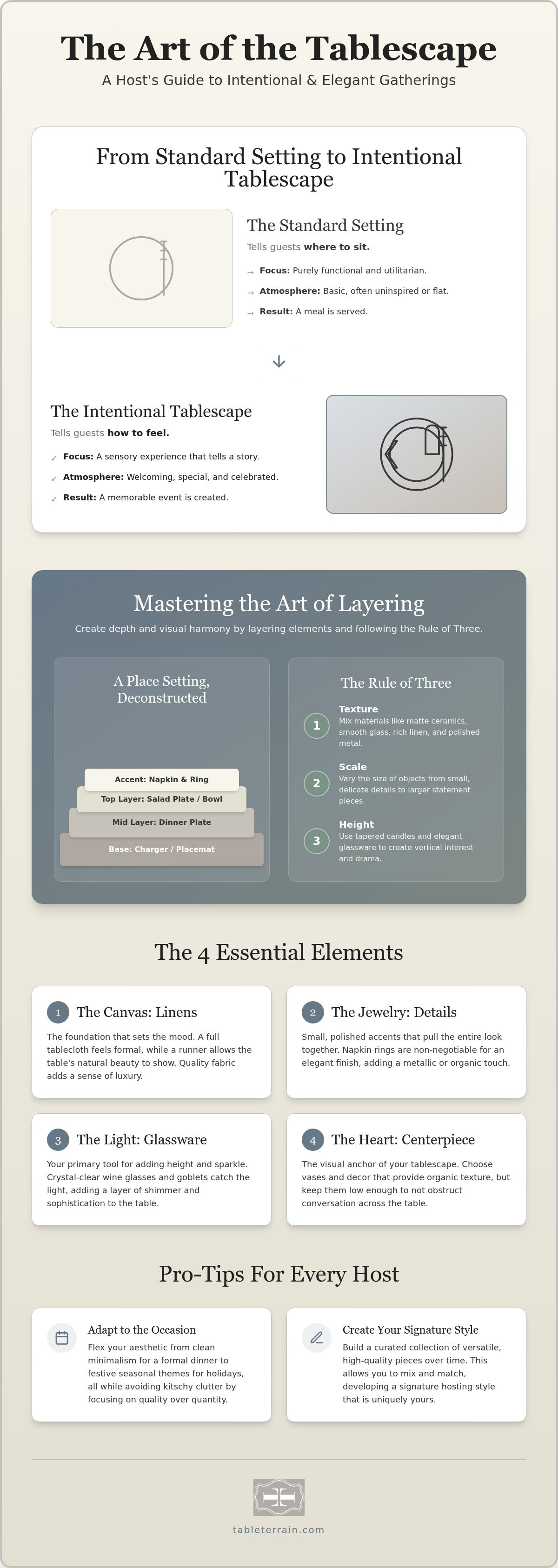
Table Scape Ideas for Every Occasion and Season
Designing table scapes is an evolving practice. It shouldn't feel like a rigid chore. Instead, view it as a way to match the energy of your home to the rhythm of the year. The most successful hosts don't start from scratch for every event. They build a versatile toolkit of high-quality pieces. These items can be reconfigured for a quiet night in or a massive holiday bash. By focusing on a few core themes, you can master any occasion with confidence. It’s about being prepared, not overwhelmed.
Modern Simplicity
Modern minimalism is about the power of the "un-cluttered" table. This look relies on high-quality basics to do the heavy lifting. Start with monochrome linens in crisp white or deep slate. Pair these with crystal-clear wine glasses to create a sense of transparency and light. For more inspiration on this stripped-back aesthetic, read our Minimalist Table Setting Ideas: The 2026 Guide to Modern Simplicity. A single, striking vase with a few architectural branches can serve as a dramatic focal point. This approach is sophisticated and efficient. It’s perfect for the host who values clean lines above all else.
Seasonal Transitions
Avoid the trap of buying holiday-specific decor that only sees the light once a year. Sophisticated seasonal design is about subtle shifts. Keep your base linens neutral and high-quality. To signal a change in season, simply swap your accessories. Use metallic napkin rings for a winter glow. Transition to organic textures for spring. Colorful goblets are another quick way to refresh the palette. Use amber glass for autumn and soft blues for summer. Incorporate versatile containers to house local, seasonal greenery. This method keeps your table scapes feeling fresh and relevant without ever leaning into kitsch. It’s a smarter, more sustainable way to host.
When styling for an intimate dinner, lean into the tactile. Guests are closer to the table. The weight of the flatware and the softness of the napkins matter more. For grand celebrations, focus on the visual sweep of the room. Repeat your patterns and textures down the length of the table. This creates a cohesive, professional look that feels intentional. Ready to curate your own signature hosting kit? Explore our collection of individual linens and glassware to find pieces that work for every season.
Creating Your Signature Setting with Table Terrain
Avoid the temptation of a "tablescape in a box." While these pre-packaged sets offer convenience, they often lack the soul and character that define a truly great host. At Table Terrain, our philosophy is rooted in making sophistication accessible through curation. We believe the most breathtaking table scapes are those built with intention over time. By selecting individual, high-quality pieces, you create a signature style that reflects your personal taste rather than a fleeting retail trend. This approach turns every meal into a unique expression of your hospitality.
Building your collection doesn't have to happen all at once. We suggest starting with a "Table Toolkit" of five foundational pieces. These items provide the maximum versatility for various themes and seasons. Every host should own a high-quality linen runner, a set of versatile napkin rings, elegant wine glasses, textured placemats, and a signature vase. These five elements allow you to experiment with different textures and heights while maintaining a consistent level of elegance. They serve as the reliable anchors for your creative vision.
The Quality Difference
Longevity is the true mark of luxury. Disposable or low-end options might seem efficient, but premium table linens endure through years of celebrations. They hold their shape and texture, becoming more familiar and beloved with every use. We also prioritize the tactile experience of dining. Our curated flatware is selected for how it feels in the hand; it should be balanced, weighted, and ergonomic. This attention to detail extends to our vases and containers. Every piece is chosen for its craftsmanship, ensuring it acts as a sturdy and beautiful focal point for your table scapes.
Start Your Tablescaping Journey
Personalization is the heart of modern hosting. You don't need to replace your entire cabinet to see a significant change. Start by mixing one or two new pieces with your existing dinnerware. A fresh set of designer wine glasses or a textured runner can completely transform the look of your table. This "mix and match" approach allows your setting to evolve as your style grows. It keeps your hosting feeling fresh and prevents your aesthetic from becoming stagnant or predictable.
We invite you to explore our shop and find the pieces that speak to your specific style. Whether you are planning an intimate dinner or a grand celebration, our collection is designed to simplify your process. We've done the hard work of selection so you can focus on the joy of the gathering. Discover the Table Terrain collection and start styling your next event. Your journey toward effortless, elegant hosting starts with a single, beautiful piece.
Elevate Your Next Gathering with Intentional Design
Transform your dining table into a sensory experience. You now have the framework to design breathtaking table scapes with confidence. Focus on the intentional layering of premium linens and the rhythmic heights of designer glassware. Remember that a curated toolkit of individual pieces is always superior to a generic set. By mastering scale and texture, you eliminate hosting anxiety and create a space where guests feel truly valued.
We're here to help you build that foundation. Our offerings are expertly curated for cohesive styling; we've done the hard work of selection for you. We use high-quality materials designed for longevity to ensure your pieces last for years. With national shipping across the United States, professional elegance is only a few clicks away. Shop the Curated Table Terrain Collection and start styling your next memorable event. Your table is a canvas for connection. Enjoy the art of the gathering.
Frequently Asked Questions
What is the difference between a table setting and a tablescape?
A table setting is functional, while a tablescape is an artistic, layered arrangement designed to create a specific mood. A setting provides the basic tools for eating. In contrast, table scapes use height, texture, and light to tell a story. Think of the setting as the functional skeleton and the scape as the fully realized, sensory environment. It’s the difference between simple utility and true hospitality.
How do I choose the right size table runner for my dining table?
Your runner should be 12 to 24 inches longer than your table to allow for a 6 to 12 inch drop on each end. For the width, aim for approximately one-third of the total table width. This proportion ensures the runner grounds the center without crowding the guest's dinnerware. Always measure your table before purchasing to guarantee a polished, professional drape that feels intentional and balanced.
What are the most important elements of a professional tablescape?
The core elements include a high-quality foundation of linens, the jewelry of napkin rings, and varied heights in glassware. Professional table scapes also rely on organic textures from vases and containers. These items work together to create visual depth and dimension. By focusing on these individual pieces, you build a cohesive look that feels curated rather than cluttered. It’s about the intentional layering of every item.
How can I create a beautiful table on a limited budget?
Focus your investment on high-impact, versatile items like premium napkin rings or designer wine glasses. You don't need a new set for every meal. Use seasonal greenery in clear vases to add organic life without high costs. Quality over quantity is the secret. A few well-chosen pieces elevate your existing plates instantly. It’s a smarter way to build a professional look without a massive financial investment.
Is it okay to mix different types of glassware and goblets on one table?
Mixing different types of glassware and goblets is encouraged to add visual depth and light to your table. Use the Rule of Three by grouping items of varying heights or colors. Clear wine glasses provide sparkle, while colorful goblets break up neutral palettes. This layering creates a rhythmic flow that makes the setting feel dynamic and professionally styled. It’s an easy way to introduce personality and sophisticated charm.
How tall should a table centerpiece be so it doesn't block conversation?
Keep centerpieces either below 12 inches or high enough that the bulk of the arrangement sits above the guests' heads. This ensures sightlines remain clear for effortless conversation. Low-profile vases are perfect for intimate gatherings. If you want drama, use tall, thin containers that provide vertical interest without acting as a visual wall. This balance allows for both beauty and easy communication throughout the evening.
What is the best way to care for high-quality table linens and napkin rings?
Wash high-quality linens in cold water on a gentle cycle and iron them while they’re still slightly damp for a crisp finish. For napkin rings, a simple wipe with a soft, dry cloth maintains their luster. Store these items in a cool, dry place away from direct sunlight. Proper care ensures your hosting toolkit remains beautiful for years. It’s a simple investment in the longevity of your favorite gathering essentials.
How do I choose a color palette for my dinner party table?
Start with a neutral base linen and add two or three accent colors inspired by the season or your menu. Consider the mood you want to create. Warm tones like amber and gold feel cozy and festive. Cool blues and greens suggest a breezy, modern elegance. Use your colorful goblets or napkins to introduce these pops of color against your grounded, sophisticated foundation for a cohesive result.