


The most important element of a memorable gathering isn't the main course or the centerpiece; it's the foundation set right beneath the plate. Many hosts treat placemats as mere crumb-catchers or practical shields against heat and spills. It's common to feel frustrated when your table decor looks purely utilitarian or fails to capture the sophisticated vision in your head. You want a setting that feels like a curated gallery. It should reflect your personal style and the warmth of your hospitality without the "cheap" look of mismatched accessories.
This guide shows you exactly how to select, style, and layer your table foundations to create a professional-grade dining experience at home. We'll explore the beauty of mixing tactile textures like organic jute with polished glass and fine linens. You'll gain the confidence to match organic shapes to your specific table type and master the art of layering with runners for a look that's both modern and inviting. Discover how to protect your surfaces while achieving a high-end aesthetic that makes every guest feel special. Let's transform your next meal into a beautifully styled event.
Key Takeaways
- Learn how to use placemats as a visual anchor to define each guest's personal space and elevate your table's architecture.
- Discover the best materials for your setting, from sophisticated premium linen to the organic, tactile appeal of woven seagrass and jute.
- Select the perfect shape for your furniture, using round or oval designs to prevent crowding on circular tables.
- Master professional layering techniques by combining base runners with individual mats to create a rich, multi-dimensional tablescape.
- Simplify your hosting prep by building a curated capsule collection of individual pieces that work across every season.
The Modern Role of Placemats in Table Design
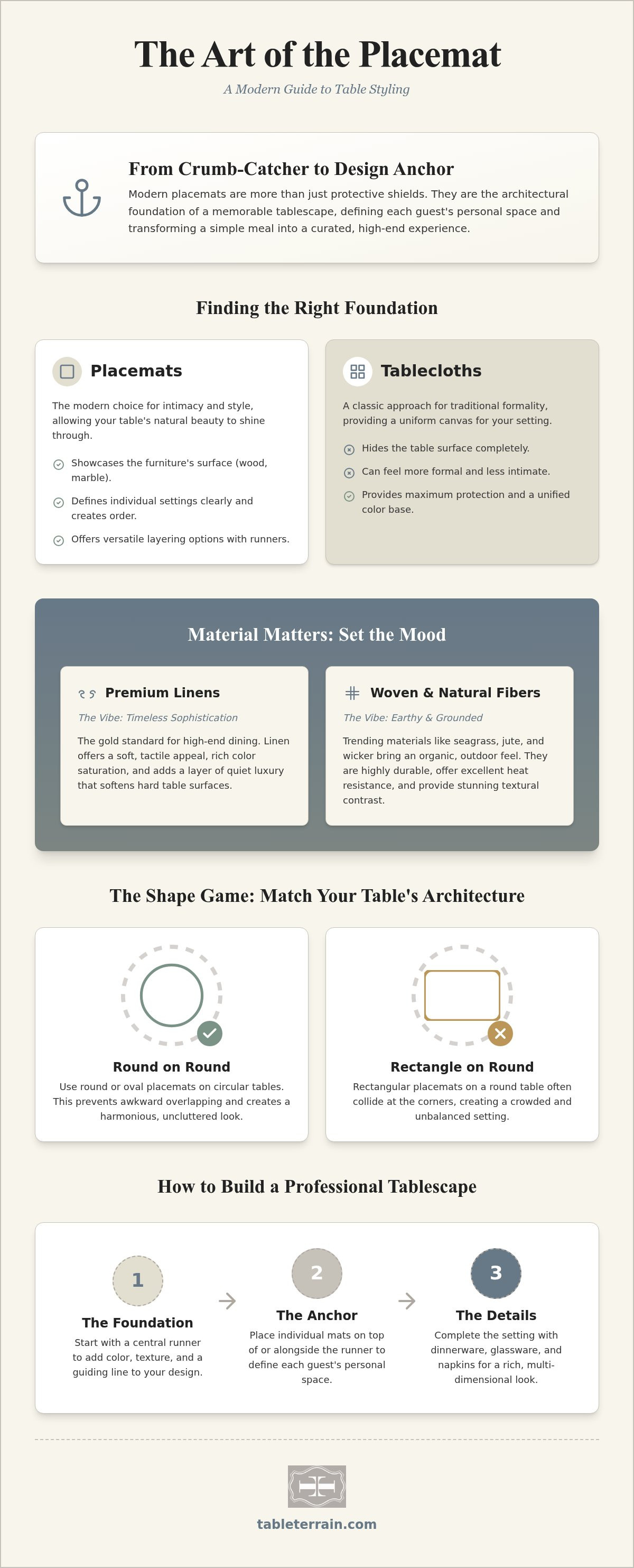
Think of your dining table as a blank stage. Every piece of flatware, every goblet, and every napkin ring needs a place to land. A placemat acts as the architectural anchor for each guest's experience. It's much more than a barrier for spills or heat. By 2026, hosting trends have shifted decisively toward curated simplicity. We now view these pieces as the canvas for your entire tablescape. They define the visual boundaries of each setting. This creates a sense of order and intentionality. Instead of a cluttered surface, your table becomes a series of framed, beautiful moments. The transition from utility to essential decor is complete. In previous decades, these items were purely functional. Now, they're the starting point for any high-end hosting plan. They allow you to play with shapes and levels to create a professional look.
Placemats vs. Tablecloths: Finding the Balance
Tablecloths offer a traditional, heavy layer of color. While classic, they often hide the natural beauty of your furniture. If you've invested in a stunning walnut or marble surface, show it off. Choose the intimacy of placemats to strike the right balance. They provide protection while letting the table's character breathe. They feel less stiff than a full drape but more polished than a bare table. Consider these styling options:
- The Minimalist Approach: Use individual mats on a bare wood table for a clean, organic feel.
- The Layered Look: Place a textured mat over a crisp linen cloth for high-formality events.
- The Modern Mix: Combine a central runner with individual mats to define the "territory" of each guest.
This layered approach is what separates a casual meal from a professionally styled event. It adds visual weight and modern sophistication without the fuss of a full-table covering.
The Psychology of a Well-Set Place
A defined setting communicates deep consideration. When a guest sits down to a clearly marked territory, they feel instantly at ease. It's a non-verbal cue that you prepared specifically for their arrival. Texture plays a vital role in this sensory experience. The tactile feel of woven fibers or smooth, premium linen influences the overall dining mood. Natural materials like jute or wood tend to ground the conversation and encourage relaxation. Rich colors or intricate patterns can spark energy and excitement. By choosing the right foundation, you aren't just setting a table; you're curating the emotional atmosphere of your entire gathering. It's about making every person at the table feel seen and welcomed.
Choosing the Right Materials: From Linen to Woven Textures
The material you choose dictates the entire energy of your meal. While some prioritize easy cleanup, a sophisticated host looks for weight, texture, and visual depth. High-quality placemats provide a stable base for your dinnerware. They prevent plates from sliding and protect delicate surfaces from heat damage. Understanding the reveals their shift from simple protective cloths to modern design statements. Heavy materials like thick cotton or cork-backed designs offer the best protection for heirloom wood tables. They absorb sound and create a focused, intimate dining environment. This weight is essential for plate stability during formal multi-course meals.
Premium Linens: Timeless Sophistication
Linen remains the gold standard for high-end dining. It offers a soft, tactile appeal that synthetic fibers simply cannot replicate. Natural flax fibers provide a rich color saturation. This ensures your table looks vibrant under warm evening light. Linen drapes beautifully and adds a layer of quiet luxury to any setting. It effectively softens the hard lines of glass or marble table tops. This creates a more inviting atmosphere for long, lingering conversations. For a truly elevated look, pair these mats with matching napkins and polished rings. You can find more styling tips in The Ultimate Guide to Table Linens and Napkin Rings.
Woven and Natural Fibers: Global Inspiration
Organic textures are the leading trend for 2026. Materials like seagrass, jute, and wicker bring a sense of the outdoors to your dining room. These fibers are incredibly durable and offer excellent heat resistance. They add an earthy, grounded feel to your tablescape. Eco-friendly materials like bamboo and recycled fibers are also gaining popularity for their sustainable appeal. Try pairing these rugged textures with delicate glassware for a striking contrast. For example, the raw edge of a jute mat looks stunning when set with green water goblets. This combination creates a fresh, globally inspired aesthetic that feels both modern and timeless.
Practicality Meets Design
Sometimes, life requires a more resilient surface. Modern synthetic and coated options have evolved far beyond the "cheap" plastic of the past. High-quality PVC woven mats or matte faux leather provide a professional look with minimal maintenance. These are ideal for daily family use or breezy outdoor gatherings. They offer a heavy weight that stays in place even in high-traffic environments. These pieces often feature sophisticated patterns that mimic natural weaves. They allow you to host with confidence, knowing spills won't ruin the foundation of your design. A curated collection allows you to swap styles based on the season or the specific mood of your event. If you are ready to start building your own set, browse our curated selection of placemats to find your perfect match.
Shape and Size: Matching Placemats to Your Table Architecture
The footprint of your dining table acts as the blueprint for your design choices. Choosing the wrong shape can make even the most beautiful setting feel cluttered or disjointed. Architecture matters. While a standard rectangle is a classic choice, it isn't always the best fit for every environment. You must consider the edge of your table and the spacing between your guests. Rectangular placemats are the most versatile option for long, linear dining tables. They align perfectly with the straight edges of the furniture. This creates a clean, rhythmic look that feels balanced and intentional. For tables seating six or more, these traditional mats provide ample room for full service without encroaching on your neighbor's space.
The Geometry of Hosting
Round and oval tables present a unique styling challenge. Standard rectangular mats often overlap at the corners when placed on a curved edge. This creates a messy, amateur appearance. Round or oval mats solve this "overlap" problem immediately. They follow the natural arc of the table, maximizing the available surface area. If you're hosting a large group at a small circular table, consider wedge-shaped mats. These are specifically designed to fit tightly together without crowding. Beyond utility, you can use shapes to alter the room's energy. A round mat on a square table softens harsh architectural lines. It creates a more intimate, conversational atmosphere. Larger, oversized mats can also serve as anchor pieces. They provide a substantial background for decorative chargers, ensuring your high-end dinnerware doesn't feel lost on the table.
Placemat Dimensions 101
Size is just as critical as shape. A standard mat usually measures around 12 by 18 inches. This provides enough room for a dinner plate, flatware, and a single glass. However, for formal events, you may prefer "grand" or oversized settings. These larger foundations allow you to keep all elements, including multiple wine glasses and bread plates, within the protected boundary. When planning your layout, measure your "guest zone." Each person needs approximately 24 inches of lateral space to feel comfortable. Ensure your placemats don't touch or overlap unless that is a specific design choice. To master the finer details of placement, review these Modern table setting rules. Proper spacing ensures your table looks professionally styled rather than accidentally crowded.
Styling and Layering: How to Build a Professional Tablescape
Creating a professional tablescape is a methodical process. It requires a logical order of operations to ensure the final look is balanced and intentional. Start with the base. A bare table showcases the natural grain of the wood, while a runner provides a soft, central axis for your decor. Once your foundation is set, place your placemats to define each individual "territory." This step is crucial. It sets the boundaries for every guest and prevents the table from feeling cluttered as you add more elements. Think of the mat as the frame for the culinary art you are about to serve.
Layering adds the height and depth that characterize high-end hosting. Begin with your largest dinner plate or a decorative charger. Stack a salad plate on top to create vertical interest. Tuck a folded napkin between the plates or place it directly on top. Finally, add the "jewelry" of the table. This includes your polished napkin rings, designer flatware, and elegant glassware. For a deeper dive into these techniques, explore our guide on Mastering the Art of Stunning Table Scapes. Following this sequence ensures a cohesive result every time.
The Art of the Layer
Combining a runner with individual mats is a sophisticated move. To avoid a cluttered look, focus on contrasting textures. Pair a smooth linen mat with a rugged, woven seagrass runner. This interplay of materials creates visual tension and interest. Ensure the runner is narrow enough that the mats don't overlap it completely. You want to see distinct layers of color and fiber. This approach works particularly well for long rectangular tables where you want to draw the eye down the center while still grounding each guest setting.
Coordinating with Accessories
Your accessories should feel like a curated set rather than a random collection. Match the tones of your placemats to your napkin rings for a seamless, professional finish. If you are using bold, designer flatware, choose a neutral mat to let the metalwork shine. Seasonal shifts are the perfect time to experiment with new combinations. Transition from light, airy linens in the summer to rich, heavy textures for Thanksgiving. Deep charcoal or forest green mats can ground a holiday table beautifully. They provide a striking backdrop for gold-toned serving items and seasonal greenery. Ready to elevate your next gathering? Shop our curated collection of placemats and table linens to find the perfect foundation for your style.
Curating Your Collection with Table Terrain
Generic sets of six often result in a "cookie-cutter" aesthetic that lacks personality. At Table Terrain, we advocate for the power of individual selection. Choosing individual pieces gives you the freedom to mix, match, and evolve your style over time. This approach allows you to build a table that feels uniquely yours. Our philosophy centers on being a knowledgeable curator. We've done the hard work of sourcing worldly, sophisticated items so you can focus on the art of gathering. You don't need to be a professional designer to achieve a high-end look when your foundations are already curated for harmony.
Think of your tablescape foundations like a curated wardrobe. You need a few high-quality staples that transition across seasons. Building a versatile "capsule collection" of placemats ensures you're prepared for any event. Start with a neutral linen for formal evenings. Add a textured woven set for sun-drenched brunches. This modular approach means you can refresh your look by simply swapping one or two elements. It’s an efficient way to maintain a high-end look without cluttering your cabinets. You can easily adapt to different guest counts and table shapes as your hosting needs grow.
Quality You Can Feel
Craftsmanship is the silent hero of a successful dinner party. High-quality materials like heavy-weight linen and durable organic fibers don't just look better; they perform better. They resist curling at the edges and maintain their rich color saturation through years of use. You can feel the difference in the weight and the weave. Our curated materials are selected for their tactile beauty and long-term durability. This focus on quality allows you to create a deeply personalized setting. It reflects your personal style and a commitment to fine craftsmanship that guests will notice the moment they sit down.
Effortless Hosting Starts Here
Hosting should be a joy, not a source of stress. We aim to simplify the process by offering pre-curated aesthetic harmony. When your base layer naturally complements your glassware and flatware, the styling process becomes intuitive. We invite you to explore our full collection of linens, goblets, and serving items. Everything we offer is designed to work together to create a polished, inviting atmosphere. This cohesion removes the guesswork, allowing you to be present with your guests instead of worrying about the decor.
Before your next event, use this final checklist to ensure your foundation is perfect:
- Select the mat shape that best fits your table's architecture.
- Layer textures to create visual depth and interest.
- Coordinate your placemats with your napkin rings for a cohesive finish.
- Verify that each guest setting has enough lateral space for comfort.
Ready to build your foundation? Shop the Table Terrain Placemat Collection to discover pieces that elevate every meal.
Mastering Your Signature Tablescape
You now have the tools to transform a simple meal into a professionally styled event. By treating placemats as the architectural foundation of your table, you create a sense of order and intentionality that guests immediately feel. Whether you choose the soft sophistication of premium linens or the grounded texture of woven fibers, your choice sets the mood for the entire gathering. Remember to match your mat geometry to your table edge. This maintains visual harmony and prevents a crowded setting.
Styling is about more than just surface protection; it's about the art of layering and personal expression. Start building your capsule collection today. This ensures you're always ready to host with confidence. We offer premium designer linens and pieces expertly curated for cohesive styling. With national shipping across the United States, your perfect table is just a few clicks away. Elevate your next dinner party with Table Terrain’s curated placemats. We are excited to be part of your creative journey. Happy hosting!
Frequently Asked Questions
Do I really need placemats if I already have a tablecloth?
You don't strictly need them, but adding them creates a sophisticated, layered look. Placing placemats over a tablecloth adds visual weight and helps define each guest's territory. This prevents the table from looking flat or overly traditional. It also provides an extra layer of protection for your fine linens against spills and heat. Combining both elements is a classic technique for formal hosting that signals deep consideration for your guests.
How do I choose the right placemat shape for a round table?
Choose round, oval, or wedge-shaped designs to complement the curve of your furniture. Rectangular mats often overlap at the corners on circular tables, which looks cluttered and unintentional. Round mats follow the natural arc of the table edge, maximizing your surface area and maintaining a clean aesthetic. If you're seating a large group in a tight space, wedge-shaped mats are specifically designed to fit together seamlessly without any awkward gaps or crowding.
Are linen placemats too hard to clean for regular use?
Premium linen is surprisingly durable and becomes softer with every wash. Most high-quality linens can be machine-washed on a gentle cycle with mild detergent. To keep them looking crisp, iron them while they are still slightly damp. While they require more attention than a wipe-clean surface, the tactile luxury they provide is unmatched. They are a timeless investment for those who value a refined dining atmosphere over pure utility.
Can you layer a placemat on top of a table runner?
Layering is an excellent way to add dimension to your tablescape. Place your mat so it partially overlaps the runner to create a cohesive, anchored look. Focus on contrasting textures to keep the design from feeling flat. For instance, a smooth linen mat looks striking against a rugged, woven seagrass runner. This technique draws the eye toward the center of the table while still providing a clear boundary for each guest setting.
What is the standard size for a dining table placemat?
The standard size for most placemats is approximately 12 by 18 inches. This footprint provides ample room for a dinner plate, flatware, and a single wine glass or goblet. For more formal occasions, you might choose "grand" or oversized mats. These larger options allow you to keep all elements of a multi-course service within the protected boundary. Always ensure you have about 24 inches of lateral space per guest to avoid a crowded feeling.
How do I coordinate my placemats with my napkin rings?
Coordination starts with identifying a common thread, such as color family or material. If you're using warm-toned woven mats, choose napkin rings in brass or gold to enhance the earthy vibe. For a more modern look, pair cool-toned linens with sleek silver or matte black rings. You don't need a perfect match. Instead, aim for a curated balance where the "jewelry" of the table complements the texture of the foundation.
Should placemats match the napkins exactly?
They don't have to match exactly, and often, a slight contrast is more visually interesting. Using a different shade within the same color palette creates a sophisticated, tonal look. You could also pair a patterned napkin with a solid mat to add a pop of personality. The goal is to create a cohesive story rather than a uniform set. This approach feels more curated and reflects a confident, personal hosting style.
What materials are best for outdoor dining placemats?
Durable materials like woven PVC, treated cotton, or rugged natural fibers like jute are ideal for outdoor use. These options offer the weight needed to stay in place during a breeze while standing up to heat and spills. Many modern synthetic weaves mimic the look of high-end linen but offer easy, wipe-clean maintenance. Choose materials that can handle the elements without sacrificing the polished aesthetic you want for an alfresco gathering.