


Why settle for a flat, uninspired table when your dining room deserves its own signature jewelry? Choosing the right embroidered table runners is the secret to transforming a simple meal into a curated event. You've likely felt the frustration of sifting through flimsy, mass-market linens that feel more like a craft project than a high-end design choice. It's easy to feel overwhelmed by sizing math or worried that embroidery might look a bit too traditional for your modern home.
We understand that you want a professional look that lasts for years, not just one dinner party. This guide provides the clear framework you need to select premium pieces that offer both durability and sophisticated style. We'll walk you through the essential sizing formulas for any table shape, show you how to layer textures like a pro, and share the specific care secrets that keep your linens heirloom-quality. Get ready to elevate your hosting with confidence and ease.
Key Takeaways
- Learn why embroidery provides a unique tactile depth that transforms your table from a simple surface into a sensory experience.
- Identify the markers of premium craftsmanship, including thread density and fabric choice, to ensure your linens last for years.
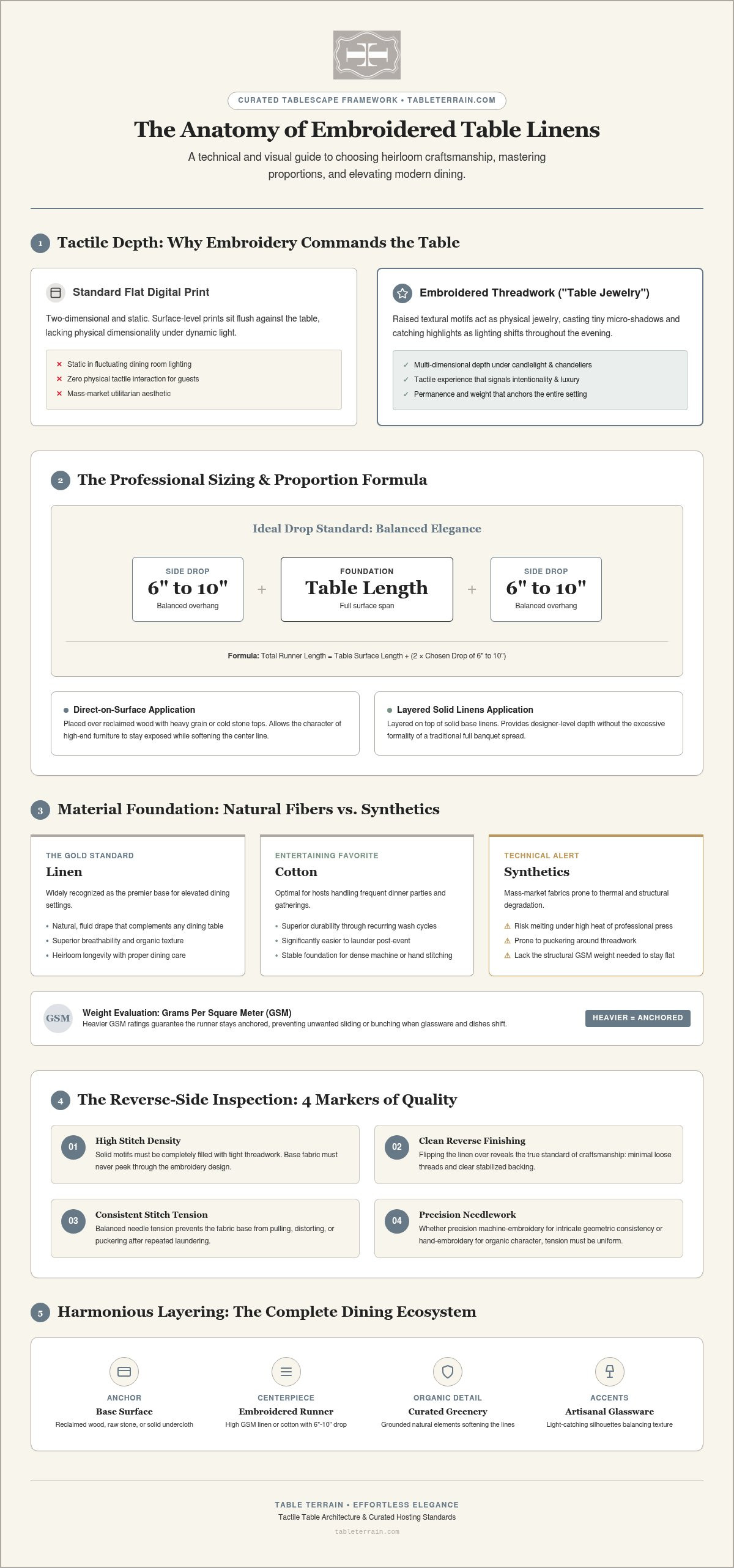
- Master the professional sizing formula to achieve the perfect 6 to 10-inch drop for any table length.
- Explore versatile styling techniques for embroidered table runners that complement both minimalist and maximalist home aesthetics.
- Discover how to layer your runner with curated glassware and flatware to create a harmonious, stress-free tablescape.
Beyond the Basics: Why Embroidered Table Runners Define a Tablescape
A great tablescape starts with a story. In 2026, that story is told through the lens of tactile luxury. We're seeing a decisive shift away from flat, mass-produced decor toward items that invite guests to reach out and touch. Embroidered table runners act as the anchor of this movement. They don't just sit on the table; they command it. While a flat print can feel static or two-dimensional, embroidery introduces a physical depth that changes as the evening progresses and the lighting shifts. Choosing pieces with character reflects a curated host mindset. It shows you value craftsmanship over mass-market convenience.
Visual vs. Tactile Interest
Texture does more than look good. It influences the psychological atmosphere of the dining experience. When intricate threadwork rises from the fabric base, it creates tiny shadows and highlights that catch the flickering light of a candle or the soft glow of a chandelier. This tactile interest is something a standard digital print simply cannot replicate. Embroidery is the jewelry of the table, providing that final, sparkling layer of detail that pulls the entire aesthetic together. It signals a level of intentionality that transforms a routine meal into a memorable occasion. Guests notice the raised motifs and the weight of the fabric, which adds a sense of permanence and quality to the gathering. Choosing premium embroidered table runners allows you to play with light and shadow in ways that flat textiles cannot match.
The Versatility of the Runner
Modern dining often celebrates the raw beauty of the furniture itself. Whether you have a reclaimed wood surface with a heavy grain or a sleek, cold stone top, a runner allows those materials to remain visible while providing a soft, decorative contrast. They are far more adaptable than full tablecloths. Modern hosts often find full covers too formal or cumbersome for contemporary gatherings. You can lay a runner directly on a bare surface for a minimalist look. Alternatively, layer it over solid linens to build complex, designer-level depth.
When planning your layout, it's helpful to understand standard table linen drop lengths to ensure the proportions feel balanced and intentional. For those looking to push their creative boundaries, professional table scapes are often built by mixing these runners with curated greenery and artisanal glassware. This approach keeps the setting grounded in practical home life while reaching for an aspirational, worldly aesthetic. It’s about creating a space that feels both sophisticated and incredibly welcoming. You aren't just setting a table; you're designing an environment.
Evaluating Quality: Materials and Embroidery Techniques to Know
High-quality embroidered table runners are investments in your hosting future. You want pieces that don't just look beautiful on day one but also withstand the inevitable spills and washes of a busy home. Understanding the technical side of textiles helps you spot the difference between a mass-market find and an heirloom piece. It's about more than just the pattern; it's about the integrity of the weave and the precision of the needle.
Choosing the Right Fabric Base
The foundation of any runner is the fabric base. Linen is widely considered the gold standard for high-end dining. It offers a sophisticated drape and natural breathability that complements any table surface. Cotton is another excellent choice for frequent entertaining. It provides superior durability and is generally easier to launder after a large dinner party.
Pay close attention to the weight, often measured in grams per square meter (GSM). A heavier GSM ensures the runner sits flat without bunching or sliding. Natural fibers are essential here. They hold traditional embroidery techniques much better than synthetic blends. Synthetics often pucker or melt under the high heat of a professional press, while natural fibers remain crisp and stable over time.
Identifying Premium Craftsmanship
Turn the runner over. The reverse side tells the real story of its construction. In premium work, you'll see a clean finish with minimal loose threads and stabilized backing. High stitch density is a non-negotiable marker of quality. You shouldn't see the base fabric peeking through the solid areas of the design. Precision machine-work offers incredible detail and consistency, while artisanal hand-embroidery provides a unique, human touch. Both have their place in a modern home, provided the tension is perfect.
Look for these specific quality signals during your search:
- Consistent stitch tension that prevents the fabric from pulling or distorting.
- Finished edges like hemstitching or mitered corners for a crisp silhouette.
- Dense threadwork that feels substantial and slightly raised to the touch.
- Colorfast threads that won't bleed into the base fabric during a delicate wash.
A messy back with long jump threads is a red flag. It suggests the maker cut corners. Professional-grade runners use stabilizers that are trimmed so precisely they become nearly invisible. This attention to detail ensures the runner lies perfectly flat on your table. Selecting the right piece doesn't have to be a guessing game. If you're looking for a shortcut to quality, explore the curated linens at Table Terrain, where every piece is vetted for craftsmanship and style.
The Perfect Fit: How to Size and Layer Your Runner
Proportion is the foundation of a professional tablescape. You don't want your runner to look like an afterthought or a scrap of fabric. Getting the size right ensures your embroidered table runners act as the intentional anchor they were meant to be. While mass-market retailers often suggest one-size-fits-all, true style requires a bit of math to achieve that designer look.
Step-by-Step Sizing Guide
Start by measuring the total length of your dining surface. Next, add between 12 and 20 inches to that number. This allows for the 'Goldilocks' drop of 6 to 10 inches on each end. A 6-inch drop feels casual and clean. A 10-inch drop leans into formal territory. Anything longer than 12 inches risks bunching in your guests' laps, which disrupts the comfort of the meal.
Width matters just as much as length. A standard runner should cover approximately one-third of the table's width. This leaves roughly 12 to 14 inches on either side for dinnerware and glassware. If your runner is too wide, it loses its status as a decorative accent and starts acting like a poorly fitted tablecloth. Balance the visual weight by ensuring the embroidery doesn't crowd the space meant for your plates.
Advanced Layering Techniques
Don't feel restricted to the traditional vertical placement. For a modern twist, try the 'tête-à-tête' method. This involves placing multiple short runners horizontally across the table, connecting guests sitting opposite each other. It creates an intimate, face-to-face dining experience that feels fresh and unexpected. It's a brilliant way to showcase intricate motifs without covering the entire length of a beautiful wood or stone table.
When you're hosting a formal event, layering is your best friend. Place your embroidered piece over crisp, solid table linens to create high-contrast depth. This technique highlights the intricate threadwork while providing a clean backdrop for your meal. Ensure your placemats complement the runner rather than competing with it. If the runner has busy, colorful motifs, choose neutral placemats to let the embroidery shine.
Following proper etiquette guidelines for table settings helps you balance these layers effectively. You want the table to feel lush, not cluttered. By pairing these textiles with elegant table settings, including curated flatware and glassware, you build a cohesive environment. It's about finding the visual weight that feels right for your specific room and occasion.
Styling the Story: Matching Runners to Your Home’s Aesthetic
Your home’s architecture and daily vibe should guide your textile choices. Embroidered table runners aren't just one-size-fits-all accessories; they are extensions of your interior design. For the minimalist, tone-on-tone embroidery provides that essential tactile layer without disrupting a monochromatic palette. It’s about the quiet luxury of seeing the light hit a raised white-on-white stitch. Contrast this with the maximalist approach. Here, bold jewel tones and intricate motifs define the 'grandmillennial' look. It’s a celebration of pattern and history that feels vibrant and alive. The seasonal host can easily adapt these styles by swapping heavy jewel tones for airy, botanical patterns during summer gatherings.
Modern vs. Traditional Motifs
Geometric embroidery works beautifully in contemporary, clean-lined dining rooms. Think sharp angles or repeating linear patterns that echo modern furniture. If you prefer a romantic or classic feel, floral and organic patterns are your best friend. These traditional motifs soften a room and add a sense of timelessness. Your choice of motif reflects your hosting persona. Are you the structured modernist or the whimsical storyteller? Pick a design that feels like a natural extension of your personality. This intentionality ensures your table feels like a cohesive part of your home rather than a temporary setup.
Color Coordination Strategies
Start with the 'dominant color' rule. Identify the strongest hue in your embroidery and use it to select your dinnerware or napkins. This creates a tight, designer-level harmony. If you have statement flatware, use a neutral runner to let those metallic finishes shine. Using contrasting thread colors is a brilliant way to create focal points on a long table. It draws the eye toward the center of the gathering and keeps the visual energy high throughout the meal.
Don't forget the vertical elements of your tablescape. We love pairing textured linens with colorful glassware to add another dimension to the setting. For example, coordinating a botanical runner with green goblets creates a lush, garden-inspired atmosphere that works year-round. It’s these small, intentional pairings that make a table feel curated rather than cluttered. When you balance the weight of the embroidery with the clarity of your glassware, you achieve a professional look with minimal effort. Ready to find your perfect match? Shop our curated collection of runners and start styling your next signature event.
Curating the Collection: Why Table Terrain Runners Stand Apart
At Table Terrain, we believe hosting should be a joy, not a chore. We've spent years sourcing embroidered table runners that meet our strict standards for both beauty and utility. Our philosophy is simple: we curate so you don't have to. You won't find thousands of low-quality, mass-market options here. Instead, you'll find a focused selection of pieces that reflect a worldly, well-traveled aesthetic while remaining grounded in the practicalities of a busy home. We act as your creative partner, doing the hard work of selection so you can focus on the art of gathering.
Every runner in our collection is chosen to withstand the "art of the meal." We know that real life involves wine spills, laughter, and the occasional candle wax drip. That’s why we prioritize high-quality natural fibers and dense threadwork that holds its shape wash after wash. These aren't just decorative accents; they're durable linens designed to be part of your family’s stories for years. We focus on the tactile details that make a table feel lush and inviting, ensuring each piece feels as good as it looks.
We view the runner as the essential anchor for your dining room. It’s the foundation that allows your other decor to shine. Our runners are designed to integrate seamlessly with our curated glassware, flatware, and sculptural vases. When you start with a high-quality base, layering textures and greenery becomes an intuitive, creative process rather than a stressful one. We help you build a cohesive environment where every element works in harmony to elevate the overall experience.
The Table Terrain Difference
We bridge the gap between high-end aspirational design and achievable home styling. Our focus is on individual decor pieces that allow for truly personalized tablescapes. You don't need a professional stylist to create a stunning environment. We provide the tools, the inspiration, and the boutique-level service to help you find your own signature look. Whether you're hosting a casual brunch or a formal gala, our pieces offer the sophistication you crave with the convenience you need. Plus, our national shipping ensures these premium embroidered table runners arrive at your door, ready for your next signature event.
Your Next Step in Sophisticated Hosting
Elevating your dining experience is a journey of discovery. We invite you to explore our current collection of linens and accessories to find the pieces that speak to your unique style. As the seasons shift, consider how your textiles can set the mood for major celebrations. We love seeing our runners paired with elegant thanksgiving centerpieces to create a warm, sophisticated holiday atmosphere. Take the guesswork out of your next event and let your creativity lead the way.
Design Your Signature Dining Experience
Your dining table is more than just a place to eat; it's a canvas for connection and creativity. By choosing high-quality embroidered table runners, you introduce a layer of tactile storytelling that flat textiles simply can't match. We've explored how the right fabric base and precision stitching ensure your investment lasts for years. You now have the formulas to master the perfect drop and the confidence to layer textures that reflect your unique hosting persona.
Table Terrain is here to be your creative partner in this journey. As a boutique e-commerce brand, we've expertly curated a collection specifically for sophisticated hosts who value time and aesthetic harmony. We do the hard work of selection so you don't have to. With national US shipping, your next signature tablescape is just a few clicks away. It's time to move beyond the basics and design a space that feels both aspirational and deeply welcoming.
Elevate your tablescape with our curated embroidered runners and start hosting with effortless style today. We can't wait to see the beautiful environments you'll create.
Frequently Asked Questions
How do I clean an embroidered table runner without damaging the thread?
Hand wash your linens in cool water with a mild liquid detergent to preserve the thread integrity. Avoid harsh bleach or scrubbing the motifs directly. For the best results, air dry the fabric flat. When it's time to press, always iron on the reverse side. Place a plush towel underneath the embroidery so the dimensional stitches sink into the pile. This simple trick prevents the high-relief threadwork from being flattened by the iron's heat.
Can I use an embroidered runner on a round table?
You can certainly use a runner on a round table to create a strong visual anchor. Position the fabric across the center to provide a base for your centerpiece or floral arrangements. Ensure the ends hang over the edges by 6 to 10 inches for a balanced look. For larger round tables, you might even consider crossing two runners in an "X" pattern. This adds more coverage while maintaining a sophisticated, geometric symmetry.
What is the best fabric for a daily-use embroidered runner?
Cotton is the superior choice for daily use because of its durability and ease of care. It withstands frequent laundering better than pure linen while maintaining a crisp, clean appearance. Look for a fabric with a substantial weight, or GSM, to ensure it stays flat during busy family meals. While linen is beautiful for special occasions, cotton provides the practical resilience needed for a hardworking dining room without sacrificing any of the artisanal charm.
Should a table runner be longer or shorter than the table?
A runner should typically be longer than your table to allow for a graceful overhang. The industry standard is a 6 to 10-inch drop on each end, which provides a professional and finished silhouette. However, modern styling sometimes favors a shorter, inset look that stops just before the table edge. This minimalist approach works well when you want to showcase the natural wood grain or stone texture of your furniture while adding a decorative layer.
How do I stop my table runner from slipping on a wooden table?
Preventing a runner from sliding starts with choosing a high-quality fabric with a heavy weight. If your embroidered table runners still move, place a thin, non-slip mesh pad underneath the fabric. You can easily trim these pads to be slightly smaller than the runner so they remain completely invisible. This provides the necessary grip on polished wood surfaces without the need for adhesives that might leave a sticky residue or damage the table's finish.
Is it okay to layer an embroidered runner over a tablecloth?
Absolutely. Layering is a brilliant way to add depth and sophistication to your tablescape. Placing an embroidered piece over a solid tablecloth creates a high-contrast look that highlights the intricate needlework. This technique is especially effective for formal gatherings or holiday celebrations where you want a lush, multi-textured environment. Just ensure the base cloth is a neutral or complementary color so the motifs on the embroidered table runners remain the focal point of the design.
How do I choose a runner that doesn't clash with my patterned dinnerware?
The secret is to find a common color thread between your textiles and your plates. Choose a runner that features a neutral base or one that highlights a subtle accent hue found in your dinnerware pattern. If your plates are very bold, look for tone-on-tone embroidery. This provides the tactile interest you want without introducing competing colors. It allows the patterns to coexist harmoniously by focusing on texture rather than adding more visual noise.
Can embroidered runners be used for outdoor dining?
You can absolutely use these runners for outdoor dining to elevate a garden party or patio brunch. Natural fibers like cotton or linen are breathable and look stunning in natural light. However, these pieces are not weather-resistant like synthetic outdoor fabrics. Always bring your linens inside immediately after the event. This protects the delicate embroidery from sun fading, morning dew, or unexpected rain, ensuring your collection remains in pristine condition for years to come.