


The traditional dining table rules are officially obsolete. For decades, standard table linens carried an unfortunate reputation: stiff, fussy, and permanently stuck in grandma’s formal dining room. Today, modern table runners ground dining architecture, replacing stiff formality with tactile, versatile warmth. Instead of masking beautiful wood grain or sculpted stone surfaces, contemporary styling treats fabric as an intentional design foundation.
You probably already know how frustrating it feels to style a table that somehow ends up looking overly formal or completely mismatched. Finding the sweet spot between sterile minimalism and cozy functionality isn't always obvious, especially when you're wrestling with awkward overhang lengths or delicate fabrics. In this guide, you'll discover how to choose the right materials, calculate precise dimensions, and master effortless styling techniques that elevate everyday dining and entertaining. We will break down essential fabric weaves, sizing formulas, and seamless layering tricks to curate a confident, contemporary table setting.
Key Takeaways
- Discover how modern table runners frame architectural dining surfaces rather than concealing them, balancing tactile textures with clean negative space.
- Compare natural linen, pure cotton, and modern blends to choose the ideal drape, fabric weight, and maintenance routine for your lifestyle.
- Master quick overhang and width formulas to achieve either a tailored drop or a sleek, flush-floating look without awkward bunching.
- Learn effortless layering techniques that coordinate runner foundations with ceramic dinnerware, artisanal glassware, and low-profile centerpieces.
- Spot premium textile craftsmanship details like mitered hems and proper wash care that keep your linens looking polished through years of gatherings.
What Defines Modern Table Runners in Contemporary Dining?
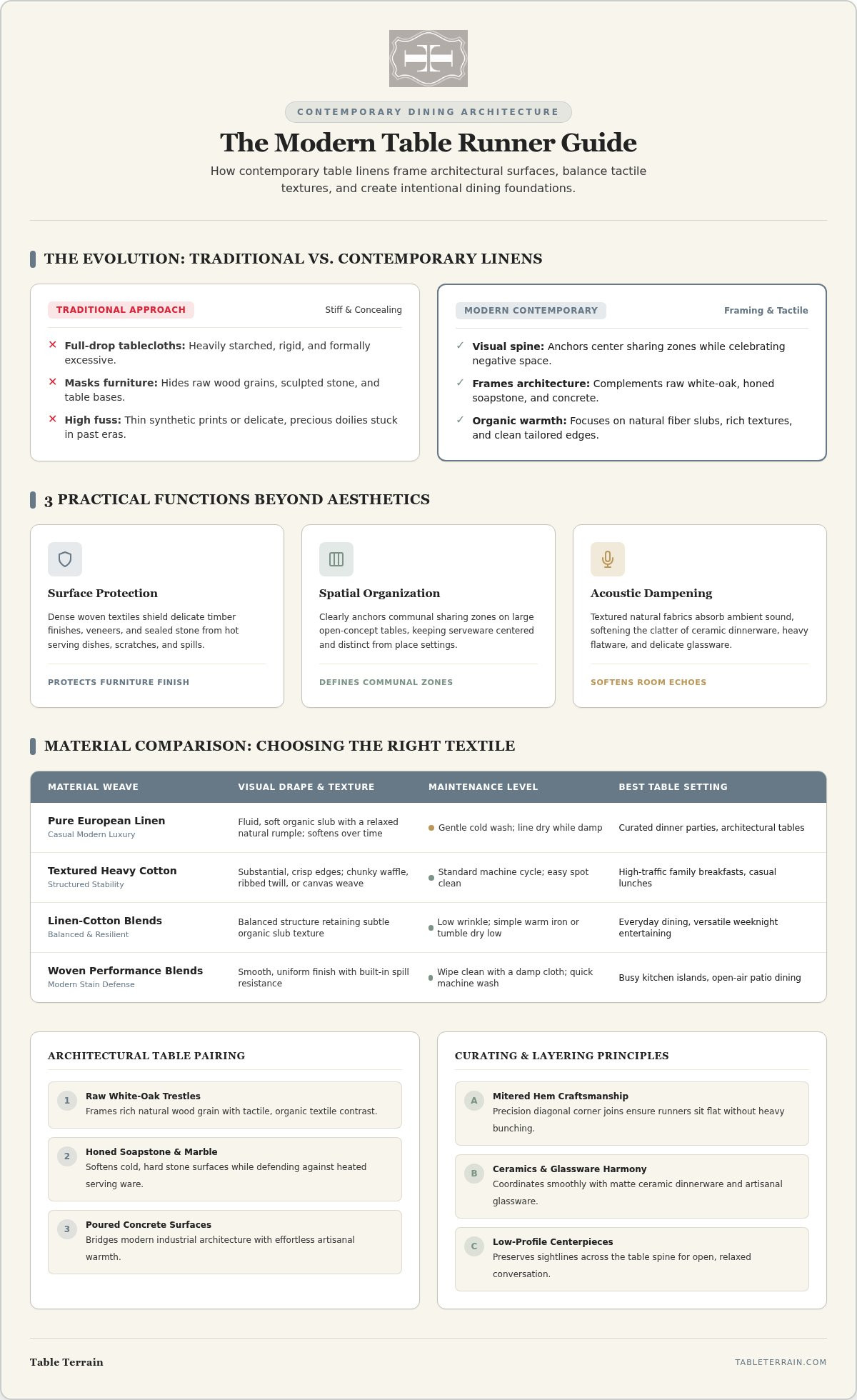
Forget fussy lace doilies and slick synthetic prints. Contemporary tabletop design celebrates the architectural integrity of your furniture rather than hiding it. Today's modern table runners do not conceal dining surfaces; they frame them. Whether you are dressing a raw white-oak trestle, honed soapstone, or poured concrete, a modern runner introduces organic warmth without visual clutter. The focus shifts away from loud graphics toward rich, tactile textures, understated geometric weaves, and clean edges. Running down the center of the table, fabric acts as an intentional visual spine that connects place settings and welcomes relaxed, communal dining.
The Evolution from Traditional to Contemporary Linens
Traditional entertaining once demanded full-drop tablecloths, heavily starched and formal. Modern hosting breaks those rigid rules in favor of effortless hospitality. Contemporary styling relies on negative space, allowing natural wood grains and sculpted table bases to remain visible. A thoughtfully selected runner softens the cool, hard planes of modern dining tables, bridging industrial materials with artisanal warmth. It transforms everyday dinners into curated moments without feeling stuffy or overly precious.
Functional Benefits Beyond Tabletop Aesthetics
Beyond defining your room's style, modern table runners deliver quiet practical benefits that protect your furniture and improve the hosting experience:
- Surface protection: Dense, woven textiles shield delicate timber finishes, veneers, and sealed stone from heated serving bowls, condiment drips, and surface scratches.
- Spatial organization: On large, open-concept tables, runners clearly anchor communal sharing zones, keeping serving items centered and distinct from individual place settings.
- Acoustic dampening: Hard tabletop surfaces bounce sound across open rooms. Textured natural fabrics absorb ambient noise, softening the clatter of ceramic dinnerware, heavy flatware, and delicate glassware for easier dinner table conversation.
Comparing Modern Table Runner Materials: Linen, Cotton, and Blends
Fabric composition directly determines how a runner settles against your table. It controls the fluid hang at the edges, the tactile weight under a wine glass, and how gracefully the weave endures a shared family meal. While synthetic prints often feel thin and slippery, modern table runners crafted from natural fibers ground the dining room with effortless substance. Choosing the right textile comes down to balancing tactile luxury against your weekly laundry routine.
| Material | Visual Drape & Texture | Maintenance Level | Best Setting |
|---|---|---|---|
| Pure European Linen | Fluid, soft organic slub, relaxed natural rumple | Gentle cold wash; line dry while damp | Curated dinner parties, architectural tables |
| Textured Heavy Cotton | Substantial, crisp edges, ribbed or waffle weave | Standard machine cycle; easy spot cleaning | High-traffic family breakfasts, casual lunches |
| Linen-Cotton Blends | Balanced structure with subtle slub texture | Low wrinkle; simple warm iron or tumble dry low | Everyday dining, versatile weeknight entertaining |
| Woven Performance Blends | Smooth, uniform finish with built-in spill resistance | Wipe clean with a damp cloth; quick machine wash | Busy kitchen islands, open-air patio dining |
Pure Linen: The Benchmark of Casual Modern Luxury
Pure flax linen remains the gold standard for contemporary tabletop styling. Natural variations in the thread create an organic slub texture that feels authentic to the touch. Don't fight its gentle natural creasing. Those soft waves are the hallmark of relaxed luxury. Linen fibers soften significantly with every rinse, growing more supple over years of use rather than degrading.
Structured Cottons and Heavyweight Textured Weaves
For sharper geometry, dense cotton weaves provide exceptional stability. Chunky waffle patterns, ribbed twills, and heavy canvas weaves sit flat without shifting when platters move. Cotton holds saturated earth tones exceptionally well through repeated washes, making it a reliable foundation for busy everyday dining.
Performance Fibers and Stain-Resistant Blends
Blended textiles pair natural aesthetics with modern stain defense. Combining flax with cotton or woven performance yarns preserves surface texture while minimizing stubborn food absorption. They offer a worry-free solution for breakfast bars and patio tables prone to messy spills. If you want to refine your entertaining space with relaxed, tactile layers, explore contemporary table linens designed to balance everyday durability with modern refinement.
Runner Sizing and Proportion Guide: How to Measure Accurately
Getting proportions right makes all the difference between a polished tablescape and fabric that looks like an afterthought. Sizing modern table runners correctly ensures your settings feel balanced rather than cramped. Grab a steel tape measure and follow these four steps to find your exact dimensions:
- Measure your tabletop: Record the exact length and width of your table. Use a rigid steel tape measure rather than a flexible tailor’s tape to prevent inaccurate, sagging numbers.
- Apply the one-third width rule: Contemporary runners typically span 13 to 16 inches wide. Aim to occupy roughly one-third of your dining table's overall width, which generally measures between 36 and 42 inches. This ratio leaves plenty of perimeter space for dinner plates and flatware.
- Pick your drop profile: Decide between a relaxed casual overhang, a dramatic tailored fall, or a flush contemporary layout.
- Calculate total length: Use the standard formula: Runner Length = Table Length + (2 × Desired Drop). For an 84-inch table with a 6-inch overhang on both ends, look for a 96-inch runner.
The Anatomy of Table Overhang and Drop Lengths
Contemporary dining favors intentional drops over pooling fabric. A casual 6-inch drop per side provides clean proportion, stopping comfortably above diner laps. For elevated gatherings, extend the fabric to a 10- or 12-inch drop for a deeper vertical line. Avoid floor-grazing lengths; they trap chair legs, wrinkle quickly, and pull uncomfortably during dinner. Alternatively, opt for a flush "floating" runner with zero overhang. This short cut rests completely inside the tabletop boundary, making it an ideal choice for live-edge timber or sculpted marble surfaces you want fully showcased.
Tailoring Runners for Round, Square, and Oval Tables
Non-rectangular dining surfaces present unique styling opportunities when using modern table runners:
- Round tables: Lay a single runner straight across the center diameter. The crisp linear band creates a compelling contrast against curved edges, organizing centerpieces effortlessly.
- Square tables: Place two identical runners in a balanced crisscross layout. This bisects the table into four distinct dining zones while maintaining clean architectural lines.
- Oval tables: Measure strictly along the longest centerline. Verify that your chosen width leaves at least 10 to 12 inches of clearance near tapering curved ends so outer dinnerware sits level.
Modern Table Runner Styling: Textures, Layers, and Palettes
Great tabletop design thrives on restraint. While traditional hosting relied on heavy centerpieces and cascading folds, contemporary presentation leans into negative space. Modern table runners act as an architectural anchor, creating visual cohesion without crowding your guests. You can run fabric traditionally down the table's spine, or try the popular tête-à-tête approach: laying two or three shorter runners crosswise across the table width. This technique turns the runner into a shared placemat for opposing diners, creating an intimate, communal feel.
Layering Runners with Placemats and Table Linens
Layering textures adds depth without feeling busy. Pair a slubbed linen runner with rounded woven placemats to soften sharp angles. Maintain tonal balance by sticking to harmonious palettes, such as pairing warm sand textiles with toasted rattan. Ensure your placemats don't awkwardly overlap the runner edges; leave at least two inches of visible tabletop between them so each layer breathes naturally.
Creating Focal Points with Glassware and Decor
Once your textile foundation is set, build subtle interest along the center seam. Punctuate an earthy neutral runner with jewel-toned accents, such as a vintage-inspired artisan green goblet beside each setting. Stagger low ceramic vases and slim metal taper holders down the length to ensure sightlines remain completely open for effortless conversation. Review foundational principles for modern table scapes to balance proportions, scale, and serving pieces across the entire setting.
Color Trends: Warm Earth Neutrals vs Moody Minimalist Darks
Modern palettes draw deep inspiration from organic landscapes:
- Warm earth tones: Terracotta, raw oat, ochre, and muted sage bring grounded, relaxed warmth to light woods and white kitchens.
- Moody minimalist darks: Charcoal, deep slate, and washed espresso offer striking contrast against marble, poured concrete, and pale oak dining tables.
- Seasonal adaptability: Keep an unbleached, oatmeal-toned runner as your year-round styling canvas. Refresh the entire look seasonally simply by swapping amber glassware for smoked tumblers or adding dried botanical sprigs.
Ready to refresh your dining space? Discover thoughtfully crafted foundation pieces when you shop modern table runners and linens for your next gathering.
Curating and Caring for High-Quality Table Runners
Investing in quality craftsmanship guarantees your linens survive countless dinner parties while maintaining their shape. When evaluating modern table runners, look past surface color and inspect the architectural finishing. Superior textiles feature crisp mitered corners, where fabric edges fold diagonally at a clean 45-degree angle. Check for neat hemstitching or substantial double-turned borders. These small construction choices keep the fabric lying completely flat along the table surface, preventing wavy edges after washing.
Washing, Drying, and Ironing Natural Textiles
Natural flax and cotton yarns require gentle handling to preserve fiber strength:
- Launder cold: Wash runners in cold water below 30°C (86°F) using mild liquid detergent. Avoid harsh chlorine bleaches or synthetic fabric softeners, which coat natural fibers and weaken their absorbency.
- Air-dry flat: Skip high-heat dryer cycles. Spin on low agitation and remove the runner while slightly damp, gently pulling the edges straight before drying flat on a drying rack.
- Press while damp: If you want a crisper look than linen's natural rumple, iron on the reverse side while the fabric remains lightly damp to release creases effortlessly.
- Quick stain rescue: Address red wine or salad oil splatters immediately. Blot gently with cool sparkling water and a touch of mild dish soap; avoid vigorous rubbing that drives pigment deeper into the weave.
- Crease-free storage: Never fold heavy natural runners into tight squares. Roll them around cardboard tubes or hang them across padded trouser bars to keep them smooth between dinners.
Curating an Essential Hosting Wardrobe
You don't need dozens of textiles cluttering your linen drawer. A well-curated dining collection requires just two foundational pieces: one crisp, neutral runner in oatmeal or warm ivory for everyday meals, and one heavily textured weave in charcoal or deep earth tones for intimate evenings. These versatile bases coordinate seamlessly with elegant table settings for dinner parties, shifting character simply through your choice of taper candles and dinnerware. When you are ready to curate your rotation, explore the online collection at Table Terrain, where tactile natural textiles, complementary glassware, and serving pieces unite to make home entertaining straightforward and beautiful.
Bring Effortless Modern Warmth to Your Next Gathering
Setting a memorable table shouldn't feel like a high-stress production. By trading stiff heirloom cloths for tactile modern table runners, you allow the natural beauty of your dining furniture to shine through. Whether you prefer the organic drape of pure flax linen or the structured lines of a heavyweight ribbed weave, the right textile grounds your space with relaxed confidence. Keep your drop measurements deliberate, give place settings room to breathe, and let subtle textures carry the room.
Ready to build a versatile hosting rotation that lasts? Table Terrain offers a curated selection of premium dining textiles and artisanal tableware designed for effortless contemporary hosting, delivered straight to your door with nationwide US shipping. Take the guesswork out of entertaining and explore curated modern table runners and linens at Table Terrain. Your dining room is ready for its next great conversation.
Frequently Asked Questions
What is the standard width and length of a modern table runner?
Most contemporary runners measure 13 to 16 inches wide, designed to cover approximately one-third of a standard dining table width. Lengths generally range from 72 to 108 inches. To determine the right length for your table, add 12 to 20 inches to your tabletop's total measurement, which ensures a balanced 6- to 10-inch drop on both ends.
Should a table runner hang off the edges of the dining table?
Overhang depends entirely on your styling goal. A traditional or formal look benefits from a 6- to 10-inch drop off each end of the table. However, many stylists prefer a flush or floating look with zero drop. This keeps the fabric entirely on the table surface, which highlights beautiful edge profiles on live-edge timber, concrete, or stone tables.
Can you use a table runner on a round dining room table?
Yes, running fabric straight across the center diameter works exceptionally well on round tables. The strong linear band cuts across circular geometry, establishing clean modern contrast. It grounds your central arrangement of vases and taper candles while defining an organized path for family-style serving dishes without crowding diner place settings.
Is it acceptable to pair table runners with placemats simultaneously?
Styling both pieces together creates rich textural dimension when executed with care. To prevent a crowded look, leave two to three inches of bare tabletop visible between the outer edge of the runner and your placemats. Match shapes thoughtfully by pairing a crisp rectangular runner with rounded woven placemats, staying within a cohesive, harmonious color family.
What fabrics work best for an everyday modern table runner?
Pure European flax linen and structured heavyweight cotton rank as the top choices for daily dining. Linen offers natural, relaxed elegance that grows softer with repeated washing. Cotton provides crisp edge stability, excellent color retention, and effortless spot cleaning for busy breakfast nooks and family meals.
How do you keep linen table runners from looking messy and overly wrinkled?
Embrace linen's natural rumple as a hallmark of casual luxury rather than a flaw. To prevent harsh, unsightly creasing, remove the runner from the washer while damp, smooth the seams with your hands, and air-dry it flat. If you want a crisper presentation, steam or press the fabric with a warm iron on the reverse side while it remains slightly damp.
Can modern table runners be placed across the table widthwise?
Yes, styling modern table runners crosswise is known as tête-à-tête arrangement and is increasingly popular. Instead of one long lengthwise runner, lay two or three shorter textiles across the table width. Each runner spans between two facing chairs, functioning as a shared placemat that frames intimate dining settings while leaving the table's decorative ends open.