


A professional tablescape isn't defined by matching colors. It's defined by the intentional friction between light and shadow. While many hosts fear that mixing a casual runner with formal wine glasses will look like a mistake, the truth is that contrast creates depth. Learning how to combine linens and glassware is the secret to moving beyond basic settings into the realm of high-end design. You want your dining room to feel curated and inviting, yet you might struggle to find the balance between different textures and levels of formality.
Mastering this interplay allows you to create sophisticated, curated dining experiences at home. We'll show you how to pair the transparency of delicate goblets with the rich, tactile nature of premium linens. This guide provides a clear framework for mixing what you already own and choosing new accents with confidence. You'll learn to layer textures, balance heights, and use color to anchor your aesthetic for any 2026 gathering. From the weight of a linen napkin to the sparkle of a wine glass, every detail matters. Let's build a table that tells a story.
Key Takeaways
- Balance the light-reflecting qualities of glassware with the light-absorbing textures of linens to create visual depth and harmony on your table.
- Discover how to combine linens and glassware by selecting one anchor piece first, ensuring the weight of your fabrics matches the style of your stems.
- Apply the 60-30-10 color rule to integrate vibrant accents, such as colored goblets, without overwhelming your neutral table runners or placemats.
- Follow a methodical layering process from the center out to build a professional tablescape that remains clean and uncluttered for every guest.
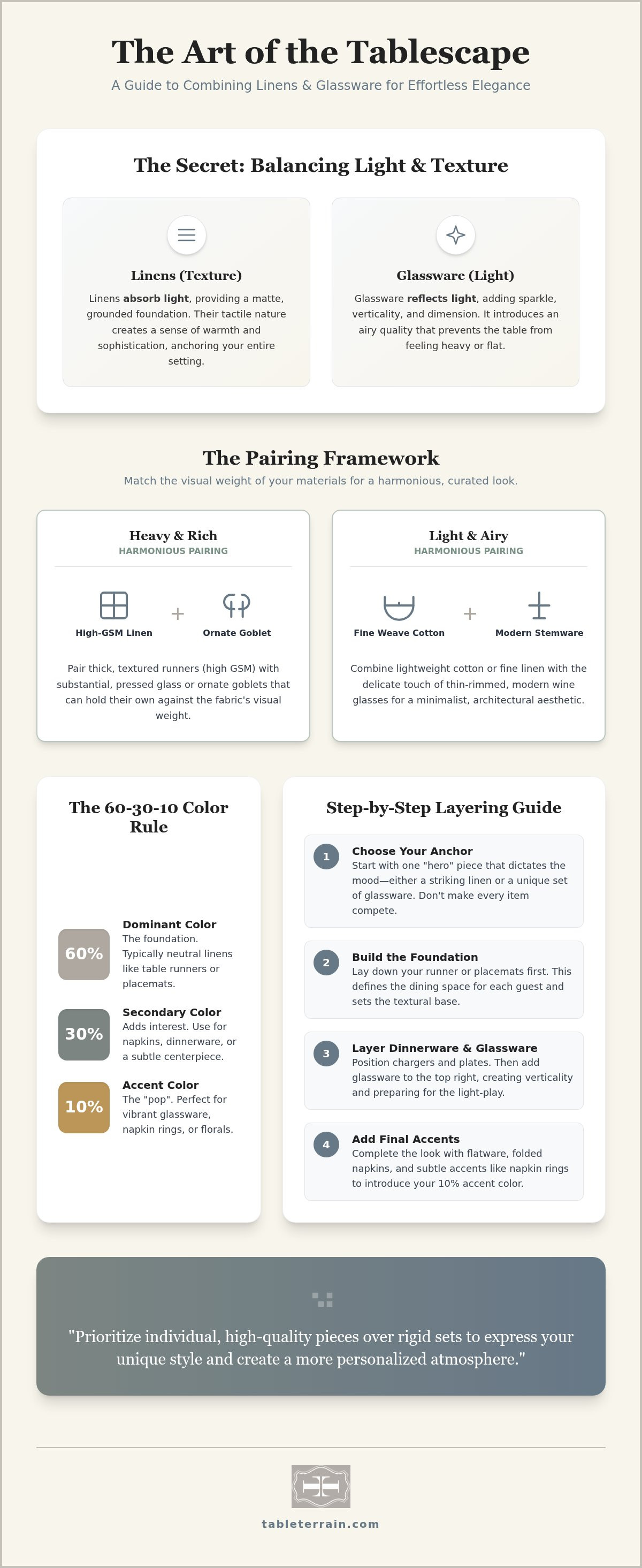
- Prioritize individual, high-quality pieces over rigid sets to express your unique style and create a more personalized atmosphere.
The Secret to a Professional Tablescape: Balancing Light and Texture
Professional table design isn't just about matching colors. It's about how light moves across the surface. Professional stylists use a "Light vs. Texture" framework to create visual depth. Think of your linens as the stage and your glassware as the spotlight. The core of how to combine linens and glassware lies in this intentional friction. Linens absorb light, providing a matte, grounded foundation. Glassware reflects light, offering the "sparkle" that prevents a table from feeling flat or heavy. For your 2026 gatherings, remember that balance is about intent, not perfection.
Understanding visual weight is essential for a curated look. Thick, heavy linens have a lot of visual "heaviness," so they require delicate, thin-stemmed wine glasses to add airiness. If you choose substantial, pressed glass goblets, pair them with finer, smooth-weave placemats. Every great design starts with an anchor piece. This is the single element that dictates the mood. It could be a vibrant textured runner or a set of vintage-inspired green water goblets. Once you choose your anchor, every other piece should either complement its texture or contrast its transparency.
Texture: The Foundation of Your Table
The weave of your fabric sets the immediate tone. Natural fibers like linen and cotton are masters of light absorption. They provide a tactile finish that feels sophisticated yet approachable. If you're aiming for a relaxed weekend brunch, a loose-weave runner adds organic interest. For more structured evenings, follow formal table setting rules to ensure your placemats and napkins are positioned to highlight the craftsmanship of the fabric. Textured linens ground the table, providing a stable visual base that makes high-shine glassware pop.
Transparency: Using Glassware to Create Dimension
Glassware provides the necessary "air" in your design. While linens are horizontal, wine glasses and goblets add essential verticality. This height draws the eye upward and creates a sense of three-dimensional space. Clear crystal offers a timeless, invisible elegance, while pressed colored glass adds a layer of character and weight. If you're using tall, dramatic stems, opt for a simpler runner to avoid visual competition. Learning how to combine linens and glassware means recognizing that the more intricate your glass, the more understated your fabric should be. This creates a curated look that feels both professional and effortless.
Choosing Your Anchor: Linen Materials vs. Glassware Styles
Every professional design begins with a single, decisive choice. You must select your anchor element before layering in accessories. This prevents the table from looking cluttered or indecisive. If you have a set of striking, emerald-toned wine glasses, let those lead the way. If you prefer a heavy, hand-woven runner, make that your foundation. Learning how to combine linens and glassware effectively starts with identifying which piece deserves the spotlight. Don't try to make every item a "hero" or they'll compete for attention.
The weight of your materials dictates the visual rhythm of the setting. Linen weight is often measured in GSM (grams per square meter). High-GSM fabrics are thick, durable, and visually heavy. They pair beautifully with substantial, pressed glass or ornate goblets that can hold their own against the texture. Conversely, lightweight cotton or fine linen napkins require the delicate touch of thin-rimmed, modern wine glasses. Matching the formality level is essential for a cohesive look. You wouldn't wear a tuxedo with flip-flops; don't pair a formal damask napkin with a chunky, casual tumbler. Mixing different materials instead of buying a pre-packaged set creates a curated, traveled feel that reflects your personal style.
Linen and Glassware Pairing Framework
The 2026 rule of Material Harmony states that the tactile density of your fabric must mirror the visual clarity of your glass. Pair crisp, high-thread-count cotton linens with sleek, modern wine glasses for a minimalist, architectural look. For a richer, more traditional experience, coordinate heavy, textured runners with ornate or colored goblets. This contrast emphasizes the craftsmanship of both the weave and the glasswork. If you're looking for inspiration, explore our curated selection of wine glasses to find your next anchor piece.
The Role of Napkin Rings and Table Accents
Think of napkin rings as the bridge between fabric and glass. They act as the jewelry of the table, pulling separate textures into one story. Choose metallic finishes like brass or polished silver to complement the rims of high-end wine glasses. If you're using colored glass or matte goblets, natural finishes like wood or stone provide a grounded, organic touch. These small accents tie disparate elements together, transforming a simple meal into a cohesive event. A well-chosen ring makes even a casual linen napkin feel right at home next to a formal crystal goblet.
Color Coordination: Mixing Vibrant Tones and Sophisticated Neutrals
Color is the emotional heart of your table. Applying the 60-30-10 rule keeps your design grounded and professional. Use 60% of a dominant color, usually your table runner or placemats. Add 30% in a secondary shade through napkins or plates. Reserve the final 10% for a bold accent, which is often where your glassware shines. This formula is the easiest way to master how to combine linens and glassware without the result feeling chaotic or overwhelming. It ensures every piece has a clear purpose in the overall palette.
Monochromatic layering is another high-end technique that feels incredibly modern. Mix three shades of the same hue, such as sage, forest, and moss green, to create a sophisticated, tonal look. This approach allows you to transition through 2026 seasons with ease. You can swap a light linen napkin for a deeper version as the weather cools while keeping your favorite glass stems. This creates a curated look that feels intentional rather than accidental. By varying the saturation of a single color, you add depth without the stress of matching disparate colors.
Styling with Colored Glassware
Colored glass serves as a brilliant focal point for any setting. In 2026, green goblets have emerged as a "new neutral" because they complement almost any organic palette. They bring life to a table without clashing with floral arrangements or wooden surfaces. If you prefer warmth, pair amber or smoke-colored glass with terracotta or toasted oat linens. This creates a cozy, sun-drenched atmosphere. To use blue glassware without it feeling cold, mix it with "warm" neutrals like sand or creamy ivory. The contrast between the cool glass and the warm fabric keeps the setting inviting and balanced.
Neutral Linens as a Canvas
Neutral linens act as a quiet stage for intricate glassware to perform. Shades of ivory, sand, or soft grey allow the facets of a crystal wine glass to catch the light beautifully. You don't need bright colors to create interest when you have the right foundation. Use woven textures like a slubbed linen or a hemstitch detail to add visual weight to a neutral table. Mixing white-on-white is a masterclass in subtle design. By using a heavy cotton placemat with a sheer linen napkin, you create depth through shadow rather than pigment. This allows your glassware to remain the undisputed star of the show. Learning how to combine linens and glassware in a neutral palette is about celebrating the quiet details of craftsmanship.
A Step-by-Step Guide to Layering Your Table Elements
Building a professional tablescape is a methodical process. In 2026, the expert standard is to work from the center out. This ensures symmetry and prevents the dreaded "cluttered" look that often happens when pieces are added at random. When you understand how to combine linens and glassware, you treat the table as a landscape with varying elevations. Start low and build high. This hierarchy creates a visual journey for your guests, leading their eyes from the soft fabric to the sparkling glass. It's a simple framework that yields sophisticated results every time.
The Foundation Layer: Runners and Placemats
Your choice of foundation dictates the social energy of the meal. A runner creates a communal, shared experience that draws people together. Placemats offer individual definition for each guest, which feels more structured and formal. For maximum sophistication, layer a textured runner over a solid tablecloth. This adds immediate depth and visual interest. Align your placemats so they sit exactly one inch from the table edge. This alignment should guide the "foot" of your glassware, creating a clean vertical line from the edge of the table to the stem of the glass.
The Middle Layer: Napkins and Flatware
Napkins act as the tactile bridge between the table and the guest. Use a fold that showcases both the linen's weave and the sparkle of the nearby glass. A simple rectangular drape or a loose, organic fold works best for modern settings. Position your flatware to create parallel lines that lead the guest's eye toward the glassware. This creates a sense of order and professional intent. Use napkin rings to introduce a third texture, such as brushed metal or natural wood, which can echo the finish of your glassware rims or the weight of your goblets.
The Final Layer: Glassware Placement
This is where your table truly comes to life. Use the "Triangle Method" for placement to ensure the setting feels open and inviting. The water goblet sits directly above the dinner knife. Place the wine glass to its right and slightly lower. This grouping prevents a "wall of glass" that can block cross-table conversation. Consider these final pro checks before your guests arrive:
- Check the Sightlines: Sit in a guest chair to ensure the glassware height doesn't obstruct the view of the person across from you.
- Group by Height: Arrange glasses from tallest to shortest, moving from left to right, to create a tiered, professional effect.
- Add an Accent: Introduce a single colored glass or a uniquely shaped goblet to break the monotony and act as a conversation starter.
Mastering these layers allows you to host with total confidence. If you're ready to start your own design, explore our latest table runners and glassware to find the perfect layers for your next event.
Elevating the Experience with Curated Table Terrain Accents
Professional tablescaping is an expression of your unique style. While bulk sets offer convenience, they often lack the soul and character of a curated collection. Investing in individual, high-quality pieces allows you to build a table that feels personal and lived-in. This approach is the ultimate secret to how to combine linens and glassware effectively. You aren't just following a generic template. You're selecting textures and transparencies that resonate with your specific aesthetic. A hand-picked goblet or a premium linen runner tells a story that a mass-produced set simply cannot match. In 2026, the most memorable table scapes are those that feel collected over time. When you learn to curate, you gain the freedom to adapt to any occasion without needing a whole new inventory.
Finding Your Personal Hosting Style
Identify your design leanings to simplify your creative choices. Are you a "Minimalist Modernist" who loves clean lines and clear, architectural stems? Or perhaps you're a "Textured Traditionalist" drawn to heavy weaves and ornate, colored glass. Once you know your style, you can build a capsule collection of linens and glassware where every piece works together. This versatility means you can host a formal holiday dinner or a casual Sunday lunch with the same core elements. Don't be afraid to mix Table Terrain pieces with your existing family heirlooms. A vintage crystal wine glass looks stunning atop a modern, textured runner. This contrast bridges the gap between generations and adds a layer of history to your gathering. It's these personal touches that make a setting truly special.
The Table Terrain Difference
We believe that hosting should be a joy, not a source of stress. Our collection focuses on the craftsmanship of premium linens and glassware, ensuring every piece feels substantial and special. Every wine glass is chosen for its clarity and balance. Every runner is selected for its tactile richness. We've done the hard work of selection so you can focus on the art of the gathering itself. Creating elegant table settings becomes effortless when you have access to curated bundles and versatile individual accents. Experiment with your layout. Break the traditional rules. Use a water goblet as a flower vase or mix different napkin colors at the same table. A personalized look is always more inviting than a perfect one. Ready to elevate your next dinner party? Shop the latest Table Terrain collections and find the pieces that speak to you.
Design Your Next Unforgettable Gathering
Mastering the balance between light and texture is the key to a professional grade dining experience. By pairing light-absorbing linens with light-reflecting glassware, you create a visual depth that feels both sophisticated and inviting. Remember that your table is a landscape. Building from the center out and layering heights ensures a clean, curated look that avoids the common fear of clutter. Once you understand how to combine linens and glassware, every meal becomes an opportunity for creative expression.
Table Terrain is your partner in this journey. Our collection is expertly curated for effortless hosting and has been featured in luxury home décor guides. We offer national shipping across the United States, bringing high-end craftsmanship directly to your door. Don't feel restricted by traditional rules. Instead, use these frameworks to build a capsule collection that reflects your unique personality. Discover the Table Terrain Collection: Shop Curated Linens and Glassware. You have the tools to host with total confidence; now it's time to gather your favorite people and let your table tell the story.
Frequently Asked Questions
Can I mix different styles of glassware on one table?
Mixing glassware styles is a brilliant way to add personality. Pair a sleek, modern wine glass with a vintage-inspired textured goblet for a curated feel. The key is finding one unifying element, such as a similar stem height or a shared color family. This intentional contrast prevents the table from looking like a mismatched collection and instead creates a professional, multi-dimensional aesthetic that reflects your personal style.
How do I choose the right napkin for my wine glasses?
Select your napkins based on the visual weight of your glassware. Delicate, thin-rimmed wine glasses pair best with smooth, high-thread-count cotton or fine linen. If you're using substantial, heavy-bottomed goblets, choose a napkin with a visible, rustic weave. This creates a balanced sensory experience for your guests. Matching the formality of the fabric to the style of the glass is essential for a cohesive, professional tablescape.
Should my table runner match my glassware color?
Your table runner shouldn't be an exact match for your glassware. Use the runner as a neutral canvas to highlight vibrant glass tones. For example, a sand-colored runner makes green water goblets look fresh and intentional. If you prefer a monochromatic look, vary the saturations. Pair a deep forest runner with lighter sage glassware. This technique adds depth and prevents the table from appearing flat or overly "matchy-matchy."
Is it okay to use colored glassware for a formal dinner?
Using colored glassware for formal dinners is a major trend for 2026. It adds a layer of sophistication that clear crystal often lacks. Opt for rich, jewel-toned goblets or smoky hues to maintain a high-end feel. Balance these bold pieces with crisp, neutral linens and polished flatware. This ensures the colored glass acts as a refined focal point without overwhelming the formal setting or distracting from the meal.
What is the best linen material for a casual tablescape?
Natural linen with a slubbed texture is the gold standard for casual hosting. It's durable, easy to wash, and has a relaxed drape that feels inviting. Cotton blends also work well for daily use. Pair these light-absorbing fabrics with sturdy, short-stemmed wine glasses or tumblers. This combination creates a grounded, organic atmosphere that encourages guests to linger over their meal without the pressure of a stiff, formal setting.
How many glasses should I have at each place setting?
Most professional settings include two to three glasses per guest. Start with a water goblet placed directly above the dinner knife. Add a wine glass to the right. If you're serving both red and white wine, include a second wine glass. Use the "Triangle Method" to group them. This saves space and keeps the setting organized. Proper placement is a core part of learning how to combine linens and glassware for a professional look.
How do I combine patterned linens with textured glassware without it looking busy?
Stick to a limited color palette when mixing patterns and textures. If your runner has a bold pattern, choose glassware with a simple, subtle texture like a light ribbing. Ensure the colors in the pattern reflect the tones of the glass. This creates a sense of harmony. If you're learning how to combine linens and glassware with patterns, ensure one element remains neutral to anchor the design and prevent it from looking cluttered.
What are the most popular glassware and linen trends for 2026?
In 2026, the focus is on craftsmanship and organic textures. Monochromatic layering with different shades of green or amber is incredibly popular. Green water goblets have become the preferred "new neutral" for modern hosts. You'll also see a rise in high-GSM linens that feature raw edges or hand-stitched details. These trends emphasize a move away from rigid, matching sets toward a more personalized and tactile dining experience that values individual pieces.