
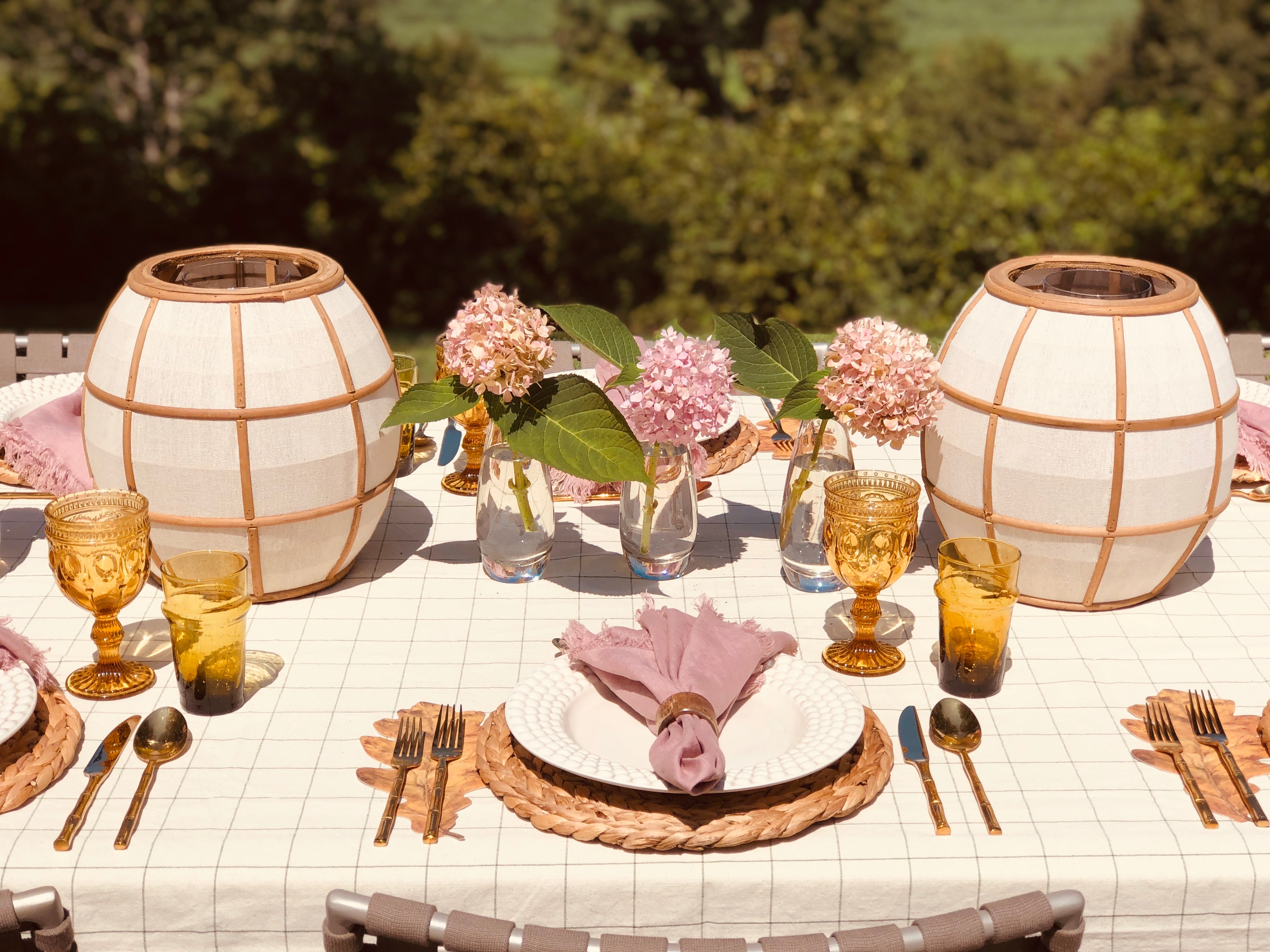


Silk table runners don’t have one standard size: listed examples include a Traditional Silk Table Runner at 60 X 18 inches and an embroidered Chinese dragon and phoenix runner at 91x13 inch. Measure your table and choose a length that gives you the look you want, from a neat fit to a graceful overhang.
Silk table runners bring sheen and texture to a table, but the right runner should also suit its shape, setting, and care routine. Choosing dimensions or styling a runner on a round table can feel tricky. This guide covers how to choose a size and construction, arrange a runner on a round table, and care for it with confidence. You’ll also find practical tips for pairing silk with other linens and creating a polished setting for everyday meals or special gatherings.
Key Takeaways
- Measure your table and decide how much overhang you want before choosing a runner length; examples range from 60 X 18 inches to 91x13 inch.
- Compare fabric finish and construction to the occasion, from satin’s sheen to taffeta’s accordion crinkle texture.
- On a round table, lay one runner across the center or cross two runners in an X to create a balanced focal point.
- For most satin runners, use a gentle machine cycle with mild detergent, then air-dry to help maintain shape and sheen.
- Layer the runner with complementary table linens and thoughtful serving pieces for a polished, welcoming setting.
Runner dimensions
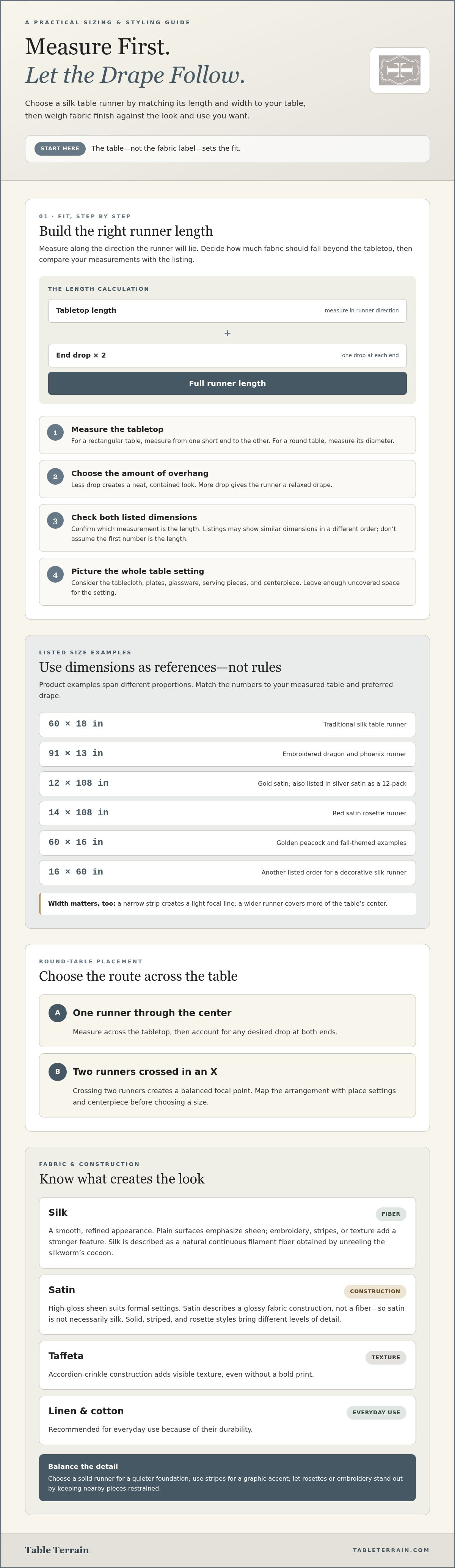
Start with the table, not the fabric. A runner’s length determines how far it extends beyond the tabletop, while its width affects how much of the surface remains visible. Listings show a wide range of proportions: examples include silk runners measuring 60 X 18 inches and 91x13 inch. Those dimensions offer useful reference points, but your table and preferred look should guide the final choice.
Measure the tabletop in the direction the runner will lie. For a rectangular table, measure from one short end to the other, then add the fabric length you want to drape over both ends. In practical terms, the runner’s full length equals the tabletop length plus the two end drops. Choose less overhang for a neat, contained look or more for a relaxed drape.
For a round table, measure its diameter, then decide whether the runner will cross the center or sit diagonally. A runner crossing the center needs to span the tabletop, plus any desired drop at both ends. Choose the width separately: a narrow strip creates a light focal line, while a wider one occupies more of the table’s center. Since these choices affect place settings and centerpieces, map out the arrangement before choosing a size.
- 12"x108" appears as a gold satin size and also as a silver satin size sold in a 12 pack.
- 14"x108" is an example of a red satin rosette runner.
- 60 x 16 inches appears in examples including a golden peacock design and a fall-themed silk runner.
- 16x60 inches is another listed dimension for a decorative silk runner.
These examples show why a product’s material alone doesn’t tell you how it will fit. Compare both measurements with your table, and check which dimension represents the length in the listing. Similar measurements may appear in a different order, as with 60 x 16 inches and 16x60 inches. Don’t assume the first number always means length unless the listing makes that clear.
Width matters most when the table is already dressed. Layering a runner over a tablecloth adds a band of color or texture, while a wider piece covers more of the cloth. Leave enough uncovered space for plates, glassware, and serving pieces. On a bare tabletop, choose a width that balances the table’s shape and the objects arranged down its center.
Before choosing silk table runners, use these steps to check the fit:
- Measure the tabletop in the runner’s intended direction.
- Choose the desired end drop, then account for both ends.
- Compare the calculated length and preferred width with listed dimensions.
- Picture the runner with the tablecloth, place settings, and centerpiece.
Silk’s origins help explain its varied woven designs. The National Bureau of Standards describes silk as the only natural continuous filament fiber, obtained by unreeling the silkworm’s cocoon. Silk can be presented in different proportions and decorative treatments, so base your choice on the measured fit as well as the material.
Runner fabric and construction
Read the fabric description before choosing a finish. “Silk” identifies a fiber, while “satin” describes a glossy fabric construction. Satin can be made from different fibers, so a satin runner isn’t necessarily silk. Check the material and surface descriptions separately. This distinction helps you choose both the fiber you want and the look you prefer.
Silk has a smooth, refined appearance that suits a carefully arranged table. Its weave, finish, and decoration can change the overall effect. A plain surface highlights the fabric’s sheen and the rest of the setting. Embroidery, stripes, or texture create a stronger feature. For example, embroidered details can become a focal point, while a solid runner can complement patterned plates.
Satin’s high-gloss sheen suits formal settings. Solid, striped, and rosette designs each bring a different level of detail. A solid color adds a clean accent to a plain tablecloth; stripes create a more graphic pattern, while rosettes add dimension and draw the eye. Choose a finish that complements your tableware rather than competing with it.
Taffeta offers another surface effect. Accordion-crinkle construction creates visible texture, adding interest even without a bold print. Consider how it will sit beside smooth glassware, polished flatware, or patterned dishes. If several elements already feature strong patterns, a quieter runner can help balance the setting. With simpler place settings, textured fabric adds definition.
Linen and cotton are recommended for everyday use because of their durability. Satin is recommended for formal events for its high-gloss sheen. These are useful starting points beyond style: consider how often you use the table and the mood you want to create. Satin can dress the table for a special dinner, while linen or cotton offers a practical option for regular meals.
Before choosing a construction, compare the runner with the other fabrics and finishes in your setting:
- For a quiet foundation: Choose a solid runner to add color without introducing another pattern.
- For a graphic accent: Use stripes when the rest of the table has simpler shapes or colors.
- For added texture: Consider taffeta with its accordion crinkle design.
- For a decorative focal point: Let rosettes or embroidery provide the detail, then keep nearby pieces restrained.
Layering changes how a fabric’s construction looks. A solid satin runner over a plain tablecloth adds contrast through color and sheen. For a wedding tablescape, layer satin over a full tablecloth in a complementary color, then add flowers or candles. The cloth creates a coordinated base, while the runner draws the eye to the center. Consider all materials together as you choose each layer.
Look closely at descriptions and images for fiber, finish, pattern, and texture. Those details help distinguish silk table runners from satin styles that may have a similar sheen. If you’re assembling a coordinated setting, explore table runners alongside your chosen table linens and serving pieces.
Styling runners on round tables
On a round table, a runner can guide the eye to the center while leaving the circular outline visible. Place one straight across the middle for a simple, balanced arrangement. Its ends can fall over opposite edges, creating a line that divides the tabletop visually. Center the fabric so both sides look intentional.
For a more layered look, cross two runners in an X. Place the first across the center, then lay the second over it at an angle. Their crossing point creates a natural spot for a centerpiece, such as a vase of flowers. Align both runners carefully so the X looks deliberate rather than off-center.
Choose a layout that suits how you’ll use the table. A single runner leaves more of the tabletop visible and suits a restrained setting. Two crossed runners create stronger color and pattern, making the center feel more dressed. If a runner has embroidery or a bold motif, one strip may be enough. Let its details show rather than covering them with another fabric.
Plan the centerpiece before setting the plates. A tall arrangement on a round table can interrupt conversation, while a lower grouping keeps sightlines open. Place a compact vase or a few candles near the center, at the point where one runner crosses or two meet. Leave room around the display for serving dishes and place settings.
Color and pattern influence how the layout looks. A solid satin runner adds sheen against a plain tablecloth. For a coordinated wedding tablescape, layer satin over a full tablecloth in a complementary color, then add flowers or candles. If you use two runners, choose colors that work together and keep other details quieter. This keeps the X as the focal point.
Silk’s surface adds a soft glow to the center of a round table. Pair a patterned runner with simple plates, or use plain fabric to balance decorated china. If you add a tablecloth, choose a color that supports the runner rather than competing with it. Subtle contrast defines the layout; closely matched colors create a softer, more blended effect.
Set the runner in place before arranging the tableware so you can adjust the fabric without moving dishes or glasses. Follow this sequence:
- Clear the tabletop and identify the center point.
- Lay one runner across the center, or arrange two in an X.
- Adjust the ends so they fall evenly and the fabric lies smoothly.
- Place the centerpiece at the center, then arrange plates and serving pieces around it.
For a dinner setting, check each place from a seated position. Make sure the runner doesn’t overlap plates or leave loose fabric where guests need space. On a smaller round table, one centered strip can preserve more room. On a broader tabletop, an X can define the middle while keeping the edges open.
Finish by viewing the arrangement from across the room. Straighten the center line, smooth visible folds, and adjust the vase or candles until they sit naturally. Round tables don’t need complicated styling: one centered runner or two crossed runners can create a polished focal point.
Washing and care
Start with the fabric, not the color. Silk and satin describe different things: silk is a fiber, while satin describes a fabric construction. Satin runners may use fibers other than silk, so care instructions can vary. Read the label before washing, especially if a runner has embroidery, rosettes, or decorative trim.
Many satin runners are cared for on a gentle machine cycle with mild detergent, then air-dried to help maintain their shape and sheen. This guidance is for satin runners, not automatically for every silk textile. Check the care instructions first. If a runner combines satin with embroidery or other embellishments, follow the guidance for its most delicate component.
Prepare the runner before cleaning. Remove tableware and shake off crumbs, then inspect the fabric in good light for food spots, loose threads, or details that could catch. If you find a stain, blot it gently with a clean cloth rather than rubbing, which can spread the mark or disturb the finish.
If the care label allows machine washing, place the runner in the washer without crowding it with heavy items. Use a gentle cycle and mild detergent. Wash similar colors together, especially if a dark red runner could transfer color to pale ivory fabric. Keep items with hooks or rough fasteners separate to reduce snagging.
Air-drying can help preserve a satin runner’s shape and sheen. After washing, support the fabric as you take it from the machine. Don’t twist or wring it. Smooth it into its natural shape, then lay it flat or hang it to dry. Keep it away from direct heat, which may affect delicate fibers or finishes.
When the care instructions permit machine washing, use this sequence for a satin runner:
- Read the care label and check for embroidery or attached trim.
- Remove crumbs and gently blot visible spots before washing.
- Wash on a gentle machine cycle with mild detergent.
- Reshape the runner and air-dry it without twisting or wringing.
- Store it only after it is fully dry.
Store the runner carefully between occasions. Once it is completely dry, fold it loosely or roll it around a clean tube to reduce sharp creases. Keep it in a clean, dry place, away from spills and anything that might snag the surface. For embroidered silk table runners, avoid placing heavy objects on raised stitching.
After drying, inspect the runner before storing it. Check the edges, seams, and any rosettes or embroidery for changes. If a crease remains, consult the care label before applying heat. Silk and satin may require different ironing methods, so follow the instructions for that specific runner to protect its sheen and decorative details.
Choose a runner that suits the way you host, then browse table runners for a considered finishing touch.
Table Terrain: Table Linens & Napkin Rings
Table Terrain helps bring your finished tablescape together with table linens and napkin rings that complement your chosen runner. Add flatware and serving items for a coordinated place setting, or use vases and goblets to complete the table’s look. These pieces are a natural next step after choosing dimensions, fabric, and an arrangement that suits your table. Turn to Table Terrain when you’re ready to pair your runner with finishing touches for a welcoming meal or special gathering. Choose pieces that support the runner’s color and texture without crowding the table. Visit Table Terrain to explore the collection.
Set the Scene for Your Next Gathering
Let your table set the mood you want guests to experience. A silk table runner can inspire a personal setting, whether you’re planning a relaxed meal or a polished celebration. Choose complementary details that add warmth without crowding the table, and make the finished arrangement an invitation to linger.
Table Terrain offers Table Linens & Napkin Rings, Flatware & Serving Items, and Vases & Containers to help complete your table. Explore pieces that suit your runner, table shape, and occasion, then create a setting that feels like your own.
Contact Table Terrain to explore pieces for your next tablescape. A thoughtful setting starts with the details you love, and there’s always room to make the next gathering feel special.
Frequently Asked Questions
What types of silk are used to make table runners?
Descriptions may identify traditional silk or wild silk, while embroidery and handmade details describe the runner’s finish rather than its fiber. Silk itself comes from unreeling the silkworm’s cocoon, according to the National Bureau of Standards. Compare the material wording with any construction details. A dragon-and-phoenix embroidered design, for example, tells you about decoration, not a separate silk fiber type.
What sizes are available for silk runners?
Sizes vary in both length and width. Examples include a 13 x 72 inch runner and a 14 feet long runner. For a narrow centerpiece accent, width can matter as much as length. Check how the dimensions are ordered in the listing, then compare them with your table and planned arrangement. This helps you choose silk table runners that suit the setting rather than relying on the material name alone.
How do silk compare with satin, linen, and polyester runners?
Silk and polyester identify fibers; satin describes a fabric construction that can use different fibers. Satin is known for its high-gloss sheen, while linen and cotton are recommended for everyday use because of their durability. Polyester is another fiber option, so compare the stated material and finish rather than assuming satin means silk. Choose according to how you’ll use the table and the surface effect you prefer.
How should you clean and care for a silk table runner?
Follow the care label, since instructions depend on the fabric and its construction. Before cleaning, shake away crumbs and gently blot fresh spills rather than rubbing them. Inspect embroidery, seams, and trim for delicate details. Make sure the runner is fully dry before storing it in a clean, dry place. Avoid stacking objects that could snag raised stitching or crease the fabric.
Can these runners be machine washed or dry cleaned?
Use the care label to choose a cleaning method; don’t assume every silk runner is machine washable. Satin runners are often cared for on a gentle machine cycle with mild detergent and air-dried, but that guidance doesn’t automatically apply to silk. If the label says “dry-clean only,” follow it. Embroidery, trims, and mixed materials can also affect how to clean the runner.
Are silk runners durable and suitable for everyday use?
Silk can dress a dining table, but frequent meals bring more handling, spills, and cleaning. Linen and cotton are recommended for daily use because of their durability, while satin’s sheen suits formal occasions. For regular family dining, choose a material suited to repeated use. Save silk table runners from Table Terrain for settings where you can enjoy their finish and handle the fabric with care.
What are the typical prices for silk table runners?
Prices for silk table runners generally range from $20 to over $100, depending on factors such as the purity of the silk, length, brand reputation, and whether the piece features hand-embroidery or intricate detailing. At Table Terrain, you can find options across various price points to match both your budget and your home decor needs.
What colors and styles of silk table runners are popular?
Styles include solid, striped, rosette, embroidered, and textured designs. Colors include gold, silver, red, and ivory, alongside patterned designs such as golden peacock and Chinese dragon and phoenix.