
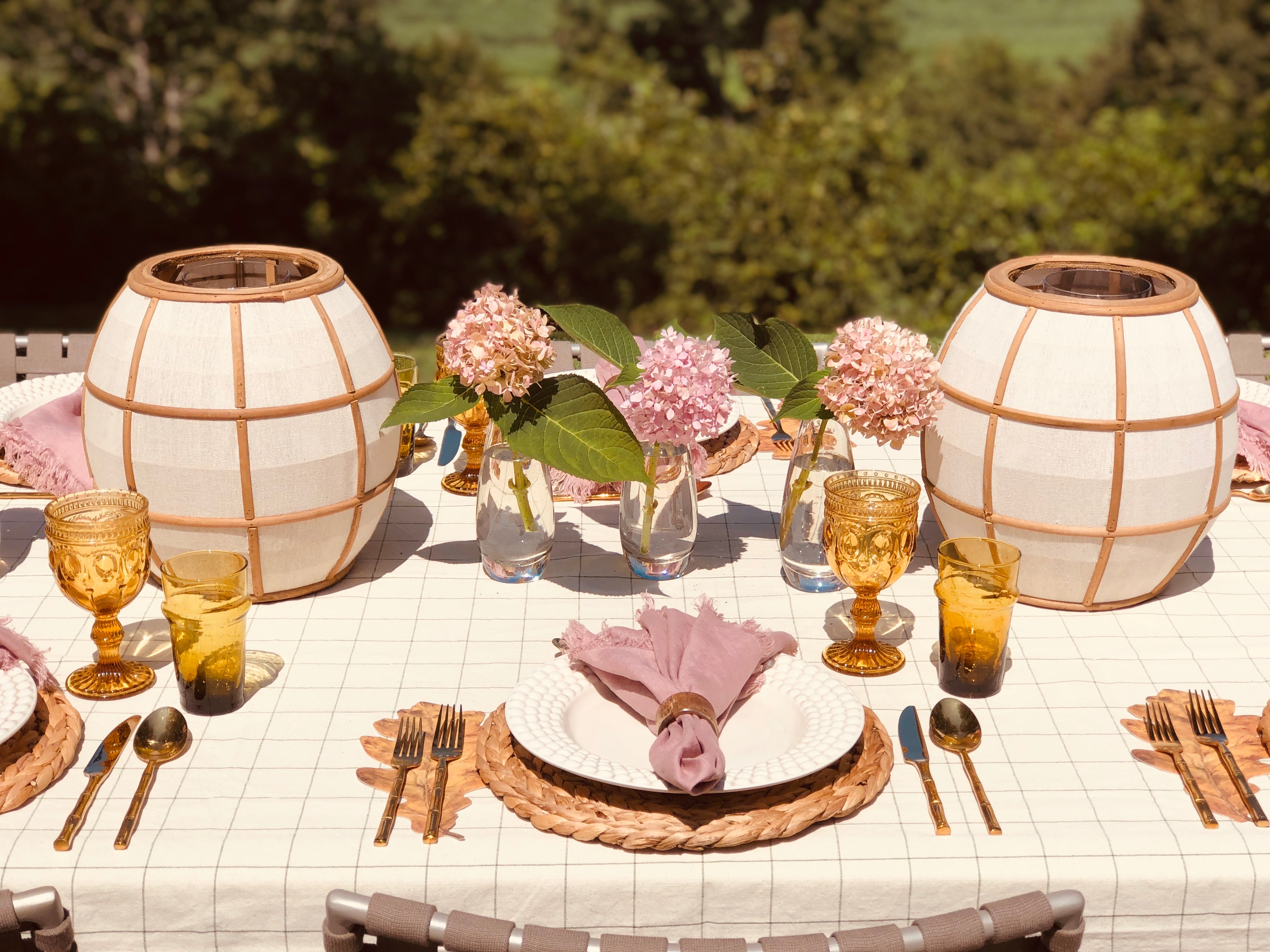


A festive table doesn’t need a full seasonal makeover; the right runner can set the mood. Choose holiday table runners based on the occasion, your dining space’s existing colors, and whether you want a bold seasonal pattern or a quieter accent. A white tablecloth works year-round, while red and green create a distinctly seasonal feel.
It’s easy to focus on the print and overlook how the runner will work with the rest of the table. Consider its visual weight, the tablecloth beneath it, and whether the design will feel special as a gift as well as useful at home.
This guide helps you compare seasonal themes, color palettes, and patterns, then layer a runner over a tablecloth for a polished tablescape. You’ll also find practical ways to assess gift appeal, making it easier to choose a festive, personal look that’s ready for gathering.
Key Takeaways
- Choose a runner as a gift by matching its design to the recipient’s hosting style and the occasions they celebrate.
- Use seasonal scenes for a festive focal point, or choose botanical and woodland motifs for a more nature-inspired mood.
- Pair colors and patterns with intention: let one design lead, then use quieter accents to keep the table balanced.
- Layer a runner over a tablecloth to add contrast and dimension while giving the table a cohesive seasonal look.
- Coordinate linens with tableware and serving accents to bring the whole setting together.
Holiday table linen gifts
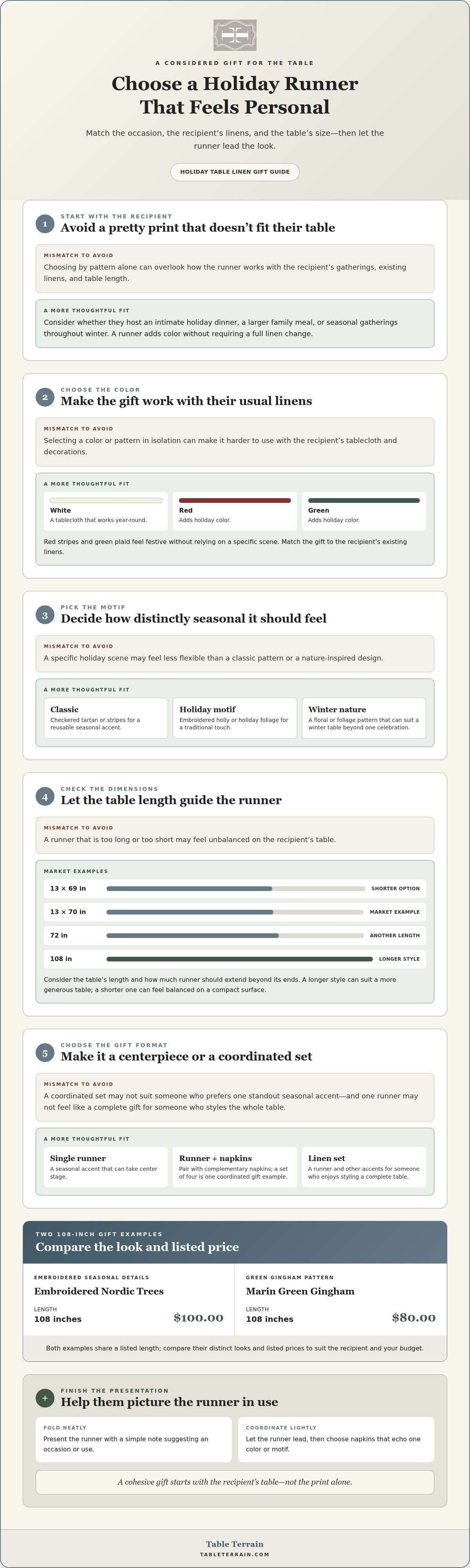
A thoughtful table gift suits the recipient’s gatherings. Start by considering how they host: an intimate holiday dinner, a larger family meal, or seasonal entertaining throughout winter. A runner adds color without requiring a full linen change. Choose a classic pattern if the recipient reuses favorite decorations, or a distinct holiday motif for a more expressive gift.
Size helps make the choice practical. Market examples include runners measuring 13 by 70 inches and 13 by 69 inches. A 72-inch runner offers another length option, while some seasonal styles measure 108 inches. Before choosing, consider the recipient’s table and how much runner should extend beyond its ends. A longer style can suit a more generous table; a shorter one can feel balanced on a compact surface.
Use this simple gift-selection sequence:
- Choose the occasion, such as Christmas dinner or a winter gathering.
- Pick a color that works with the recipient’s usual table linens.
- Select a motif, from checkered tartan to embroidered seasonal details.
- Consider the table’s length before settling on runner dimensions.
- Add a coordinated linen piece if you want to build a gift set.
Table linen sets make coordinated gifts, bringing a runner and other accents together in one visual story. They’re especially suitable for someone who enjoys styling a complete table. For a more flexible present, pair one runner with complementary napkins. A set of four napkins is one example of a coordinated linen gift, while a single runner can take center stage as a seasonal accent.
Think about how the gift might be used after the holiday. Red stripes or green plaid feel festive without relying on a specific scene, while embroidered holly or holiday foliage offers a more traditional seasonal accent. A white tablecloth works year-round; red and green tablecloths add holiday color. Match the gift to the recipient’s existing linens rather than choosing a pattern in isolation.
Presentation matters, too. Fold the runner neatly and include a simple note suggesting an occasion or use. For example, describe tartan as a festive layer for a Christmas meal. A floral or foliage pattern can suit a winter table beyond one celebration. Keep the gift cohesive: let the runner lead, then choose napkins that echo one color or motif. This small styling cue helps the recipient picture the linen in use.
The Embroidered Nordic Trees table runner is 108 inches long and listed for $100.00; the Marin Green Gingham table runner is 108 inches long and listed for $80.00. Comparing these options can help match the gift to a preferred look and budget, while a coordinated napkin set offers a useful finishing touch.
Holiday table runners with seasonal scenes
Choose a scene that suits the gathering’s mood. A Christmas tree pattern makes the holiday instantly recognizable. A pinecone design feels more woodland-inspired. One pinecone runner measures 13 by 72 inches, offering a clear example of a long, narrow table accent. A 12 Days of Christmas design measures 108 inches long. Compare the runner’s length with the table before choosing, then consider how much of the scene will remain visible beneath serving dishes.
Are holiday table runners heat-resistant, stain-resistant, or safe to use with candles? These qualities depend on the fabric and finish, so don’t assume a decorative textile resists heat or stains. Keep open flames away from fabric, and place candles in stable holders on a separate, clear surface.
Let the printed scene guide the rest of the table. If the runner features detailed Christmas trees, keep nearby decorations simple. Plain napkins and understated place settings let the illustration stand out. With a pinecone print, add natural textures such as wood or greenery without repeating every motif. A seasonal scene works best as the visual anchor, rather than competing with other focal points.
Build a centerpiece that leaves room for serving. Set a low arrangement near the middle of the runner, with taller pieces toward the ends. For a tree-themed design, arrange evergreen branches in a narrow vessel. For a winter woodland scene, use pinecones as small accents beside the centerpiece. Keep the runner’s central artwork visible, especially to guests seated across from one another.
Use these steps to style the scene:
- Lay the runner straight and center its main artwork.
- Place the centerpiece where it won’t cover the focal motif.
- Echo one color from the print in napkins or place settings.
- Keep candles and serving pieces from crowding the design.
Match the scene’s scale to the table, too. A 13-by-72-inch pinecone runner has a different visual reach from a 108-inch design. On a shorter table, a large scene may draw attention to the runner’s ends. On a longer table, a smaller repeated motif can create a steady rhythm. Think about the view from each seat, not just the overhead arrangement.
For a polished seasonal table, choose one story and repeat it lightly. A tree scene can pair with evergreen details; a pinecone motif can lead toward woodland accents. Keep the surrounding linens calmer, then bring the table together with seasonal table linens chosen to complement the runner rather than compete with it.
Animal, bird, botanical, winter, and woodland themes
Animal motifs bring personality to seasonal dining. A donkey illustration feels playful and unexpected, a partridge suggests a traditional holiday story, and winter birds create a quieter, nature-inspired mood. Choose a motif that suits the gathering, then use it to guide your supporting colors. A playful animal print pairs well with relaxed place settings, while a detailed bird design suits a more composed table.
Bird patterns can feel festive without obvious holiday symbols. Partridges, songbirds, and winter birds each create a distinct impression. Pair these motifs with simple greenery or plain napkins. If the runner features several birds, keep nearby decorations restrained. A small branch arrangement can echo the design without duplicating it. Avoid placing a centerpiece over the printed focal points.
Botanical designs offer another option. Holly berries and holiday foliage bring seasonal greenery to the table. Choose napkins that pick up one color from the leaves or berries. Deep green napkins, for example, can connect a foliage design with simple white dishes. A small vase of evergreen sprigs reinforces the theme. Keep the arrangement low enough for the pattern to remain visible.
Winter motifs work beyond a single celebration. Snow-covered trees, bare branches, and woodland animals suggest a seasonal scene without relying on bright holiday colors. Pair these designs with neutral linens for a calm look. Add a warm accent, such as deep red napkins, if the table needs more contrast. Carry one color through the place settings instead of repeating every motif.
Use the runner’s pattern scale to guide your decorations. A large animal illustration needs open space around it, while a repeating bird pattern can support smaller accents along the table. First, center the runner. Next, identify its strongest color and motif. Then choose one complementary detail, such as greenery or a matching napkin. This simple process keeps the theme clear.
- Animal scenes: Pair donkey or woodland animal motifs with understated dishes.
- Bird patterns: Echo a feather or branch detail with simple greenery.
- Botanical prints: Repeat one berry or leaf color in napkins.
- Winter designs: Use neutral linens, then add one warm accent.
Consider the view from each seat. A partridge design may have one central focal point, while birds or leaves may repeat across the fabric. Position the runner so guests can see the artwork, not just the centerpiece. On a long table, place serving pieces near the ends and keep the central motif visible throughout the meal.
Finally, match the theme to the occasion’s formality. A whimsical donkey print can bring life to a casual family meal. Botanical holly creates a classic Christmas setting, while winter birds suit a quieter seasonal dinner. Choose one clear visual story, then support it with restrained accents. This balance lets the runner shape the table without overwhelming it.
Holiday color and pattern combinations
Choose colors and patterns together, not separately. Start with the tablecloth, then coordinate the runner and smaller accents.
Holiday Color Combinations
A white tablecloth gives red, green, or gold room to stand out. Red and green make a familiar holiday pairing, while gold adds warmth beside either shade. For a quieter look, choose one seasonal color and keep the remaining linens neutral. A green tablecloth measuring 60 by 120 inches offers one example of a larger color statement.
Consider the room’s existing palette, too. If chairs or dishes already have strong color, choose a runner that echoes one shade. A red-striped runner adds a small seasonal accent to white linens. Green plaid creates a more layered effect, especially with plain napkins. Keep the strongest color to one or two places instead of repeating it at every setting.
Holiday Pattern Combinations
Pair patterns by varying their scale. A broad plaid runner works with solid napkins, while a small check can sit alongside simple dishes. If the runner has detailed embroidery, let it remain the main pattern. Add a restrained accent, such as a plain napkin in one of the design’s colors.
Patterns mix best when they share a color. Green plaid and a botanical print, for example, can feel connected through matching greens. Red stripes can pair with a subtler red detail elsewhere. Avoid combining several large, high-contrast prints; they compete for attention and can make the table feel busy.
Use this quick coordination order:
- Choose the tablecloth’s base color, such as white or green.
- Select one runner pattern, like plaid, stripes, or foliage.
- Repeat one color in napkins or another small accent.
- Keep dishes and serving pieces visually simpler.
Texture also affects how a combination looks. A smooth white cloth gives a patterned runner crisp contrast. A woven or textured surface adds depth, so simpler patterns may feel more balanced. With a green cloth, try a gold runner for contrast, or a related green pattern for a tonal look. Check the combination from the room’s entrance and from each seat.
Before setting the table, lay out the runner and napkins together. Check that the runner’s main colors stand out against the cloth, then add dishes and serving pieces. If the pattern becomes hard to distinguish, remove a competing accent. A clear color relationship and one leading pattern make a seasonal setting feel intentional.
Layering runners with tablecloths
A tablecloth sets the base; a runner adds a focused layer. Start by spreading the cloth smoothly, then center the runner along the table’s length. This arrangement frames place settings while keeping the cloth visible on both sides. A 60-by-120-inch green tablecloth gives one concrete example of a seasonal foundation. Coordinate the runner’s color and scale with that backdrop.
Length affects the finished look. A 108-inch runner creates a longer visual line than a 72-inch style. Compare each length with the tabletop before styling. The runner should look intentional, not crowded against the table’s ends. On a longer table, place it centrally so the design reads as one continuous accent. On a shorter surface, avoid bunching or awkward overhang.
Create contrast through color or texture. A plain cloth lets a patterned runner stand out. With a patterned cloth, choose a simpler runner or one that picks up a subtle color from the base. A green cloth and gold runner, for example, create contrast without adding another print. Keep napkins and dishes simple when both layers already have strong color.
Use this order to create the layered setting:
- Choose a tablecloth that suits the occasion and table shape.
- Spread it evenly, smoothing folds across the center.
- Center the runner and check its alignment from each side.
- Add place settings, leaving the runner’s design visible.
- Finish with a centerpiece that doesn’t crowd serving space.
Consider pattern scale as well as color. A bold plaid over a quiet cloth creates a clear focal point, while a detailed embroidered runner can get lost against a busy base. If both layers have patterns, look for a shared color and different scales. A fine stripe beneath broad foliage, for example, gives each design room to stand out.
Layering can make a familiar table feel seasonal. Keep a year-round cloth as the base, then change the runner for a holiday meal. A white cloth works across seasons, while red or green adds a festive accent. Store the base and runner together after use so the next table setting starts with a coordinated pair.
Before guests arrive, view the table from the doorway and seated positions. Adjust the runner if its central motif sits beneath a serving bowl. Move the centerpiece toward one end, or shift serving pieces to keep the design visible. For a coordinated base and accent, shop table runners to complete your layered table setting.
When choosing a runner or coordinated set, compare the listed regular and sale prices alongside the look you want for the table.
Consider whether a runner on its own or a set best suits the layered setting.
Table Terrain: Table Linens & Napkin Rings
Table Terrain brings a finished look to seasonal tables with Table Linens & Napkin Rings. Explore the selection when you’ve chosen a runner and want coordinating linens to complete the setting. Flatware & Serving Items can complement the table’s style, while Vases & Containers offer options for displaying a centerpiece. Goblets add another detail as you bring the place settings together.
Use the look you’ve created as your guide. Match supporting pieces to the runner’s color, pattern, and mood, keeping the table cohesive rather than crowded. Explore Table Terrain’s offerings to find pieces that suit your gathering. Visit tableterrain.com to browse, or contact Table Terrain.
Set the Scene for Your Next Gathering
Let your table reflect the kind of gathering you want to create. A quiet winter meal may call for a restrained, nature-inspired look, while a lively holiday dinner might welcome richer color and a more expressive pattern. Choose the feeling first, then let linens and table accents support it.
Before setting the table, picture what guests will see as they sit down. Decide where the centerpiece belongs, keep the runner’s design visible, and leave room for serving pieces. This simple mental walkthrough helps make holiday table runners part of a welcoming setting, not just a seasonal decoration.
Table Terrain offers Table Linens & Napkin Rings, Flatware & Serving Items, and Vases & Containers to help bring a tablescape together. If you’re ready to choose a runner for your next celebration, contact Table Terrain about runners.
Trust your eye, keep the setting personal, and make room for the moments that matter.
Frequently Asked Questions
What are popular holiday table runner styles and colors for Christmas, Thanksgiving, and other holidays?
Popular choices include Christmas greenery, plaid, and festive motifs. Thanksgiving tables often suit warm terracotta tones, while Halloween designs may feature black lace and spiderwebs. A terracotta cheesecloth runner, for example, offers a soft autumn accent, while a black spiderweb design creates a more dramatic Halloween look. Choose holiday table runners to match the occasion, then coordinate napkins and dishes using one color from the design.
What materials are best for holiday table runners, such as linen, cotton, or polyester?
Organic cotton is one listed material option for holiday table runners.
What are the best reusable and eco-friendly holiday table runner options?
The Aspen Spruce Green Organic Cotton and Aspen Luminous Red Organic Cotton runners are listed as organic-cotton options.