
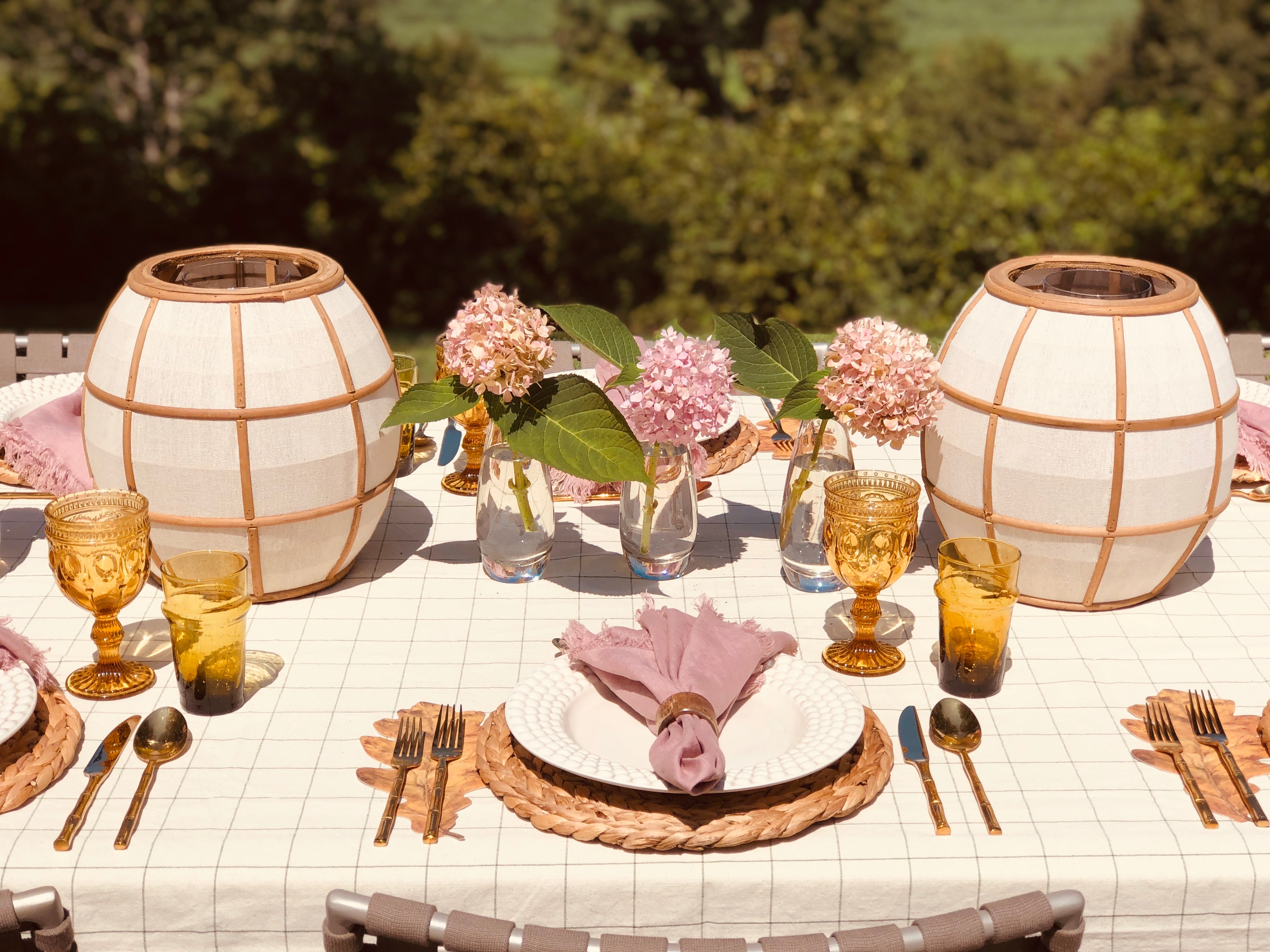


The right long table runner isn’t necessarily the one with the most dramatic overhang. It’s the one that looks balanced on your table and leaves room for dining. Choosing among long table runners can feel less straightforward than it should: product listings vary, and a few inches can change whether the ends look polished or awkward. Start with your table’s measurements, then choose the look you want.
A useful starting point is a runner 12 to 18 inches longer than the table, leaving a 6 to 9-inch drop at each end. For width, aim for about one-third of the table’s width. These proportions help you compare options, but the best fit depends on the table, the fabric, and how you plan to use the setting.
In this guide, you’ll learn how to find a balanced length, choose a runner that suits your gathering, and coordinate its color, texture, and pattern with pieces you already own. Whether you’re setting the table for an everyday meal or a special occasion, the right runner can bring the setting together while leaving room for the details that make it yours.
Key Takeaways
- Use long table runners to add a focused layer to your table, either on their own or alongside other linens.
- Measure your tabletop first, then choose an end drop that feels balanced for your table and gathering.
- Compare material, texture, color, and pattern as separate styling choices to find a cohesive look.
- Center the runner lengthwise and leave clear space for place settings and shared dishes.
- Choose an individual runner to personalize your setting and coordinate with the tabletop pieces you already own.
Long Table Runners: What They Add to a Dining Table
A table runner is a narrow textile laid lengthwise down a table, creating a visual path through the setting. Unlike a tablecloth, which covers most or all of the tabletop, a runner highlights a central strip and leaves more of the table surface visible. That simple line can draw attention to the table’s shape, add color or texture, and make the dining area feel finished without covering every detail. For a cohesive look throughout the space, pairing tabletop textiles with foundational floor pieces from Cozy Rugs can help tie the entire room together.
A runner can stand alone on a bare tabletop or be layered with a tablecloth, placemats, or both. If the table surface has a finish or grain you want to show, leave some of it exposed. For a layered look, choose linens with a shared color or texture, then let one piece take the lead. A general overview of the history of table linens offers useful context for how table coverings can serve both practical and decorative roles.
A runner can also anchor a centerpiece. Position a vase or low arrangement along its centerline, leaving room for serving dishes and clear sightlines across the table. The runner guides the eye from one end to the other, while a modest centerpiece adds a focal point without taking over the dining space. The result feels composed, not crowded.
When does a long table runner suit your table?
A runner creates a visual centerline that can make a table feel more deliberate, whether you’re sharing an everyday meal or setting the scene for guests. It’s useful when you want a defined place for a centerpiece or serving pieces but prefer to keep more of the tabletop visible. Consider the table’s shape, surface, and how you use it. A runner should support the setting, not obstruct conversation or serving.
For shared dining, the central strip can help organize bowls, platters, or a small arrangement while place settings remain around it. For a gathering, choose a runner that complements the mood without requiring every other piece to match. The best fit depends on the table and the way people gather around it.
Can you use a runner without a tablecloth?
Absolutely. On a wood, stone, or glass tabletop, the exposed surface becomes part of the design. A lighter runner can stand out against a darker finish; a richly colored one can bring warmth to a paler surface. Keep the contrast intentional, and let the runner’s texture or pattern add interest without competing with the table itself.
A single runner creates a clean focal line. Layering it over a tablecloth adds another visual surface, while placemats define individual place settings. Choose the approach that suits the occasion and leaves practical room for dining. For ideas on coordinating these pieces, explore the table linens and napkin rings guide.
How to Measure for the Right Long Table Runner
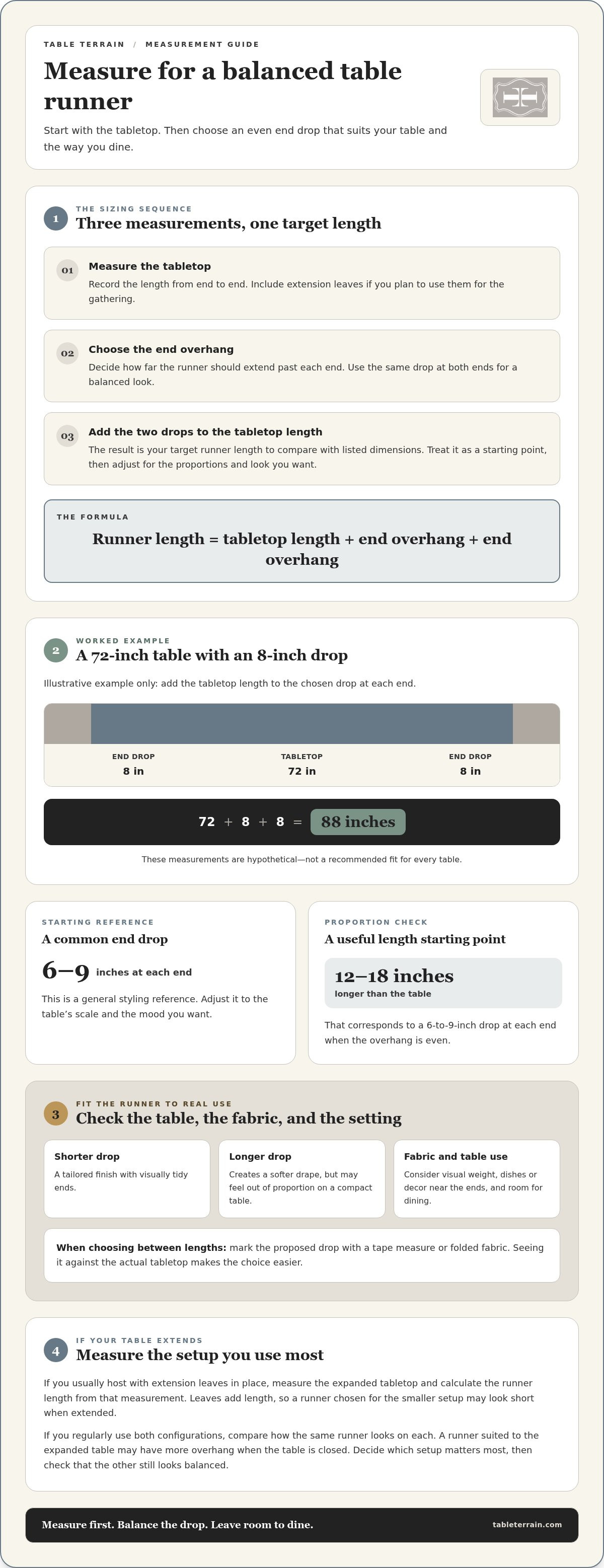
Measure before comparing long table runners. A product’s listed length tells you how much fabric you’re buying, but the finished look depends on how that length relates to your tabletop and the amount of fabric you want extending beyond each end. Treat the overhang as a styling choice, not a fixed requirement.
Use this simple sequence:
- Measure the tabletop. Record its length from end to end, including any extension leaves you plan to use for the gathering.
- Choose your end overhang. Decide how far you’d like the runner to extend past each end. Use the same drop at both ends for a balanced look.
- Calculate the runner length. Add the chosen overhang twice to the tabletop length. The result is your target runner length.
Runner length = tabletop length + overhang at one end + overhang at the other end. Use this as a practical starting point when comparing listed dimensions, then adjust for the proportions and look you want.
Illustrative example only: Imagine a table measuring 72 inches long and a desired overhang of 8 inches at each end. Add 72 + 8 + 8 to get a target runner length of 88 inches. These measurements are hypothetical, not a recommended fit for every table. For your own table, let its proportions and the way you use the space guide your choice.
How much should a table runner hang over the ends?
There isn’t one drop that suits every table or occasion. A shorter overhang gives the runner a tailored finish and keeps the ends visually tidy. A longer drop creates a softer drape, but can feel out of proportion on a compact table. As a general styling reference, a 6-to-9-inch drop at each end is common. Adjust it to suit the table’s scale and the mood you’re creating.
Before settling on a length, picture the runner in place. Consider the table edge, the fabric’s visual weight, and whether you’ll have dishes or decor near the ends. If you’re between two lengths, mark the proposed drop with a tape measure or folded fabric. Seeing the overhang against the actual tabletop makes the choice easier.
What if your table is extra long or extendable?
Measure the table in the configuration you use most often for entertaining. If you usually host with extension leaves in place, measure the expanded tabletop and calculate the runner length from that measurement. Leaves add length, so a runner chosen for the smaller setup may look short when the table is extended.
If you regularly use both configurations, compare how the same runner would look on each. A runner that suits the expanded table may have more overhang when the table is closed. Decide which setup matters most for your gatherings, then check that the other arrangement still looks balanced. To explore individually styled options, browse Table Terrain’s curated table linens as you consider the look you want.
Compare Long Table Runner Materials, Colors, and Patterns
Choose a runner by considering four separate elements: material, texture, color, and pattern. Material influences the overall impression, texture adds depth, and color and pattern determine how the runner relates to your tableware. Looking at each element separately makes it easier to compare options and consider the care details for the specific piece.
Material
Look: Cotton often feels relaxed and practical; linen has a natural, refined character; satin or silk can read as more formal. Visual weight: It depends on the weave, finish, and color. Setting: Consider the mood of the gathering and the look you want.
Texture
Look: Smooth surfaces feel crisp; a visible weave or raised detail brings dimension. Visual weight: More pronounced texture draws the eye. Setting: Pair tactile detail with simpler surrounding pieces for balance.
Color
Look: Neutrals create a quiet foundation; saturated hues make a confident accent. Visual weight: Strong contrast stands out, while related tones blend. Setting: Use existing table finishes and serveware as your guide.
Pattern
Look: A solid gives other details room to shine; a print adds movement and personality. Visual weight: Large, high-contrast motifs tend to feel bolder. Setting: Balance a patterned runner with simpler linens and tableware.
These are styling cues, not fixed product specifications. The same color can feel subtle against one tabletop and striking against another. Before deciding, place the runner beside the table surface, linens, and a piece of drinkware. Check the combination in the light where you’ll use it, then notice which element becomes the focal point.
Which runner color and pattern work with your existing tableware?
Start with what’s already on the table: its finish, the linens, and the color of your goblets or wine glasses. If those pieces have lively hues or intricate details, a quiet neutral can create breathing room. If your setting is understated, a patterned accent or stronger color can add personality without requiring a full change of linens. For ideas on coordinating colored glassware, explore the guide to colorful glassware and goblets.
Tonal coordination creates a calm, connected mood. Choose shades that sit near one another, such as warm neutrals paired with another earthy tone. Contrast feels livelier. A deep runner against a pale surface, for example, gives the table a clear visual anchor. Keep the rest of the palette edited so each piece has room to register.
How can texture change the feel of a long runner?
Texture adds visual depth without introducing another color. A subtle weave can make a simple palette feel considered, while a more pronounced surface becomes a feature in its own right. Let one tactile element lead, then pair it with smoother or simpler pieces. The setting feels layered without looking busy.
How to Place a Long Table Runner for a Balanced Setting
Good placement makes long table runners feel like part of the setting, not an extra layer competing for attention. Center the runner along the table’s length and align it with the table’s middle. Arrange place settings and shared dishes around it, leaving enough clear surface for guests to eat and serve comfortably.
Think of the runner as a visual guide, not a boundary. It can define a central area for shared dishes or a modest centerpiece, while the table edges remain open for plates, glassware, and serving pieces. Keep a centerpiece low or compact enough for guests to see and speak to one another across the table. Scale matters more than quantity: one well-proportioned focal point often feels calmer than several objects crowded together.
How do you center a runner on a long table?
Use the table edges as reference points. Lay the runner lengthwise, then compare the visible tabletop on either side to check that it sits in the middle. Align both ends visually, especially if the table has a strong centerline or distinct end edges. Step back, view it from the ends, and make small adjustments until the placement looks even.
Next, check from seated viewpoints. A runner can look centered while standing but appear slightly off from a chair, particularly if the table or its surface has an uneven visual pattern. Walk around the table and make a small shift if needed. Smooth out folds, then arrange the tableware. The runner should look settled without making the setting feel too arranged to use.
How do you keep a runner from competing with place settings?
Balance the runner’s visual prominence with the linens and tableware around it. If it has a strong pattern or bold color, keep nearby pieces simpler so guests’ plates and glassware remain easy to notice. A quieter runner can sit comfortably beside more expressive place settings. Either way, leave clear, usable space for dishes and serving bowls rather than filling every part of the tabletop.
Before guests arrive, set a place or two as a practical test. Check that plates don’t overlap the runner awkwardly, glasses sit securely, and shared dishes can be reached without disrupting the arrangement. Shift items as needed, and keep a clear line of sight across the table. For more inspiration on bringing each element together, browse this guide to elegant table settings.
Once the arrangement feels balanced, make the runner the setting’s quiet anchor and let the tableware do its part. Explore Table Terrain’s curated runners to find an individual piece for your table.
Find Curated Long Table Runners at Table Terrain
Once you know the look and fit you’re after, shopping becomes less about scrolling through endless options and more about finding a piece that feels right for your table. Table Terrain curates linens and tabletop pieces for gracious entertaining, including runners you can choose as individual accents. A runner can express your style, whether you’re refreshing an everyday setting or adding a considered detail to a gathering.
Table Terrain’s promise is “Beautiful Tables. Effortlessly Curated.” Founder Brooke Streep brings nearly three decades of experience styling homes, events, and tables. That perspective informs an approach centered on bringing tabletop pieces together with ease while leaving you room to make the setting your own.
What makes a curated runner easier to shop for?
A considered selection offers a clearer starting point than browsing without a sense of direction. Begin with your table measurements and the style you’ve identified: a quiet neutral, a distinctive pattern, or a particular color relationship with your linens and drinkware. Then compare those preferences with the dimensions, materials, and care details provided on each product page.
Keep your needs in view as you browse. A runner should suit the way you use your table as well as the atmosphere you want to create. Product descriptions can help you evaluate each piece, while your tabletop and existing linens provide context for deciding whether it belongs in your setting.
How can a runner become the starting point for your table?
Choose the runner first, then build around its visual character. Pair a patterned piece with simpler placemats or linens, or use a more understated runner as a backdrop for expressive glassware. Vases and containers can contribute to the overall look, but the pieces don’t all need to compete for attention. Repeat a color or echo a texture to create a sense of connection.
“A beautifully set table, without the guesswork.” Start with one piece you love, then add only what supports it and suits the way you’ll gather. This keeps your table personal and considered without making the setting feel crowded. Explore Table Terrain’s curated long table runners and linens to find an individual piece for your table.
Make Your Next Gathering Feel Like Yours
The right runner can be more than a finishing touch. It can set the mood for a meal and give you a starting point for bringing together pieces you already love. Let your table’s character guide you, then choose long table runners that feel at home with your everyday place settings and the occasions you look forward to hosting.
Table Terrain’s curated tabletop pieces make it easy to explore individual details for a more personal setting. Founder Brooke Streep brings nearly three decades of styling experience to the art of gathering, with an eye for pieces that feel considered and welcoming.
Choose a runner that speaks to your style, then build around it at your own pace. Explore Table Terrain’s curated table linens and find an inspiring starting point for your next table. A thoughtful detail can make gathering feel even more special.
Frequently Asked Questions
How long should a table runner be for a long dining table?
Measure the table in the setup you use most, then add twice your chosen end drop to find a target length. For example, an 84-inch tabletop with a 7-inch drop at each end calls for a runner close to 98 inches. Long table runners can vary in proportion, so compare the calculation with the listed length and consider whether the finished look suits how you’ll use the table.
Can you use a table runner without a tablecloth?
Yes. A runner can sit directly on the tabletop, letting the surface become part of the setting. On a glass table, it can add a defined strip of color; on a wood table, it can complement or contrast with the grain. This approach works well when you want to show off the table itself. Use placemats at individual settings if you’d like more definition around each place.
Can a table runner be used on an extendable dining table?
Yes, but the runner’s proportions may change as the table expands. If you entertain in both configurations, consider which setup matters more and how the runner will look in the other one. A runner selected for the extended table may have more fabric at the ends when the leaves are removed. Before guests arrive, open the table and arrange the runner and place settings together to see how the full layout works.
What is the difference between a table runner and a tablecloth?
A table runner is a narrower textile that emphasizes a strip of the tabletop, while a tablecloth covers a broader area. The choice affects how much of the table’s finish remains visible and how much visual weight the linens bring. A runner can be used as a lighter accent or layered with other linens; a tablecloth creates a more continuous fabric backdrop for the setting.
How do you keep a long table runner centered?
Align the runner with the table’s visual middle, then step back and check it from each end. If the tabletop has a seam, grain, or other strong line, use that as a guide. Make small shifts rather than pulling from one end alone, which can skew the fabric. Once it looks even from standing and seated viewpoints, place the tableware and check that the runner hasn’t moved.
How do you choose a table runner color that works with your tableware?
Pick one existing element to guide the palette, such as a plate, goblet, or the table finish. For a calm look, choose a runner in a related tone; for more contrast, use a color that stands apart while still complementing the setting. If your dishes already have a bold pattern, a quieter runner can give the eye a place to rest. Compare the colors together in your dining room’s usual light.