
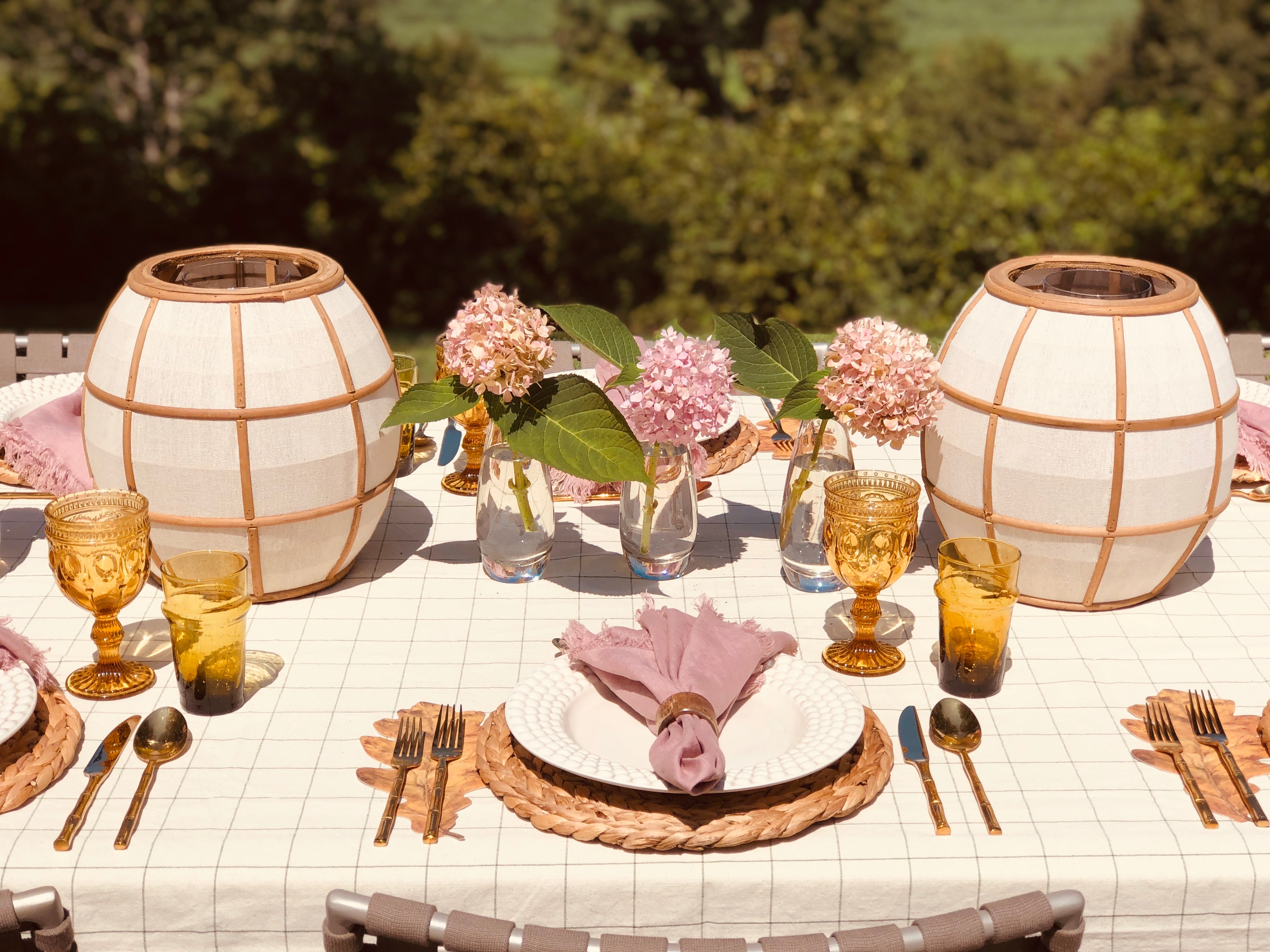


What makes easy clean placemats practical isn’t always a surface you can wipe clean. The best choice is one whose care routine fits your household, whether that means removing crumbs with a cloth or washing the mat when needed.
Spills and stains are part of everyday dining, but practical table mats don’t have to look purely utilitarian. The right material can make cleanup more manageable while adding color, texture, and a polished finishing touch.
This guide compares wipeable surfaces, washable fabrics, and natural woven materials, with tips for choosing a routine you’ll actually follow. You’ll also find advice on checking product care directions, protecting your tabletop, and coordinating placemats with linens and other pieces. The aim is simple: an inviting table that feels easy to live with every day.
Key Takeaways
- Choose easy clean placemats by matching their care routine to your household, rather than relying on a one-size-fits-all idea of “easy.”
- Compare common materials by cleanup needs and table style, from quick surface wiping to laundering.
- Use placemats as a layer between dishes and your tabletop, but check product-specific guidance for heat and water protection.
- Consider everyday meals, typical spills, and entertaining style to narrow down a practical, polished choice.
- For a coordinated starting point, Table Terrain’s Essential Tablescape Kit includes eight water-hyacinth placemats.
Easy-Clean Placemats: What “Easy to Clean” Really Means
“Easy to clean” can describe different routines. One placemat may need a quick wipe after dinner; another may need washing when it gets dirty. The most practical easy clean placemats are those you can care for as directed without adding chores you’d rather avoid.
A placemat provides a surface between dishes and the table, and it can add color and texture to a setting. For a general overview of placemat materials and purposes, see the Placemat Wikipedia article. But appearance and basic purpose don’t tell you how a particular mat should be cleaned. Check its care directions before choosing, especially if spills are common or you want to avoid a special cleaning routine.
Wipeable, washable, and low-maintenance: how the terms differ
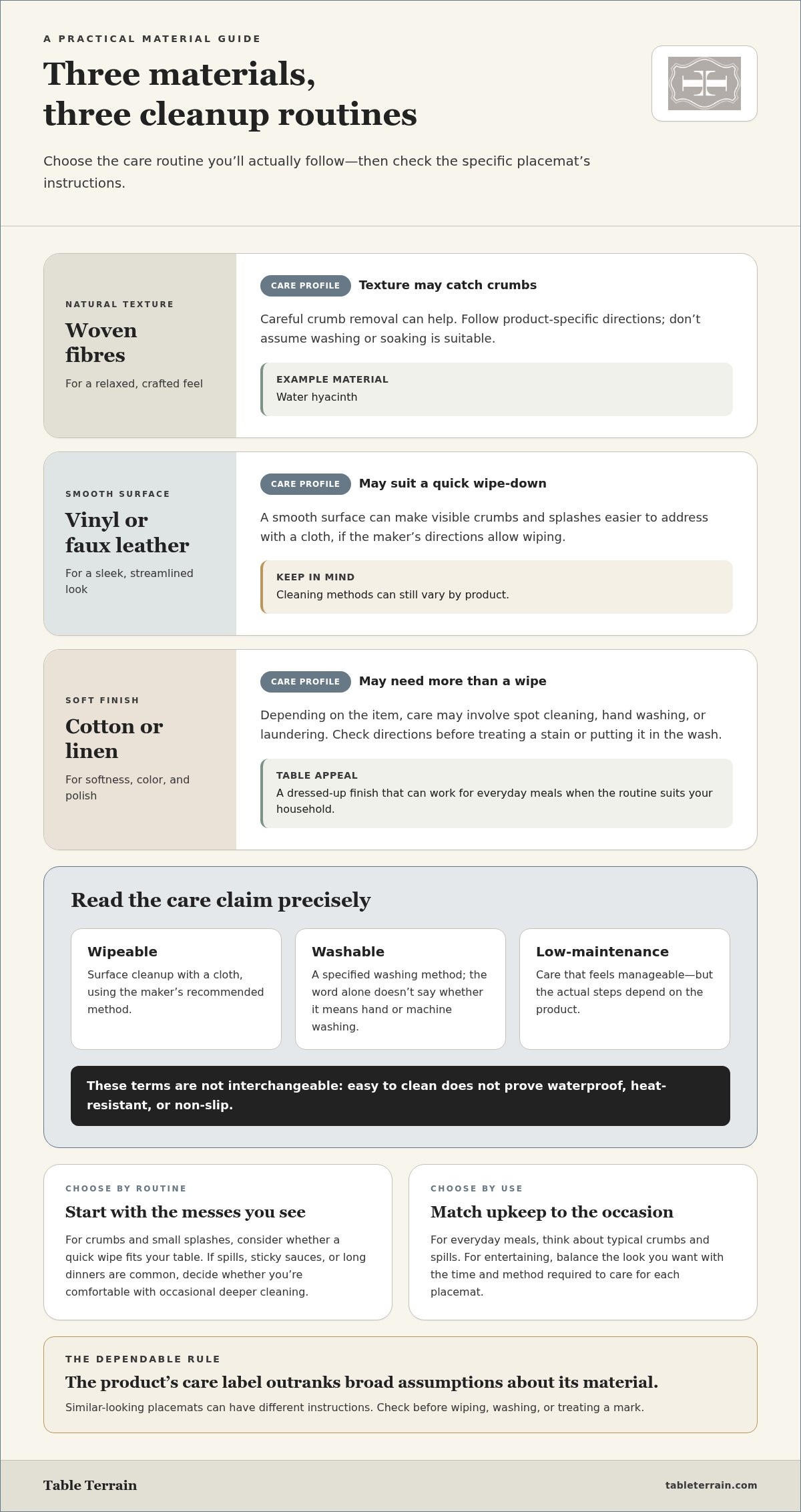
Wipeable describes surface cleanup: you can remove everyday residue with a cloth using the method the maker recommends. Washable means the item can be cleaned using a specified washing method, but the word alone doesn’t tell you whether that means hand washing or machine washing. Low-maintenance is broader. It suggests care that feels manageable, but the actual steps still depend on the product.
Don’t treat one claim as proof of another. Waterproof, heat-resistant, and non-slip describe different properties. A placemat being easy to clean doesn’t establish that it has any of them. Read the product’s care and use directions. A woven surface, for instance, may need a gentler approach than a smooth one, while fabric care can depend on the item’s construction and instructions.
Which cleanup routine fits your table?
Start with the messes you actually see. Do weeknight meals usually leave crumbs and small splashes that call for a fast wipe? Are spills, sticky sauces, or long dinners common enough that placemats need more than surface cleanup? Your answers help you decide whether a wipe-and-put-away routine is enough or whether you’re comfortable with occasional deeper cleaning.
Next, compare your preferred routine with the maker’s directions. If you want to clear the table quickly, a product that requires extra steps after each meal may not feel low-maintenance in practice. If you’re happy to wash placemats periodically, a washable option may suit your habits, provided its care directions work for you. Don’t rely on appearance or material name alone.
- For everyday meals: Consider how you’ll handle the crumbs and spills that are common at your table.
- For frequent messes: Look for care directions that match the cleanup you’re willing to do. Don’t assume a surface is stain-proof.
- For entertaining: Balance the look you want against the time and method required to care for each placemat.
Choose the routine first, then the look. That makes it easier to find placemats that feel fitting after a meal as well as when the table is set.
Easy-Clean Placemat Materials: Compare Care and Table Appeal
Material can suggest how a placemat feels and what its care may involve, but it can’t replace the product’s own instructions. Surface finish, construction, and any special treatment can affect the recommended routine. Use the comparison below to shortlist easy clean placemats, then check the care directions for the specific item you’re considering.
Woven natural fibres, such as water hyacinth
Typical care: Texture may catch crumbs, so careful removal can help. Follow product-specific directions, and don’t assume washing or soaking is suitable.
Table appeal: Adds natural texture and warmth, with a relaxed, crafted feel.
Vinyl or faux leather
Typical care: A smooth surface may suit a quick wipe-down when the maker’s directions allow it. Cleaning methods can still vary by product.
Table appeal: Often reads as sleek and streamlined, making it a natural fit for a modern setting.
Fabric, such as cotton or linen
Typical care: May call for spot cleaning, hand washing, or laundering, depending on the item. Check the care directions before treating a stain or putting it in the wash.
Table appeal: Brings softness, color, and a dressed-up finish, while still working for everyday meals when its care routine suits your household.
Woven and natural-fibre placemats
Woven placemats bring depth to a tabletop. Their texture can make a simple place setting feel warm and considered, but the weave may hold crumbs more readily than a smooth surface. Water hyacinth is one example of a woven material, not a promise of easy wiping or stain resistance. Check the item’s instructions before cleaning, and don’t assume water or laundering is appropriate.
For a quick cleanup, consider how to remove food from the weave without pulling at it or pressing residue deeper into it. The product’s own directions should guide your method. A woven finish can be beautifully tactile, and care expectations deserve the same attention as appearance.
Smooth-surface and fabric placemats
Smooth vinyl or faux-leather surfaces can make visible crumbs and splashes easier to address with a cloth, provided the care directions permit wiping. Fabric brings a different appeal: linen or cotton can soften a setting and complement napkins, but cleaning might involve more than a quick pass. There’s no universal winner. Choose based on the look you love and the upkeep you’ll happily manage.
Keep this rule in mind: the product’s care label outranks broad assumptions about its material. Two placemats that look alike may have different instructions, so check before wiping, washing, or treating a mark. That small step can help you choose a table setting that feels polished and practical over time.
If you’re weighing texture and coordination as well as cleanup, explore Table Terrain’s placemats and tabletop pieces for inspiration on bringing a table together.
Do Easy-Clean Placemats Protect the Table and Stay Looking Elegant?
A placemat gives each setting a defined layer between dishes and the tabletop. It can help contain everyday crumbs and spills while adding a considered finish, but it shouldn’t be treated as a guarantee against scratches, heat damage, or stains. The protection it offers depends on the individual product and how it’s used.
Keep performance claims specific. A placemat described as water-resistant or heat-resistant has a stated feature, but that wording doesn’t automatically explain how it should be used or cleaned. Follow the maker’s directions, and don’t infer heat or water protection from a material’s name, thickness, or appearance. A beautiful table starts with realistic expectations.
What placemats can, and cannot, do for a tabletop
Think of a placemat as a place-setting boundary: it gives plates, cutlery, and glassware a composed area while adding a layer over the table. That layer may help keep small food spills and crumbs together for cleanup, but it doesn’t guarantee the surface underneath will stay untouched. For hot cookware or spills, follow the table and placemat makers’ specific instructions rather than assuming any mat will prevent damage.
Before setting the table, check product details for stated limits on heat, moisture, or cleaning. Careful use matters just as much as the material. If the instructions don’t describe a particular use, don’t treat a broad claim as permission for it.
How to keep a practical table setting polished
Practicality doesn’t have to look casual. The visual mood comes from the mix of texture, color, shape, and finish. A woven placemat can bring warmth to crisp table linens; a smooth, restrained surface can suit a clean-lined setting. Fabric mats can create a softer, more dressed-up look. Choose one element to lead, then repeat a color or texture elsewhere so the arrangement feels intentional rather than busy.
Try these simple combinations:
- Natural and relaxed: Pair a textured placemat with a plain napkin and clear glassware. Let the weave provide interest, and keep the centrepiece low and simple.
- Clean and tailored: Coordinate a smooth placemat with napkins in a related shade. Consistent tones make practical pieces feel like part of the design.
- Soft and inviting: Set fabric placemats with complementary napkins and understated flatware for a layered look that still feels welcoming at everyday meals.
For more ideas on bringing these layers together, explore this guide to layering table linens and napkin rings. Coordinated details can make easy clean placemats feel at home at both a weeknight dinner and a thoughtfully set gathering. The aim isn’t to hide their practical role; it’s to make that role part of a polished table.
How to Choose Easy-Clean Placemats for Your Everyday Routine
The right choice starts with how your table is used, not with a universal “best” material. Use this four-step process to balance cleanup, care, and the look you want. It helps narrow down easy clean placemats for daily meals and gatherings alike.
- Identify the setting. Think about where the placemats will be used and how often. A mat for everyday family meals may need to suit regular quick resets, while one used mainly for hosted dinners might be chosen for its texture or more formal finish.
- Picture your usual messes. Consider the spills and crumbs you typically see. If meals often involve sauces or sticky fingers, prioritize care directions that feel manageable after those moments. If messes are occasional, you may be comfortable with a different routine.
- Choose the look you want. Decide whether a smooth, understated surface, a woven texture, or the softness of fabric best suits your table. Then consider how the placemats will work with your napkins, dishes, and glassware. Practical doesn’t have to mean plain.
- Check fit and care. Review each product’s dimensions, material description, and care directions. Make sure the placemat suits the space available at each setting, and understand whether the stated method involves wiping, washing, or another kind of care.
Match placemats to the messes and moments you expect
For frequent family meals, choose a routine you’ll genuinely repeat after dinner. A cleanup method that sounds simple but feels time-consuming in practice may not suit your household. For occasional entertaining, you might give more weight to a distinctive texture or a polished finish, as long as you’re comfortable with the care it requires. Rather than ranking materials broadly, compare the directions for the specific placemats you’re considering.
Ask yourself: do quick resets matter most, or is a more decorative surface worth a little extra upkeep? Keep the answer realistic. Your preferred routine should work on an ordinary weeknight, not only when you have extra time.
Check care directions before adding placemats to your table
Look for the exact cleaning method on the individual product page. A material name alone doesn’t tell you whether the item can be wiped, washed, or cleaned another way. Follow those directions when dealing with spills, and don’t assume a method that works for one placemat suits another.
If you’re coordinating placemats with linen napkins, use each item’s own care guidance. You can also consult this guide to premium table linens for relevant linen-care context.
Ready to put your criteria into practice? Explore Table Terrain placemats and consider how each option fits your table’s look and routine.
Create a Beautiful Table with Table Terrain’s Curated Placemats
Choosing placemats is about more than finding a surface that suits your table. The right pieces help set a mood and give you a starting point for bringing linens and tabletop details together. Table Terrain curates placemats and coordinated pieces for gracious entertaining, with an eye for making a polished table feel approachable. The brand promise says it simply: “Beautiful Tables. Effortlessly Curated.”
A coordinated starting point for an inviting table
The Essential Tablescape Kit offers a considered foundation for setting the table. It includes eight water-hyacinth placemats, eight white 100% stone-washed linen napkins, eight natural horn napkin rings, and twelve 18-inch sandstone-color taper candles. Together, these pieces establish a palette of natural textures, soft white, and warm neutral tones.
A coordinated kit can make styling feel less like a series of separate decisions. Instead of starting from scratch with each detail, you can build around pieces already gathered for you. Set the placemats and napkins, add the napkin rings, then arrange the candles as part of the table’s overall composition. The result is a cohesive starting point that still leaves room to bring in your own dishes, glassware, or other personal touches.
Consider the kit for its visual coordination, not as a shortcut to a particular cleaning routine. The water-hyacinth placemats are part of the set’s natural-texture story; don’t assume they’re wipeable, washable, stain-resistant, or suitable for a specific cleaning method. As with any placemat, refer to the product’s care directions when deciding how it fits your everyday needs.
Explore placemats and tabletop pieces
Table Terrain brings placemats together with tabletop pieces that help hosts create an inviting setting. That curated perspective is useful when you want your table to feel harmonious without matching every element exactly. Start with the atmosphere you want, such as a warm, natural foundation or a crisp, understated look, then choose details that complement rather than compete.
As you explore easy clean placemats, keep the two decisions distinct: choose a look that suits your table, and choose a care routine that suits your household. The Essential Tablescape Kit is one example of a coordinated table foundation, while individual placemats should be considered according to their own materials and care directions. That way, style guides the setting and product-specific information guides upkeep.
Set the scene with pieces that feel considered and welcoming. Explore Table Terrain’s curated tabletop pieces and find inspiration for a table that feels beautifully brought together.
Set the Table for More Moments Together
Let your next table setting begin with one detail you love. A favorite color, a natural texture, or a beautifully finished placemat can set the mood, then guide the linens and tabletop accents you layer around it. Choose easy clean placemats with a care routine that feels natural for your home, and spend less time second-guessing the setup and more time enjoying the people around it.
Table Terrain brings a thoughtful styling perspective to the details. Founder Brooke Streep draws on nearly three decades of styling experience to curate pieces that make a table feel welcoming and pulled together. Take inspiration from that considered approach, then make the setting your own with textures and accents that suit the way you gather.
Ready to find a fresh starting point for your table? Explore Table Terrain’s curated tabletop pieces and create a setting that feels personal and effortless.
Frequently Asked Questions
What are the easiest placemats to clean?
Smooth, nonporous placemats, such as some silicone, vinyl, or faux-leather options, are often simplest for a quick wipe-down if their care instructions allow it. But easy clean placemats aren’t defined by material alone. Check the product’s cleaning directions and consider whether you prefer wiping after meals or are comfortable with a more involved routine. A washable fabric mat may suit your habits better than a surface you don’t enjoy using.
Can you put placemats in the washing machine?
Only put placemats in the washing machine if the product’s care instructions say machine washing is suitable. The label may specify a cycle, water temperature, or drying method, and those details can differ between products, even within the same material family. If the directions recommend wiping or hand cleaning instead, follow them. When instructions don’t clearly permit machine washing, don’t assume a mat can handle a spin cycle.
Are vinyl placemats easier to clean than fabric placemats?
Vinyl placemats can be easier to wipe down after a small spill, while fabric placemats may require spot treatment or washing. That difference is useful if you want to clear the table quickly, but it doesn’t make vinyl the right choice for everyone. Fabric can bring color and softness to a setting, and its care routine may still be practical for your household. Compare each item’s directions before choosing.
How do you clean woven placemats?
Use the cleaning method recommended for the specific woven placemat, since the weave and material can affect how it should be handled. For loose crumbs, gently remove them without scraping or pulling at the fibres. Don’t soak, scrub, or launder a woven mat unless its care directions allow it. If food spills into the texture, follow the maker’s guidance rather than applying a cleaning product or method by guesswork.
Do placemats protect a dining table from heat and spills?
Placemats add a layer between dishes and the tabletop, which can help gather crumbs and minor spills in one place. They don’t guarantee protection from heat, moisture, scratches, or stains. For example, don’t place a hot pan on a mat based only on its material or thickness. Check the product’s stated heat and water guidance, and follow the dining table’s care recommendations too.
Can you use easy-clean placemats for a formal dinner?
Yes. Choose a finish and palette that suit the occasion, then coordinate the placemats with napkins, glassware, and the rest of the setting. A smooth, understated mat can create a tailored look, while a textured option can add depth. For a polished dinner, keep the centrepiece simple and repeat one or two colors across the table. Practical care and an elegant setting can work together.
How often should you clean placemats?
Clean placemats after meals according to their care directions, especially when you notice crumbs, food residue, or spills. A mat used for a light breakfast may need only the routine its maker recommends, while one with visible sauce or sticky residue needs attention after that meal. For washable placemats, follow the label on when and how to wash; don’t use a fixed schedule that ignores the product’s instructions.