
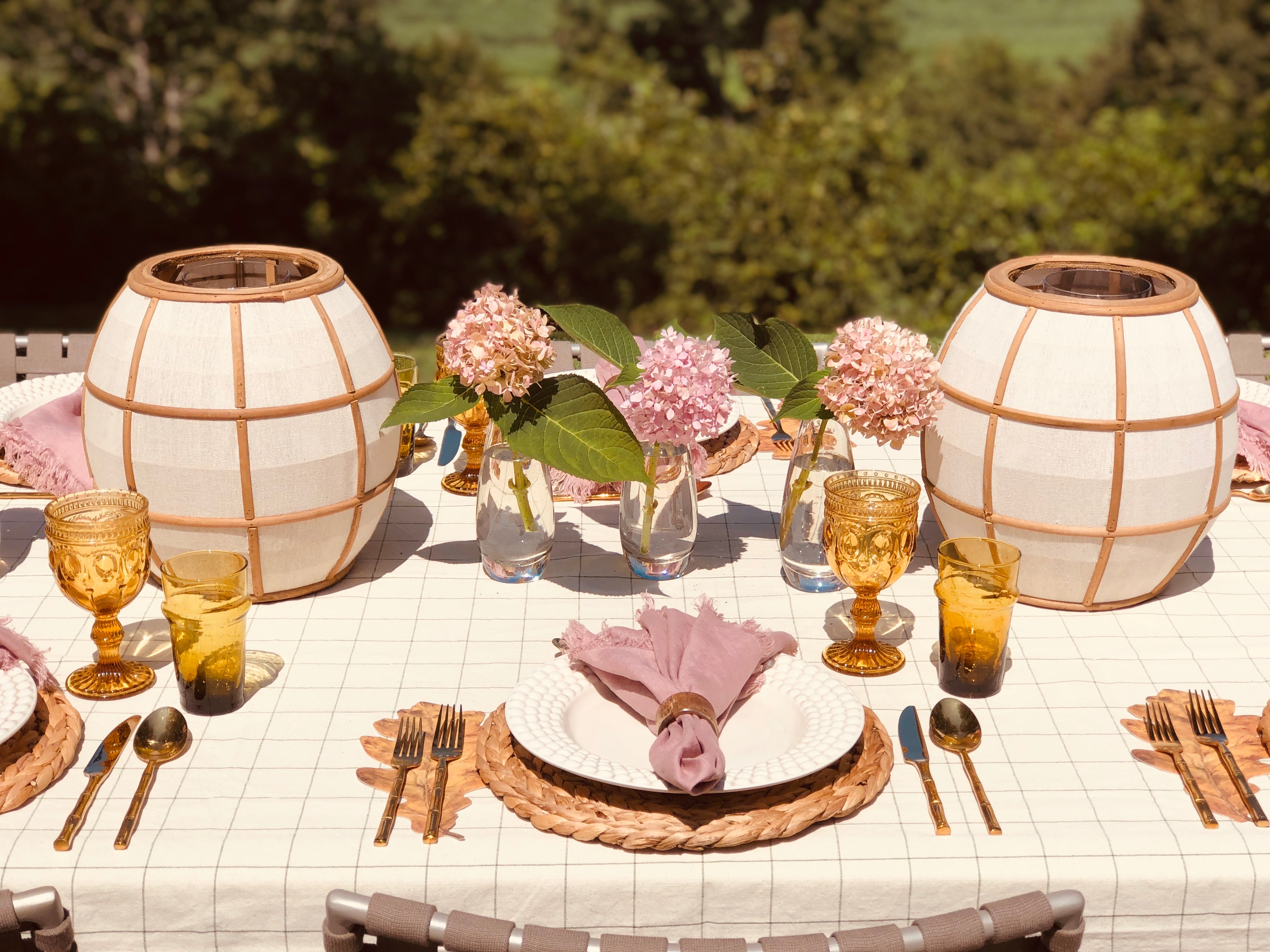


What if the most beautiful Thanksgiving centerpiece is the one that leaves the most room? Inspiration images may be filled with pumpkins, flowers, and candlelight, but recreating that look can mean blocking conversation or crowding out serving dishes. The best thanksgiving table centerpieces are designed around the meal and the table, not just the season. A thoughtful arrangement feels festive and polished while giving guests space to see one another and enjoy dinner.
Start with the table’s shape, the way you’ll serve the meal, and the tableware you already own. Then choose a manageable mix of seasonal color, texture, and natural details. A vase or container can anchor the arrangement, while a runner or placemats add a coordinated layer without crowding the setting. The result is a warm Thanksgiving table that works for guests and pieces you can enjoy through fall.
Key Takeaways
- Choose thanksgiving table centerpieces to suit your table layout, then compare low arrangements, runner-style displays, and grouped accents.
- Use one focal element, a few natural accents, and a restrained color palette to create a composed seasonal look.
- Build the table in a simple order, and check sightlines from seated positions before settling on the arrangement.
- Echo one color, texture, or seasonal note from the centerpiece in a supporting tabletop detail.
- Explore how vases, containers, runners, placemats, goblets, and wine glasses can bring the finished setting together.
Thanksgiving table centerpieces: start with the meal and table
A centerpiece is the visual anchor of the table, but it shouldn’t compete with the food or make guests work around it. Seasonal color and texture bring warmth; clear sightlines, comfortable place settings, and room for serving dishes make the meal easier to enjoy. The challenge is to make the table feel special without turning its most useful surface into a display shelf.
A functional Thanksgiving centerpiece adds seasonal beauty while preserving space for serving dishes and easy conversation. Let the table’s shape, the number of guests, and your serving plan guide the design. A single compact arrangement may suit a small table, while a long table may call for low accents spread along the center. Think about the mood you want, too. The history of Thanksgiving reflects a holiday shaped by traditions of gathering and giving thanks, making a welcoming, shared table a fitting focus.
Before choosing flowers, foliage, or fruit, picture what happens once everyone sits down. If guests will pass serving dishes around the table, leave a clear route through the center. If most of the meal will be served from a sideboard, you may have more room for a decorative focal point. The goal isn’t to fill every open space. Give the table a seasonal focal point and keep the meal easy to enjoy.
What makes a Thanksgiving centerpiece work?
A successful arrangement sets a welcoming mood while respecting the table’s practical purpose. Autumn leaves, fruit, flowers, or a warm-toned vessel can add seasonal color and texture without making the arrangement feel crowded. Choose details that complement one another rather than compete for attention.
Keep guests in view of one another, and reserve usable space for plates, glassware, and serving dishes. If an arrangement interrupts conversation or leaves no comfortable place for a dish, edit it down or move it.
Take stock of the table before choosing a centerpiece
Make a quick inventory before styling. Note the table’s shape and usable surface area, count the place settings, and list the platters, bowls, and serving pieces that need to stay within reach. Their size and placement will help determine how much room the centerpiece can take.
- Check whether the table is round, square, or long, and notice where the center falls.
- Set out the place settings to see how much room remains.
- List the serving dishes that will sit on the table, and leave a clear area for them.
- Look at your existing linens, dishes, and décor for colors or textures to repeat.
Use familiar pieces as the starting point for your palette. A runner or placemats can connect the centerpiece to the table, while a vase or container gives seasonal accents a defined base. This planning makes it easier to choose a focal point that feels coordinated, fits the meal, and leaves guests room to gather comfortably.
Build a Thanksgiving centerpiece with height, color, and texture
Start with a simple composition: one focal element, a few supporting natural accents, and open space around them. The focal point might be a vase of seasonal flowers, a cluster of gourds, or a low arrangement of foliage and fruit. Supporting pieces should add detail without competing for attention. Leave breathing room so each element reads clearly and the table still feels relaxed.
Color, texture, and negative space create balance when each element has room to stand out without crowding the table. For thanksgiving table centerpieces, a curated arrangement often feels more polished than a collection of every seasonal object you own.
Choose a restrained palette that relates to your linens and place settings. For example, combine rust-colored leaves and pears with cream flowers, then repeat cream in the table linen. Or pair muted green foliage with burgundy accents and a neutral runner. Repeating a few colors connects different materials, whether you use flowers, fruit, branches, or decorative gourds.
- Focal element: Choose one item or grouping that sets the scale and mood.
- Natural accents: Add foliage, flowers, fruit, gourds, or branches in smaller amounts.
- Breathing room: Leave visible space between elements and around the arrangement.
A vase or container gives loose natural elements a steady, defined base. Select one that relates to the table’s palette, then arrange foliage or flowers so they feel balanced rather than tightly packed. A container can also add contrast, such as a smooth surface beside leafy branches, without introducing another color.
Choose seasonal elements that feel cohesive
Gather materials that share a color or texture instead of trying to use every autumn favorite at once. A few branches and pears can feel abundant against a simple linen; flowers and small gourds can bring a softer, more playful note. Repeat one or two colors from the arrangement in your linens to make the setting feel intentional.
Use height and texture without blocking conversation
Low arrangements keep the central sightline open and make conversation easier. Taller accents add vertical interest, but can interrupt the view if they sit directly in the way. Try narrow branches or a slender arrangement, or position taller elements to one side. Sit in a few chairs to check the view before finalizing the design.
Texture brings depth even when the palette is quiet. Contrast smooth glass with leafy foliage, matte fruit with a polished vase, or gathered branches with soft linens. Keep the mix selective: one or two contrasting textures can make the focal point feel considered, while too many can make the table look busy. If the centerpiece has a strong shape or color, keep nearby details simple.
For a cohesive finish, echo one material or hue in a runner or placemats, then let the centerpiece remain the focus. A well-chosen vase or container for seasonal styling can anchor natural elements and transition easily into other fall settings.
Compare Thanksgiving centerpiece styles for different table layouts
The right arrangement depends on more than the look you like. Match its footprint to the table’s shape, place settings, serving dishes, and serving plan. A long display may suit a narrow table but leave little room for platters. A single low vessel can be easier to accommodate, while separate accents can move as serving needs change. No one format works for every dining setup or hosting style.
Use this comparison to narrow the options. Consider both the open surface and what guests need to see, reach, and pass during the meal.
| Style | Best table fit | Serving space | Visual impact | Ease of adjustment |
|---|---|---|---|---|
| Low arrangement | Round, square, or compact tables | Leaves surrounding space open | Soft focal point with clear sightlines | Simple to shift as needed |
| Linear runner-style display | Long or narrow tables | Uses the center line, so plan for dishes | Creates a continuous visual path | Accents can be spaced or removed |
| Grouped accents | Tables with changing serving needs | Open gaps can accommodate dishes | Several small focal moments | Easy to rearrange individually |
When a low centerpiece is the right fit
Choose a low arrangement if guests will serve themselves from the table or you want an uninterrupted view across it. Compact flowers, greenery, or a low vessel can define the center without rising into the sightline. Keep the arrangement contained, with clear space around it for plates and serving dishes. This style works across table shapes because it doesn’t depend on a long central display.
Low doesn’t have to mean plain. A shallow container with foliage and a few seasonal accents adds color and texture while keeping the table open. Before settling on its position, place the dishes that will be used during dinner. Adjust the arrangement to preserve convenient space for serving rather than asking guests to work around it.
When a linear or grouped arrangement works better
A runner can create a visual spine along a long table, connecting a line of greenery, small vessels, or seasonal accents. It doesn’t need to be filled from end to end. Leave breaks where platters or bowls will sit, and keep the display narrow enough to preserve usable space on both sides.
Grouped accents suit a table where serving dishes need to shift during dinner. Place small arrangements or objects in separate clusters, leaving open areas between them. Repeat a color, material, or natural detail across the groups for cohesion. For thanksgiving table centerpieces, this flexible approach makes it easier to adapt the look as the meal moves from setting to serving.
Set up Thanksgiving table centerpieces with a simple styling sequence
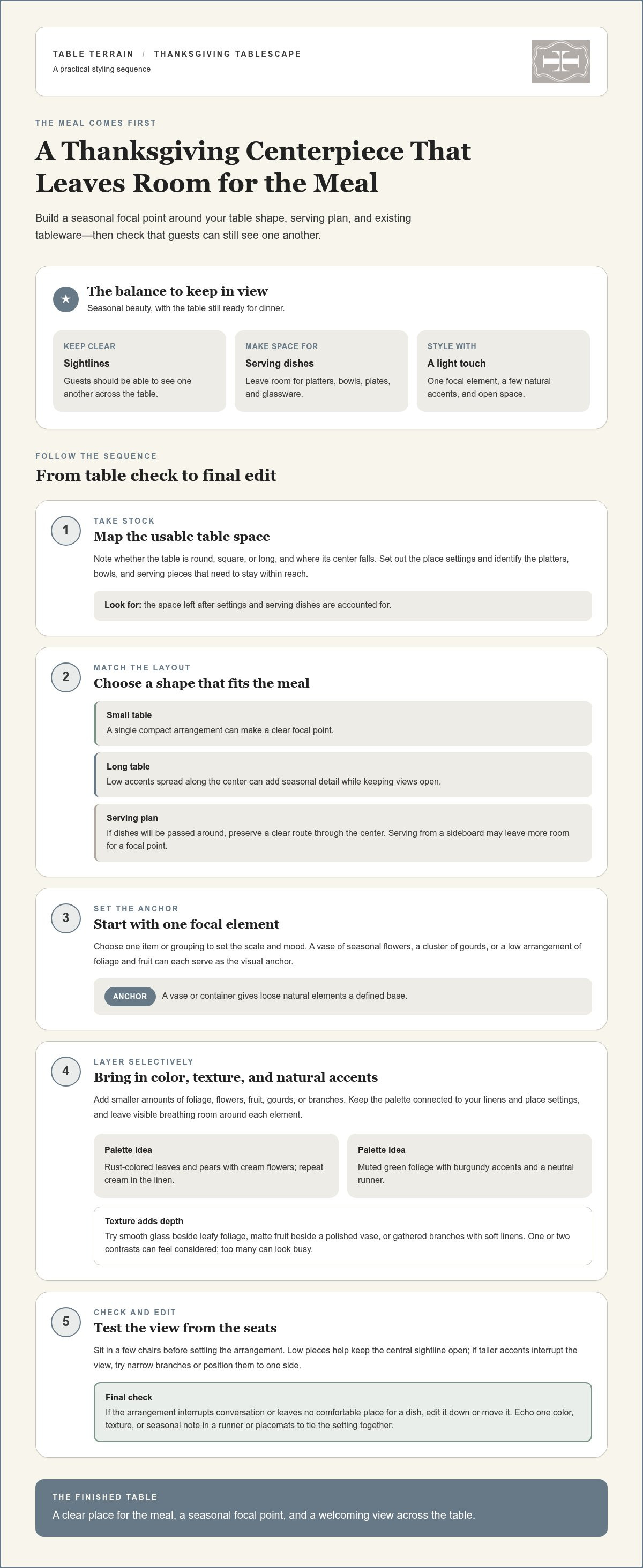
Style the table in layers so the centerpiece looks considered and still works once dinner begins. Set the foundation first, then place the focal point, arrange place settings, and finish with serving pieces. This order shows how much room the centerpiece really has and helps prevent dishes added at the last minute from crowding the arrangement.
- Dress the table. Lay down a runner or placemats to establish the visual area and give the setting a clear base.
- Place the centerpiece. Position the vase, container, or seasonal arrangement where it can be seen without taking over the table.
- Arrange the settings. Add plates, flatware, napkins, and glasses, checking that each place feels comfortable.
- Add serving pieces. Set out the platters and bowls that will stay on the table during dinner, then adjust the centerpiece to preserve space.
For additional place-setting inspiration, use these elegant table settings for dinner parties as a reference while planning how each setting relates to the centerpiece. Keep the finished table connected, with no decorative layer competing for attention.
Style the foundation before adding the focal point
A runner or placemats can define the centerpiece’s visual footprint before you add flowers, foliage, or other seasonal details. Choose a foundation that complements the tableware and leaves enough open surface for dinner. If the centerpiece already brings several colors or textures, keep the base simple. For more ideas on coordinating the foundation, explore the guide to table linens and napkin rings.
Make a final function and balance check
Before guests arrive, sit in different seats and check that everyone can see across the table. Make sure shared dishes and drinks are within comfortable reach. Remove accents that compete with the focal point or encroach on place settings. Glassware and serving items can support the look through a repeated color or finish, but they don’t need to match every material in the centerpiece.
Take a final look from the perspective of someone serving themselves. Can a platter be set down without moving a vase? Is there room to pass a bowl without disturbing the arrangement? If not, shift the centerpiece, remove an accent, or divide the display so serving pieces have room. These small edits make thanksgiving table centerpieces feel polished while keeping the table ready for the meal.
Complete the setting with table linens and tabletop accents that complement your centerpiece and suit the way you plan to serve dinner.
Complete your Thanksgiving centerpiece with thoughtful tabletop details
Once the centerpiece is in place, choose a few supporting details to connect it to the rest of the table. Let one feature lead: repeat a color from the flowers in the linens, echo a natural texture in a placemat, or choose a vase that complements the tableware. You don’t need a new set of décor. Pieces you already own can make the setting feel personal and collected.
For more ideas that pair a focal arrangement with the surrounding table, explore Thanksgiving centerpiece styling inspiration. Use it to spark a direction, then adapt the details to your table’s colors, place settings, and serving needs. Aim for a cohesive setting, not a display where every element competes for attention.
Coordinate linens and table accents with the centerpiece
A runner can visually connect a linear arrangement to the table, guiding the eye along its length without requiring decoration from end to end. For a compact centerpiece, placemats can repeat one of its colors while keeping each place setting distinct. If your seasonal materials already have varied colors or textures, choose a quieter linen foundation. For broader composition ideas, see stunning tablescape styling ideas.
Vases and containers can contribute to the overall look, whether they hold the main arrangement or serve as small accents. Start with your existing linens and tableware, then decide if anything is missing. Repeating a shade or material once or twice is usually enough to make separate pieces feel connected.
Finish the setting with glassware and serving pieces
Goblets and wine glasses add shape and color around the centerpiece, but their first job is to serve the guests. Place them with each setting, and keep serving items accessible rather than filling the space where platters need to land. A coordinated detail can be as simple as glassware that complements the centerpiece’s palette; there’s no need to repeat every material across the table.
Before dinner, check that each decorative accent has a purpose. If an item adds neither useful function nor a clear connection to the centerpiece, leave it off. That edit preserves serving space and lets the most thoughtful details stand out.
Choose a few pieces that suit the gathering and work with what you already have. Browse Table Terrain tabletop décor for vases, containers, runners, placemats, goblets, and wine glasses that can help complete your setting. The best thanksgiving table centerpieces feel at home with the table around them, creating a seasonal welcome without taking over the meal.
Make your table feel like your own
Let your Thanksgiving table reflect the way you like to welcome people. A familiar vase, a favorite linen, or one seasonal accent can give the setting personality without making it feel overdone. The most memorable thanksgiving table centerpieces aren’t about having more; they’re about choosing details that feel right for your home and the people gathered around it.
Table Terrain’s selection of linens, vases, glassware, and dining accessories offers individual pieces to personalize the table and build on what you already own, rather than starting from scratch.
Explore tabletop décor for your Thanksgiving table, and choose the details that suit your gathering. Your table doesn’t need to be perfect to feel welcoming. Trust your eye, make room for conversation, and enjoy bringing everyone together.
Frequently Asked Questions
How tall should a Thanksgiving table centerpiece be?
Keep a centerpiece low enough that seated guests can see one another comfortably. There’s no single height that suits every table, since chair height, arrangement width, and table layout all affect the view. If you want a taller accent, choose a narrow shape with an open center, or place it where it won’t divide the main sightline. Sit in several seats and check the view before guests arrive.
Can you use a table runner as part of a Thanksgiving centerpiece?
Yes, a runner can act as the base for a centerpiece display, especially on a long table. Use it to hold a few connected accents, such as a vase, seasonal fruit, or small decorative objects, rather than covering its full length. Keep the ends and sections near serving dishes clear. If your runner already has a noticeable pattern or color, let the centerpiece details stay more restrained.
What flowers are good for a Thanksgiving centerpiece?
Choose flowers in colors that work with your linens and other seasonal elements. Chrysanthemums, roses, and carnations can work well in autumn arrangements, while foliage or branches add shape and contrast. You don’t need a large bouquet: a few stems in a vase can bring color without dominating the table. Before arranging, remove leaves that would sit below the waterline and refresh the water as needed.
How do you make a Thanksgiving centerpiece on a small table?
Use one compact focal point instead of spreading several decorative pieces across the surface. A small vase with a few stems, or a shallow dish with a modest seasonal accent, can add a festive note while leaving space for plates and drinks. Skip a wide base and avoid layering multiple linens beneath the arrangement. If serving dishes need to share the table, choose a centerpiece that can be moved easily.
Can a Thanksgiving centerpiece include candles?
Yes, candles can add a warm glow, provided they’re placed securely and kept away from foliage, napkins, and other materials that could catch fire. Use stable candleholders on a level surface, and leave enough room that sleeves or serving dishes won’t brush against them. Consider flameless candles if the table will be busy or children will be nearby. Never leave a lit candle unattended.
How do you keep a Thanksgiving centerpiece fresh?
For a fresh-flower arrangement, start with a clean vase and fresh water, and trim the stems before placing them in it. Remove leaves below the waterline, since submerged foliage can affect the water. Keep flowers away from direct sunlight, heaters, and other warm spots. Check the arrangement before serving and top up or replace the water if needed. Add delicate stems closer to the gathering so they look their best.
When should you make a Thanksgiving centerpiece?
Prepare the nonperishable parts in advance, such as choosing the container, setting out a runner, or arranging durable decorative accents. Add fresh flowers and greenery closer to the meal so they retain their appearance. If your centerpiece includes fruit or other edible elements, wash and dry them before arranging, then keep them separate from anything that could stain or damage the linens. Leave time for a final fit check with your tableware.