
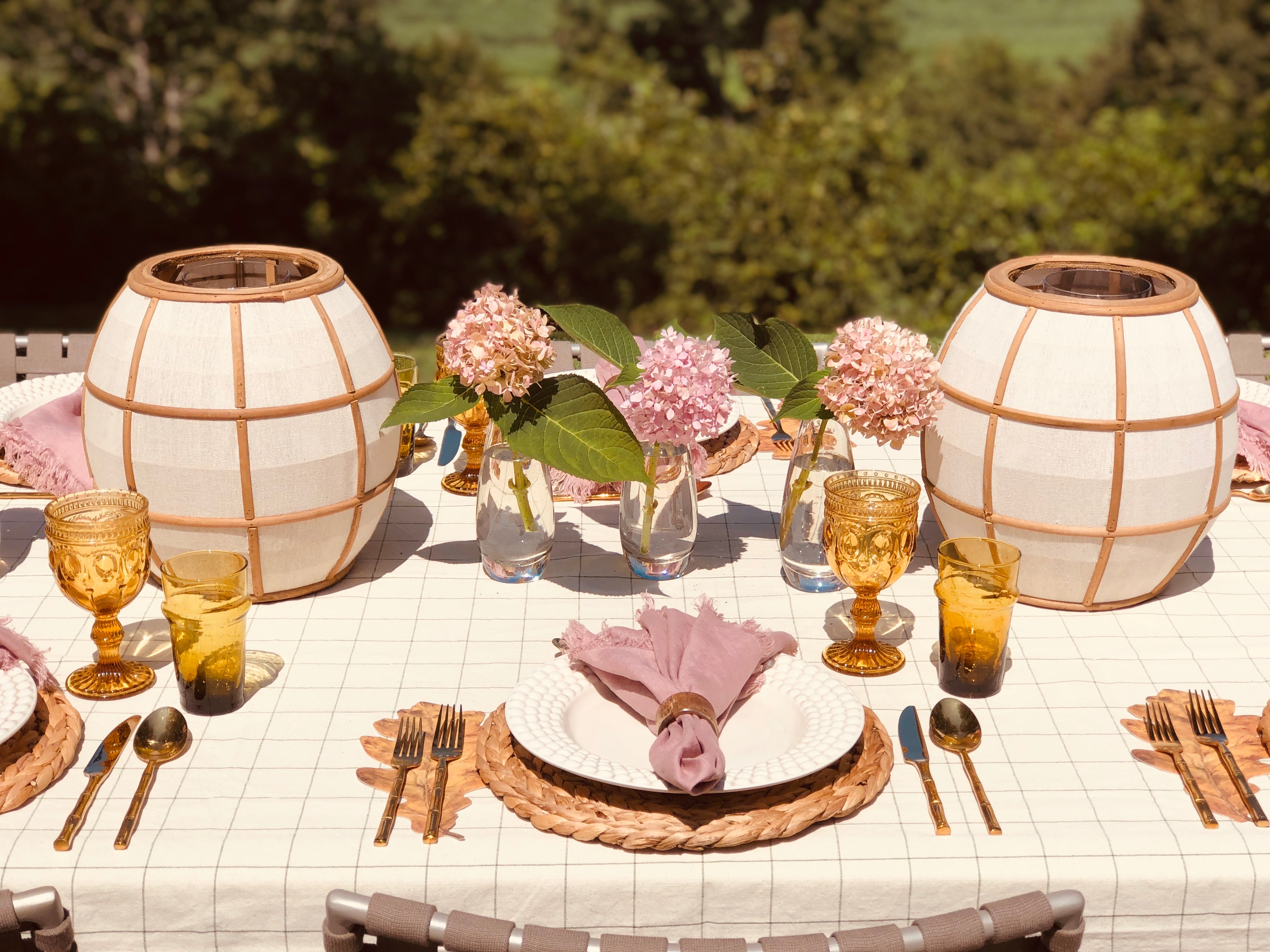


What if the secret to a polished tablescape isn’t matching every piece, but giving each one a reason to belong? Creating a cohesive look with mixed materials can feel tricky when glass, metal, linen, and textured accents all compete for attention. The key is to choose a visual thread, then use it to make contrast feel considered rather than cluttered.
You don’t need a perfectly matched set or a shopping trip to start. Begin with pieces you already own, then connect them through a clear color palette, balanced scale, or repeated shape or texture. A linen runner can soften the shine of glassware; coordinated placemats can ground contrasting flatware and decorative accents.
In this guide, you’ll learn how to combine tabletop materials with intention, decide which pieces should coordinate and which can stand apart, and add new elements selectively. You’ll see how color, scale, and repetition bring linens, glassware, flatware, and finishing touches together for a setting that feels personal, polished, and ready to gather around.
Key Takeaways
- Start with an anchor, such as an occasion, a mood, or a tabletop piece you love, to give your styling decisions direction.
- Choose whether color, texture, or shape will guide your tablescape, then use that visual thread to select and arrange materials.
- Give each material a clear role. Pair contrasting surfaces thoughtfully so they add interest without competing for attention.
- Build the setting in stages, then remove anything that distracts from the overall effect or gets in the way of the meal.
- Creating a cohesive look with mixed materials is easier when you layer individual pieces with intention rather than relying on a matching set.
Why Mixed Materials Can Make a Tablescape Feel More Personal
A table doesn’t need to come from one perfectly matched set to feel considered. Mixing materials lets you bring together pieces you’ve collected, inherited, or simply enjoy using, creating a setting with more character than a uniform arrangement. The goal isn’t to make every surface alike. It’s to combine different surfaces around a deliberate visual thread, so the whole table feels composed rather than assembled at random.
Contrast gives a tablescape depth. Soft fabric beside clear glass, or a smooth surface beside a metal accent, makes each material more noticeable. Repetition brings the eye back through the setting and helps those differences feel connected. Think of a song with a steady beat and changing notes: repeating one color or shape offers that beat. Without it, unrelated finishes can feel noisy, like several songs playing at once. Objects can also carry personal meaning; Material culture and its significance explores how the things people use connect with culture and human behavior.
What gives different tabletop materials a sense of connection?
Look for a detail that can travel across the table. Shared color is an easy connector, but it isn’t the only one. Repeated rounded shapes, related finishes, or similar visual scale can link pieces that don’t match. A subtle echo is enough: the curve of a vase might pick up the shape of a goblet, while a warm tone in the runner reappears in a napkin ring or another accent. Cohesion doesn’t require identical pieces; it comes from a detail that lets varied materials feel like they belong together.
Which table layers can contribute different textures and finishes?
Start with the layers that already have a practical role. Table linens and runners bring softness and can set a calm foundation. Placemats add another layer, while glassware brings a clearer, more reflective surface and flatware adds a metallic note. You don’t need every category on every table. Use vases or serving pieces as accents when they support the setting, not simply to fill empty space.
Keep each layer’s job in mind. If a patterned runner draws attention, simpler glassware gives the eye a place to rest. If the table feels too smooth and uniform, a textile layer can introduce softness. For instance, pair a plain runner with glassware and flatware that differ in finish, then repeat one color in a small accent. The mix feels intentional because each contrast has a companion.
This approach makes creating a cohesive look with mixed materials less about buying a matching collection and more about editing what’s already on hand. Set out a few favorite pieces and notice which colors, forms, or finishes relate. Build around those connections, then leave out anything that competes without adding interest. The result can feel personal and polished, with enough variety to invite a closer look and enough repetition to read as one tablescape.
Choose a Visual Thread Before Combining Tabletop Materials
Before setting out every piece, choose one starting point. It might be the occasion, the mood you want to create, a favorite item already in your cupboard, or a palette drawn from a season or gathering. This first choice keeps decisions manageable. You don’t need a full plan or a matching set; you need one idea to return to when a new color, finish, or shape catches your eye.
Different visual threads suit different tables:
- Color-led: Repeat one or two tones across layers for a clear, easy-to-read connection.
- Texture-led: Build around a tactile contrast, such as soft fabric with smooth, reflective accents.
- Shape-led: Echo curves, straight lines, or rounded forms across pieces with different finishes.
None is the right choice for every setting. A color-led approach can feel calm and coordinated; texture can make a restrained palette more lively; repeated shapes can tie together pieces in varied colors. Pick the thread that best suits what you already own and the atmosphere you’re after. For creating a cohesive look with mixed materials, one recurring detail is often more effective than asking every piece to match.
How can a color palette unify a mix of finishes?
Choose a small group of coordinating tones before adding accents. For example, start with warm cream and muted green, then let one of those colors recur in a linen, a glass, or a decorative detail. That repeated tone links pieces even when their surfaces differ. Before adding a color simply because an individual item appeals to you, ask whether it supports the palette or starts a new visual story.
How do scale and visual weight keep materials in balance?
Balance isn’t only about material. A broad shape, a strong color, or a central position can make an item feel visually weighty, while a smaller or lighter-looking piece may recede. If a substantial vase or serving piece anchors the center, keep nearby place-setting layers quieter. If the centerpiece is understated, a more noticeable accent at each place can bring the table into balance.
Try a quick tabletop test before committing: step back and notice where your eye lands first. If one side or layer pulls too much focus, shift or remove an accent, or repeat its color elsewhere to distribute attention. The aim isn’t perfect symmetry. It’s a comfortable visual rhythm that gives each piece room to be noticed.
Once you’ve settled on a thread, choosing supporting layers becomes simpler. For a practical starting point, explore table linens and napkin rings, then consider how a runner or another accent might carry your palette across the table. Table Terrain offers individual tabletop pieces to help you build a setting that feels personal.
Compare Material Pairings for Contrast Without Clutter
A useful pairing has two parts: a noticeable contrast and a point of balance. Start with one dominant layer, such as a runner or the place settings, then let a few supporting surfaces add dimension. If every piece is equally bold, the eye has nowhere to rest. Use the examples below as styling inspiration, not a checklist. The best mix depends on the pieces you have and the effect you want.
| Material role | Visual effect | Balancing partner |
|---|---|---|
| Soft textile, such as a linen layer | Brings softness and a grounded base | Reflective glassware for a light-catching contrast |
| Reflective glass | Adds brightness and a sense of lightness | A matte or softly textured textile |
| Smooth ceramic | Creates a clean, simple surface | A natural-looking accent or a folded textile |
| Metal accent, such as flatware | Introduces a crisp glint | Quieter linens or smooth serving pieces |
How do soft, reflective, and natural-looking surfaces work together?
Let the surfaces play different roles. A soft textile layer can temper the shine of reflective glassware, while a natural-looking accent adds warmth beside smoother pieces. If the materials feel far apart, repeat one color or silhouette across them. For example, a curved glass and rounded serving piece can echo each other, while a shared tone in the linen links both to the table.
Keep the contrast focused. A linen layer, glassware, and one natural-looking accent can offer plenty of texture without making every surface compete. Before adding another material, ask whether it contributes a new note or simply adds more visual noise. The aim is variety with breathing room.
How can flatware, glassware, and linens share the spotlight?
Give each category a clear job. Let linens establish a quieter foundation, flatware support the place setting, and glassware provide a chosen point of interest. If a glass stands out through its color or shape, keep nearby layers restrained. If a napkin detail draws the eye, let surrounding pieces give it room rather than introducing another focal point.
For a glassware-focused example, the green goblet buying guide offers a closer look at styling a distinctive glass. Carry one related color or shape into another layer, then stop before the echo becomes a pattern on every surface. This is a practical way to approach creating a cohesive look with mixed materials: choose one dominant layer, add a small number of contrasts, and edit anything that competes with the focal point.
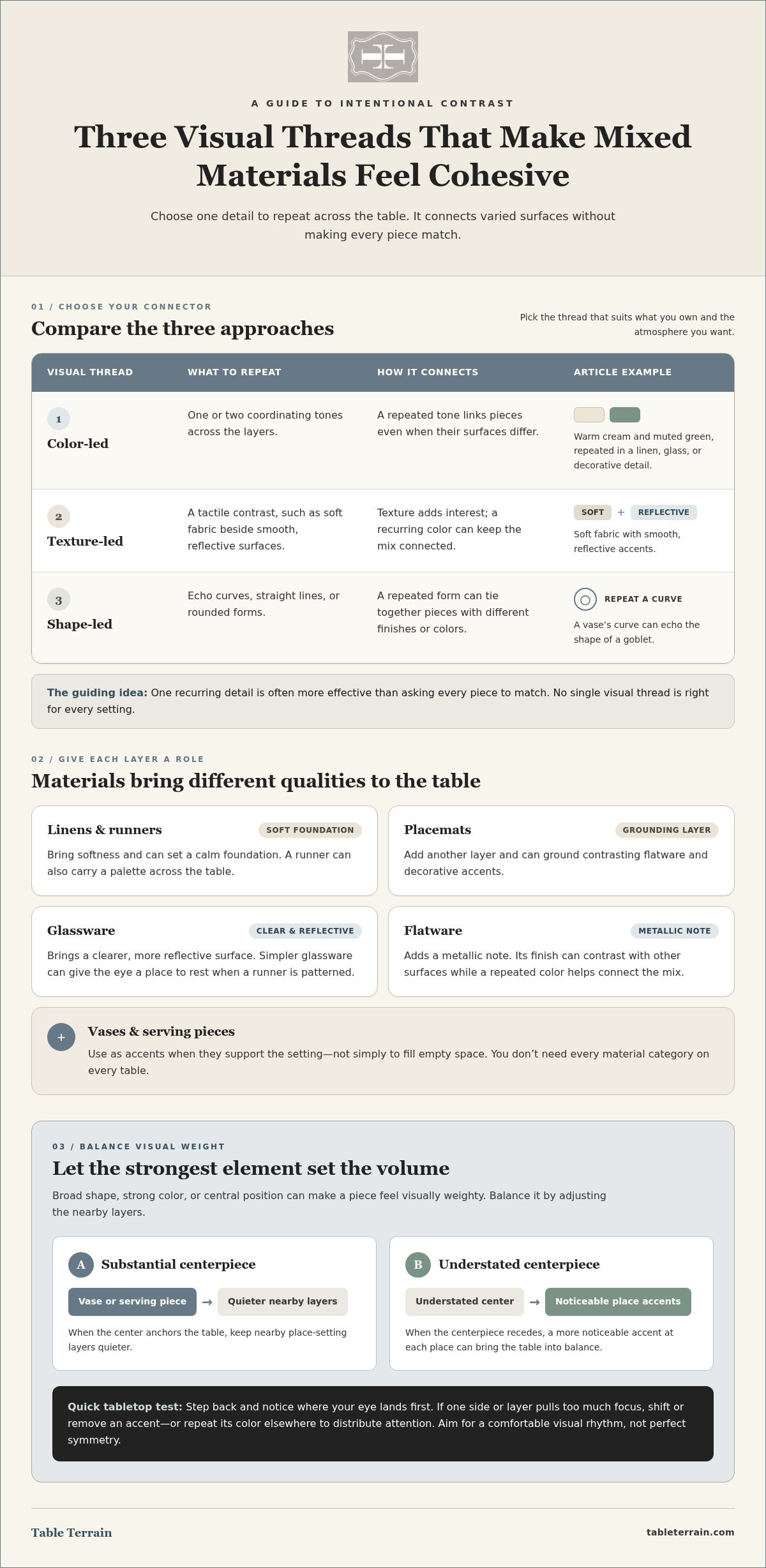
Follow a Simple Styling Sequence to Build a Cohesive Table
A clear order makes tablescape styling easier, whether you’re setting the table for a casual meal or a dinner party. Work with what you own first. Add pieces gradually, checking how each choice supports the visual thread instead of trying to solve the whole table at once.
- Choose an anchor. Start with an existing piece you want to feature, the table surface, or the mood you want to create.
- Establish a palette. Select a few tones that suit your anchor and give different finishes a point of connection.
- Layer the essentials. Add the pieces needed for the meal, then decide whether a runner or placemat helps frame them.
- Repeat a detail. Echo a color, shape, or finish in another area so the materials feel related.
- Edit the arrangement. Remove anything that distracts, competes, or doesn’t serve the setting.
What should be the first layer in a mixed-material tablescape?
Begin with the table surface or your anchor piece, then decide whether a textile layer will help define the setting. Add the place-setting essentials next, such as flatware and glassware, before introducing optional decorative accents. As you build, keep your chosen thread visible: a color, shape, or finish should connect new additions to what’s already in place. You can skip layers that don’t suit the meal.
Pause before the final edit. Step back and scan the table for color balance, differences in scale, and competing focal points. If the centerpiece feels substantial, check that it doesn’t overwhelm the place settings. If several pieces draw attention at once, decide which one you want guests to notice first and let the others support it.
How can you edit a table that feels too busy?
Remove one competing accent at a time, then look again. Notice whether colors, shapes, or finishes already repeat enough to connect the remaining pieces. Leave breathing room around place settings and serving pieces, too. A clear surface isn’t wasted space; it gives each layer room to be seen and keeps the table comfortable to use.
For broader inspiration on bringing all the elements of a setting together, explore elegant table settings for hosting. The same measured approach supports creating a cohesive look with mixed materials: build from a useful foundation, introduce contrast with purpose, and edit until the table feels balanced.
To put the sequence into practice, explore individual tabletop pieces and build a setting that suits your table and occasion.
Bring Your Mixed-Material Tablescape Together with Considered Pieces
A personal tablescape doesn’t have to arrive all at once. Bring it together by choosing a visual thread, giving each material a role, balancing contrast, and editing as you go. That approach lets collected pieces feel intentional without requiring every item to match. It also helps you identify what the table needs before adding anything new.
Start with the pieces already in your cupboards. A favorite glass, a set of flatware, or a runner can offer a useful clue: notice its color, shape, or finish, then use that detail to guide your next choice. Add one complementary category at a time. A runner might give the table a soft foundation; placemats or napkin rings can add another layer without replacing the rest of your setting.
How can you add pieces without starting from scratch?
Build around what you love, not around an imagined perfect set. If a glass has a distinctive shape, echo that curve in a vase or another decorative accent. If a runner has a color you want to carry through, pick up that tone in a napkin detail. Add only what supports the thread. For more ideas on shaping a personal setting, explore the art of stunning tablescapes.
Think in roles, too. Linens, runners, placemats, and napkin rings can help form the layered foundation. Glassware and flatware contribute functional contrast, while serving items or vases can bring a practical or decorative note. Not every category needs to appear. Select individual pieces according to the mood and needs of your meal, and let each addition earn its place.
What finishing check makes the table feel ready for guests?
Before guests arrive, check both appearance and use. Make sure place-setting essentials are easy to reach and that serving pieces have room. Then look for a repeated detail, perhaps a color or shape, that connects the different materials without making the setting uniform. If one accent is distracting, remove it and take another look. A little breathing room can make the pieces you chose stand out.
This is the heart of creating a cohesive look with mixed materials: not sameness, but a considered relationship between the pieces. Keep the visual thread, let contrast add personality, and stop when the table feels balanced and comfortable. An expressive setting should invite people to sit down and enjoy the meal, not make you worry about whether every detail matches.
Ready to build your table one considered layer at a time? Explore Table Terrain tabletop pieces and choose accents that support your own visual thread.
Let Your Table Evolve One Thoughtful Piece at a Time
Your table can change with the season, the occasion, or simply the pieces you feel like bringing together. You don’t need to settle on one look forever. Let a favorite item guide your next choice, then stay open to new combinations as your collection grows. That’s the pleasure of creating a cohesive look with mixed materials: the result reflects your taste, not a matching-set rule.
When you’re ready to make a small change, consider one layer that could add a fresh note or make the setting feel more complete. Table Terrain’s curated selection spans linens, glassware, flatware, serving items, and decorative tabletop pieces, with individual items that help shape a personalized dining setting. Choose an accent that complements what you already love, and let the table take form at its own pace.
Explore Table Terrain tabletop pieces and find a thoughtful addition for your next gathering. Your most inviting tablescape is the one that feels like yours.
Frequently Asked Questions
Can you mix different materials on a dining table?
Yes, different materials can work beautifully together on a dining table. For a relaxed lunch, use a familiar everyday setting as your base and add one contrasting glass or serving piece for a fresh note. Keep the pieces guests use easy to reach, and let the occasion guide how much decoration you add. A mix should feel welcoming, not too precious to enjoy.
How many different materials should you use in a tablescape?
There’s no fixed number; the right mix depends on the table, the pieces, and how much activity the meal requires. Arrange the pieces before guests arrive, then view the table from the room’s entrance. If the materials read as separate spots of attention, remove an accent. A small table may feel complete with a few contrasting surfaces, while a larger setting can accommodate more variety.
Can you mix silver-colored and gold-colored flatware on one table?
Yes. To make the combination feel planned, keep each place setting consistent rather than mixing finishes randomly within a single setting. You might use one finish for most settings and bring the second into a serving piece, or alternate finishes in an orderly pattern. Consider the room’s lighting, too: reflective surfaces can look more pronounced under bright light, so check the table in the setting where you’ll serve the meal.
How do you make a table look cohesive without matching everything?
Creating a cohesive look with mixed materials doesn’t require identical accessories. Add a repeated gesture, such as folding napkins in the same way or placing each glass consistently, to give the table a sense of order. Then allow color, finish, or shape to vary. This balance gives guests a familiar visual rhythm while leaving room for pieces with different stories or origins.
What should you do if mixed materials make your table look cluttered?
First, remove anything that won’t be used during the meal, including decorative pieces that interrupt conversation or take up serving space. Then check whether the remaining items are evenly distributed, rather than clustered at the center or one end. If the table still feels busy, simplify one place setting and compare it with the others. Small adjustments can reveal whether the issue is excess, placement, or competing patterns.
Can a formal tablescape combine different materials?
Yes, a formal table can mix materials and still feel polished. Keep the arrangement orderly by using consistent spacing and repeating the same placement across settings. That structure creates a refined feel even if the surfaces differ. For a special dinner, let one distinctive element provide character, then keep nearby details restrained. Guests can appreciate the contrast without the table feeling casual or disorganized.