
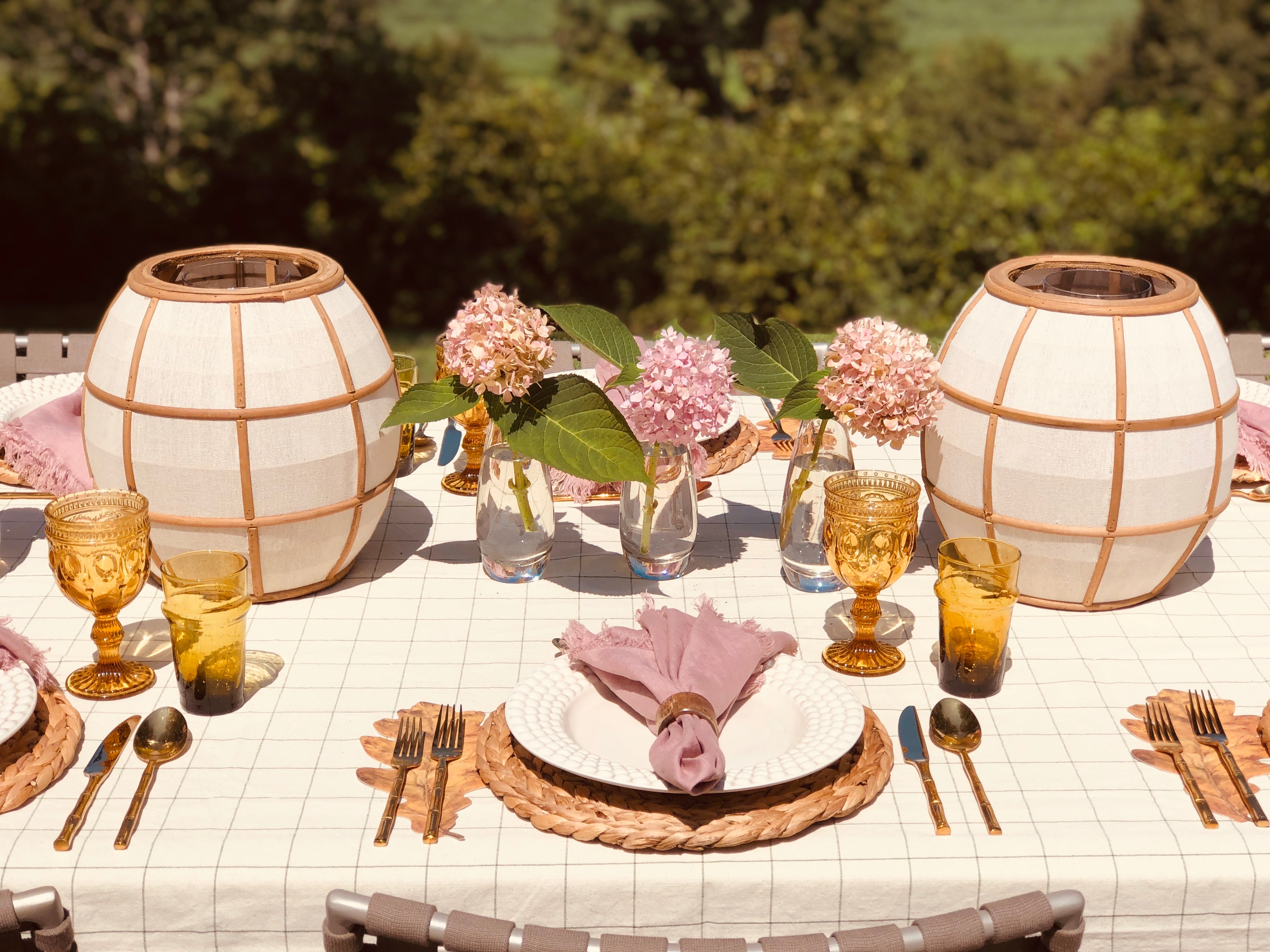


The prettiest woven placemat may not be the right one for your table. A close-up photo can show its texture, but it won’t tell you how the material, weave, or shape will work with your dishes and everyday routine. Choosing woven placemats is easier when you look beyond appearance.
Balance style with practicality. Natural fibers can bring warmth and variation, while different weaving patterns create distinct textures and visual weight. Shape matters, too: a round design can soften a setting, while a rectangular one can echo the lines of your table. The best choice feels at home in your setting and suits the way you host.
This guide compares common materials and woven constructions, then explains how to assess texture, shape, size, and care needs before you buy. You’ll learn what to look for beyond product photos, so you can coordinate placemats with table linens, flatware, and glassware without overlooking practical details.
Key Takeaways
- Look beyond product photos: consider how the weave’s texture and visual weight will work with your dishes and table linens.
- Choose woven placemats by balancing the material’s look and feel with its care guidance and your regular dining habits.
- Compare round, rectangular, and square shapes, then check the dimensions against your plates, flatware, and available table space.
- Use a simple selection routine: measure your table, identify how you’ll use the placemats, compare materials, review care guidance, and assess the overall style.
- Coordinate placemats with glassware and flatware through complementary textures or tones rather than relying on a perfectly matching set.
Woven Placemats: Style and Key Considerations
Woven placemats are table mats made by interlacing fibers or strands to create a patterned, textured surface. At each place setting, they define a space for the plate and add a tactile layer to the table. Their appearance and feel depend on the material and weaving method, so woven placemats can differ widely in texture, structure, and care needs.
Unlike a smooth, uninterrupted mat, a woven surface shows the path of its strands. The pattern may be subtle or pronounced, and texture is a design feature rather than a measure of quality. An open weave can feel visually light and let more of the table show through; a denser, more prominent weave can create a stronger focal point beneath dinnerware. For a broad introduction to placemat purpose, materials, and production methods, see the Placemat Wikipedia article.
How woven placemats differ from smooth table mats
Texture changes both appearance and feel. A raised or open pattern adds dimension, while a smooth mat creates a flatter, more uniform backdrop. Consider how the weave will sit beneath the items on top: a textured surface can contrast with sleek plates or clear glassware, while a less pronounced pattern can keep the setting visually calm.
Woven construction alone doesn’t tell you whether a mat is handmade, made from natural fibers, washable, or resistant to heat, spills, or stains. Those qualities depend on the particular material and construction. When shopping online, look beyond the styled photo: check the material description, close-up views, dimensions, and care guidance. Treat a placemat as one layer of a setting, not as a substitute for a surface with specific protective properties.
When woven texture suits your dining style
Woven texture can bring an easy, layered quality to a meal, making it a natural fit for relaxed gatherings or nature-inspired settings. It can also add warmth to a polished table without requiring every piece to follow the same style. Let the weave support the mood you want, whether pared back or more expressive.
Balance textures rather than matching them exactly. A woven mat beneath smooth dinnerware creates contrast; clear glassware can keep the arrangement feeling light, while a linen napkin adds another soft surface. When coordinating the full table, consider how table linens and napkin rings can complement the placemat without competing with its pattern. Keep one element prominent and let the others provide balance.
For a practical style check, picture the place setting in use, not just the mat on its own. Will the weave feel at home beside your everyday dishes? Does its visual weight suit the table and the occasion? These questions help narrow your options before you compare materials, shapes, and care requirements.
Woven Placemat Materials and Weaves: Understand the Differences
Fiber tells you what the strands are made from; weave tells you how they’re arranged. Both shape a placemat’s appearance and feel, but neither label alone tells you how it will hold up or what care it needs. Use the comparison as a starting point, then rely on the specific product description and care instructions for practical details.
| Material example | Visual character | Possible feel | Practical question |
|---|---|---|---|
| Jute | Often visibly fibrous, with an earthy, textured look | May feel coarse or pronounced | What cleaning method does the maker recommend? |
| Raffia | Can have a fine, strand-based appearance | May feel flexible or textured | How does the finished piece respond to routine handling? |
| Water hyacinth | Often presents a natural, varied surface | Can feel substantial, depending on construction | What care guidance applies to this particular weave? |
| Bamboo | May look more linear or structured | Can feel smooth or firm, depending on the strands | Does the product information specify heat or moisture limits? |
| Synthetic blend | Can imitate natural textures or create a more uniform look | Varies with the materials and weave | What are the stated cleaning and use instructions? |
Natural-fiber woven placemats: what their texture can signal
Jute may look visibly fibrous, while raffia can create a finer strand pattern. Water hyacinth and bamboo may appear more structured, though the finished surface depends on how each is prepared and woven. These are visual cues, not guarantees. Natural fibers can also vary subtly in shade and texture, so individual pieces may not look perfectly identical.
A fiber name doesn’t establish washability or heat tolerance. Check the care instructions for the specific item, especially if you expect frequent meals or spills.
Weave, finish, and edge details worth comparing
A tight-looking weave can appear compact and orderly; a more open one lets the pattern stand out and may feel less uniform under the hand. Braided construction often gives a rounded, dimensional effect, while flat weaving can look more understated. Irregular strands add visual movement. These differences affect style and surface feel, not guaranteed performance.
Look closely at the edge, too. A bound, finished, or visibly irregular edge can change the overall impression. Product photos and descriptions may show whether the perimeter looks even and how the strands meet at the border. For context on reed-based traditions and the evolution of woven mats, explore Traditional reed mat weaving.
As you compare placemat styles, use three filters: the fiber’s appearance, the weave’s visual weight, and the care guidance. This keeps your choice grounded in both the table you want to set and the way you’ll use it.
Round, Rectangular, or Mixed? Compare Woven Placemat Options
Shape changes the rhythm of a place setting. Round mats can soften a table with straight edges and echo the curve of a round plate. Rectangular mats create a clean, orderly frame, while square mats bring a more geometric feel. No shape is automatically right for a particular table. Compare it with your furniture, dinnerware, and the space available at each seat.
| Shape | Table compatibility | Styling effect | Measurement checks |
|---|---|---|---|
| Round | Can complement round tables or soften angular table lines | Curved, relaxed, and visually gentle | Check the mat’s diameter against the plate and usable setting area |
| Rectangular | Often echoes the long lines of rectangular tables | Structured and orderly | Compare length and width with plate placement and room for flatware |
| Square | Can reinforce a geometric look or contrast with round tableware | Defined and contemporary | Check each side against the plate, setting area, and neighboring places |
Match placemat shape to the table and dinnerware
Repeating shapes creates a coordinated look: round plates on round mats feel cohesive, while rectangular mats can underline a linear arrangement. Contrasting shapes add movement. For example, a round plate on a square mat creates a clear outline around the setting. Before choosing, map the usable area at one place, not just the table’s overall dimensions. Include the plate, room for flatware, and enough space between neighboring settings. A round mat may echo round dinnerware beautifully, but its curve uses space differently from a rectangular option.
Compare texture, color, and decorative details
Shape is only one part of the composition. A neutral woven surface can give colorful linens, patterned ceramics, or glassware room to stand out. If the mat has a strong pattern, scalloped edge, or other decorative detail, let it act as a focal point rather than treating it as a quiet base. Balance it by keeping nearby elements simpler or repeating a detail elsewhere in the setting.
For a considered arrangement, lay out the pieces you already own and compare their outlines and visual weight. An elegant table can mix shapes intentionally, as long as the overall layout feels comfortable and each place has enough usable room.
Before ordering, compare the listed dimensions with your plate and the space available at each seat. A product photo can suggest proportion, but measuring your own setting gives you a more useful guide. Choose the shape that supports both the look you want and the way your table is arranged.
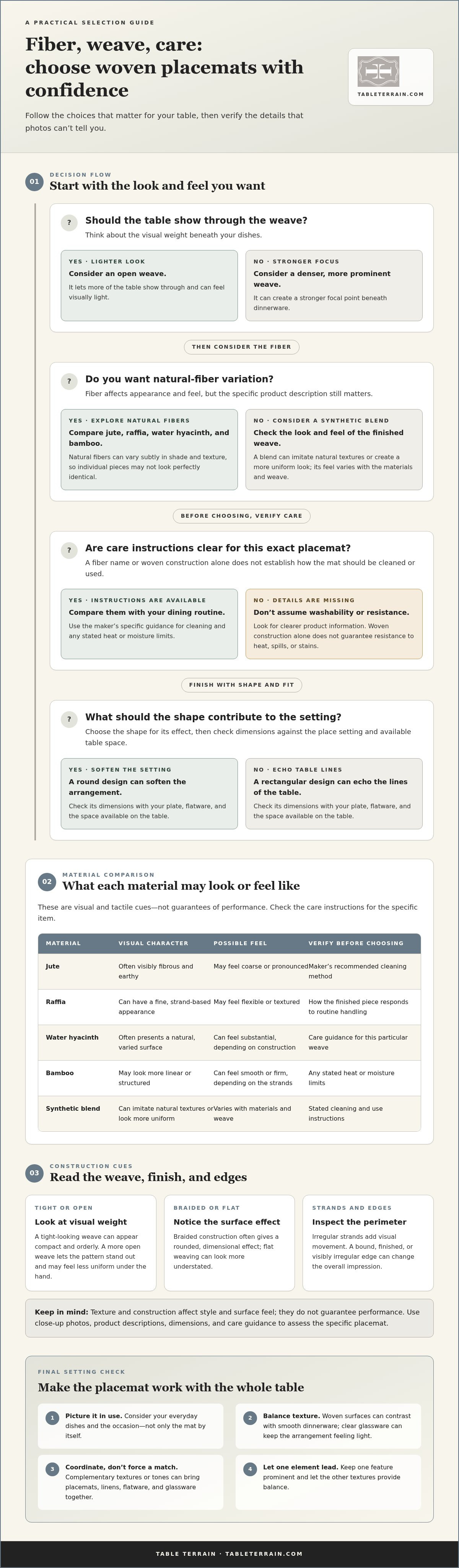
Choose Woven Placemats for Your Routine, Table, and Hosting Style
The right choice depends on more than appearance. Woven placemats for a busy dining table may need different care and storage from mats reserved for occasional dinners. Use this five-step checklist to compare options against your routine rather than assuming one material or style suits every occasion.
- Measure your place setting. Check the usable space at each seat, including the plate’s footprint and room for flatware. Compare those measurements with the dimensions in the product listing.
- Identify how you’ll use the mats. Think about how often you’ll set the table and what meals the mats will accompany. Daily dining, leisurely weekend meals, and occasional entertaining may call for different priorities.
- Compare materials and construction. Look at the listed fiber content and weave, then consider how each option’s texture and visual weight will work with your dishes and table.
- Review care guidance. Read item-specific instructions and limitations before deciding. Don’t infer washability, heat tolerance, or spill resistance from a material name or woven appearance.
- Assess the style in context. Consider color, shape, texture, and edge details alongside the table linens, glassware, and flatware you already use.
Questions to answer before you buy
Start with your routine: how often will you use the mats, and are they for everyday meals, special occasions, or both? Then picture a complete place setting. Measure the plate area and the remaining space for flatware, and consider whether neighboring settings will feel crowded. Finally, review cleaning instructions, storage needs, and any product-specific limitations that might affect where or how you use them.
For everyday dining, ease of care may be a priority, while occasional entertaining may put more emphasis on a particular texture or decorative finish. Neither is a universal rule. Choose according to what matters most in your home, and follow the maker’s guidance for the exact item.
How to judge product listings and photos
Read the specifications alongside the styled images. Compare the listed dimensions, material composition, construction, and quantity included so you know what the listing describes. If close-up images are available, inspect the weave, edges, and visible color variation. These details can help you picture how the mat may look at your place setting, though photos can’t replace written product information.
Treat words such as “washable” or “heat-resistant” as claims about a specific product, not woven mats as a category. Look for corresponding care or performance instructions in that item’s details. A careful read can help prevent a style choice from becoming inconvenient later.
Quick checklist: measure the setting, match the mat to your routine, compare its material and weave, follow its care guidance, and check that its style feels right with your table. To see how different styles might contribute to a complete tablescape, browse the placemat selection.
Bring Woven Placemats into a Considered Table Setting
A woven placemat can set the tone for a place setting, but it doesn’t need to dictate every choice around it. Build a considered table by balancing texture, shape, and color with pieces you already enjoy. The aim isn’t a perfectly matched set. It’s a table where each layer feels intentional and comfortable to use.
Coordinate texture with the rest of the table
Let contrast do some of the styling work. A textured placemat can sit beneath smooth glassware or simple linens, while expressive dinnerware adds a confident focal point. If the mat has a pronounced pattern or decorative edge, keep nearby details quieter. With a subtler weave, a patterned napkin or distinctive ceramic plate can bring more character to the setting.
Color can connect pieces without making them identical. Repeat a tone from the placemat in a napkin, or use a contrasting color to create definition. Table linens, napkin rings, glassware, and flatware each offer another way to add a personal touch. For a more layered look, combine different surface finishes thoughtfully, giving each one room to be noticed.
Explore placemats with a clear point of view
Before choosing, return to the criteria that matter most in your home. Consider whether the dimensions suit your place settings, the shape works with your table, and the material and care guidance fit your routine. Trends can inspire, but they shouldn’t outweigh practical details or the overall look you want to create.
Use this final checklist to narrow your choice:
- Material: Does its appearance and feel suit the setting?
- Construction: Do the weave and finish create the visual weight you want?
- Shape and dimensions: Does the mat fit the plate, flatware, and space at each seat?
- Routine: Does the item-specific care guidance work for how often you’ll use it?
- Coordination: Does it complement your linens, glassware, and flatware without needing to match them?
Keep the checklist in mind as you bring separate pieces together. A considered tablescape can mix a tactile base with smooth glass, crisp linens, or expressive dinnerware. Revisit the textures you plan to layer, then adjust the balance until the setting feels cohesive rather than crowded.
Table Terrain brings placemats together with complementary tabletop categories, including table linens, glassware, and flatware, so you can consider each piece as part of your own setting. Browse the Table Terrain tabletop collection for pieces to build a setting that reflects your style.
Set the Table in Your Own Style
Let your next table setting start with one detail you love, then build around it. Woven placemats can bring texture and intention to the table, while the pieces around them make the setting distinctly yours. Repeat a color, contrast a finish, or leave room for a favorite serving piece to stand out. There’s no need to make every element match.
As you refine the look, think about how individual pieces work together and how you want the table to feel for the people gathering around it. Table Terrain offers placemats alongside table linens, glassware, flatware, and serving pieces, giving you options to coordinate a setting one thoughtful layer at a time.
Ready to explore pieces for your table? Explore Table Terrain’s tabletop collection and find inspiration for a setting that feels welcoming, personal, and easy to make your own.
Frequently Asked Questions
Can woven placemats be used outdoors?
Some woven placemats may suit outdoor meals, but check the specific product’s instructions before using them outside. A covered patio and an exposed picnic table present different conditions, so consider whether the mats could encounter rain, dampness, or strong sun. Don’t leave them outdoors between meals unless the maker’s guidance allows it. Also plan where they’ll be stored afterward, especially if outdoor dining is occasional.
Are woven placemats all made from natural fibers?
No. “Woven” describes how strands are assembled, not what they’re made from. Woven placemats can use natural fibers such as jute, raffia, or water hyacinth, as well as synthetic materials or blends. Two mats with a similar woven look may have different material compositions and care needs. Read the listing’s material details rather than relying on appearance or the word “woven.”
How many woven placemats should I buy?
Start with the number of people you usually seat, then decide whether you want extra mats for larger gatherings. Check the listing carefully to see how many pieces are included, rather than assuming the pictured quantity is the quantity sold. If you plan to add mats later, consider how easily the style could coordinate with what you own and where you’ll store any extras.
Do woven placemats need a non-slip backing?
No, a non-slip backing isn’t essential for every table or placemat. Stability can depend on the mat’s construction and the surface beneath it, so don’t assume a backing is included. If movement would be inconvenient, look for backing details in the product description and images. You can also consider how the mat sits on your own tabletop, while following any use instructions provided.
Can woven placemats be cleaned after food spills?
Yes, but the appropriate cleaning method depends on the specific mat. After a spill, consult its care instructions before adding moisture or trying a stain treatment. A textured weave may hold food differently from a smooth surface, and a method suitable for one material may not suit another. Avoid scrubbing or applying cleaners unless the product guidance says they’re appropriate.
Are woven placemats suitable for formal dining?
Yes. Woven placemats can suit a formal meal if their finish and visual character support the mood you want. A quieter texture can sit comfortably beneath detailed dinnerware, while a more pronounced weave may bring relaxed contrast to polished glassware and flatware. Try the complete setting together before guests arrive. The goal is a deliberate balance, not a rule that formal tables must be smooth.
What should I place under woven placemats when storing them?
Follow the product’s storage instructions, since the best method depends on its construction. If guidance allows, store mats in a clean, dry spot and avoid stacking heavy items on top if pressure could change their shape. A flexible mat and a rigid one may need different storage approaches. Before putting them away, make sure they’re ready for storage according to the maker’s care directions.