


A memorable dinner party doesn’t require new decorations. The best way to make guests feel special at a dinner party is to welcome them warmly, serve food with their preferences in mind, and set a thoughtful table with what you already own. For your first gathering, keep the menu simple and choose familiar dishes you can prepare without spending the evening in the kitchen.
It’s natural to want everything to look just right, but thoughtful details matter more than a perfectly styled room. Have a drink and a small bite ready when guests arrive, set the table ahead of time, and use soft lighting and quiet background music to create a comfortable mood.
Here are practical ways to plan your first dinner party, simplify cleanup, and create a warm setting without shopping for decorations. A little preparation lets you spend less time managing details and more time enjoying the people around your table.
Key Takeaways
- Choose a manageable menu around your guest count, seasonal ingredients, and guests’ dietary needs.
- Make serving and cleanup easier with make-ahead dishes and large-batch cooking.
- Use lamps, candles, and softly played music to create a warm, welcoming atmosphere.
- Style the table with items you already own, adding thoughtful personal touches instead of buying decorations.
1. How do I host my first dinner party?
If you’re planning how to make guests feel special at a dinner party, start with a menu that suits your gathering. A pasta dish and large salad make an easy meal for six people or fewer. For a larger group, prepare the main dish and invite guests to bring sides, salad, or dessert. Ask about allergies and dietary needs before choosing recipes, including vegetarian, lactose-free, or gluten-free options. Consider guests’ favorite foods and avoid known dislikes.
Match the menu’s formality to the atmosphere you want. A relaxed evening might feature familiar, delicious dishes, while a formal gathering can include separate courses and plated servings. To keep costs manageable, focus on seasonal ingredients and dishes that work well together. Make a familiar meal feel special through presentation, such as serving a cheese course in small dishes.
A multi-course menu doesn’t require complicated recipes. One seven-course dinner-party menu moves from nibbles through mud pie, but you can choose fewer courses to suit your schedule. Select food you can prepare ahead or serve without constant attention. Build-your-own components, such as toppings placed beside a main dish, let guests adapt their plates to their dietary needs.
Making guests feel special at a dinner party also means personalizing the details. Use a guest’s preferences to shape the menu, then add a thoughtful touch, such as including a favorite ingredient in one course. If guests don’t know one another, introduce people who share an interest and offer an easy conversation starter, such as asking how they know the host.
Before the party, send a friendly reminder a few days ahead with any useful details. During dinner, welcome each guest, offer food and drinks, and keep the meal moving at a comfortable pace. Afterward, thank guests for coming. Take-home favors can be small and useful, such as wrapped homemade cake or cookies, while taking dietary needs into account.
2. Preparing the kitchen and simplifying cleanup
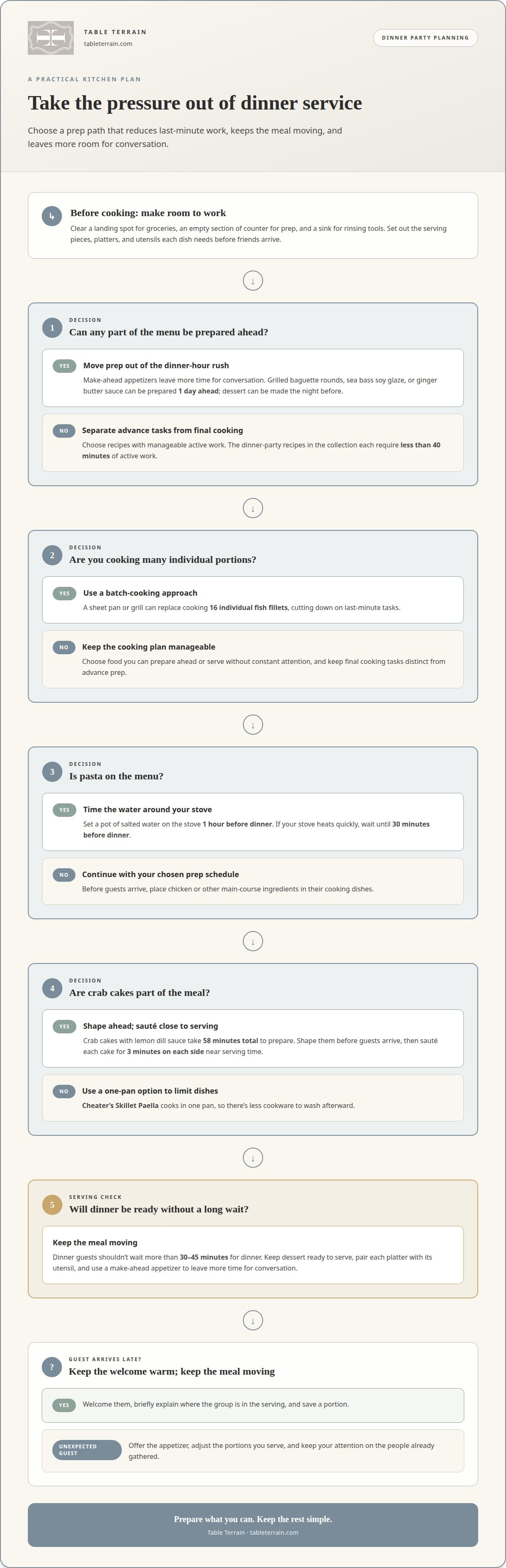
Clear a landing spot for groceries, an empty section of counter for prep, and a sink for rinsing tools. Before friends arrive, set out the serving pieces, platters, and utensils each dish needs. Large-batch cooking cuts down on last-minute tasks: a sheet pan or grill can replace cooking 16 individual fish fillets, while a make-ahead appetizer leaves more time for conversation.
Choose recipes with manageable active work, then separate advance tasks from final cooking. The dinner-party recipes in the collection each require less than 40 minutes of active work. Grilled baguette rounds can be made 1 day ahead, and a sea bass soy glaze or ginger butter sauce can also be prepared 1 day ahead. Dessert prepared the night before keeps kitchen work lighter during the gathering.
For a specific make-ahead option, crab cakes with lemon dill sauce take 58 minutes total to prepare. Shape them before guests arrive, then sauté each cake for 3 minutes on each side close to serving time. Keep the timing in mind so friends aren’t left waiting: dinner guests shouldn’t wait more than thirty to forty five minutes for dinner.
Use one-pan recipes to limit dishes. Cheater’s Skillet Paella cooks in one pan, so there’s less cookware to wash afterward. For pasta, set a pot of salted water on the stove 1 hour before dinner; if the stove heats quickly, wait until 30 minutes before dinner. Put chicken or other main-course ingredients in their cooking dishes before guests arrive, and keep dessert ready to serve.
Late arrivals deserve a warm greeting, not a pause in the meal. Welcome them, explain briefly where the group is in the serving, and save a portion. For an unexpected guest, offer the appetizer and adjust the portions you serve; keep your attention on the people already gathered.
Make serving smoother by pairing each platter with its utensil before the first course. Well-chosen serving pieces can make that setup feel cohesive, while keeping cleanup straightforward. After the meal, thank your friends and clear dishes at a relaxed pace.
3. Setting a welcoming mood with lighting and candles
Turn off overhead lights and use lamps and candles to soften the room before guests arrive. Keep the table bright enough for guests to see their dishes, while softer lighting elsewhere gives the gathering an intimate feel. Background music at a moderate volume can fill quiet moments without competing with conversation. Set it before the first knock so you can welcome guests instead of adjusting the room.
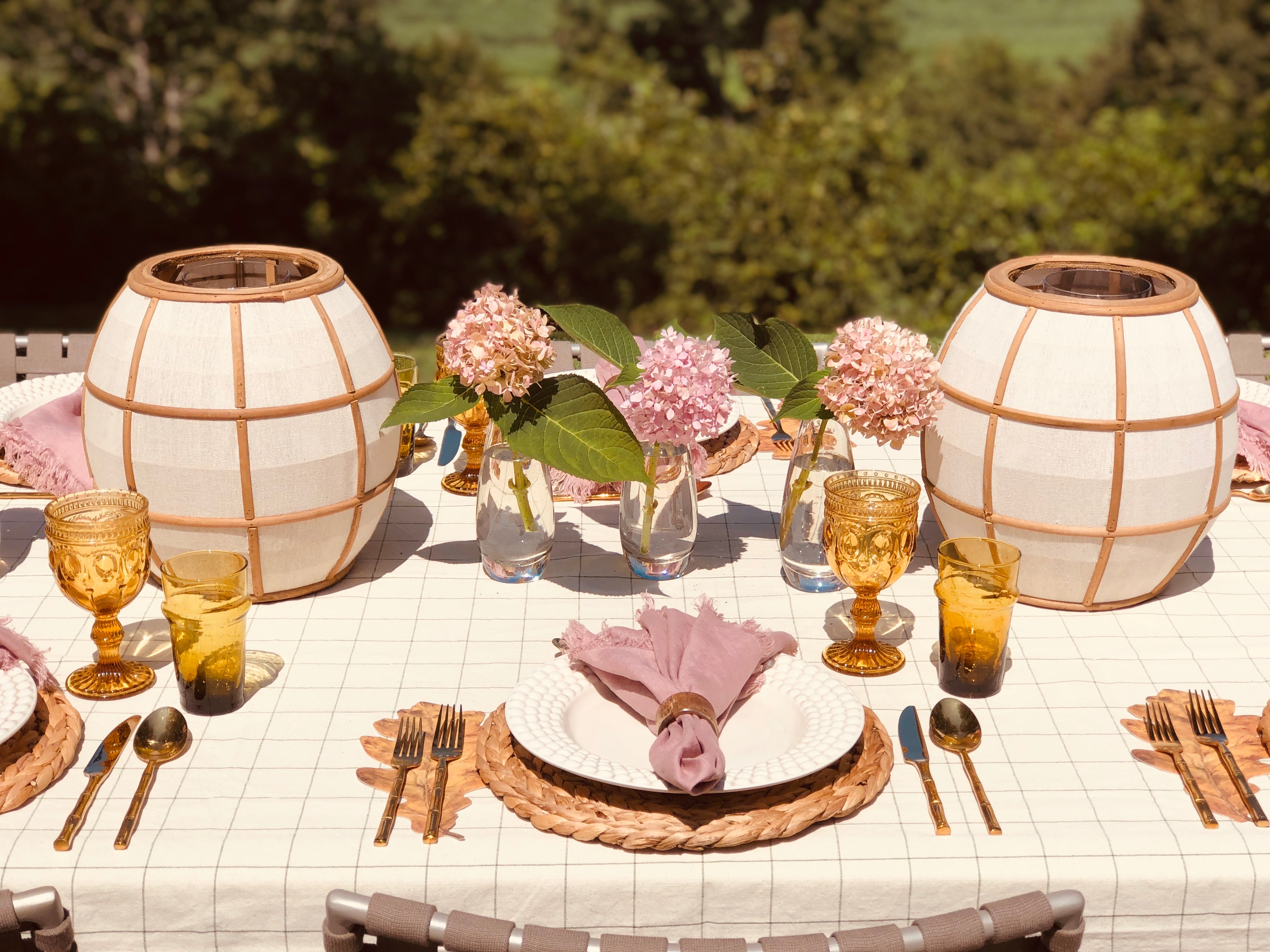
Set the table ahead of time, then place plates, glasses, napkins, and serving utensils where they’ll be used. For a special occasion, fold cloth napkins beside each plate or use napkin rings you already own. Put serving pieces near the dishes they’re intended for, and leave enough room for shared platters. These small steps make the table feel considered and help serving go smoothly.
An affordable centerpiece can come from the garden or kitchen. Arrange greenery along the table and add one or two colorful flowers in a container you have at home. Keep the arrangement low enough for guests to see one another across the table. A bowl of seasonal ingredients, such as citrus or apples, can also add color and connect the setting with the meal. For roasted vegetables or another favorite dish, let the food itself bring warmth and color.
Welcome guests with a relaxed greeting and show them where to sit. To encourage conversation, seat people beside someone they haven’t met but can easily talk with, rather than grouping all close friends together. Place quieter guests near warm, attentive conversationalists. The host can sit where they can help connect different parts of the table.
Before guests arrive, check each setting for a plate, glass, napkin, and the utensils needed for the first course. A coordinated set of 8-10 placemats and matching napkins can create a polished look, especially if you already own them. Thoughtful touches like handwritten place cards or a small flower at each setting feel personal without requiring new decorations. The finished table should suit the occasion, not look crowded with extra objects.
4. Making a dinner party feel special without buying decorations
Make the gathering personal through choices that connect with your guests, not a new decorative purchase. Write a short menu card listing the evening’s dishes, or add a handwritten note beside each place setting. If a friend loves a particular flavor, mention how it appears in the meal. These details show care without crowding the table with extra objects.
Let the food provide visual interest. Serve a colorful roasted dish on a platter you already own, and place sauces or pepper in small bowls. A familiar recipe can feel distinctive when guests can add finishing touches, such as fresh herbs or cracked pepper. Small dishes make even simple ingredients feel thoughtfully presented while keeping the table practical for serving.
Personal touches can shape the evening beyond the food. Welcome each guest by name, offer a favorite drink, and introduce friends who share an interest or story. If someone has helped with hosting before, thank them directly. A simple question about a recent trip or favorite meal can also give conversation an easy starting point without making dinner feel formal.
Keep the focus on the experience rather than perfect styling. Choose music that suits the occasion, have appetizers ready, and spend less time in the kitchen by serving food that doesn’t need constant attention. Guests notice when the host is present and engaged. A relaxed pace, thoughtful serving, and delicious meal make entertaining feel warm, even without purchased decorations.
For a polished table that still feels practical, explore serving pieces that help present the meal beautifully. Then let your own recipes, conversation, and personal touches bring the gathering together. The takeaway is simple: use what you have with intention, and make each detail reflect the people sharing the table.
Table Terrain
Table Terrain offers thoughtfully curated linens, napkin rings, flatware, serving items, vases, containers, and goblets to help make your dinner table feel considered. These pieces can bring a sense of cohesion to the setting while keeping the focus on the meal and the people gathered around it. Choose finishing touches when you want to refresh your existing tableware or add practical pieces for serving dinner.
Choose elements that suit the occasion and work with what you already own. A runner can add color, while a vase can hold greenery from the garden. Napkin rings and flatware provide useful details that make place settings feel complete without adding unrelated decorations.
For help choosing table pieces for your gathering, contact Table Terrain.
Make your next gathering your own
The most memorable gatherings often begin with one personal touch you can make your own. Choose a small ritual for the next evening, such as inviting each guest to share a favorite food memory or letting someone choose the music for dessert. These moments give the gathering its character without requiring a picture-perfect room.
Knowing how to make guests feel special at a dinner party is less about adding more and more about noticing what helps people feel welcome. Let your table reflect the occasion and your style, whether that means a favorite runner, thoughtful napkin rings, or a vase with greenery. Table Terrain offers table linens and napkin rings, flatware and serving items, and vases and containers to help bring those choices together.
As you plan your next dinner, choose the feeling you want guests to take home, then let the details support it. For table pieces that suit your gathering, contact Table Terrain. Keep it personal, keep it comfortable, and enjoy the evening around your table.
Frequently Asked Questions
How do I host my first dinner party?
Start with a deliberately small plan: choose a main dish you can prepare confidently, then build the evening around it. Decide what you can do ahead and what will need your attention during dinner. For example, prepare dessert the night before and ask a friend to handle the playlist. This keeps your first gathering manageable and leaves you free to greet guests and enjoy their company.
How should you accommodate dietary restrictions and food allergies at a dinner party?
Ask guests privately about allergies and dietary restrictions before choosing recipes, then plan a meal component everyone can share. Keep ingredient packaging or a written ingredient list nearby, and identify dishes clearly. Use separate serving utensils for dishes with different ingredients to reduce mix-ups at the table. For example, label a salad and serve its dressing separately so guests can choose what suits them.
How can you create a warm dinner party atmosphere with lighting, music, and table settings?
Create a gentle transition from arrival to dinner: keep the entry softly lit, then brighten the table as guests sit. Choose music with a steady, conversational feel, and set the volume before people arrive. Repeating a restrained palette in napkins and glassware can make the table feel intentional without competing with the food. Adjust the setting to suit the occasion and the mood you want to create.