
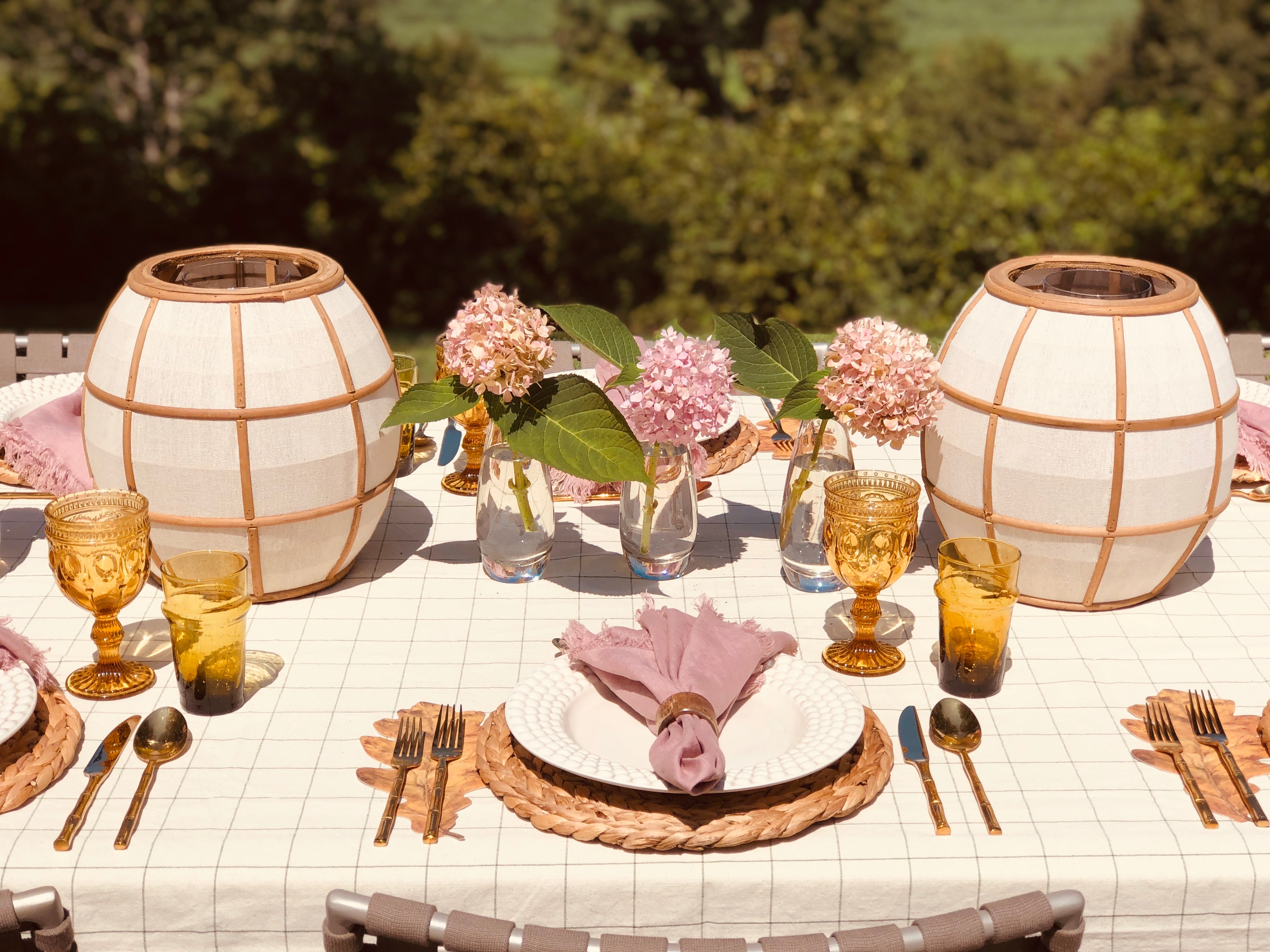


A heavier linen napkin isn’t automatically the better choice. Whether linen napkins are worth the investment depends on how you’ll use them, how much care you’re willing to give them, and whether their natural texture and lasting appeal suit your table. If you’re weighing napkin weight, feel matters as much as the number: lighter cloth napkins, around 50 grams or less, were easier to launder and maintain in the reviewer’s tests.
It’s reasonable to weigh reusable linen against paper for both convenience and upkeep. Linen feels relaxed yet polished, absorbs moisture, and softens with washing, but it can wrinkle and stain more readily than some blends.
This guide compares linen napkins with paper across feel, absorbency, durability, care, and everyday use. You’ll also learn how weave and fabric weight affect performance, helping you decide whether linen fits your routine as well as your tablescape.
Key Takeaways
- Choose napkins by how they’ll feel and perform at your table, not by weight alone; weave and finishing also shape everyday use.
- Gentle washing and air drying help preserve linen, while damp ironing and loose folding can make wrinkles easier to manage.
- Reusable cloth trades paper’s quick disposal for laundering and repeat use, so your household’s habits matter when deciding what suits you.
- Weigh linen’s durability and natural texture against its tendency to wrinkle and stain to decide whether its look and upkeep fit your routine.
Linen napkin absorbency, softness, and durability
Linen pairs distinctive texture with absorbency and repeated use. Its weave, finish, and care routine all affect how it performs at your table.
Absorbency and Softness
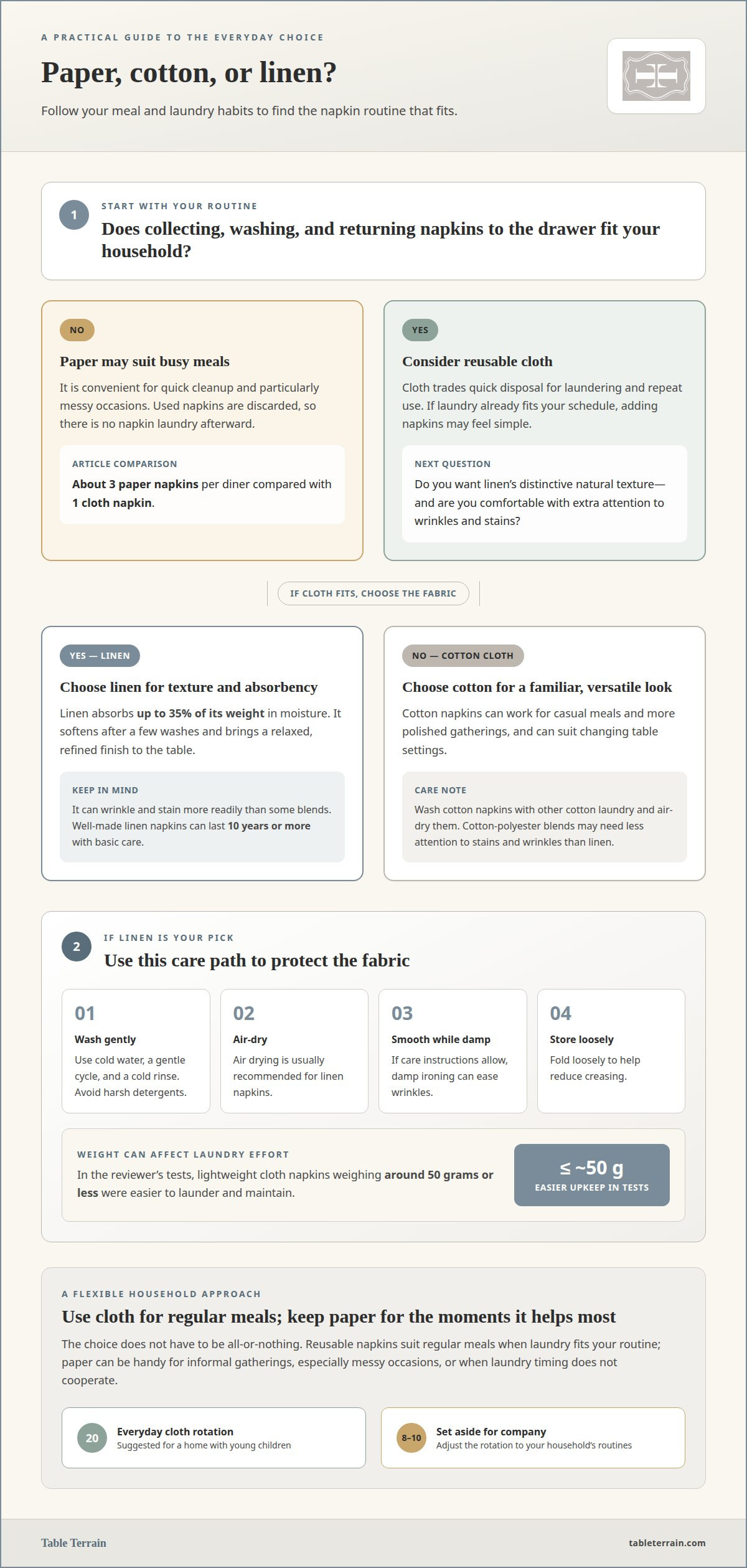
Linen absorbs up to 35% of its weight in moisture, making it useful for wiping spills and hands during a meal. Its natural texture gives a setting a relaxed, refined appearance, while colors and patterns can add personality without changing the fabric’s feel.
Linen becomes softer after a few washes, so its feel can grow more comfortable with use. For care, wash napkins in cold water on a gentle cycle, use a cold rinse, avoid harsh detergents, and air dry. Iron them while damp to smooth wrinkles.
Durability and Hem Construction
Construction influences how well linen napkins hold up. Check for secure stitching, neatly finished edges, and consistent seams. These details help hems keep their shape through regular handling and laundering.
Well-made linen napkins can last 10 years or more with basic care. A neatly finished hem also helps the napkin appear polished in a formal setting, while a plain weave offers a versatile look for different occasions. Check stitching and corners when assessing construction.
Longevity and Household Needs
Linen’s longevity makes it a practical choice for households that reuse napkins and care for them consistently. Wash and dry them gently, then store them folded loosely to reduce creasing. For households with young children, one suggested approach is keeping 20 napkins for everyday use and setting aside 8 to 10 for company.
How many linen napkins should a household buy? The answer depends on everyday use and how often laundry is done. For a home with young children, 20 napkins can serve daily meals, with 8 to 10 reserved for guests. Adjust the rotation to fit your household’s routines.
Care and maintenance trade-offs
Linen’s texture brings a relaxed finish, but wrinkles are part of its upkeep. Wash napkins in cold water on a gentle cycle, then finish with a cold rinse. Harsh detergents can be hard on the fabric, so choose a gentler option. Air drying is usually recommended. These steps suit linen’s natural character without adding complicated care routines.
For a smoother setting, iron linen while it’s damp if the care instructions allow, then store it loosely to avoid sharp creases. Pressing damp fabric can ease wrinkles. If ironing feels like too much work after a meal, linen’s naturally rumpled appearance may suit your table. Decide whether you enjoy that lived-in look before choosing it for everyday use.
Weight can affect laundry effort. In a reviewer’s tests, lightweight cloth napkins weighing around 50 grams or less were easier to launder and maintain. That difference may matter if you wash napkins often or have limited time for ironing. Towels and other laundry also need sensible sorting: wash cotton and cotton-blend napkins with cotton items, not non-cotton fabrics.
Delicate details call for extra attention. Lace or embroidery can catch during washing, so follow the care instructions for the finished item. Printed designs may fade with use, while embroidery is stitched into the cloth. The fabric and its decoration both matter when deciding how much upkeep you’re comfortable with.
Care also shapes the trade-off against easier-care blends. Linen can stain and wrinkle more readily than cotton-polyester blends, so spills and pressing may require extra attention. Production choices can matter to some households, too, but they don’t remove laundry work. If frequent ironing feels expensive in time, choose linen for occasions where its texture and finish feel worth that effort.
Reusable cloth napkins as an alternative to paper napkins
Paper napkins are convenient for quick meals, while cloth napkins are reusable. One estimate compares about three paper napkins per diner with one cloth napkin. The choice also involves cleanup: paper is discarded after use, while cloth goes into the laundry and can be used again. Consider your household’s meal habits and approach to laundry.
Reusable fabric also changes what leaves the table after dinner. Paper products account for more than 28% of all trash sent to landfills, though that figure covers paper products broadly, not napkins alone. Cloth napkins can be laundered and reused, so replacing some disposable settings can reduce the paper napkins your meals require. The difference depends on whether reusable napkins fit naturally into your laundry routine.
Cotton napkins offer a familiar, versatile look for casual meals and more polished gatherings. Linen brings a more distinctive texture, while simple cotton styles can work with changing table settings. Paper is useful when quick cleanup matters more than a reusable place setting. Cloth adds a tactile detail at each place, helping a meal feel welcoming.
Consider the full routine, not just the moment you set the table. Cloth requires collecting used napkins, washing them, and returning them to the drawer; paper requires keeping a supply on hand and discarding each used napkin. Cotton napkins should be washed with other cotton laundry and air-dried. If laundry already fits your household schedule, adding napkins may feel simple. If not, paper may better suit especially busy meals.
Use cloth for regular meals and keep paper for informal gatherings or particularly messy occasions. This flexible approach lets you enjoy reusable napkins without making every meal follow the same rule. Cotton can suit both weekday dinners and a more composed setting, while paper is handy when laundry timing doesn’t cooperate.
Benefits and drawbacks of linen napkins
Linen brings an easy, natural finish to dining, but its care routine differs from that of some other fabrics. Its advantages matter most when they fit your household’s habits.
Benefits Compared With Cotton
Linen napkins may dry faster than cotton, which can help when laundry needs to turn over between meals. Cotton offers a familiar feel, while linen’s texture gives a table a distinctive look. Both can work for everyday dining, so choose based on the feel and appearance you prefer.
Linen fibers are naturally moth-resistant, and linen is recyclable and biodegradable. Production uses every part of the flax plant, reducing waste. Those qualities may appeal if you consider material choices alongside table style. Linen can also sit naturally with other natural textiles, such as a woven runner or placemat.
So, are linen napkins worth the investment for your home? They can be if you value their natural look and reusability enough to accept the care they need.
Wrinkles and Maintenance Drawbacks
Linen can wrinkle and stain more readily than cotton-polyester blends. A crisp setting may take extra attention after washing, while a relaxed, creased finish requires less pressing. Consider how much time you want to spend preparing napkins before guests arrive.
For spills, treat linen napkins as table linens, not kitchen towels. Set stained pieces aside for laundering and handle them according to their care instructions. If easy care matters more to you than linen’s texture, a cotton-polyester blend may be a better fit for busy meals.
For everyday dining or special occasions? Linen can suit either. Are linen napkins worth the investment if you use them regularly and accept their natural creases? They may be a practical fit. If you prefer a crisp finish with less upkeep, save them for gatherings and choose another fabric for daily meals.
Table Terrain: Table Linens & Napkin Rings
Table Terrain offers table linens and napkin rings to help bring your napkin choice into a cohesive setting. Explore these finishing details when you’re ready to pair reusable napkins with a thoughtfully collected table, for everyday dining or a special gathering.
Complete your setting with flatware and serving items, goblets, or vases and containers. A considered mix can help linen feel at home alongside pieces you already use, without making every meal formal. Start with practical choices, then add textures and accents that suit your table.
If you’d like to explore table details for your setting, contact Table Terrain.
Make Your Table Feel Like Yours
Deciding whether linen napkins are worth the investment is also a chance to think about the table you want to create. Choose pieces that feel at home, suit the meals you enjoy, and make setting the table feel like part of the occasion rather than another task. A considered table doesn’t need to be elaborate. A detail that reflects your taste can make an everyday meal feel more personal, too.
As you decide, picture the moments ahead: a relaxed family dinner, a seasonal gathering, or a meal with friends. Let the atmosphere you want guide your choices, and build your setting gradually. The right pieces are ones you’ll enjoy bringing to the table and using in real life.
Ready to explore table details that suit your style? Contact Table Terrain to take your next step toward a table that feels welcoming and distinctly yours.
Frequently Asked Questions
Doesn’t linen need to be ironed?
Only if you want a crisp finish; linen can also be set out with its natural creases. For a smoother look, iron napkins while they’re slightly damp, and avoid pressing them until completely dry. If you’re setting the table for a relaxed dinner, simply fold them neatly. A formal place setting may call for a quick press before guests arrive.
How about the price?
Think beyond the purchase price and consider how often you’ll use each napkin. A set used regularly serves more meals than one reserved for occasional gatherings. Laundry, ironing, and storage also take time, so include those practical demands in your decision. Choose a quantity and fabric that fit your household’s routine rather than buying more than you’ll use.
The Top 2 Cloth Napkins | How to Know What Is The Best Material For Cloth Napkins?
There isn’t one best material for every table; linen and cotton suit different preferences. Linen offers a textured, natural look, while cotton can be a comfortable choice for everyday meals. Cotton-polyester blends may suit people who prefer fewer wrinkles. Decide whether distinctive texture, easier care, or versatility matters most to you.
How much do linen napkins cost compared with cotton or polyester napkins?
Prices vary with fabric, construction, and design, so no single comparison applies to every set. Compare similar quantities and finishes, then consider how often you’ll reuse the napkins. Factor in washing and ironing, too. A lower purchase price may suit occasional use, while frequent table settings can make durability and care more important.
How long do linen napkins typically last with regular use and washing?
With appropriate care, linen napkins may last for years, though lifespan depends on fabric quality, construction, use, and laundering. Frequent washing and rough handling can wear fabric or weaken hems sooner. Inspect napkins periodically, especially at corners and stitched edges. Signs of wear can help you decide whether a napkin still suits everyday meals or should be saved for lighter use.
How often should linen napkins be replaced?
Replace a napkin when wear affects its appearance or use, rather than following a fixed calendar. Persistent holes, thinning fabric, or hems that keep unraveling are practical signs to retire it. Minor imperfections may suit casual meals, while a formal setting may call for napkins in better condition. Rotating your set can also help prevent a few favorites from wearing out first.