


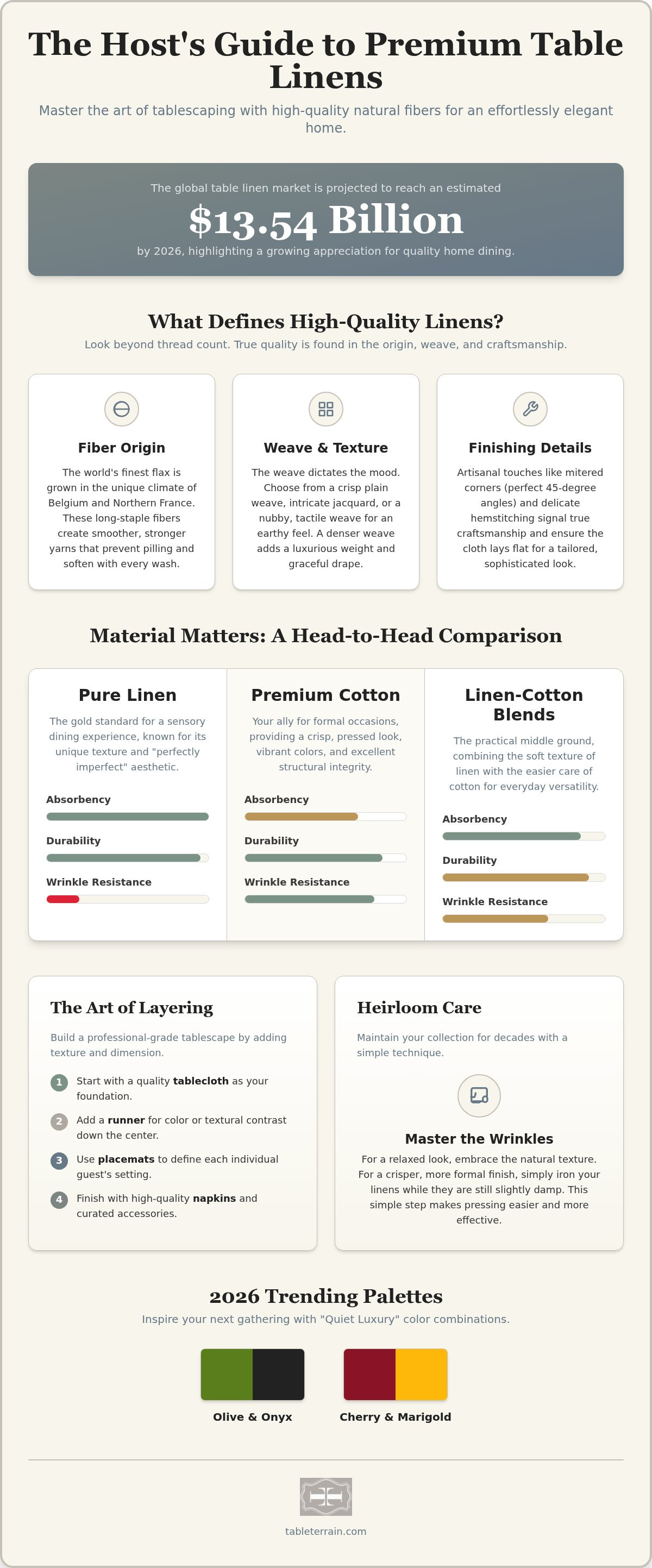
Your tablecloth isn't just a protective layer; it's the silent director of your dinner party's mood. While the global table linen market is expected to grow to 13.54 billion dollars in 2026, finding premium linen table linens often feels like a lesson in frustration. You might struggle with confusing fabric terminology or worry that natural fibers will look like a wrinkled mess before guests even arrive. It's difficult to achieve that effortless, curated look when you're unsure if your linens truly match your existing flatware and glassware.
We believe that hosting should be an inspiring art, not a source of stress. This guide will show you how to identify high-quality fabrics and style them with expert techniques to create a professional-grade tablescape at home. You'll learn to master the "Quiet Luxury" aesthetic by layering nubby textures and exploring 2026's trending palettes, such as olive and onyx or cherry and marigold. We're going to give you the confidence to choose durable, luxurious materials that make every gathering feel like a special occasion.
Key Takeaways
- Identify premium quality by evaluating fiber origin and weave density rather than misleading thread counts.
- Select the perfect linen table linens for your hosting style, from effortless daily runners to formal celebration tablecloths.
- Create a professionally styled look by layering different textures and dimensions with curated placemats and accessories.
- Master heirloom care with simple damp ironing techniques so you don't have to worry about excessive wrinkling.
- Learn the distinct benefits of pure linen versus cotton blends to match the specific mood and functional needs of your gathering.
What Defines High-Quality Linen Table Linens in 2026?
True quality in linen table linens isn't just a marketing claim. It's a tangible difference you can feel the moment you set the table. In 2026, savvy hosts look beyond the "100% linen" tag to evaluate three specific pillars: fiber origin, weave density, and finishing details. While cotton bedding relies on thread count as a primary metric, applying this to linen is a mistake. Linen fibers are naturally thicker and more robust than cotton. A high-quality tablecloth might have a lower thread count but significantly higher durability and a more luxurious weight than a flimsy alternative.
Perform the "drape test" to spot premium quality quickly. High-end linen should hang with a heavy, graceful movement that synthetic blends simply can't replicate. Look for artisanal touches that signal true craftsmanship. Mitered corners, where the fabric edges meet at a perfect 45-degree angle, ensure the cloth lies flat and looks tailored. Hand-embroidery or delicate hemstitching adds a layer of sophistication that elevates your entire dining room. These details distinguish an heirloom piece from a mass-produced product.
Fiber Quality: The Importance of European Flax
The journey to a beautiful table starts in the fields of Belgium and Northern France. This region's unique climate produces the world's finest flax. You can learn more about the production process in this Linen textile overview. Premium linen table linens use long-staple fibers. These longer strands create a smoother yarn that prevents pilling and becomes softer with every wash. High-quality flax also possesses a natural luster. This subtle sheen isn't shiny like satin; it's a soft, organic glow that improves as the fabric ages over decades.
The Role of Weave in Tabletop Aesthetics
The way your linens are woven dictates the final mood of your gathering. Plain weave is the classic choice for daily elegance. It offers a crisp, clean surface that lets your flatware shine. If you want something more intricate, choose a damask or jacquard weave. These techniques create patterns by varying the weave direction, resulting in sophisticated designs that won't fade like printed fabrics. In 2026, we're seeing a shift toward sensory textures. Nubby, tactile weaves provide a grounded, earthy feel that makes guests want to linger at the table. Choosing the right weave ensures your table feels as good as it looks.
Comparing Premium Materials: Pure Linen vs. Cotton vs. Blends
Choosing the right fabric is the foundation of any successful gathering. While synthetic options like polyester are common, they lack the soul and breathability of natural fibers. High-quality hosting demands materials that feel as good as they look. When comparing linen and cotton, you'll find that each brings a distinct personality to your home. Pure linen offers an organic, relaxed elegance, while premium cotton provides a structured, traditional feel. Blends offer a functional bridge between the two.
The Enduring Appeal of Pure Linen Table Linens
Pure linen table linens remain the gold standard for those who value a sensory dining experience. Linen is exceptionally absorbent and has natural wicking properties. This makes it the superior choice for napkins that actually work. Don't fear the wrinkles; instead, embrace the "perfectly imperfect" aesthetic that defines modern sophistication. The unique "slub" texture, those tiny, natural irregularities in the yarn, adds visual depth to minimalist settings. It's a fabric that breathes. It stays cool during summer garden parties and feels substantial during cozy winter dinners.
When to Choose Premium Cotton
Sometimes the occasion calls for a sharper, more traditional silhouette. Premium cotton is your ally for formal holiday dinners where a crisp, pressed look is non-negotiable. Cotton fibers take dye beautifully. This allows for vibrant color retention and intricate patterns that stay sharp through years of use. It's also incredibly durable. For daily, high-use environments, heavy-weight cotton stands up to frequent laundering while maintaining its structural integrity. It provides a smooth, reliable canvas for your most prized dinnerware.
If you entertain often, linen-cotton blends offer a practical middle ground. They combine the soft hand-feel and characteristic texture of linen with the wrinkle-resistance of cotton. This makes them an excellent entry point for building a versatile collection that works for both Tuesday nights and Saturday soirées. Focusing on natural fibers ensures your tabletop feels curated and intentional rather than mass-produced. Explore our curated selection of natural fiber linens to find the perfect match for your hosting style.
Choosing Your Linen Table Linens Based on Hosting Style
Your hosting style is as unique as your menu. For daily meals, prioritize ease and casual elegance. Durable placemats and runners allow you to protect your table while showing off its natural grain. They're quick to set and easy to launder, making them perfect for busy weeknights. When the occasion shifts to a celebration, invest in full-length linen table linens. A matching set of napkins and a large tablecloth creates a cohesive, intentional atmosphere that signals a special event. To find the right fit, measure your table and add 10 to 12 inches per side for a standard "drop." This creates a graceful overhang that feels professional without interfering with guests' laps.
Think of your collection as a capsule wardrobe. Neutral basics work year-round, while a few statement napkins can refresh the look for spring or autumn. Building this collection takes time, but high-quality pieces last for generations. For long-term preservation, consult The Old Farmer's Almanac guide to caring for table linens to ensure your heirlooms stay pristine through years of gatherings.
The Minimalist Host: Clean Lines and Neutral Palettes
Minimalism doesn't mean boring. It means curated. Use tone-on-tone textures to build depth without creating visual noise. A single, high-quality runner on a bare wood table provides just enough softness to the room. Select napkins in a slightly different shade of the same color family to act as a sophisticated accent piece. This approach highlights the quality of the fabric rather than a loud print, keeping the focus on the food and conversation.
The Maximalist Host: Bold Colors and Layered Patterns
If you love color, don't be afraid to layer. Mixing patterns works best when you keep a consistent color story across the tabletop. You can coordinate your bold linens with vibrant accessories like green water goblets to ground the look and provide visual balance. Use deep jewel tones or trending 2026 palettes like cherry and marigold to set a specific seasonal theme. Layering a textured runner over a solid tablecloth adds the dimension necessary for a truly maximalist masterpiece that feels energetic and inviting.
The Art of Layering: Building Your Table Terrain
Layering is the secret to a professional look. It's not just about protection; it's about creating depth and movement. A full tablecloth provides a formal foundation, but you don't always need a total cover. If you have a beautiful wood or marble surface, let it breathe. Use linen table linens like runners and placemats to define individual spaces while keeping the table's character visible. This approach builds a curated landscape that feels both intentional and inviting.
Don't forget the small details that act as the jewelry of your table. A set of napkins isn't truly finished without the right napkin rings. These pieces provide a polished, vertical element to each place setting. They keep the fabric tidy while adding a metallic or organic accent that ties into your flatware. When you coordinate your linens with your serving items and glassware, the entire setting feels like a single, harmonious composition rather than a collection of random objects.
Texture Layering for Professional Depth
Professional styling relies on contrast. Try mixing a smooth, crisp cotton base with a heavy, textured linen runner. This interplay of light and shadow creates visual interest without needing loud patterns. Woven placemats are another excellent tool for adding dimension. They provide organic warmth to even the most formal settings, preventing the table from feeling too stiff or cold. For more advanced styling techniques, explore our guide on Mastering the Art of Stunning Table Scapes.
Color Coordination Strategies
Apply the 60-30-10 rule to your tabletop palette for perfect balance. Use 60% of a dominant color for your tablecloth, 30% for a secondary color in your runner or placemats, and 10% for a bold accent in your napkins. Match these accent colors to your elegant wine glasses to create a rhythmic flow across the setting. High contrast helps your flatware stand out. A dark charcoal napkin makes silver-toned forks pop, while a cream linen background highlights the warmth of gold-toned serving items.
Ready to transform your dining room? Shop our exclusive collection of table accessories to begin building your own layered look.
Heirloom Care: Maintaining Your High-Quality Linen Collection
Caring for your collection doesn't have to be a chore. Premium linen table linens are remarkably resilient. To keep them at their best, use a warm wash cycle between 30-40°C. This protects the natural fibers while ensuring they're clean for the next gathering. Avoid harsh detergents or bleach. These chemicals can weaken the flax over time. If a spill happens, act fast. Blot the area with cold water and mild soap before the stain sets. Simple actions today preserve your heirlooms for tomorrow.
The secret to a crisp look is damp ironing. Don't wait for your linens to bone-dry. Iron them while they're still slightly moist for a smooth, professional finish. When storing your collection, location matters. Choose a cool, dry, and well-ventilated area. Avoid plastic containers or bags. These trap moisture and can lead to yellowing or mildew. Breathable cotton bags or simply folding them on a clean shelf is much better for long-term fiber health.
Laundering for Longevity
Never use fabric softeners on premium linen. They coat the fibers and reduce the very absorbency that makes linen so functional. Air-drying is always the gold standard for fiber health. If you must use a dryer, keep it on low heat. Remove the items while they are still slightly damp to prevent deep-set creases. To revive vintage pieces, a gentle soak in lukewarm water with a splash of white vinegar can safely brighten yellowed fabric without damaging the delicate weave.
Why Curated Quality Matters
Investing in high-quality pieces means you spend less time replacing worn-out items. Table Terrain’s curated collection simplifies this selection process. We've done the hard work of sourcing premium natural fibers so you can focus on the art of gathering. High-quality linens are meant for living. They shouldn't be hidden away for a hypothetical future event. Use them, enjoy them, and let them get softer with every wash. They are the durable, beautiful backdrop to your life's most meaningful moments.
Elevate Your Next Gathering with Curated Style
Creating a professional-grade tablescape is within your reach. By focusing on fiber origin and mastering the art of layering, you transform a simple meal into a memorable event. High-quality linen table linens serve as the essential canvas for your creativity. They offer a sensory experience that synthetic fabrics simply cannot match. Remember that true luxury lies in the details, from the weight of the drape to the texture of a hand-finished hem. These pieces aren't just for show; they're designed to be lived in and loved for years to come.
We've done the hard work of selection so you don't have to. Our offerings feature premium natural fibers curated by expert stylists to ensure tabletop harmony. Whether you're hosting a casual Tuesday dinner or a grand holiday celebration, these pieces are designed for the modern host who values both time and aesthetic beauty. Shop the Table Terrain Linen Collection today to find the perfect foundation for your home. Your guests are waiting, and your table is ready to shine.
Frequently Asked Questions
What is the best material for high quality table linens?
Pure European flax is the best material for high-quality table linens due to its exceptional durability and natural luster. Unlike synthetic fibers, premium linen becomes softer and more beautiful with each wash. It offers a unique sensory experience that elevates any dining setting. We focus on natural fibers because they provide the organic sophistication and breathability that modern hosts crave for their curated tablescapes.
Should I choose a tablecloth or a table runner for a modern look?
Choose a table runner if you want to showcase a beautiful wood or marble surface while maintaining a modern, minimalist vibe. Tablecloths are better for formal celebrations where you want a complete transformation of the room. For a truly professional look, try layering a textured runner over a solid tablecloth. This adds dimension and visual interest without making the setting feel too stiff or traditional.
How do I know what size tablecloth to buy for my table?
Measure the length and width of your table first. For a standard dining drop, add 20 to 24 inches to both dimensions. This ensures a graceful 10 to 12 inch overhang on all sides. If you are hosting a very formal event, you might prefer a floor-length drop. Always check your measurements twice to avoid a cloth that looks stunted or interferes with your guests' comfort.
Are linen napkins better than cotton napkins for dinner parties?
Linen napkins are generally superior for dinner parties because they are more absorbent and have a luxurious, tactile feel. While cotton napkins offer a sharp, pressed appearance, linen table linens provide an effortless elegance that guests appreciate. They handle spills better and develop a beautiful, soft drape over time. Pair them with curated napkin rings to add a final, polished touch to your place settings.
How do I remove red wine stains from high quality linens?
Act immediately by blotting the spill with a clean, white cloth to absorb as much liquid as possible. Never rub the fabric, as this pushes the wine deeper into the fibers. Apply cold water or a specialized stain remover designed for natural textiles. Many hosts use a mixture of dish soap and hydrogen peroxide for stubborn spots. Always rinse thoroughly and launder according to the care instructions.
What is the difference between a placemat and a charger plate?
A placemat is a functional piece made of fabric, wood, or woven materials designed to protect the table and define a guest's space. A charger plate is a large, decorative base plate that sits under the dinnerware. While they serve different purposes, you can use them together to create a sophisticated, layered look. This combination adds height and texture to your linen table linens.
Can I mix different types of linens on the same table?
You can absolutely mix different types of linens to create a more dynamic and personalized table. Combining a smooth cotton tablecloth with a heavy, nubby linen runner adds professional depth to your design. Keep the color palette cohesive to ensure the different textures feel intentional rather than cluttered. This approach allows you to highlight specific pieces like heirloom napkins or modern placemats for a unique aesthetic.
How should I store my premium linens to prevent yellowing?
Store your premium linens in a cool, dry, and well-ventilated area to prevent yellowing and fabric degradation. Avoid using plastic containers or bags, as they trap moisture and can cause mildew. Instead, use breathable cotton storage bags or wrap them in acid-free tissue paper. If you store them on a shelf, make sure they aren't exposed to direct sunlight, which can fade vibrant colors over time.