


Your guests will touch their flatware more than any other element on your table. While linens provide the backdrop, designer flatware sets anchor the physical weight of your hosting. It's the essential jewelry that bridges your glassware and plates. You've likely felt the disappointment of a beautiful fork that feels light or tinny in your hand. Perhaps you've dealt with frustrating rainbow stains or rust spots on pieces that promised durability. You deserve a table that looks professionally styled and feels just as premium as the menu you've crafted.
Selecting the right set is about mastering the balance between ergonomic weight and material integrity. In 2026, the trend of warm minimalism is bringing a focus back to high-performance luxury that stands the test of time. This guide helps you evaluate material grades like 18/10 stainless steel and understand why forged construction beats stamped alternatives. We'll show you how to choose pieces that enhance the sensory experience of every meal while ensuring your investment stays beautiful for years. From textured artisanal finishes to classic gold, you'll learn to curate a tablescape with absolute confidence.
Key Takeaways
- Define your table's aesthetic by treating cutlery as the essential "jewelry" that bridges linens and glassware.
- Prioritize 18/10 stainless steel to ensure your pieces offer superior rust resistance and a professional-grade shine.
- Evaluate designer flatware sets based on ergonomic weight and the emerging 2026 trends of organic curves and bold minimalism.
- Apply the "Texture Matching" rule to create harmony between heavy linens and substantial, forged utensils.
- Extend the life of your collection by avoiding prolonged soaking and high-heat dishwasher cycles that can damage delicate finishes.
Understanding the Anatomy and Importance of Fine Flatware
Flatware encompasses the essential tools of your table: the forks, knives, and spoons that facilitate every bite. While they are functional necessities, you should think of designer flatware sets as the jewelry of your dining room. Just as a statement necklace completes an evening look, cutlery adds the final sparkle to your presentation. It serves as a vital structural anchor in a modern table setting, providing a physical counterpoint to the soft textures of linens and runners.
The weight of a utensil has a surprising psychological impact on guest satisfaction. A fork that feels substantial in the hand immediately communicates quality and care. Conversely, a flimsy or "tinny" piece can detract from the sensory experience of a well-prepared meal. This tactile feedback is a silent communicator of luxury. It influences how your guests perceive the flavor and value of the food you serve.
The Components of a Standard Place Setting
A professional 5-piece place setting is the foundation of elegant hosting. It typically includes five core pieces:
- Dinner Fork: The largest fork, used for the main course.
- Salad Fork: A smaller fork used for appetizers or greens.
- Dinner Knife: The primary cutting tool, balanced for comfort.
- Soup Spoon: Featuring a larger, deeper bowl for broths.
- Teaspoon: A versatile smaller spoon for stirring or desserts.
You may also choose to incorporate specialized Cutlery like butter knives or dessert spoons. These pieces add layers of sophistication for multi-course meals, signaling to your guests that every detail has been curated for their enjoyment.
Why Quality Matters: Beyond Simple Utility
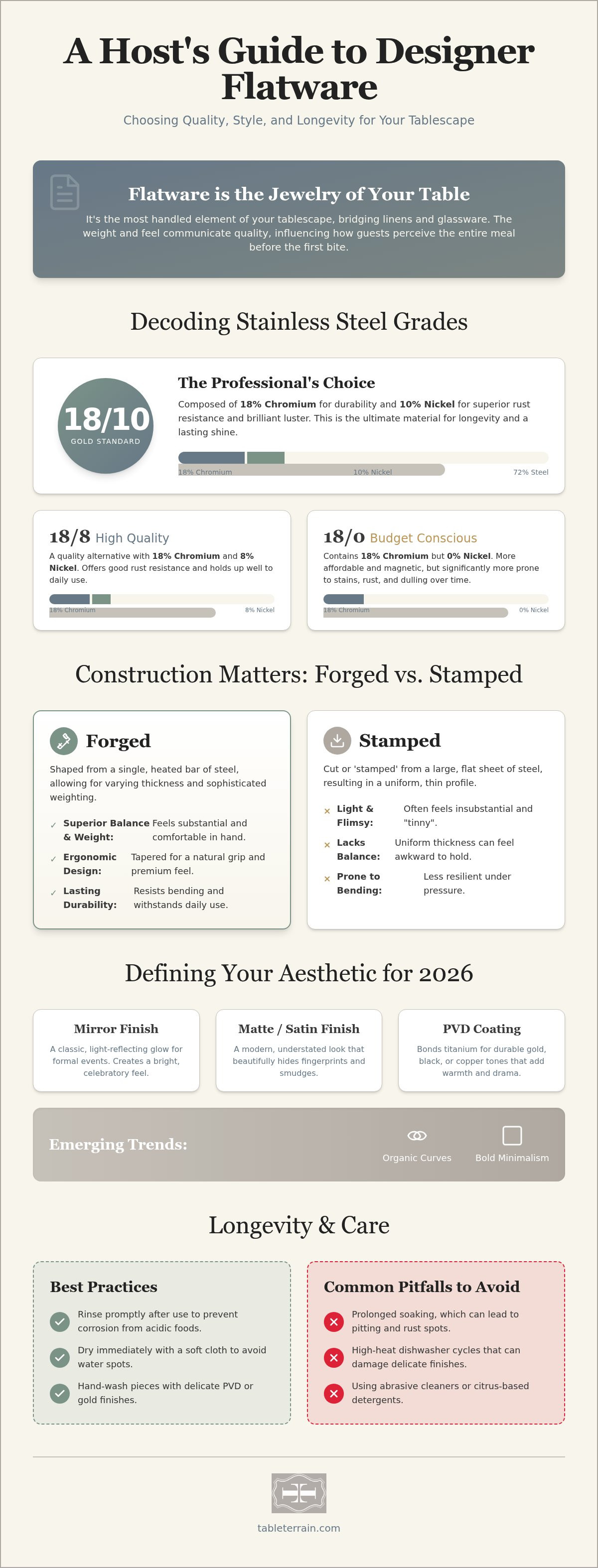
The difference between budget options and premium designer flatware sets often lies in the manufacturing process. Stamped flatware is cut from a flat sheet of metal, which often results in thinner, lighter pieces that lack ergonomic balance. Forged flatware is shaped from a single bar of heated steel. This process allows for varying thicknesses and a more sophisticated hand-feel that feels natural in the palm.
Quality materials also prevent the metallic aftertaste that can ruin a delicate dish. Premium 18/10 stainless steel is non-reactive, ensuring the integrity of your food's flavor. While budget alternatives might bend or develop rust spots after a few washes, forged premium sets offer the longevity required for both daily use and special occasions. Choosing high-quality pieces is an investment in the long-term beauty and functionality of your home.
Selecting the Right Material: Stainless Steel Grades and Finishes
Not all stainless steel is equal. Choosing the right material ensures your table remains pristine for years. High-end collections rely on specific metal compositions, but the grade determines how the pieces handle daily use and frequent washing. For designer flatware sets, 18/10 is the gold standard. This ratio represents 18% chromium for strength and 10% nickel for a lasting, brilliant luster. Nickel is the secret ingredient that provides superior corrosion resistance. It keeps your forks from developing rust spots or "rainbow" stains after a dishwasher cycle.
While 18/10 offers the best protection, you'll also encounter 18/8 and 18/0 grades. The 18/8 grade is a high-quality alternative with slightly less nickel, though it still provides good rust resistance. In contrast, 18/0 contains no nickel at all. It's often more affordable and magnetic, but it's far more susceptible to staining and dulling over time. If you want a set that maintains its professional appearance through hundreds of dinner parties, stick with 18/10. Looking back at the history of cutlery, material innovation has always been about balancing beauty with practical resilience.
Choosing Your Finish: Mirror vs. Matte vs. PVD
Mirror finishes provide a classic, light-reflecting glow for formal events. They offer a traditional elegance that makes a table feel bright and celebratory. Matte and satin options offer a modern, understated look that hides fingerprints beautifully. For those seeking bold color, PVD (Physical Vapor Deposition) coatings are the answer. This technology bonds titanium to the steel, creating permanent gold, black, or copper tones. If you're opting for a gold finish, it's a stunning way to add warmth to your table. You can explore a variety of these finishes when you browse premium serving items.
The Forged vs. Stamped Debate
Forging involves shaping a single bar of red-hot steel into the final utensil shape. This process creates a dense tool with perfect balance. A forged knife feels purposeful in your hand. It offers a "heft" that stamped alternatives, which are cut from flat metal sheets, cannot replicate. Stamped pieces often feel thin and lack the rounded, comfortable bolsters found in forged designs. Forged designer flatware sets are essential for a premium cutting experience because they allow for a tapered blade and a weighted handle that sits naturally in the palm. The result is a utensil that feels like an extension of the hand rather than just a tool.
Defining Your Aesthetic: Flatware Styles for 2026
Your table's aesthetic starts with the tools your guests hold. Choosing designer flatware sets is about more than matching a fork to a plate; it's about setting a specific mood for the evening. In 2026, we're seeing a shift toward "Modern Organic" designs. These pieces feature soft curves and natural silhouettes that mimic the fluidity of water or smoothed river stones. If you prefer something more structured, "Sculptural Minimalism" offers bold, heavy lines with zero ornamentation. This style relies on the raw beauty of the metal and the precision of the silhouette to make a statement. For those who love a home that feels lived-in and storied, "Vintage Eclecticism" is making a major comeback. This trend encourages a curated, collected look that feels personal rather than clinical.
Handle design plays a massive role in the visual weight of your place setting. It's a detail that many overlook, but it changes the entire energy of the table. Tapered handles that narrow toward the neck create a sense of lightness and grace, making the table feel more open. Flared handles, which widen at the base, feel grounded and sturdy. They provide a sense of permanence and tradition. When you pick a handle style, consider the "heft" you want your guests to feel. It's the difference between a delicate garden brunch and a substantial, multi-course winter feast.
Modern and Minimalist Silhouettes
Clean lines and architectural shapes are the hallmarks of modern design. These architectural pieces are perfect for elegant table settings for dinner parties, where the goal is a cohesive, high-contrast look. Consider matte black or brushed gold finishes to emphasize the sharp, intentional edges of the cutlery. Thin-handled flatware is particularly effective for creating an airy, sophisticated atmosphere. It allows the beauty of your table linens to shine through without being overshadowed by bulky utensils. It feels intentional, precise, and effortlessly cool.
Timeless Classics with a Twist
You don't have to abandon tradition to stay current. Many designer flatware sets now offer updated versions of traditional patterns like the teardrop or the baguette. These "transitional" styles are incredibly versatile because they bridge the gap between old-world charm and contemporary simplicity. The history of cutlery shows how design shifted from pure utility to artistic expression, a transition that continues with today's updated classics. Use polished silver to brighten a dark, moody tablecloth or a deep navy runner. These pieces catch the candlelight beautifully, adding a layer of warmth and sparkle that never goes out of style.
The Art of Coordination: Pairing Flatware with Linens and Glassware
A truly professional table feels like a single, cohesive thought. Coordination is the bridge that connects the softness of your placemats to the crystalline sparkle of your wine glasses. Think of your designer flatware sets as the visual glue of the tablescape. To achieve this, follow the "Texture Matching" rule. Pair heavy, artisanal linens with substantial forged flatware. This creates a sense of physical balance. If you use flimsy napkins alongside a heavy forged knife, the setting feels lopsided and unintentional.
Color theory also plays a vital role in your selection. You can instantly warm up green water goblets by choosing gold-toned utensils. This contrast feels intentional and high-end. It establishes a visual flow that moves naturally from the napkin ring to the cutlery placement. This layering technique ensures your flatware bridges the gap between casual daily items and your most formal glassware.
Matching Flatware to Your Linens
Pairing crisp table linens with polished silverware is a timeless choice. The high-gloss finish of the metal reflects the smooth surface of the fabric, creating a bright and celebratory mood. If you prefer a more grounded look, use textured runners to provide a backdrop for contemporary, matte-finished utensils. The weight of your chosen napkin should always influence your flatware choice. A thick, multi-ply linen napkin requires a utensil with enough heft to sit firmly beside it without being overshadowed by the fabric's volume.
Coordinating with Glassware and Serving Items
Consistency is key when matching metal tones across your table. If your serving trays and wine coasters are silver, silver-toned cutlery provides a seamless transition. The height of your wine glasses also dictates the "presence" required from your flatware. Tall, dramatic stems need utensils with bold silhouettes so they don't appear lost on the table. You can still mix metals with confidence. Silver flatware looks sophisticated alongside gold-rimmed glassware as long as you maintain a neutral color palette elsewhere. Start building your perfect collection by exploring our curated flatware and serving items today.
Longevity and Care: Maintaining Your Flatware’s Luster
Investing in designer flatware sets is only the first step. To ensure your pieces remain the functional jewelry of your table, you must commit to proper maintenance. The "Golden Rule" of cutlery care is simple: never leave stainless steel soaking in water for extended periods. While the 18/10 grade you've prioritized is highly rust-resistant, prolonged exposure to moisture can still lead to pitting. This is especially true if food acids remain on the surface for hours. Rinse your utensils immediately after use to protect the integrity of the metal. Store your set in a lined drawer or a specialized chest to prevent pieces from clashing and scratching one another.
Your choice of finish dictates the intensity of care required. Mirror finishes are resilient, but matte and PVD coatings require a gentler touch. High-heat dishwasher cycles are the primary culprit for dulling these specialized surfaces over time. The intense steam can eventually break down the titanium bond in PVD colors or cause matte textures to lose their velvety appearance. If you want your gold or black utensils to stay vibrant, consider using lower heat settings. Drying your flatware immediately with a soft cloth prevents mineral spots from hard water. These spots can be difficult to remove once they've set on the surface.
Dishwasher Best Practices
Modern convenience doesn't have to ruin your collection. When loading the dishwasher, place forks and spoons with the handles down to ensure the business ends get a thorough cleaning. Place knives with the handles up. This protects your hands during unloading and prevents the sharp blades from scratching other pieces in the basket. Avoid detergents that contain citrus or lemon oil. These acidic additives can cause permanent pitting in even the highest quality steel. If you don't have enough dishes for a full load, use the "rinse and hold" cycle. This removes corrosive food particles without subjecting the metal to a full heat cycle prematurely.
Restoring the Shine
Even with perfect care, you might occasionally notice "rainbow" stains or heat tints. These are usually just mineral deposits from your water or a reaction to high temperatures. You can easily remove these at home. A soft microfiber cloth dampened with a bit of white vinegar or lemon juice often does the trick. For deeper cleaning, use a specialized stainless steel polish designed for food-safe items. Avoid abrasive scouring pads at all costs. They will create permanent scratches on polished surfaces that cannot be buffed out. To find pieces built for both beauty and endurance, explore the Table Terrain Flatware Collection for designs that stand the test of time.
Set a Table That Tells Your Story
Your dining room is a stage for connection, and your cutlery is the most tactile part of the performance. By prioritizing the ergonomic weight of forged pieces and the enduring brilliance of 18/10 stainless steel, you transform a simple meal into a sensory event. You now have the tools to balance modern organic curves with crisp linens and bold glassware. Quality isn't just about the first impression; it's about the luster that remains after years of shared stories and celebrations.
Choosing the right designer flatware sets shouldn't feel like a chore. It's an opportunity to express your unique hosting style with confidence. At Table Terrain, we've done the hard work of curation so you don't have to. Our collection features premium materials designed for elegant hosting and seamless integration with your existing decor. With nationwide shipping on all tabletop decor, your next stunning tablescape is just a few clicks away.
Shop the Curated Flatware Collection at Table Terrain and start hosting with effortless sophistication today.
Frequently Asked Questions
What is the difference between 18/10 and 18/0 flatware?
18/10 stainless steel contains 18% chromium and 10% nickel. The nickel provides a high luster and superior resistance to rust and corrosion. In contrast, 18/0 contains no nickel. While 18/0 is often more affordable, it's far more likely to develop rust spots and lose its shine over time. For high-quality designer flatware sets, 18/10 is the preferred choice for both daily use and elegant hosting.
Is gold or black flatware dishwasher safe?
Many modern gold and black sets use a PVD coating that technically makes them dishwasher safe. However, high-heat cycles and harsh detergents can eventually dull these specialized finishes. To maintain the vibrant color of your designer flatware sets, use a gentle, non-citrus detergent on a low-heat setting. For the absolute best results and longevity, hand washing and immediate drying are always the most reliable methods for colored cutlery.
How many place settings of flatware should I own for hosting?
A set of 12 place settings is the standard recommendation for most hosts. This allows you to set a full table for eight or ten guests while having several spare pieces for dessert or unexpected visitors. If you host larger gatherings or multi-course meals frequently, consider investing in 16 settings. Having a consistent set ensures your table remains visually cohesive without the need to mix in mismatched utility pieces.
Why is my stainless steel flatware getting rust spots?
Rust spots usually appear when flatware is left soaking in water or exposed to acidic food residues for too long. Even high-grade stainless steel can develop pitting if mineral deposits from hard water are left to dry on the surface. Avoid the "soak and wait" habit. Rinse your utensils immediately after a meal and dry them with a soft cloth to prevent mineral spots and corrosion from taking hold.
What is the best way to store flatware to prevent scratches?
Storing your collection in a lined drawer with individual dividers is the best way to prevent surface scratches. When pieces clatter against each other in a loose pile, they develop tiny nicks that dull the polished finish over time. Use a cutlery tray with soft inserts or a specialized flatware chest. If you have a particularly delicate set, consider using cloth wraps to keep each piece pristine between dinner parties.
Does the weight of the flatware actually matter for guests?
The weight of your cutlery has a significant psychological impact on your guests. Heavier pieces feel more substantial and expensive, which subconsciously elevates the perceived quality of the meal. A balanced, weighted fork provides tactile feedback that communicates care and attention to detail. This physical heft serves as a structural anchor for your table, making the entire dining experience feel more grounded, professional, and intentionally curated for comfort.
Can I mix different styles of flatware on one table?
You can absolutely mix styles to create a personalized, eclectic look. The key is to find a common element, such as a similar metal finish or a consistent ergonomic weight. Try pairing modern, minimalist knives with vintage-inspired forks to add character to your setting. This approach works best when you maintain a neutral backdrop with your linens, allowing the diverse shapes of the flatware to act as a curated design feature.
What is forged flatware vs. stamped flatware?
Forged flatware is created by heating a single bar of steel and shaping it into the final utensil. This process results in a heavier, better-balanced piece with a more comfortable hand-feel. Stamped flatware is cut from a flat sheet of metal, making it thinner and lighter. Forged pieces are generally considered superior for luxury settings because they offer a tapered blade and a rounded handle that feels natural and purposeful in the palm.