
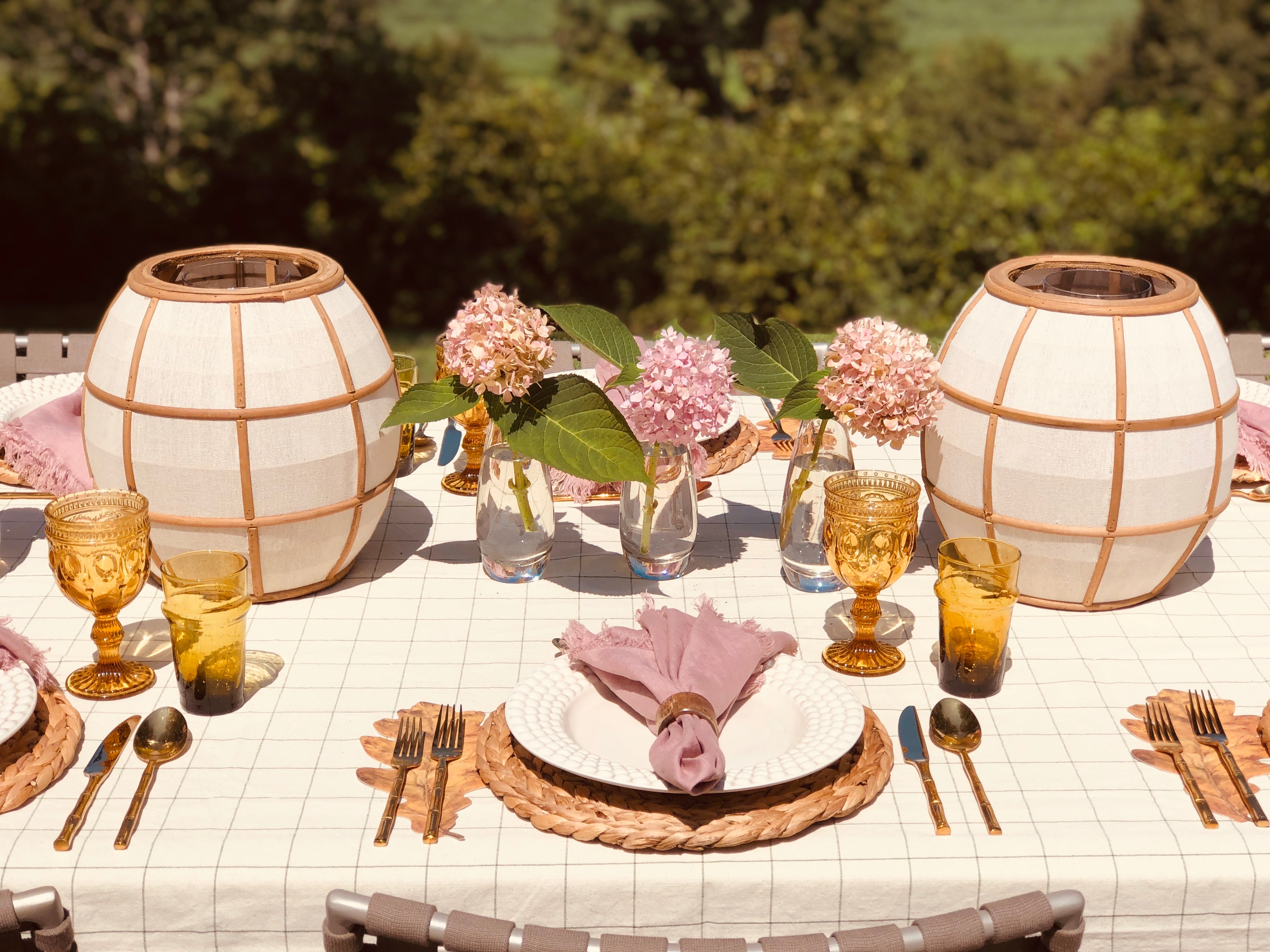


An elegant table doesn’t depend on elaborate décor; thoughtful placement makes the difference. To learn how to set an elegant table, start with at least 24 inches of space for each guest, then place the water glass above the knives, with the wine glass beside it. For a formal setting, let the tablecloth fall about a foot to lap level.
An elegant table doesn’t require a full set of formal china or a complicated place-setting plan. Clear, comfortable arrangements work just as beautifully for a relaxed meal as they do for a special dinner.
Use these practical steps to set an elegant table for either occasion, from positioning plates and flatware to choosing linens, glassware, and a centerpiece. You’ll learn what to include for a formal setting, what to simplify for casual dining, and how a few finishing touches can bring it all together.
Key Takeaways
- Build a formal place setting from the plate outward, keeping the charger and flatware neatly aligned.
- Choose table linens and a centerpiece that suit the occasion, and use unscented candles so they don’t compete with the food’s aroma.
- Arrange water and wine glasses together above the knives for an easy-to-follow place setting.
- For casual dining, keep only the pieces guests need and add character with coordinated linens, napkin rings, or serving pieces.
What are the essential rules for setting a formal dinner table?
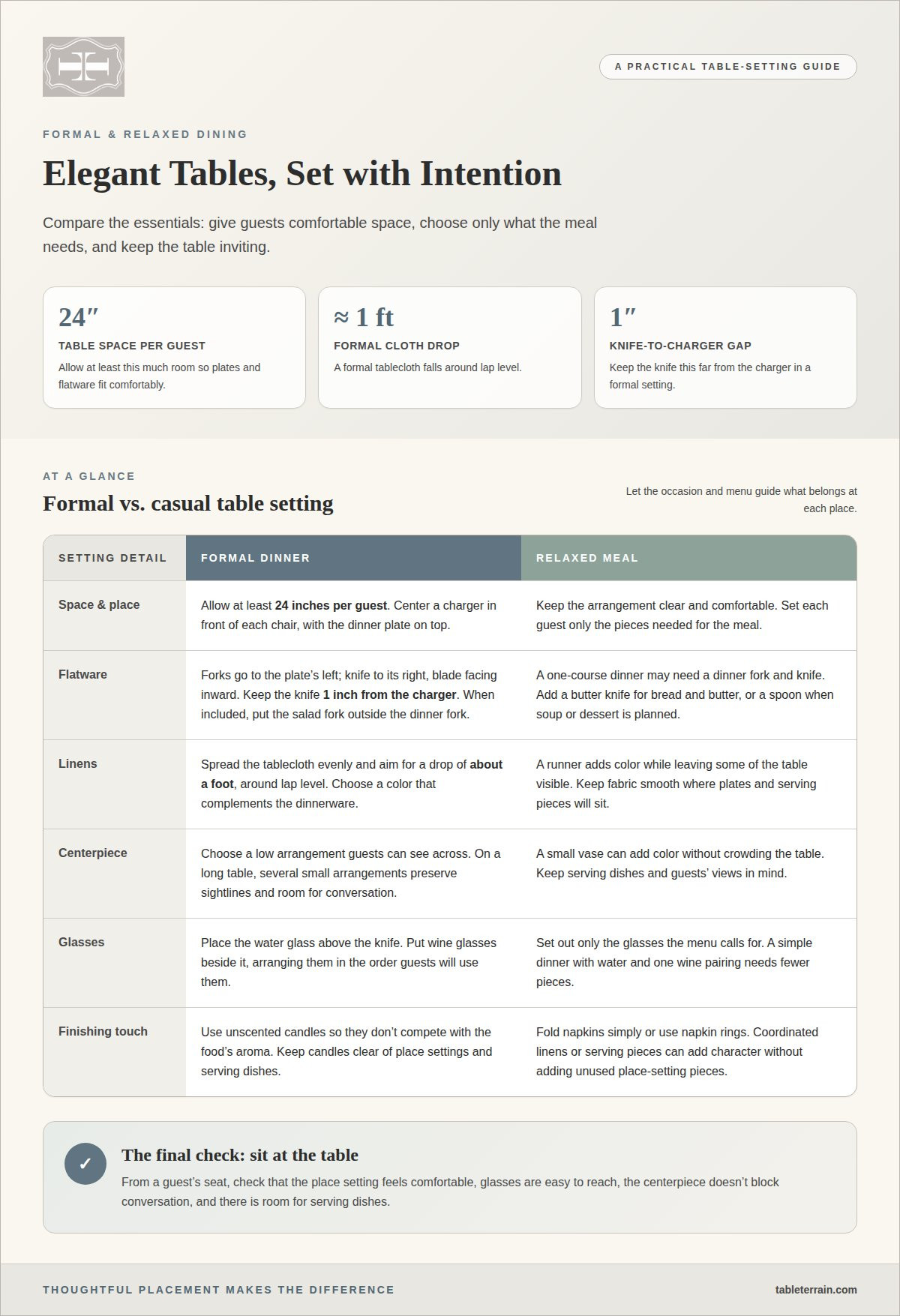
Start with a place for every course, then arrange each piece in a consistent order. Allow at least 24 inches of table space for each guest, so plates and flatware fit comfortably.
-
Prepare the formal place setting
Set one place for each guest, using a dinner plate as the center point. A formal setting may include a charger, folded napkin, dinner fork, salad fork, knife, and utensils for the planned courses. Keep the arrangement balanced, with enough room for guests to eat comfortably without reaching across another setting.
Let the menu determine which utensils belong at each seat. A multi-course dinner may call for more flatware than a single-course meal, but leave off utensils guests won’t use.
-
Place plates, flatware, and chargers
Center a charger in front of each chair, then place the dinner plate on top. Set forks to the plate’s left and the knife to its right, blade facing inward. For a basic setting, place the dinner fork on a folded napkin to the left of the plate.
Keep the knife 1 inch from the charger. Place the salad fork outside the dinner fork when both are included, so guests can work through utensils from the outside toward the plate.
Review the row of formal settings from a seated guest’s perspective. Align each plate with its chair and arrange neighboring utensils in the same order. This simple check gives the table a composed look and helps guests find their place without disturbing anyone else’s flatware.
For formal dining, use the utensil farthest from the plate first, then work inward with each course. Rest used flatware on your plate between courses rather than returning it to the tablecloth. These cues make a formal dinner easier to follow and keep each setting tidy.
Formal table linens and centerpiece choices
Choose linens and decor to match the occasion, while leaving room for serving dishes. A low centerpiece helps guests see one another across the table.
-
Choose formal table linens
Spread a clean tablecloth evenly and check that its edges fall consistently around the table. For a formal setting, aim for a drop of about a foot, around lap level. Choose a color that complements the dinnerware, such as a crisp neutral cloth with colorful flowers or seasonal accents.
For a less formal meal, a runner adds color while leaving some of the table visible. Keep the fabric smooth where plates and serving pieces will sit, and choose a pattern that doesn’t compete with the dinnerware.
-
Select a conversation-friendly centerpiece
Choose a low arrangement guests can see across, such as a compact vase of flowers instead of a tall, dense display. Keep it in the center of the table, clear of plates and serving dishes. Before guests arrive, sit down and check that it doesn’t block anyone’s view.
On a long table, use several small arrangements instead of one oversized display. They create a cohesive look while preserving clear sightlines and space for conversation.
-
Add decorative accents and candles
Add unscented candles to a formal table so their aroma doesn’t compete with the food. Place them clear of settings and serving dishes, and choose a style that complements the flowers and linens. A simple combination of candles and greenery can look polished without filling every open space.
Choose accents to suit the occasion rather than adding every decorative piece at once. For a formal dinner with dessert, leave room for a dessert spoon and serving plates. For an everyday meal, a runner and small vase add color without crowding the table.
Where do the water and wine glasses go on a formal dinner table?
Place the water glass above the knife, then arrange wine glasses beside it. This keeps drinks within easy reach without crowding the dinner or bread plate.
- Set the water glass above the knife, near the upper-right edge of each setting. Keep it within easy reach, with enough space to lift it without bumping the wine glasses. Repeat the placement at every seat for a balanced arrangement.
- Place the wine glass to the right of the water glass, slightly lower if that creates a natural diagonal. If dinner includes both red and white wine, arrange the glasses in the order guests will use them. Keep the line compact so it doesn’t encroach on neighboring settings.
- Set out only the glasses the menu calls for. A simple dinner with water and one wine pairing needs fewer pieces than a meal offering several wines. If serving multiple wines—perhaps curated selections from Stellez Vine Singapore—arrange each glass beside the water glass rather than scattering them around the dinner plate. Keep the bread plate above the forks accessible.
- Choose glassware that complements the table’s colors without making the arrangement feel busy. Clear glass suits patterned linens or colorful flowers, while subtly tinted glass adds interest to a neutral setting. Use consistent water glasses across the table and the same style of wine glass at each seat.
- Before dinner, sit at each place and check the arrangement from a guest’s perspective. Make sure the water glass is easy to reach, the wine glasses don’t block sightlines, and each glass can be lifted comfortably. This final check makes the setting more elegant without sacrificing practicality.
Informal table setting upgrades
For a relaxed dinner, keep the essentials and add a few thoughtful details. Learning how to set an elegant table for casual dining means balancing useful pieces with color, texture, and room to share food.
- Start with the menu and set out only the utensils guests will use. A one-course dinner may need a dinner fork and knife; add a butter knife if you’re serving bread and butter. For soup or dessert, include the appropriate spoon when that course is planned. Leaving unused pieces off the table gives each setting a lighter, more welcoming feel.
- Fold napkins simply or use napkin rings to give an everyday meal a finished touch. Place each napkin consistently beside or on the plate. For a holiday gathering, introduce a seasonal color through the napkins and repeat it in a small detail, such as a runner or flowers.
- Choose glassware based on the drinks you’ll serve. A water glass and glasses for white or red wine make a practical arrangement without unnecessary extras. If guests can choose between both wines, set out both types of glasses; otherwise, use only the glassware the menu needs.
- Add texture with placemats or a runner, then bring in color with one compact centerpiece. Patterned placemats can brighten a plain table, while a neutral runner lets fresh flowers stand out. Consider serving dishes and conversation space before adding decorative accents.
- For a buffet, place plates at the beginning of the food line, then put napkins and cutlery at the end. Guests can serve food before picking up the items they’ll carry. If you’re deciding how to set an elegant table for a casual gathering, coordinate linens and napkin rings to create a cohesive look. Explore table linens and napkin rings for finishing details.
Table Terrain: Table Linens & Napkin Rings
Table Terrain helps bring a table setting together with coordinated details. Choose linens and napkin rings to add color, texture, and a considered finish to formal dinners or casual gatherings.
For a complete tablescape, pair linens with flatware and serving items, then add a vase or container as a focal point. Goblets can complement the glassware and help create a cohesive look. Start with pieces that suit the occasion, then build around their colors and style.
Visit tableterrain.com to explore tabletop details for your next gathering.
Make your next gathering your own
A beautiful table should feel like an invitation, not a performance. Choose a mood that suits the occasion, then let the details support it. A relaxed seasonal meal might call for a fresh, colorful palette, while a formal evening can feel composed with restrained textures and thoughtful finishing touches.
Knowing how to set an elegant table gives you a starting point, not a script. Adapt the arrangement to your menu, available space, and the atmosphere you want to create. Table Terrain offers considered pieces for dining and entertaining to help bring those choices together.
When you’re ready to shape a tablescape for your next gathering, contact Table Terrain. Choose the pieces that feel right for your home, and enjoy making the table part of the occasion.
Frequently Asked Questions
What do you need to set a table?
For a simple meal, gather a plate, the utensils the menu calls for, a napkin, and a drinking glass for each guest. Add a serving spoon or shared platter if guests will pass food around. A placemat or tablecloth defines each place, while a small vase adds a decorative touch without taking over the dining space.
What extra items are needed for a five-course meal setting?
Add only the pieces that suit the courses you’re serving. A soup course may call for a soup spoon, while fish may need its own fork or knife. Include a salad fork if salad is on the menu, and set out a dessert spoon or fork for the final course. A bread plate and butter knife are useful when you’re serving bread.
What is the proper placement for silverware in a basic table setting?
Place forks to the left of the plate and knives to the right, with the blade facing the plate. If the meal includes a spoon, set it beside the knife. Keep the utensils guests will use within easy reach and leave unused pieces off the table. This makes the setting straightforward without unnecessary formal touches.
Where do napkins go once a table is set?
Place a neatly folded napkin on the plate or beside it, where each guest can reach it easily. For a casual meal, a napkin beside the fork keeps the plate clear. A napkin ring adds a decorative detail, while a simple fold works well when patterned linens or flowers already bring color to the table.
What are the basic rules for setting an elegant formal table?
Plan each place setting around the menu and keep the arrangement consistent from seat to seat. Choose linens and tableware that complement one another rather than compete for attention. Leave guests room to eat and pass dishes comfortably. For a polished finish, check the table from each seat before dinner.
How should plates, glasses, and cutlery be arranged for a formal place setting?
Center the main plate at each seat, with the bread plate above and to the left. Place forks on the left and knives and spoons on the right, arranged for the courses. Set the water glass above the knives and wine glasses nearby. If dinner includes one wine, leave out extra stemware to keep the arrangement open and practical.