


Why does a table set with your finest pieces sometimes feel as flat as a cardboard box? You’ve invested in quality dinnerware and beautiful linens, yet the final look lacks the "wow" factor you see in professional editorials. It’s a common frustration for hosts who worry that adding more will result in a cluttered, clashing mess. You aren't alone in wanting a table that feels dynamic rather than just functional.
The secret to a professional-grade setting isn't about buying more things; it's about mastering how to mix textures on a table to create tactile tension. You can learn the trade secrets to combining heavy linens, smooth glassware, and polished metals for a sophisticated dining experience. This guide walks you through the art of layering placemats, runners, and unique green goblets to build a Pinterest-worthy environment. We'll explore how to balance different fabrics and accessories with confidence, ensuring your next gathering feels like a curated event. From the body of the table to the final accent, we will help you build a look that is both cohesive and deeply dimensional.
Key Takeaways
- Discover how texture creates visual weight and anchors your dining room through the sensory interplay of fabric, glass, and metal.
- Master how to mix textures on a table using the Base, Body, and Accent framework to build a cohesive and dynamic setting.
- Identify the four essential pillars of tabletop materials, from premium linens to designer glassware, to ensure every layer has a distinct finish.
- Avoid "Showroom Syndrome" by opting for curated individual pieces that provide tactile tension instead of perfectly matching sets.
- Learn the professional secrets to layering runners and napkin rings to create an inviting, Pinterest-worthy hosting environment.
Why Texture is the Secret to a Professional Table
Tabletop texture is the sensory interplay of materials like premium linen, designer glass, and polished metal. It is the invisible thread that pulls a room together. When you understand how to mix textures on a table, you move beyond basic utility and into the art of atmosphere. Texture provides what designers call visual weight. This is the perceived heaviness or lightness of an object. A thick linen runner anchors the center of the room, while delicate wine glasses provide a necessary counterpoint of airy lightness.
The psychological impact is just as significant. Tactile elements directly affect guest comfort and intimacy. Soft, organic fabrics invite people to relax and stay longer. In contrast, a table filled only with hard, smooth surfaces can feel cold or overly formal. Approaching your setting as a multi-sensory design project is the core of modern table scapes. It is about creating a space that looks beautiful and feels even better to inhabit.
Texture vs. Pattern: Knowing the Difference
Texture is how a surface feels to the touch or how it looks like it would feel. Think of the coarse weave of a placemat or the cool, smooth finish of a stone vase. Pattern, however, is a repeated visual graphic, like stripes or floral prints. While they often work together, they serve different roles. You don't need bold patterns to make an impact. In fact, you can mix textures beautifully within a solid, monochromatic color palette. The subtle contrast between a matte ceramic plate and a glossy glass goblet provides plenty of interest without the need for busy prints.
The Goal: Creating Tactile Tension
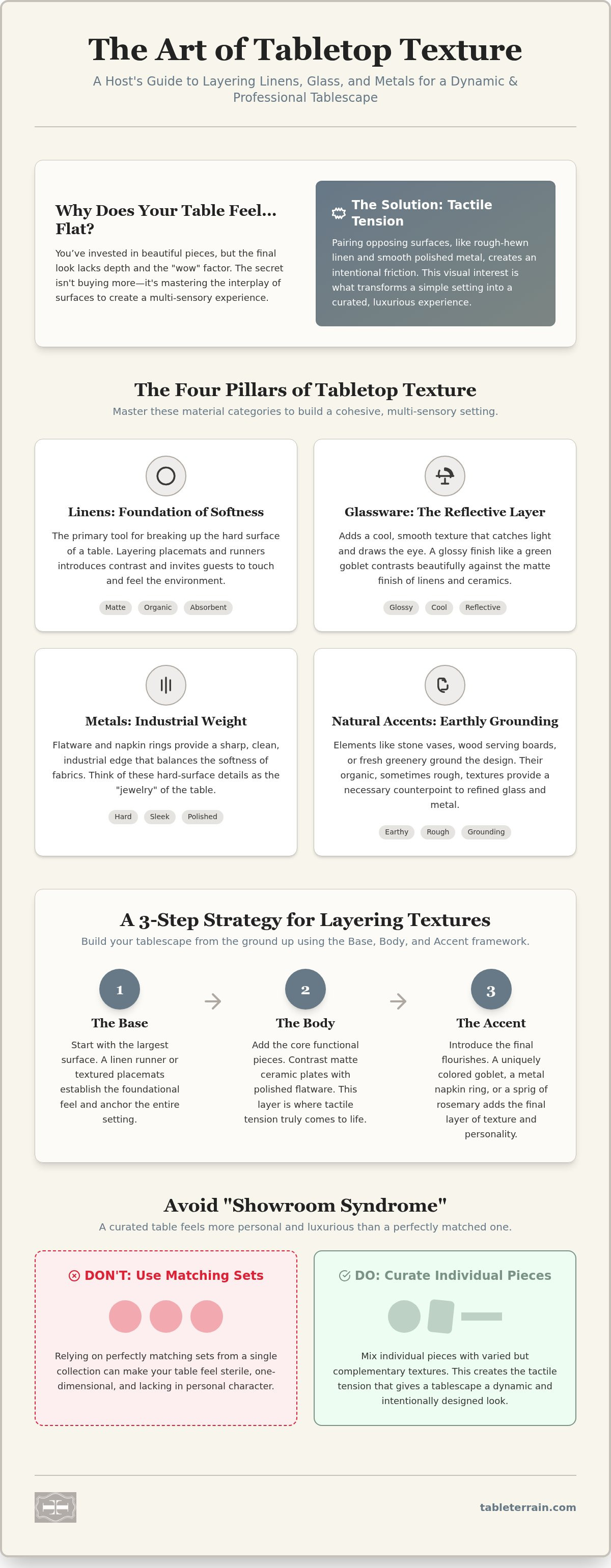
Professional styling relies on tactile tension. This is the practice of pairing opposing surfaces to create interest. Imagine the friction between a rustic, rough-hewn linen napkin and a sleek, modern fork. This contrast prevents your home from looking like a sterile showroom display. It adds character and a sense of curated luxury. Tactile tension is the intentional friction that creates visual depth. By choosing pieces that clash in feel but harmonize in tone, you create a table that feels dynamic, layered, and intentionally designed.
The Four Pillars of Tabletop Texture
To build a professional tablescape, you need a clear framework. These four material categories, Linens, Glassware, Metals, and Natural Accents, are the building blocks of every memorable meal. Each category brings a distinct finish to the setting. Linens offer a matte, organic softness. Glassware provides a glossy, liquid-like shine. Metals introduce a hard, industrial edge. Natural accents, like stone vases or wood containers, ground the design in the earth. Mastering how to mix textures on a table starts with understanding how these finishes interact. You should always begin with high-quality table linens to set the tone for the entire experience. These pillars work together to build a cohesive theme, whether you're aiming for a rustic garden brunch or a sleek, modern dinner party.
Linens: The Foundation of Softness
Linens are your primary tool for breaking up the hard, flat surface of a dining table. Consider the difference in hand-feel between a crisp, smooth cotton and a slubby, organic linen. Cotton feels structured and formal. Linen feels relaxed and lived-in. By layering linen placemats over a bare wood table, you immediately introduce a soft-to-hard contrast that feels intentional. Runners add a secondary layer of fabric, creating a path of visual interest down the center of the setting. The tactile nature of premium fabric invites guests to touch and feel the environment, making the meal feel more intimate and grounded.
Glass and Metal: The Reflective Layers
Glass and metal act as the reflective highlights of your design. Using green goblets adds a cool, smooth texture that catches the light and draws the eye. This glossy finish contrasts beautifully against the matte texture of your napkins. Your flatware serves as the industrial weight of the arrangement. Polished designer flatware provides a sharp, clean edge that balances the softness of the fabric. Think of your napkin rings as the jewelry layer. They add a final, hard-surface detail that secures the organic folds of the linen. You can explore our curated tabletop collections to find pieces that harmonize these contrasting finishes effortlessly.
The 3-Step Strategy for Layering Textures
Mastering how to mix textures on a table requires a methodical approach. We use the "Base, Body, and Accent" framework to ensure every element has a purpose. This order of operations creates visual balance and prevents the setting from feeling flat or disjointed. By building from the bottom up, you can design elegant table settings for dinner parties that look professionally curated. It’s about creating layers that invite the eye to move across the table.
Use this checklist to ensure your design covers every sensory layer:
- Base: Table material, tablecloths, or runners.
- Body: Placemats, dinnerware, and glassware.
- Accent: Napkin rings, vases, and greenery.
Step 1: The Base Layer (The Canvas)
Your table surface is your first texture. Wood offers a warm, rustic grain. Marble feels cool and sophisticated. Glass is sleek and modern. You don't always need to hide these materials. Choosing a runner instead of a full tablecloth allows you to expose the table's natural character. This establishes your dominant material and grounds the entire design. If you prefer a full tablecloth, choose a high-quality linen to create a soft, unified canvas that absorbs light and sets a relaxed tone.
Step 2: The Body (The Core Elements)
The body layer adds vertical depth to your setting. Start by layering placemats over your base. This creates a tactile foundation for your dinnerware. Pairing matte ceramic plates with slubby linen napkins builds immediate interest through contrast. This is also the perfect stage to introduce glassware. Smooth glass goblets provide a necessary, sharp counterpoint to the soft fibers of your linens. This interplay between hard and soft surfaces is what makes a table feel intentional rather than accidental.
Step 3: The Accents (The Detail)
Accents provide the final, intricate details that pull the look together. Use metal or wooden napkin rings to add a "hard" element to the organic folds of your fabric. Small vases and greenery bring a living, irregular texture that softens the structured lines of your flatware. Consider how candlelight interacts with these surfaces. Flame flickers beautifully against polished metal and textured glass, creating a warm glow that hard surfaces like marble or wood can't replicate. These finishing touches ground the "shiny" elements and make the environment feel approachable and intimate.
Common Mistakes: Avoiding the "Flat" Table
Even with high-end pieces, your setting can fall into the "Showroom Syndrome" trap. This happens when every surface is too smooth and perfectly matched. It feels clinical. It lacks soul. Without contrast, the table looks flat and uninviting. Guests don't feel a sensory connection to the space. Learning how to mix textures on a table is about avoiding this visual boredom. On the flip side, using too many "loud" textures at once creates a cluttered mess. If you pair heavy velvet with rough stone and hammered metal, the eye doesn't know where to rest.
Balance is the goal. A lack of contrast actually makes your dining area feel smaller. It closes in the space because there is no depth for the eye to explore. To fix a table that feels too clinical, add one organic element like a linen runner. To fix a cluttered table, simplify. Swap out one busy texture for a smooth glass surface to provide a visual "breather." This restores harmony without sacrificing style.
The "Same-Surface" Trap
Pairing a silk runner with silk napkins feels uninspired. It lacks the intentional friction that defines professional styling. You need a disruptive texture to break the monotony. Think of a slubby, hand-woven linen placemat against a polished ceramic plate. The rough weave makes the smooth plate look even sleeker. A good rule of thumb: never place two identical textures directly on top of each other. This simple change adds immediate dimension. When you master how to mix textures on a table, you treat every layer as an opportunity for a new sensory experience.
Balancing Visual Weight
Visual weight is about where the eye lands and how long it lingers. If all your metals and glassware are grouped in one spot, the table feels lopsided. Distribute these reflective layers evenly across the entire setting. Use height to your advantage. Tall vases or emerald green goblets move the eye through different textures at various levels. Varying the heights of your accessories prevents the table from looking like a flat grid. It encourages guests to look up and around, which naturally sparks conversation. This creates a dynamic environment that feels full but organized. It prevents one area from feeling "heavier" than the rest.
Ready to break the mold and elevate your next gathering? You can shop our curated tabletop essentials to find the perfect disruptive textures for your next event.
Curating Your Textured Collection with Table Terrain
Table Terrain simplifies the art of hosting by offering pieces designed for intentional interplay. We believe that a beautiful table shouldn't feel like a chore to assemble. Our curated collection does the hard work of selection for you. You don't need to buy rigid, matching sets to achieve a high-end look. In fact, the most successful hosts focus on how to mix textures on a table using individual, high-quality items. This approach allows you to build a personalized collection over time. Premium linens and designer glassware are versatile enough to transition through every season. They provide the perfect foundation for a lifetime of memorable gatherings.
Essential Pieces for Every Host
Every great collection begins with a few versatile staples. High-quality linen placemats are a non-negotiable starting point. They provide a soft, organic base that immediately elevates the dining experience. From there, you can layer in your reflective elements. A signature set of wine glasses or unique goblets adds a necessary glossy contrast to the matte fabric. These pieces catch the light and draw the eye. Your designer flatware serves as the final texture anchor. Its hard, industrial finish provides a sharp edge that balances the softer elements of the table. Together, these pieces create a cohesive yet dynamic environment that feels sophisticated and welcoming.
Planning Your Next Gathering
When you start your next tablescape project, try choosing a single "hero" texture to lead the design. This might be a slubby, woven runner or a set of polished metal napkin rings. Let this material dictate your secondary layers. If you are looking for seasonal inspiration, explore our guide for elegant thanksgiving centerpiece ideas. It demonstrates how to combine natural, foraged elements with premium materials for a truly sophisticated holiday look. This method ensures your table feels intentional and layered rather than cluttered.
Don't be afraid to experiment with tactile tension. Pairing opposing surfaces is the fastest way to move from a flat setting to a professional-grade display. Trust your instincts and play with different combinations of fabric, glass, and metal. Hosting is an art form. Your table is the canvas. Visit our shop today to find the individual pieces that will bring your next vision to life. It is time to create a dining experience that your guests will feel as much as they see.
Elevate Your Next Gathering with Tactile Design
Mastering how to mix textures on a table is the difference between a functional meal and a truly memorable event. You now have the framework to move beyond the flat look of a showroom and into the dynamic world of tactile tension. By following the Base, Body, and Accent strategy, you can layer premium linens, designer glassware, and polished metals with absolute confidence. The goal isn't perfection; it's about creating a sensory environment that makes your guests feel welcome and inspired from the moment they sit down.
Building your collection doesn't have to be overwhelming. Focus on individual, high-quality pieces that offer versatility for every season. Table Terrain offers sophisticated styles for every occasion, curated by design experts who value both aesthetic harmony and lasting elegance. We use premium materials to ensure your tablescape remains a centerpiece of your home for years to come. Whether it's a casual brunch or a formal dinner, the right materials anchor your design and spark natural conversation.
Shop the Table Terrain Collection to start layering your perfect tablescape.
Take these secrets and start experimenting with your own unique style. Your next invitation is an opportunity to share your creativity and the joy of gathering with those you love.
Frequently Asked Questions
How many different textures should I have on one table?
Aim for three to five distinct textures to create depth without overwhelming the senses. Start with a foundational fabric like a linen runner, add the smooth gloss of glassware, and finish with the hard industrial edge of designer flatware. This variety ensures your setting feels intentional. If you use fewer than three, the table often looks flat. More than five can make the arrangement feel cluttered and lose its cohesive focal point.
Can I mix different types of metals in my flatware and napkin rings?
Mixing metals is a sophisticated way to add industrial texture and visual interest to your setting. Pair polished silver flatware with brushed gold napkin rings to create a curated, eclectic feel. The key is to keep the undertones consistent or use one metal as the dominant "hero" while the other acts as an accent. This prevents the setting from looking accidental. Mixing finishes, like matte and high-shine, adds even more dimension to the reflective layers.
What is the best base texture for a modern dining table?
A high-quality linen runner or placemat set is the most versatile base for a modern table. Linen offers a slubby, organic feel that contrasts beautifully against sleek wood or marble surfaces. If your table has a striking natural grain, use a runner to expose the wood while providing a soft foundation for your dinnerware. This layering technique is essential when learning how to mix textures on a table to achieve a professional, balanced look.
How do I mix textures if I only want to use one color?
Monochromatic settings rely entirely on tactile tension to create visual interest. Pair a matte ceramic plate with a glossy glass goblet and a rough-hewn linen napkin, all in the same shade of cream or charcoal. The way light hits these different surfaces creates natural shadows and highlights. This prevents the single-color palette from looking boring. Focus on the "hand-feel" of each item to ensure there is enough contrast between the layers.
Do I need a tablecloth to add texture to my table?
You don't need a full tablecloth to create a textured environment; often, a bare table provides the best first layer. If you have a beautiful oak or stone table, use linen placemats to introduce softness without hiding the natural grain. This creates a hard-to-soft transition that feels modern and intentional. Runners are another excellent alternative, adding a path of fabric texture down the center while keeping the overall aesthetic light and airy.
How do natural elements like wood or plants count as texture?
Natural elements introduce organic texture, which features irregular patterns and varied surfaces. A wooden serving bowl or a sprig of fresh greenery breaks up the rigid lines of flatware and plates. These items provide a grounding effect, especially in settings with a lot of shiny glass or metal. They act as a visual breather. Including these elements is a key part of how to mix textures on a table for a balanced, life-like feel.
What is the most common mistake when layering table linens?
The most common mistake is over-matching fabrics, which leads to a flat and uninspired appearance. Pairing a smooth cotton tablecloth with identical smooth cotton napkins lacks the necessary friction to create depth. Instead, disrupt the surface by layering a textured linen napkin over a crisp base. Never place two identical textures directly on top of each other. This simple rule ensures that every layer remains distinct and contributes to the overall multi-dimensional experience.