



A placemat and charger can share a place setting, but they don’t have to. For most meals, choose one; for a more formal, layered look, place the placemat beneath the charger. Learning how to layer placemats and chargers is about balancing the extra layer with the colors, textures, and space at each setting.
It’s easy to see the appeal: a fabric placemat adds softness and texture, while a glass or metal charger brings a crisp accent beneath the dinner plate. The key is making the combination feel intentional, not crowded. Explore when to use both pieces, how to coordinate their materials and colors, and when a single layer looks more polished.
Key Takeaways
- Use a placemat as the base and add a charger above it when you want a more formal, layered place setting.
- Keep the palette to a few main colors and repeat textures to make contrasting materials feel cohesive.
- Choose a single layer for a smaller table or a simpler setting, and consider how each piece affects room at the place setting.
- Use the charger as a decorative base for plates, not as a surface for serving food.
Do You Use a Charger With a Placemat?
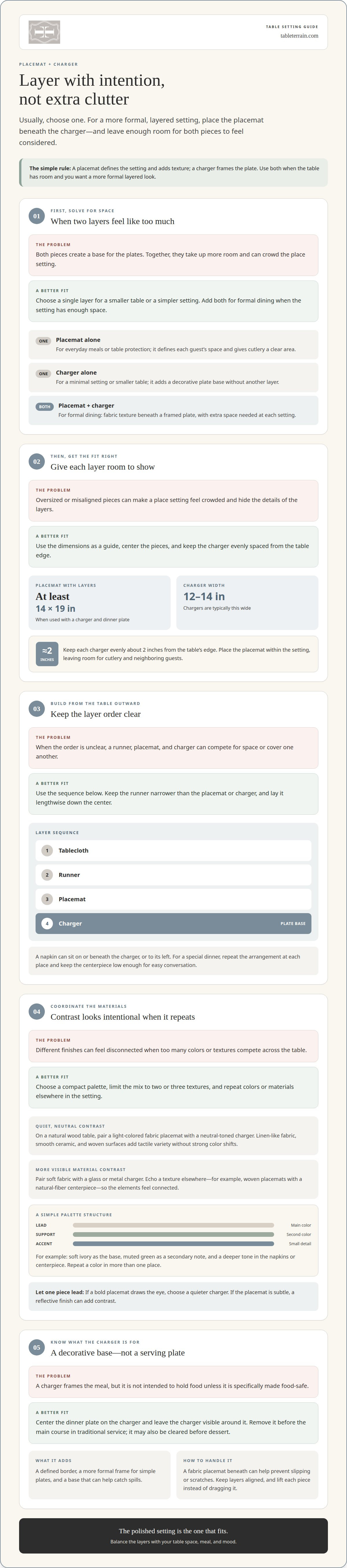
Usually, choose either a placemat or a charger because both create a base for the plates. For a formal table setting, use both: lay the placemat over the tablecloth, then center the charger on top. Keep each charger evenly about 2 inches from the table’s edge. Place the placemat within the setting, leaving room for cutlery and neighboring guests.
Size and shape affect comfort as much as appearance. A placemat used with a charger and dinner plate should be at least 14 inches by 19 inches. Chargers are typically 12 to 14 inches wide. On a crowded table, smaller pieces help preserve space; a larger setting can accommodate more generous layers. Match round chargers with round plates for a classic frame, or use contrast for a more modern look.
Build the layers outward from the table: tablecloth, runner, placemat, then charger. Keep the runner narrower than the placemat or charger, and lay it lengthwise down the center. A napkin can sit on or beneath the charger, or to its left. For a special dinner, repeat the arrangement at each place and keep the centerpiece low enough for easy conversation.
| Option | Best use | Design and practical fit |
|---|---|---|
| Placemat alone | Everyday meals or table protection | Defines each guest’s space and gives cutlery a clear area. |
| Charger alone | A minimal setting or a smaller table | Adds a decorative plate base without another layer. |
| Placemat with charger | Formal dining | Combines fabric texture with a framed plate, but needs space. |
Balance style with practicality by keeping the layers consistent and avoiding crowding each place. Placemats can help protect the surface from heat, spills, and scratches; a wipeable option can be useful for spill-prone meals. Refresh the look by changing the runner or napkins while keeping the base layers steady. Choose a combination that suits your table space, meal, and mood.
Coordinating colors and textures
A cohesive setting doesn’t require every piece to match. Choose a compact color palette, then use contrasting textures and materials to add visual interest.
Neutral Palettes and Texture
Neutral styling relies on restrained color and tactile variety rather than bold patterns. On a natural wood table, pair a light-colored fabric placemat with a neutral-toned charger for an elegant, understated effect. Linen-like fabric, smooth ceramic, and woven surfaces can complement one another while keeping the palette calm. Here, visual interest comes from materials and finishes, not strong shifts in color.
Mixed Materials and Textures
Mixing materials creates a stronger contrast. Pair a fabric placemat with a glass or metal charger: the soft textile offsets the harder, reflective surface. Make the combination feel intentional by repeating each texture elsewhere, such as echoing woven placemats in a natural-fiber centerpiece. Limit the mix to two or three textures, then repeat them across the table so the pieces feel connected rather than competing.
Choose two or three main colors. One can lead, another support it, and a third provide a small accent. For example, use soft ivory as the base, muted green as a secondary note, and a deeper tone in the napkins or centerpiece. Repeat a color in more than one place so the elements work together.
Let the placemat do some of the visual work. A textured fabric adds depth to a plain surface, while a colored or patterned design brings personality to understated dinnerware. If a bold placemat already draws the eye, choose a quieter charger; if the placemat is subtle, a reflective finish can add contrast. Explore textured placemat styles as you consider which materials best suit your table.
What Is the Role of a Charger Plate?
A charger is a large decorative base for dinnerware that adds polish and helps catch spills. Unlike a dinner plate, it frames the meal rather than holding food.
Charger plates aren’t intended to serve dinner unless specifically made food-safe. In traditional service, remove them before serving the main course; they may also be cleared before dessert.
To help prevent slipping or scratches, place a fabric placemat beneath the charger. Keep the layers aligned, and lift each piece instead of dragging it across the table or linens.
Decorative and Protective Roles
A charger gives a place setting a defined border and can make simple plates feel more formal. Choose one that contrasts with the dinnerware, such as a dark charger beneath a pale plate. It can also catch spills and help protect a tablecloth or table surface. Unlike a placemat, it provides a plate-shaped base and may cover less of the setting.
Chargers Under Dinner and Salad Plates
Center the dinner plate on the charger, then place a salad plate above it when serving multiple courses. Leave the charger visible around the plates for a framed effect. During a formal dinner, it can stay in place while a course is cleared. Remove it before serving food if that suits the service style.
Everyday Plates as Underplates
An everyday dinner plate can serve as an underplate beneath a smaller salad plate, creating a similar visual foundation without a separate decorative charger. This uses pieces already in the cupboard and can coordinate with table linens through color or shape. Center the upper plate, leaving enough of the lower plate visible to distinguish the layers. Unlike a charger, an everyday plate is designed to hold food.
Layering fabric placemats with glass or metal chargers
Fabric softens the setting, while glass or metal adds a crisp, reflective accent. For a clearly visible layered effect, place the charger over the fabric placemat.
Charger on Top of the Placemat
This arrangement shows both materials clearly: fabric creates a soft base, and the charger frames the dinner plate. Try a neutral woven placemat beneath a glass charger for subtle contrast, or pair patterned fabric with simple metal. Keep the plate centered so the charger remains visible around it. This order works for formal occasions and casual dinners when you want texture without hiding either piece.
Charger Under the Placemat
Placing a charger beneath a fabric placemat reverses the usual visible layering. The fabric covers most of the charger, making its color and reflective finish less prominent. This can create a quieter look if the charger’s edge remains visible, but it offers less contrast than placing the charger on top. Use this order only when the placemat and charger sit flat together.
Let the stronger pattern lead. With patterned fabric, choose a glass or metal charger in a neutral tone, then use plain dinnerware to keep the setting composed. If the placemat is solid, a reflective charger can add visual interest without introducing another busy print.
Consider function as well as appearance. Fabric brings softness and color; glass or metal adds a distinct finish. Keep the layers centered and consistent at each place, with enough placemat visible to frame the charger. For a casual meal, use restrained colors and a simple arrangement. For a special occasion, repeat the material contrast across the table so each setting feels connected.
Build a beautiful combination around your chosen fabric and finish. Choose fabric placemats to create a soft foundation for glass or metal chargers.
Table Terrain: Placemats
Table Terrain helps bring a layered setting together with placemats that give each place a defined foundation. Explore the selection to find fabric colors and textures that complement a charger, tablecloth, or runner. Coordinating table linens and napkin rings can carry the palette across the table, while flatware and serving items help complete the setting. Vases and containers add a finishing accent without crowding each place.
Start with the look you want, then consider which pieces suit your meal and table. Whether you’re creating a relaxed everyday arrangement or a more polished setting for guests, choose balanced layers that leave room for dining. Explore placemats and coordinating table pieces at Table Terrain to begin creating your setting.
Make Your Next Table Your Own
Let the occasion guide your next tablescape. A relaxed brunch, seasonal dinner, or special gathering can each inspire a different mix of color, finish, and personal detail. Start with a few favorite pieces, then build a fresh setting around the meal and the mood you want to create. With practice, how to layer placemats and chargers becomes less about following a formula and more about shaping a table that feels like yours.
Table Terrain brings together details for a coordinated table, including Table Linens & Napkin Rings, Flatware & Serving Items, and Vases & Containers. Consider which pieces would complement your next gathering, then contact Table Terrain about your table styling.
Choose a look that welcomes your guests and makes you glad to gather around the table.
Frequently Asked Questions
What is the correct order for layering a charger and placemat?
If you’re deciding how to layer placemats and chargers, place the placemat on the table first, then center the charger on top. This leaves the placemat visible as a fabric border around the charger and plate. Keep the arrangement consistent across the table so each setting looks intentional. If the table feels crowded, use just one piece instead of forcing both into the setting.
How do you layer placemats and chargers with dinner plates and bowls?
Set down the placemat, add the charger, then center the dinner plate on top. A bowl can sit directly on the charger or on the dinner plate, depending on the meal and presentation. Chargers aren’t intended to hold food unless made as a food-safe variety. For a simple soup course, a bowl on a dinner plate creates a neat, contained stack.
What placemat and charger sizes work best together?
A placemat should be at least 14 inches by 19 inches when used with both a charger and dinner plate; chargers are typically 12 to 14 inches wide. Check that the charger sits fully within the placemat, with enough fabric visible to frame it. Then allow room for cutlery and glassware. A quick dry layout before setting the full table helps reveal crowded or uneven placements.
How do you mix placemat and charger colors, patterns, and materials?
Choose two or three main colors, then repeat them across the table for cohesion. For example, pair a patterned fabric placemat with a solid glass charger, then echo one placemat color in the napkins. Keep the overall mix to two or three textures, such as woven fabric, smooth glass, and polished metal. Let one piece carry the strongest pattern while the others support it.
How do you style chargers and placemats for formal versus casual table settings?
For a formal dinner, combine placemats and chargers with coordinated plates and neatly arranged cutlery. A consistent layout creates a composed finish. For a casual meal, simplify the setting by choosing a placemat or charger alone, then add only what the meal needs. On a small table, fewer layers leave guests more usable space.