



A candle-wax spill doesn’t have to ruin a tablecloth. To learn how to get candle wax out of a tablecloth, let the wax harden, gently scrape away what you can, then use a warm iron and clean paper towels to absorb the residue. Launder the cloth according to its care label, and check for any remaining stain before putting it in the dryer.
It’s understandable to worry that scraping or heat could damage a favorite linen. A careful, gradual approach helps lift the wax while letting you check for an oily or colored mark before heat makes it harder to remove.
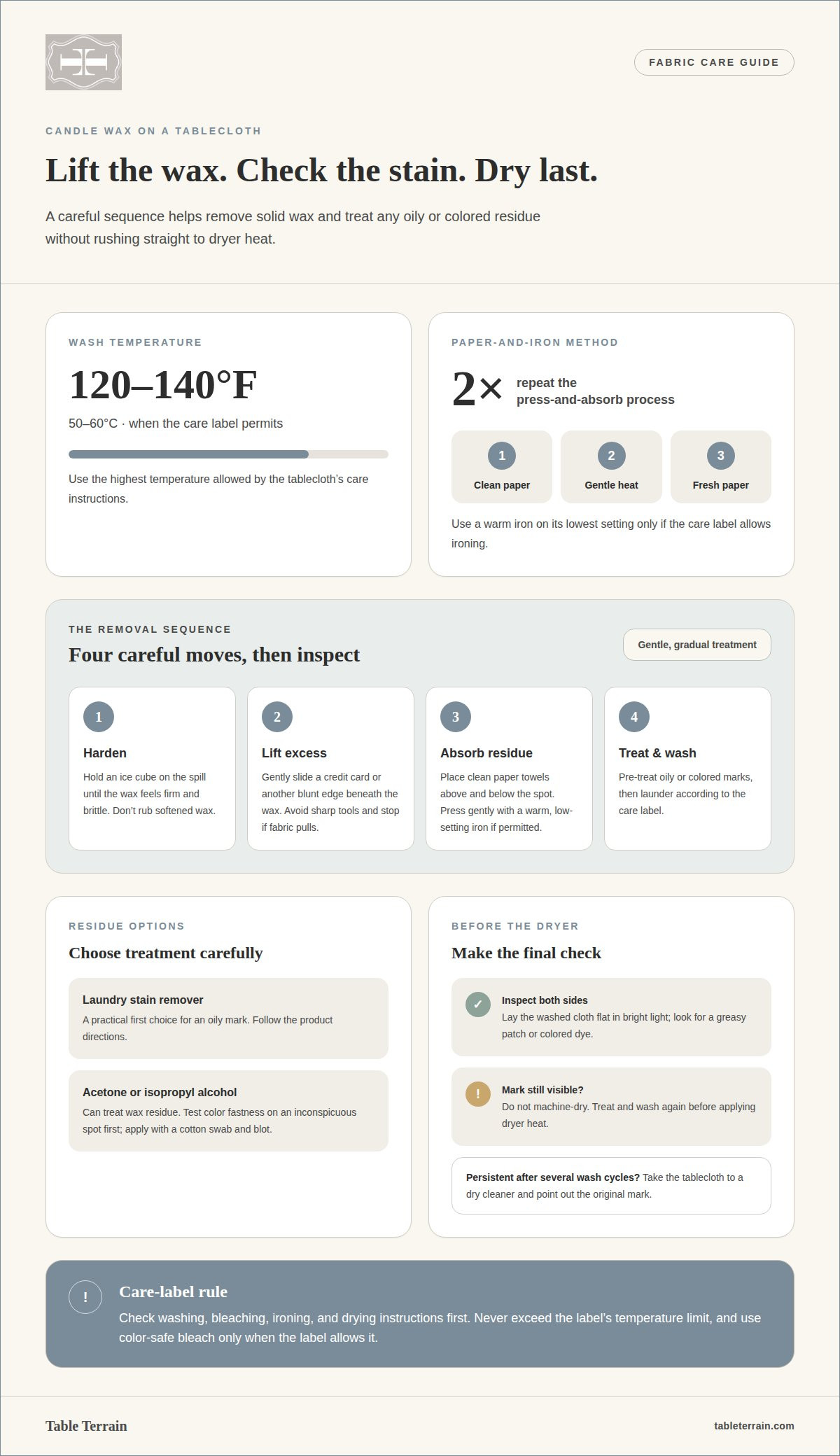
First harden the wax and remove the excess with a gentle tool. Then use the paper-towel-and-iron method, treating any residue before washing. After laundering, check for lingering stains and wait to machine-dry the cloth until it looks clean.
Key Takeaways
- Let wax harden before lifting it gently with a blunt edge to help protect the tablecloth’s fibers.
- Use clean paper towels above and below the spot, then apply gentle iron heat to draw out more wax.
- Treat any oily or colored residue before laundering, following the tablecloth’s care label.
- Inspect the fabric after washing and hold off on machine drying if a mark remains.
Checking stains before machine drying
Before drying, inspect the washed tablecloth in bright light and follow its care label. Heat can make a remaining wax or dye mark harder to remove.
-
Check the Fabric Care Label
Find the care label and read its washing, bleaching, ironing, and drying instructions before treating the stain. Follow its directions, especially if the cloth has a low-temperature limit or says not to tumble dry. Don’t choose a hotter wash or dryer setting than the label allows.
-
Inspect for Remaining Stains
Lay the washed tablecloth flat under bright light and examine the original spill area from both sides. Look for a translucent, greasy patch or colored wax dye, which may remain after the solid wax is gone. If you can still see or feel residue, don’t put the cloth in the machine dryer. Treat the mark and wash the fabric again first.
- If an oily mark remains, test any stain treatment on an inconspicuous area first to check color fastness. Acetone or isopropyl alcohol can treat wax residue. Apply nail polish remover or rubbing alcohol with a cotton swab, then blot. Place the stained area face down on a folded towel to catch transferred residue. Complete the remaining stain-removal steps before the treatment dries.
- If you used nail polish remover, follow the product’s directions before laundering the tablecloth. After washing, inspect the fabric, including the underside and surrounding fibers. A faint ring can be easier to spot when the cloth is flat and fully lit. Machine-dry it only after the wax mark and any oily or colored stain have disappeared. Otherwise, repeat the treatment and laundering.
Hardening and scraping wax from tablecloths
To get candle wax out of a tablecloth, first harden the spill, then lift the solid wax without tugging the weave. Removing excess wax now leaves less to treat later.
-
Harden the Candle Wax
Hold an ice cube against the wax until it feels firm and brittle. Keep the ice focused on the spill rather than soaking a wide area of the cloth. A few passes can help a small spot harden enough to lift. Don’t rub softened wax, as this can spread it between the fibers.
-
Scrape Away Excess Wax
Slide the edge of a credit card beneath the hardened wax, working gently across the surface. A dull knife or spoon can also lift thicker pieces, but use light pressure to avoid cutting or snagging the fabric. Avoid sharp knives. If the wax breaks into flakes, pick them away with your fingers rather than grinding them into the weave.
- Clear loose fragments from the tablecloth before moving on. Check the front and back of the spot, especially where wax has broken into small pieces. If a piece stays attached, apply the ice cube again until it hardens, then lift it with a blunt edge. Stop if the fabric pulls or frays. Forcing the tool can damage the weave.
- Knowing when to stop scraping is an important part of getting candle wax out of a tablecloth. Keep removed wax and flakes away from clean parts of the cloth, brushing them onto a disposable surface rather than across the fabric. Once the raised wax is gone, check for a thin film or color mark. These traces need separate treatment, not more scraping.
After the cloth is clean, table linens can help set the scene for your next gathering.
Laundering the tablecloth after stain treatment
Before washing, pre-treat any oily mark and follow the tablecloth’s care label. Laundry stain remover is a practical first choice; acetone or isopropyl alcohol can also treat wax residue.
- Test the fabric’s color fastness on an inconspicuous spot before applying stain remover. Then soak the stain and the surrounding area with the remover, following its product directions. This helps treat both the visible mark and residue around its edges. Don’t skip pre-treatment: melted wax can leave an oily film after the solid pieces are removed.
- Wash the tablecloth at the highest temperature allowed by its care label. For washable fabric, 120 to 140°F (50 to 60°C) is an ideal range when the label permits it. Use the detergent package’s amount for heavily soiled laundry. After the cycle, inspect the stained area before drying. If color remains, re-launder with color-safe bleach, provided the care label allows its use.
-
Repeat Treatment for Colored Wax
After washing, check the cloth and repeat stain treatment if colored wax has left a visible mark. Use a remover suited to the fabric, testing color fastness on an inconspicuous spot first. Rewash according to the care label, then inspect the area before machine drying. If color remains, use color-safe bleach only if the label permits it.
-
Take Persistent Stains to a Dry Cleaner
If the wax stain remains after several wash cycles, take the tablecloth to a dry cleaner. Share the care label information and point out the original mark, including any colored or oily residue. Avoid machine drying first, since heat can make remaining marks harder to remove. This is a sensible next step when home laundering hasn’t lifted a persistent stain.
Using an iron and paper towels to absorb wax
Place paper towels above and below the wax, then use gentle iron heat to melt and lift the residue. Follow these steps only if the tablecloth’s care label allows ironing. Linen, cotton, and polyester can have different heat limits.
-
Melt Wax with Heat
Set the tablecloth on an ironing board with the waxy area facing up. Put clean paper towels over and beneath the spot, then press with a warm iron on its lowest setting. University of Georgia Cooperative Extension also recommends pressing from the back of fabric between white paper towels. Check the care label first, and avoid heat if it prohibits ironing.
-
Absorb Melted Wax with Paper Towels
Watch as the wax transfers to the paper. Lift the iron, replace any wax-marked towel with a clean one, and press again. Fresh paper helps prevent transferred wax from spreading back onto the cloth. For colored wax, use extra paper-towel layers and check frequently for dye transfer.
- Repeat the pressing and absorption process twice, using fresh paper each time. Keep the iron moving or press briefly rather than leaving it in one place. If the paper becomes saturated, replace it before continuing. A hair dryer can provide an alternative heat source when an iron isn’t available; keep paper towels above and below the wax to catch it as it softens.
- After the paper has absorbed most of the wax, check the tablecloth for an oily mark or remaining color. The heat-and-blot process removes wax, but residue may still need separate treatment before laundering. Don’t press directly onto bare fabric: the paper towels are there to absorb the softened wax.
For a fresh setting after cleanup, explore table linens for your next gathering.
Table Terrain
Table Terrain brings together thoughtfully collected table linens and dining pieces for polished, welcoming gatherings. Once your tablecloth is clean and ready to use, pair it with napkin rings, flatware, serving items, vases, or goblets to create a cohesive table setting.
Turn to Table Terrain when you’re refreshing your dining table after a spill or planning a meal with friends. A well-chosen linen sets the mood, while complementary details help complete the table without competing with the occasion.
Contact Table Terrain to explore pieces for your next table setting.
Make Room for the Next Gathering
Knowing how to get candle wax out of a tablecloth can make an unexpected spill feel like a small pause, not the end of a lovely evening. Once the cloth is ready to use again, picture the atmosphere you want to create next: a relaxed brunch, a candlelit dinner, or a bright seasonal celebration. Let that mood guide your choices, rather than waiting for a special occasion to make the table feel considered.
Start with colors and textures you already enjoy, then add details that bring the setting together. A softer palette can make dinner feel calm; a lively accent can give a weekend meal more energy. Keep the arrangement personal and practical, with space for conversation and serving. Small changes can refresh familiar gatherings without making the table feel overly formal.
As you plan what comes next, contact Table Terrain to discuss your next table setting. Make your next gathering feel distinctly yours.
Frequently Asked Questions
How to scrape dried candle wax off fabric without damaging it?
Let the wax harden completely, then gently lift it with the edge of a spoon or a blunt butter knife. Work from the outside of the spot toward the center, keeping the tool nearly flat so it doesn’t catch the fibers. If the fabric can be moved, chill it first with a wrapped ice pack. Stop if the weave pulls or snags.
Can you use an iron and paper towels to remove candle wax from a tablecloth?
Yes, if the fabric’s care label allows heat. Place plain, absorbent paper over the hardened wax, set the iron to a low temperature with steam off, and press briefly rather than sliding it. Move to a clean section of paper as wax transfers. Check the fabric between presses, and don’t use this method on heat-sensitive or delicate cloth.
How do you remove colored candle wax stains from fabric?
Remove the hardened wax first, then treat any remaining color as a separate stain. Dab a small amount of laundry detergent or fabric-safe stain remover onto the mark, following the product directions. Test it on a hidden area first, especially on patterned cloth. Wash according to the care label, and check the stain before using a dryer.
How do you get candle wax out of a white tablecloth?
After lifting the wax, check the care label and treat any leftover mark with laundry detergent suitable for the fabric. Rinse and wash as directed, then inspect the cloth in good light before drying. Heat can make a remaining stain harder to remove. Avoid whitening treatments unless the care label permits them, as they may weaken fibers or leave discoloration.
How do you remove oily residue left by candle wax?
Blot the residue with a clean cloth, then work a small amount of liquid laundry detergent into the spot and let it sit briefly, following the product label. Rinse using the warmest water allowed by the tablecloth’s care instructions. Wash as usual and inspect the area before drying. If it still feels greasy, repeat the treatment rather than applying heat.
How do you remove candle wax from delicate or dry-clean-only tablecloths?
For delicate fabric, let the wax harden and lift only what comes away easily with a blunt tool. Don’t iron, scrub, or apply stain remover unless the care label permits it. For a dry-clean-only tablecloth, take it to a cleaner and point out the wax and any colored residue. This is the safer choice for fragile fibers or special finishes.