
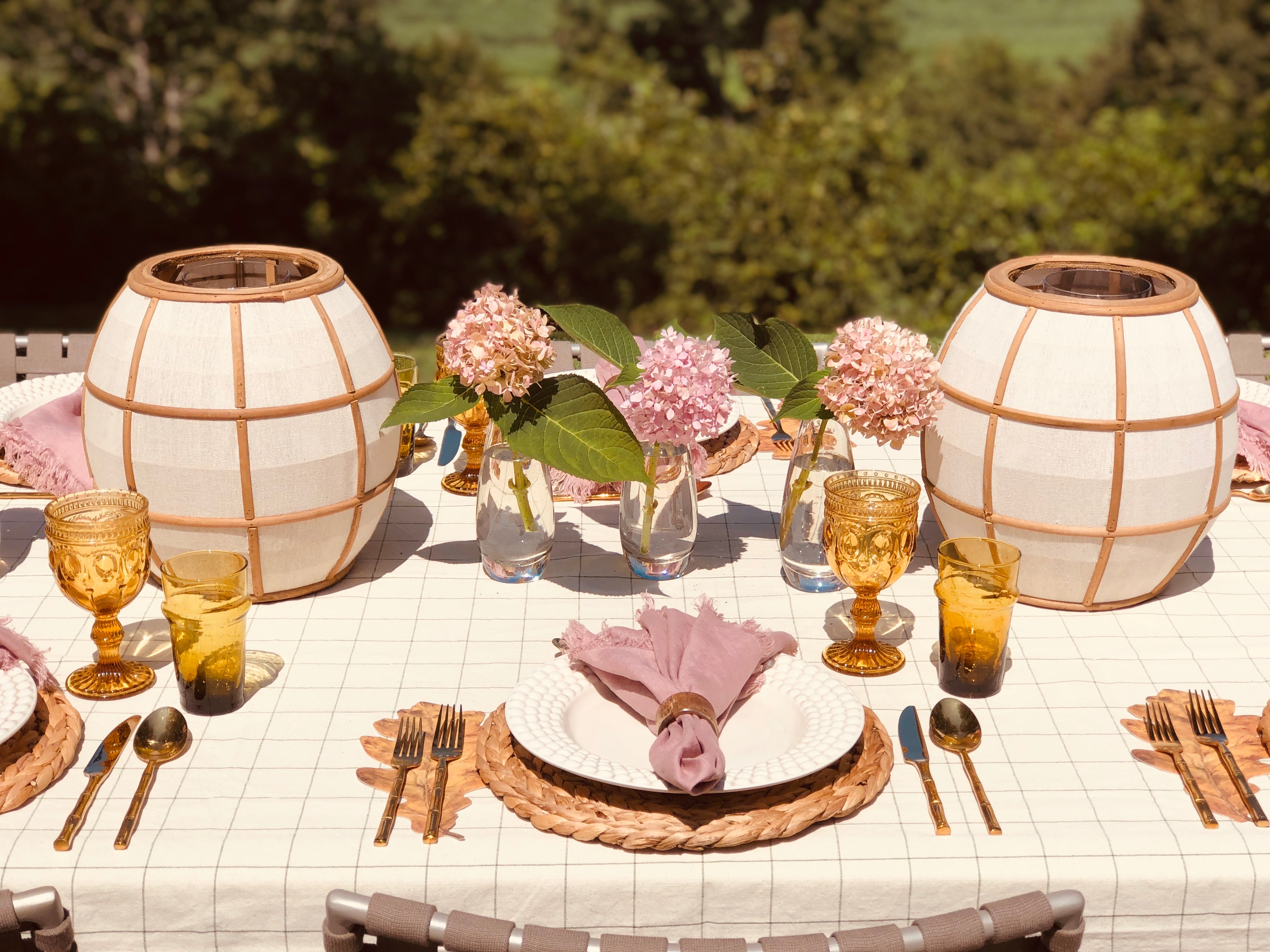


A welcoming dinner table depends less on perfect styling than on having the right pieces ready at the right time. It’s easy to worry that you’ll miss a fork, choose a level of formality that doesn’t suit the occasion, or still be arranging the table while dinner needs your attention. A dinner party table setting checklist makes those decisions simpler, so you can focus on your guests instead of last-minute scrambling.
Start with the gathering itself: your guest count, meal format, and the mood you want to create. Then match the essentials to the plan, from plates and flatware to glasses, napkins, and serving pieces. Linens, placemats, runners, and a simple vase can bring the table together, but a thoughtful setting doesn’t need to be elaborate.
This guide walks you through what to prepare and when, with a flexible checklist you can adapt to your dinner party. Use it to plan the table, set it up, and add personal details, so the finished space feels coordinated, comfortable, and ready to welcome everyone.
Key Takeaways
- Shape your dinner party table setting checklist around the guest count, meal format, and mood you want to create.
- Separate must-have place-setting pieces from optional accents, and make the most of what you already own.
- Adjust the layout for a seated meal, a more formal dinner, or a buffet so serving and guest movement feel comfortable.
- Split preparation between the day before and the day of the gathering to make final checks manageable.
- Use coordinated linens, glassware, and one considered focal detail to add personality without crowding the table.
Start Your Dinner Party Table Setting Checklist with the Gathering
A dinner party table setting checklist connects your guests’ needs with the table essentials and the time you have to prepare. Begin with the gathering, not the linens. Note how many people are coming, how you’ll serve the meal, what the occasion calls for, and how much usable table space you have. These details help you decide what belongs on the table and what can stay in the cupboard.
A thoughtful setting can be simple. Completeness and comfort matter more than strict formality: guests need a place to sit, room to eat, and the pieces required for the meal. Familiar plates or a mix of glasses can feel polished when arranged with care. Choose pieces that suit your home and the kind of evening you want to share.
A checklist helps you settle practical decisions before styling the table, leaving fewer details to manage at the last minute.
Decide what kind of dinner party you are hosting
Think about how guests will dine. For a relaxed meal, you might pass shared dishes around the table. A seated dinner calls for a place setting at each seat and a clear plan for serving courses. At a buffet, guests need an easy path to the food and room to carry plates back to their seats. Let the occasion and your usual hosting style guide the level of formality.
There’s no need to replace familiar pieces for a special evening. Well-loved plates, flatware, and glassware can feel personal and considered when they work together. The history of table setting and tablescaping includes many ways to arrange a table. Take inspiration, then make the setup feel natural for your guests.
Set priorities before gathering tableware
Start with seating and access. Make sure every guest has a comfortable place and can reach what they need without disrupting others. Before arranging anything, note dietary, accessibility, or seating needs that could affect the layout. For example, a guest who uses a mobility aid may need a clear route to the table, while a dietary need may call for a distinct place setting or serving arrangement.
Then choose one simple visual direction before pulling out linens or accents. It could be a favorite color, a seasonal detail, or a clean, relaxed look. Let that choice guide your tabletop pieces rather than trying to coordinate everything at once.
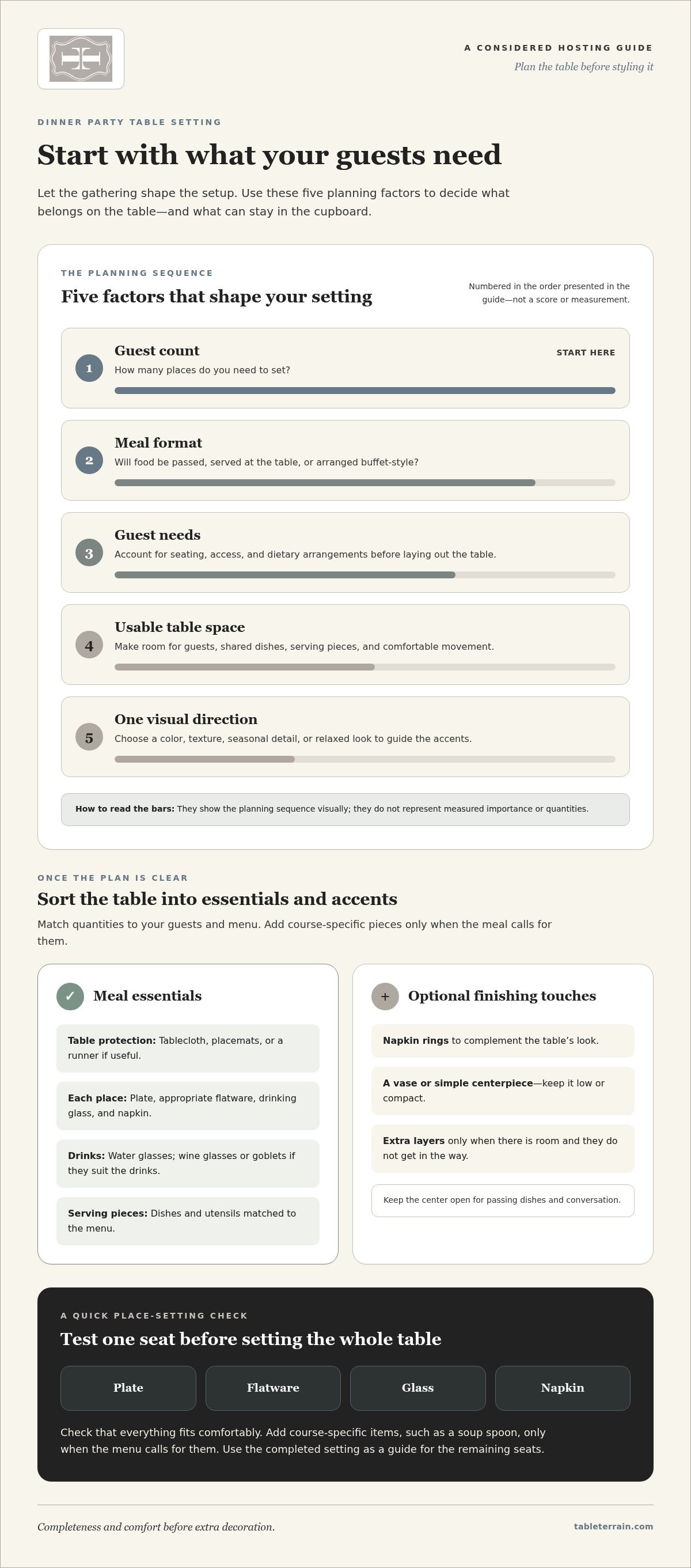
- Guest count: How many places do you need to set?
- Meal format: Will food be passed, served at the table, or arranged buffet-style?
- Guest needs: What seating, access, or dietary arrangements should shape the setup?
- Table space: Where will guests sit, and where will serving pieces go?
- Visual direction: What one color, texture, or personal detail will bring the table together?
With these choices made, you’ll have a clear starting point for gathering tableware. Next, sort the essentials from the optional finishing touches.
Build a Dinner Party Table Setting Checklist Around the Essentials
Once you know how guests will dine, group table items by what they do. This keeps the basics easy to find and prevents decorative extras from taking up serving space. Check quantities against your guest count and planned courses before setting anything out. If a dish or utensil is only for a course you aren’t serving, leave it off the list.
Use two categories: essentials for this meal and optional finishing touches. Essentials make the table functional; accents add personality if you have room and time. Your exact list depends on the menu and serving style.
- Table protection: Choose a tablecloth, placemats, or a runner if you want a protective or layered surface.
- Place settings: Set out a plate, the appropriate flatware, a drinking glass, and a napkin for each guest.
- Drinking glasses: Include water glasses, plus wine glasses or goblets if they suit the drinks you’re serving.
- Serving pieces: Match serving dishes and utensils to the menu rather than setting out every piece you own.
- Optional details: Consider napkin rings, a vase, or extra layers only if they support the look without getting in the way.
Check each guest’s place setting
Count place settings one guest at a time. For each seat, prepare a plate, the flatware needed for the meal, a drinking glass, and a napkin. Add course-specific items only when the menu calls for them, such as a soup spoon for a first course. Leave room for shared dishes and comfortable movement, especially if guests will pass food around the table.
Before arranging the full table, lay out one complete setting as a test. Check that the plate, utensils, and glass fit comfortably together, then use that setting as a guide for the remaining seats. This makes it easier to spot missing items or a crowded layout before everything is in place.
Prepare shared table and serving pieces
Plan shared pieces around the food: a serving dish and utensil for each item that needs them, plus a water vessel guests can reach. Add wine glasses or goblets if they match the drinks you’ll serve. Keep the center of the table open for passing dishes, and choose a low or compact centerpiece so guests can see and speak to one another.
For a quick final count, group items by function and compare each group with your guest list and menu. Table linens and napkin rings can add texture or help tie colors together. Choose the pieces that suit your table, such as table linens, placemats, runners, and serving pieces.
Choose a Dinner Party Table Setting That Fits the Meal
The best table setup follows the way the meal will unfold. A relaxed dinner, a multi-course seated meal, and a buffet each call for different choices about place settings, serving space, and how guests move around. Etiquette can offer a useful starting point, but it shouldn’t make the table awkward or leave guests guessing. Let comfort and the menu lead.
Meal format shapes what guests need at their seats and where food should be served, so use it to guide the setup.
| Meal format | Guest flow | Place settings | Serving access |
|---|---|---|---|
| Relaxed seated meal | Guests stay seated and pass shared dishes. | Keep it simple, with only the pieces used for the meal. | Leave room in the center or plan to bring dishes out as needed. |
| More formal dinner | Guests remain seated while courses are served. | Set each place for the courses you’re actually serving. | Keep serving pieces accessible without filling every open space. |
| Buffet | Guests move between the serving area and their seats. | Keep dining places uncluttered and easy to reach. | Make a clear route to the food and leave room for plates and serving utensils. |
Keep a relaxed seated setting comfortable
For an informal meal, use a straightforward place setting and skip pieces guests won’t use. A tablecloth can soften the look, while placemats or a runner offer a lighter layer. Choose what suits the table and the mood, then leave open space for shared dishes. Guests should be able to reach food and talk across the table without shifting a centerpiece or moving their settings.
Make formal and buffet settings easy to navigate
A more formal dinner can feel special without adding unused utensils. Build each setting around the courses on the menu, and keep extra serving pieces nearby until needed. For a buffet, prioritize a clear path to the food and avoid turning the dining table into storage for every dish. For styling inspiration, explore elegant table settings for dinner parties, then adapt ideas to your room and meal.
Before settling on a layout, picture the evening from a guest’s point of view. Can everyone sit down easily? Is there room to pass a bowl, refill a glass, or get up without interrupting the table? A small adjustment, such as moving a serving dish to a side surface or choosing a slimmer centerpiece, can make the setup feel more relaxed.
Use your dinner party table setting checklist to note the format, where food will be served, and which items belong at each place. Coordinated table linens and tabletop pieces can help bring the arrangement together while keeping the meal’s needs in focus.
Use a Day-Before and Day-Of Dinner Party Checklist
Give table preparation its own place in the hosting timeline. The goal isn’t to finish every detail early; it’s to handle what can be done in advance and reserve the day of the gathering for a few focused checks. Use the guest count and meal format you’ve already chosen to guide each task.
Preparing table details the day before leaves more of the gathering day free for welcoming guests.
The day before: prepare and organize
Confirm who’s coming, then match clean tableware to the menu and serving plan. Gather linens, napkins, flatware, glassware, and serving pieces together so you can spot gaps without searching room to room. If your space and routine allow, set the table now. If not, group each item by purpose and keep everything in one convenient spot.
The day of: finish without rushing
Check each place setting before adding decorative details. Fill any gaps, make sure seats are clear and comfortable, and put serving pieces where you can reach them when the food is ready. Add fresh touches once practical meal preparation is underway. Keep backup napkins and extra serving utensils close by, but off the table so they don’t take up guest space.
Work through the sequence below at a pace that fits your plans. If you’ve already set the table, the day-before steps become a quick inspection rather than a full setup.
- The day before, after confirming guests: Recheck the guest count and review the menu. Make a short list of the pieces needed for each place and each dish.
- The day before, during a quieter moment: Set out clean linens, napkins, flatware, glasses, and serving items. Arrange the table if practical, leaving clear space for food and conversation.
- The day of, before final food preparation: Walk around the table and check seating, place settings, and the path to serving areas. Wipe away marks or replace any piece that isn’t ready to use.
- Shortly before guests arrive: Add fresh flowers or another finishing touch, refill water, and place backup napkins and serving utensils within reach.
For the final walk-through, view the table from the doorway and from a seated position. Can each guest reach their setting? Are chairs easy to pull out? Are shared dishes accessible without blocking conversation? Check that glassware and flatware are clean, and that the serving utensils match the dishes they’ll accompany. A small adjustment now can prevent interruptions once everyone sits down.
Keep your dinner party table setting checklist nearby as you complete these steps, and cross items off as they’re ready. Linens, glassware, and serving pieces can help complete the setup when you need a practical or decorative addition.
Bring Your Dinner Party Table Checklist Together with Thoughtful Details
Once the table works for the meal, add details that give it a sense of occasion. Coordinated doesn’t mean every piece has to match. A few repeated colors or textures can connect table linens, napkins, placemats, runners, glassware, and flatware, while familiar pieces keep the setting personal and relaxed.
Start with one focal detail, such as a vase with seasonal stems. Keep it proportionate to the table and low enough to preserve sightlines. Leave open space for serving dishes, glasses, and guests’ hands. If a detail makes it harder to pass food or see across the table, simplify the arrangement.
Add texture and color without overcrowding the table
Choose a small palette, then repeat its tones in a few places. For example, a table runner can echo the color of napkins, while clear or softly colored glassware adds another layer without overwhelming the setting. Mix textures selectively, such as a smooth tablecloth with woven placemats, and keep plates and flatware easy to see and use.
Think in layers, not additions for their own sake. A tablecloth, runner, and placemats can all have a place, but together they may leave too little room for settings and shared dishes. Pick the layer that best suits your table and the mood of the meal. A vase or container can add a finishing touch without requiring a full centerpiece.
Table Terrain’s tabletop collection offers optional ways to bring the look together. Linens and runners can establish a base, placemats can define individual places, and napkin rings, glassware, flatware, or serving pieces can carry a color or material through the setting. Use what helps the table feel considered; a welcoming gathering doesn’t call for every detail at once.
Use the checklist again for your next gathering
After dinner, save the final checklist and jot down what made hosting easier. Note whether you needed more serving utensils, if a centerpiece took up too much room, or if a particular linen worked especially well. These small observations turn the list into a useful guide for your next meal, rather than a one-time inventory.
For another gathering, adjust quantities and formality to fit the guest group, menu, and serving style. Keep the practical essentials, then choose a fresh accent or reuse pieces that already feel right. Thoughtful preparation gives you fewer table decisions to manage as guests arrive and more attention to share with them.
When a useful layer or finishing touch would complete your setup, explore Table Terrain table essentials and choose pieces that suit the gathering you have in mind.
Make Your Next Gathering Feel Effortless
Let your next dinner party build on what worked and make the table feel more like your own. Keep your dinner party table setting checklist somewhere easy to find, then adapt it to the people, meal, and mood you’re planning. A few well-chosen details can set the tone without turning preparation into another task to manage.
Choose tabletop pieces for both purpose and personality. Table Terrain brings together linens, napkin rings, placemats, runners, glassware, flatware, and serving items, so practical hosting needs can sit comfortably alongside decorative choices. Start with one piece that suits the gathering, then let it guide the rest of the table.
Explore Table Terrain’s tabletop essentials and choose pieces for your next gathering. Keep it personal, keep it comfortable, and enjoy the company around your table.
Frequently Asked Questions
What do you need for a basic dinner party table setting?
Each guest needs a plate, the flatware for the meal, a drinking glass, and a napkin. Add serving dishes and utensils based on the menu, such as a bowl and serving spoon for a shared salad. Linens and decorations are optional. If space is limited, prioritize items guests will use and keep extra pieces on a nearby surface rather than squeezing them between place settings.
How do you set a table for a dinner party?
Start with a clean plate at each seat, then place the flatware and glassware needed for the menu. For a familiar arrangement, put forks to the left of the plate, knives and spoons to the right, and the drinking glass above the knives. Keep the knife blade facing the plate. Finish with napkins, then check that guests can reach shared dishes without shifting their settings.
What should I set out the day before a dinner party?
Set out the linens, napkins, plates, flatware, glasses, and serving pieces you expect to use, then check that each is clean and ready. Match serving utensils to their dishes, so a salad server doesn’t get confused with a spoon for another course. If you’re setting the table early, leave delicate touches, such as fresh flowers, for the day of the gathering.
How do you set a table for a casual dinner party?
Keep a casual setting practical rather than overly matched. Give everyone the pieces they need, and use familiar plates or mix-and-match glasses if that suits your home. A runner or placemats can add color without requiring a full tablecloth. For a meal served family-style, leave open space for bowls and platters, and consider placing larger dishes on a side surface if the table feels crowded.
Do you need a centerpiece for a dinner party table?
No, a centerpiece is optional. If you’d like a focal point, choose something that fits the scale of the table, such as a small vase or a simple seasonal accent. Keep it low enough that guests can see one another, and leave room for food and drinks. A bare center can work just as well, especially when serving dishes need space or the table is compact.
How do you set a dinner party table for a buffet?
Keep the food and serving utensils together in an order that feels natural to follow, with enough room for guests to serve themselves. If possible, put plates at the start of the buffet and serving utensils beside their dishes. At the dining table, set out the essentials guests need to eat comfortably, but leave decorative pieces and extra serving items off the surface so diners have room.
How can I make dinner party table setting less stressful?
Build your dinner party table setting checklist from the guest count and menu, then keep it as a reusable starting point. Add a note beside any item that’s easy to forget, such as a serving spoon for a shared side or a water glass at each place. After the meal, jot down what you actually used. Next time, adjust the list instead of planning from scratch.