
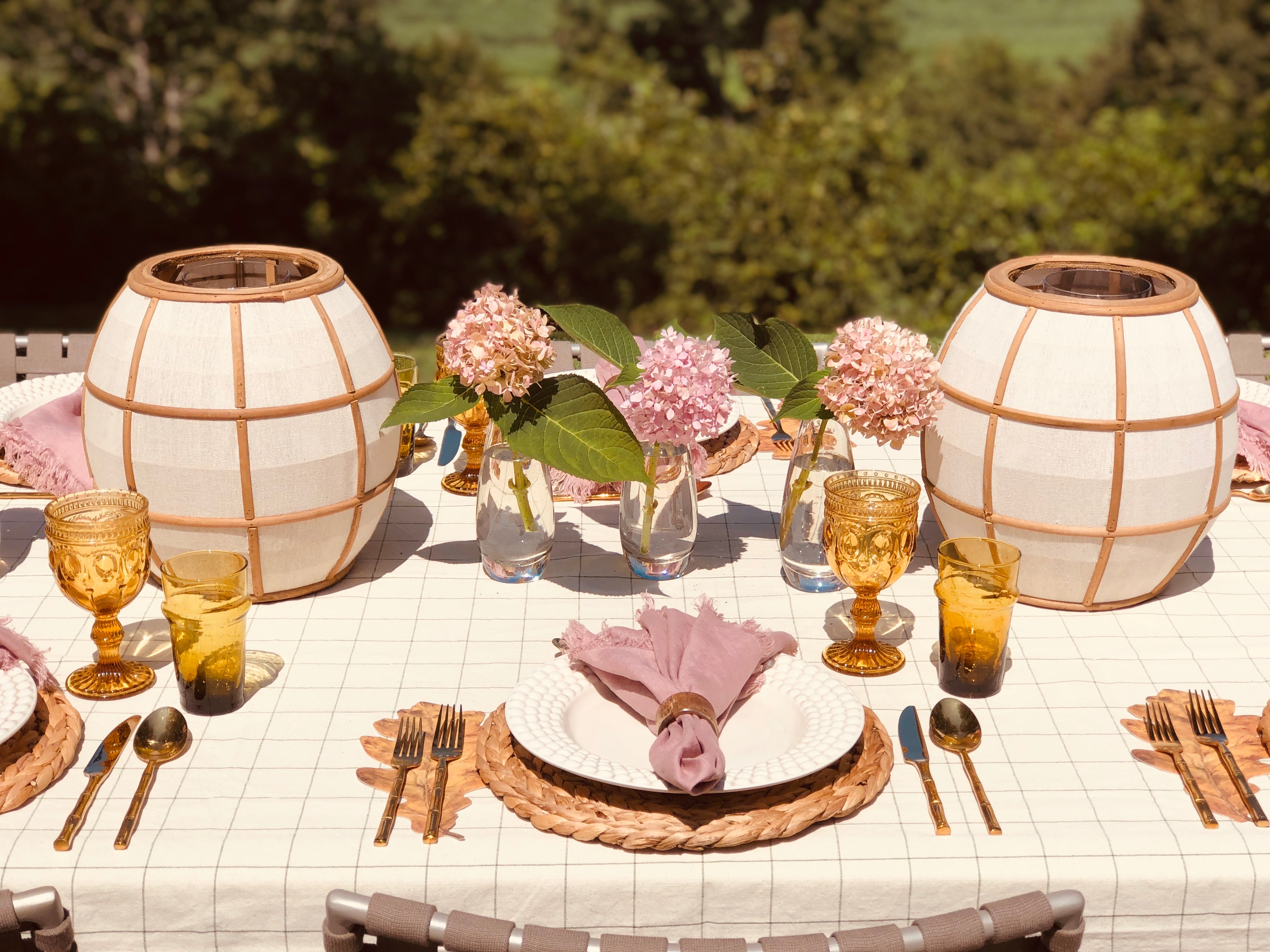


Could the wrong wash cycle leave your favorite flatware dull, spotted, or scratched? Cleaning and storing fine flatware doesn’t have to be complicated, but the right approach depends on each piece’s material and finish. Silver, silverplate, and stainless steel can have different care needs, so one routine may not suit every place setting.
If you’re unsure whether to handwash or use the dishwasher, or how to prevent tarnish and water marks, start with the maker’s care instructions. A few consistent habits after each meal can help keep flatware clean and ready for your next gathering.
This guide explains how to choose a cleaning method for the material, dry pieces thoroughly, and store them to limit scratches and avoidable wear. You’ll also learn why separating pieces matters and when gentler care is the wiser choice. With a simple routine, your flatware can stay polished and feel at home on a thoughtfully set table.
Key Takeaways
- Identify whether your flatware is stainless steel, sterling silver, or silverplate before choosing a cleaning routine.
- Use the maker’s instructions to decide between handwashing and dishwasher cleaning rather than assuming every set can go in the machine.
- For cleaning and storing fine flatware, clear away food residue, rinse thoroughly, and dry pieces promptly after washing.
- Sort flatware by type and store pieces dry with space between them to help limit moisture marks and surface contact.
- Keep routine washing separate from polishing, and choose a polishing approach suited to the material and finish.
Why cleaning and storing fine flatware carefully matters
Fine flatware isn’t defined by one particular metal or by how often you use it. It’s a quality category for pieces whose materials and finishes deserve considered care. That might mean utensils reserved for celebrations or pieces you use every day because they bring a polished touch to the table. Either way, a thoughtful routine can help preserve their appearance without turning cleanup into a project.
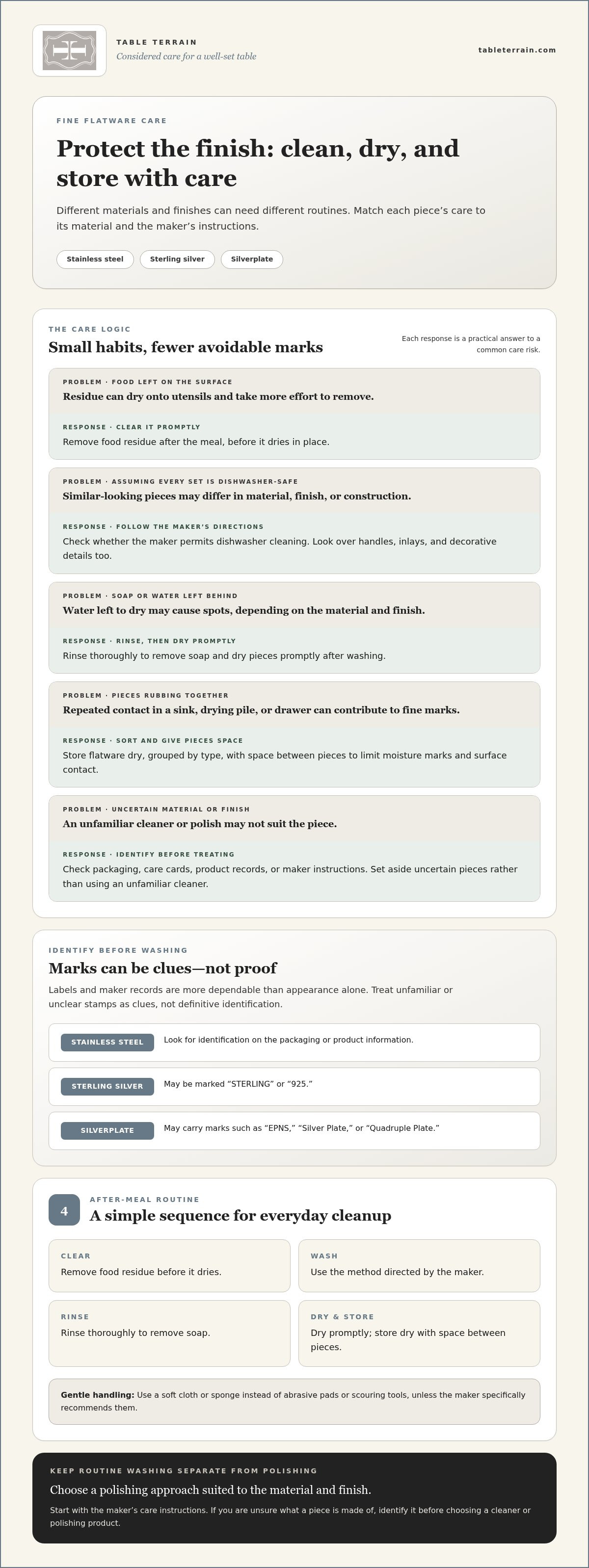
Small habits after a meal can make a difference over time. Food left on utensils can dry onto the surface and take more effort to remove. Water left to dry may cause spots, depending on the material and finish. And when pieces knock against one another in a sink, drying pile, or drawer, repeated contact can contribute to fine marks. Since these effects vary, don’t assume every set responds to care in the same way.
What counts as fine flatware?
Think of “fine” as a cue to pay attention, not as a promise that the pieces are made from a particular material. Stainless steel, sterling silver, and silverplate are distinct categories, and decorative finishes can bring their own care considerations. Everyday utensils and special-occasion pieces both benefit from material-appropriate handling. Before settling on a cleaning method, look for care details on the packaging or in the maker’s instructions.
Those instructions matter more than a universal rule or a habit borrowed from another set. A routine that suits one finish may not suit another. Use the original guidance as your starting point; if you don’t have it, identify the material and finish before choosing a cleaner or polishing product.
Which everyday habits can affect its finish?
Start with what’s left after the meal. Sauces, oils, and other food residue can cling to utensils, and leaving it to dry may make cleanup harder. Clear away food promptly so it doesn’t dry in place. For silver pieces, the Household Silver overview discusses tarnishing and polishing, useful context for understanding why silver care may differ from routine washing.
Next, consider contact and moisture. Loose utensils rubbing together in a sink or drawer may pick up surface marks over repeated use. Leaving pieces damp can also lead to spots, though the effect depends on the material and finish. Careful handling doesn’t need to be elaborate: clear residue, follow the maker’s directions, and give pieces a dry, orderly place after use. That simple routine works for a quiet meal or a table set for guests.
Identify your flatware material before choosing how to clean it
Start by identifying the flatware, not by reaching for a cleaning product. Pieces can look similar while differing in material, plating, or decorative finish, and those differences may affect which cleaning methods are suitable. The safest method is the one that matches the piece’s material and the maker’s guidance. A quick check helps you avoid relying on assumptions.
Look for information on the original packaging, product records, care cards, or maker’s instructions. If you’ve inherited the pieces, check for stamps or marks, but treat them as clues rather than a reason to guess at care. Finding the relevant information first makes it easier to establish a confident routine for cleaning and storing fine flatware.
How can you tell stainless steel, sterling silver, and silverplate apart?
Labels and maker records are more dependable than appearance alone. Stainless steel may be identified on packaging or product information. Sterling silver is sometimes marked “STERLING” or “925,” while silverplate may carry marks such as “EPNS,” “Silver Plate,” or “Quadruple Plate.” These markings can help with identification, but unfamiliar or unclear stamps shouldn’t be treated as definitive proof.
Sterling silver and silverplate are different categories, even if the pieces look alike at first glance. Don’t test an uncertain finish with an unfamiliar polish. Identify the material and find suitable care guidance first, so you don’t use a product that isn’t intended for the piece.
What should you check before washing?
Once you have a likely material and finish, read the maker’s cleaning instructions before deciding how to wash the flatware. Look specifically for dishwasher directions rather than assuming a set is suitable for machine cleaning. Inspect handles and decorative details too: a piece may include materials or construction that call for different care from its main utensil surface.
Use this quick pre-wash check:
- Find the material and finish details on packaging, care cards, or product records.
- Look for the maker’s washing instructions, including any dishwasher-specific guidance.
- Notice whether handles, inlays, or decorative details need separate attention.
- Set aside pieces whose material or care directions remain uncertain, rather than applying an unfamiliar cleaner.
Keep the care notes with the flatware or somewhere easy to find. This makes cleanup simpler, especially if different pieces in your collection need different approaches. For a considered table setting, Table Terrain’s curated flatware and serving items include individual pieces that can help personalize the setting.
How to clean fine flatware after a meal
A consistent cleanup routine helps protect the finish and makes flatware easier to set out next time. Clear away food residue before it dries onto the pieces. Then follow the maker’s washing directions, rinse thoroughly to remove soap, and dry promptly if the care instructions call for it. Use a soft cloth or sponge instead of abrasive pads or scouring tools unless the maker specifically recommends them.
Clear residue, wash as directed, rinse thoroughly, and dry promptly; the maker’s instructions determine the right method for each piece. Keep the sequence simple, but don’t assume one routine suits every material or finish. If a piece’s care directions are unclear, avoid experimenting with strong cleaners or polishing products.
When is handwashing the sensible choice?
Handwashing is sensible when the maker recommends it or doesn’t say the piece is suitable for the dishwasher. Use warm water and mild dishwashing liquid as general guidance, while following any specific care directions. Wash pieces individually when practical so they don’t knock against one another in the sink. A soft sponge or cloth can lift ordinary residue without the unnecessary abrasion of a rough scrubber.
For a small group of utensils, wash them one at a time rather than leaving them piled in soapy water. Pay attention to joints, patterned areas, or details where food might remain, but use a light touch. Rinse each piece well. If the instructions recommend prompt drying, use a clean, soft cloth rather than leaving the flatware to air-dry in a crowded rack.
When can fine flatware go in the dishwasher?
Use a dishwasher only when the maker says the specific pieces are suitable for machine washing. Don’t assume similar-looking utensils share the same care requirements. Follow the recommended cycle and detergent guidance, if provided, and don’t add pieces whose material or finish you haven’t identified. If the directions call for handwashing, a convenient machine cycle isn’t a substitute.
Load approved utensils so they’re less likely to rub, nest, or knock against one another. Separate forks, spoons, and knives where the basket design allows, and avoid crowding the pieces. When the cycle ends, unload and dry promptly if the care directions recommend it; standing moisture can leave marks on some finishes. If care routines differ across your collection, note which pieces are machine-suitable to make cleanup after a gathering easier.
That small bit of attention is part of cleaning and storing fine flatware well: choose a method for the piece in front of you, not for the set you assume it resembles. Table Terrain’s curated flatware and serving items offer individual pieces for a personalized setting.
How to dry and store fine flatware to help prevent damage
Build drying and storage into your cleanup routine: dry pieces fully when appropriate, sort them by type, then store them with space between them. Dry, separated storage helps limit lingering moisture and unnecessary contact that may mark some surfaces over time. Follow the maker’s storage directions before choosing a container or wrap, since the right setup depends on the material and finish.
Use this simple sequence after washing:
- Dry each piece according to its care instructions.
- Sort utensils by type so they’re easy to find and less likely to rub together.
- Place them in a dry organizer, divided tray, or suitable original packaging.
- Leave enough space to lift out a piece without scraping it against others.
How should you dry flatware after washing?
If hand-drying is appropriate, use a clean, soft, lint-free cloth. Wipe each piece gently, then check around handles, joins, and decorative details where water can linger. Don’t put flatware away damp, particularly if its care directions call for complete drying. For machine-washed pieces, follow the maker’s directions for unloading and drying rather than assuming air-drying suits every finish.
Make a final check in good light. Turn each utensil briefly to look for droplets or residue, especially where the handle meets the working end. If the cloth becomes damp, switch to a dry section so you don’t transfer moisture back onto the surface. This quick check helps keep pieces ready for the next setting.
Which storage setup helps keep pieces organized?
Choose a dry drawer or cabinet away from persistent moisture, then use divided compartments to keep forks, spoons, and knives sorted. A drawer organizer or divided tray can reduce direct contact while making everyday pieces easy to reach. Leave room in each section so utensils aren’t wedged together; crowded compartments can cause pieces to scrape as they’re added or removed.
For special-occasion flatware, original storage packaging may be useful if the maker intended it for that purpose and it’s clean and dry. For longer-term storage, follow the maker’s advice on suitable containers or wrapping. Don’t assume one type of cloth, lining, or storage chest suits every material and finish. If you keep different kinds of flatware together, separate them and keep their care notes nearby.
Thoughtful cleaning and storing fine flatware means giving each piece a dry, orderly place that fits its care guidance. Table Terrain’s flatware and serving items can help you add individual pieces to a personalized table setting.
Keep fine flatware ready: routine upkeep and common care questions
A simple rhythm makes flatware easier to care for and ready to bring back to the table. After a meal, clear residue and clean each piece using its specified method. Once dry, return it to separated storage rather than leaving utensils loose in a drawer. From time to time, check for leftover residue, spots, or changes in the finish. These quick reviews can help you notice when a piece needs attention before its next use.
Ordinary washing and polishing are different tasks. Washing removes food and everyday soil; polishing is a separate step for addressing tarnish or improving appearance, and the right approach depends on the material and finish. Don’t reach for polish just because a piece looks dull. First consider whether you’re seeing residue, water spotting, or a change in the finish, then refer to the maker’s instructions.
How can you respond to spots, dullness, or tarnish?
Begin by confirming what the piece is made of and identifying the mark as best you can. A spot may be residue or water-related, while tarnish can occur on silver. They don’t necessarily need the same treatment. Use only a cleaning or polishing product intended for the identified material and finish, and follow its directions. Test discreetly only if the product instructions permit it.
If you can’t identify the material, the mark persists, or the finish seems to be changing, pause before trying a stronger cleaner or home remedy. Abrasive methods can affect some finishes, and treatments suited to one kind of flatware may not be appropriate for another. Return to the maker’s care information rather than layering on more products. A cautious pause is better than an experiment that may leave a mark.
What does a low-effort care routine look like?
Keep the routine consistent, not complicated. After meals, remove food residue and wash pieces promptly according to their care directions. Rinse well, then dry fully when appropriate. Sort utensils by type and return them to a divided organizer or other suitable storage, leaving space between pieces. Avoid dropping loose flatware into a crowded drawer, where utensils can rub together as you reach for them.
For occasional upkeep, check a few pieces as you put them away. Look at handles and joins as well as the main surface, and note any recurring spots or residue. If the finish changes, identify the material and consult the care instructions before polishing. This quick check keeps routine care distinct from more specialized attention.
With a dependable approach to cleaning and storing fine flatware, cared-for pieces can feel like a natural part of a thoughtfully set table. Browse Table Terrain’s curated flatware and serving items for pieces that complement your setting.
Make your next table feel personal
A well-set table doesn’t need to feel formal or complicated. Let the pieces you reach for reflect the mood of the meal, from an everyday dinner to a gathering worth lingering over. A considered approach to cleaning and storing fine flatware helps keep those finishing touches ready to join the moment, not just waiting for a special occasion.
As you shape your setting, think beyond a matching set. Individual décor pieces can bring a personal note to the table, while thoughtfully chosen flatware and serving items help tie the experience together. Shop Table Terrain’s curated flatware and serving items to find pieces that suit your style and make your next gathering feel distinctly yours.
Every meal is a chance to create a welcoming place to come together. Start with the details you love, and enjoy setting the table.
Frequently Asked Questions
Can fine flatware be left soaking overnight?
It’s best not to leave fine flatware soaking overnight unless the maker specifically allows it. Extended soaking keeps food residue and moisture in contact with the surface, which may affect some materials or finishes. If washing has to wait, clear away scraps and keep the pieces out of standing water. Clean them as soon as practical using the method suited to their material.
Can different types of flatware be stored together?
They can share a drawer or cabinet, but avoid leaving different pieces loose against one another. Contact between utensils may cause surface marks, and materials with different care needs are easier to manage when separated. Use divided sections or individual storage sleeves, and keep care notes nearby if your collection includes more than one material or finish. This keeps pieces organized without treating them as interchangeable.
What causes fine flatware to develop spots after washing?
Spots may appear when water dries on a piece and leaves mineral residue, or when soap or food remains after rinsing. The cause can depend on the water, wash method, and flatware finish. Check whether the marks lift with a gentle rewash using the recommended method. If they remain, consult the maker’s care information before polishing, since a persistent mark may need different attention from ordinary residue.
Can I use the same polish on stainless steel and silverplate?
Don’t assume one polish is suitable for both. Products are formulated for particular materials and finishes, and a polish intended for silver may not be appropriate for stainless steel. Read the product label and compare it with the flatware’s care guidance before applying anything. If you can’t identify the piece, hold off rather than testing an unfamiliar product on a visible area.
How should I store flatware I only use for special occasions?
Before putting special-occasion pieces away, make sure they’re clean and fully dry according to their care instructions. Keep them separated in their original packaging if it’s suitable, or use a divided, protective storage option recommended by the maker. Choose a dry cupboard or drawer, not a spot exposed to regular dampness. Check the pieces before a gathering so you have time to address any marks.
Is it safe to use baking soda to clean fine flatware?
Not as a universal solution. Baking soda can be abrasive, and some home-cleaning recipes may alter a finish or remove patina that’s desirable on an older piece. The safest approach to cleaning and storing fine flatware is to identify the material first and follow the maker’s directions. Avoid improvised mixtures on plated or decorative pieces unless the care guidance specifically permits them.
How often should fine flatware be polished?
There isn’t one polishing schedule for every set. Polish only when the material and finish need it, and follow the maker’s recommendations for the product and method. Regular washing removes everyday residue, while polishing is a separate treatment that may not be needed after every use. If a piece looks dull, first check for dried water or leftover soap before deciding it needs polish.