


What if the right table runner isn’t a standard size at all? The answer depends on your table’s measurements, the amount of overhang you prefer, and how you plan to set the table. Learning how to choose the right size table runner starts with those details, not a one-size-fits-all chart.
If you’re unsure how far a runner should hang over the ends or whether its width will crowd place settings, a few simple measurements can make the choice much clearer. The goal is a runner that looks balanced and leaves room for guests, plates, and serving pieces.
In this guide, you’ll measure your table and use the desired end drop to calculate a suitable runner length. You’ll also see how the one-third width guideline applies to rectangular and round tables, and how different overhangs can shift the look from relaxed to more formal. Once you’ve settled on the proportions, you can choose a runner that works with your linens and table setting.
Key Takeaways
- Learn how to choose the right size table runner by starting with your tabletop measurements and the look you want.
- Use your preferred end drop to calculate a runner length that feels balanced.
- Compare narrower and wider proportions to leave visible tabletop and space for place settings.
- Adjust your approach for rectangular, round, or oval tables, since each shape affects the finished look.
- Choose color, texture, and material to complement your setting after settling on the runner’s dimensions.
Why Table Runner Size Changes the Look and Function of Your Table
A runner should look like it belongs on the table, not like an afterthought. Too short, and it may seem disconnected from the tabletop. Too wide or long, and it can compete with place settings or get in the way. A good fit balances the table’s proportions with how you use it, whether you’re setting a welcoming dining table or leaving a runner in place for everyday meals.
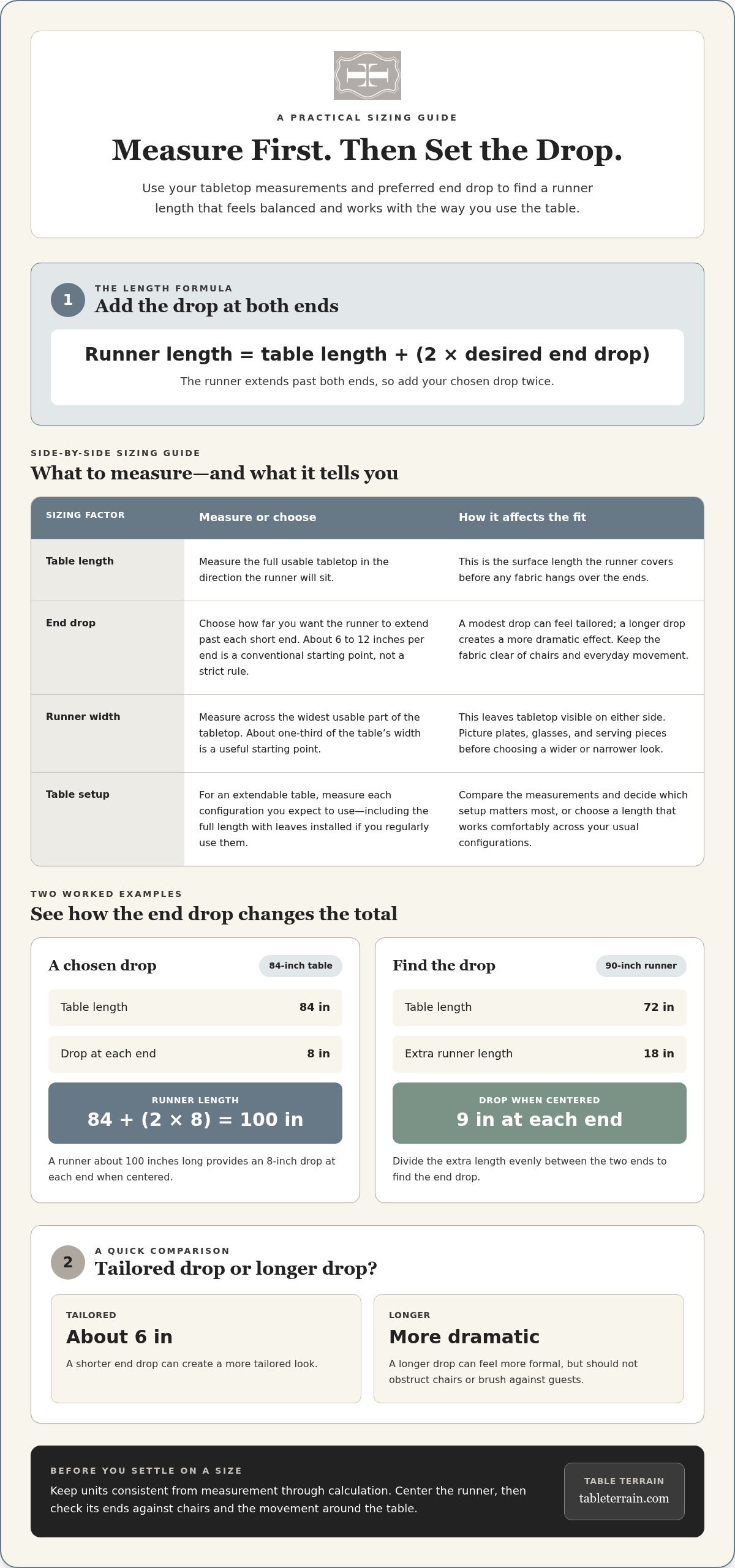
Runner length is its full end-to-end measurement. Width is the side-to-side measurement across the tabletop, and end drop is the fabric that extends past each short end.
What table runner dimensions actually mean
The runner’s full length includes the section resting on the tabletop and any fabric that hangs over the ends. For example, a 90-inch runner on a 72-inch-long table has 18 inches of extra length. Center it, and that gives you a 9-inch drop at each end. The tabletop coverage is still 72 inches; the remaining length creates the end drops.
Width tells you how much of the table the runner covers from side to side. A useful starting point is about one-third of the table’s width, leaving tabletop visible on either side. For a runner centered on a rectangular table, divide the extra length evenly between the two ends to find the end drop.
Table runners are one of several ways to dress a table. For broader context on the history of tablecloths and table runners, see how table coverings vary in shape, size, and material.
Why the right fit matters beyond appearance
Proportion changes the whole setting. A very short runner can look visually detached, especially on a long table. A balanced length draws the eye along the tabletop and gives a centerpiece a natural place to sit. A longer drop can feel more formal, but the fabric shouldn’t obstruct chairs or brush against guests as they sit and move around the table.
Width affects how comfortably the table works, too. A narrow runner may suit a simple centerpiece, but it can feel crowded if you’re arranging several serving pieces down the middle. A wider runner gives a layered display more room, but should still leave space for plates, glasses, and serving dishes. Picture the table in use before choosing a width, including the place settings and centerpiece you plan to use.
There isn’t one correct size for every table. A runner that feels generous on a compact table may look slight on a larger one, and a dramatic end drop may suit a special dinner better than a busy everyday setting. For how to choose the right size table runner, start with your table’s actual measurements, then decide what balance and ease of movement you want. Dimensions give you a reliable starting point; your setting determines the final look.
How to Measure Your Table and Calculate the Right Runner Size
Start with the table itself, not the size printed on a runner label. A simple measuring sequence gives you a reliable length to shop for, while your preferred end drop lets you tailor the look. Measure the table in the configuration you plan to use, then calculate the runner length before browsing.
- Measure the tabletop length. Run a tape measure from one end of the table to the other, in the direction the runner will sit. Record the full usable surface length.
- Measure the width. Measure across the widest usable part of the tabletop. Keep this measurement handy as you consider a runner width that leaves room for your setting.
- Choose the end drop. Decide how far you’d like the fabric to extend past each end. A drop of 6 to 12 inches per end is a conventional starting point, not a strict rule.
Calculate the runner length
Once you have your table length and preferred drop, use this formula: Runner length = table length + (2 × desired end drop). Add the drop twice because the runner extends beyond both ends. A modest drop can feel tailored; a longer one creates a more dramatic effect. Choose a length that suits the setting and keeps the runner clear of chairs and everyday movement.
Illustrative example: If your table measures 84 inches long and you want an 8-inch drop at each end, calculate 84 + (2 × 8) = 100 inches. A runner about 100 inches long would provide that drop when centered. This example shows the method, not a required size for every table.
Measure for the way you use the table
For an extendable table, measure each configuration you expect to use. If you regularly add the leaves, measure the full length with them installed; measuring only the compact tabletop could leave the runner looking short when the table is extended. Note both measurements and decide which setup matters most, or choose a length that works comfortably across your usual configurations.
Keep your units consistent from start to finish. If you measure the tabletop in inches, use inches for the end drop and final runner length. If you measure in centimeters, convert the drop to centimeters before adding it. Mixing units can turn a simple calculation into the wrong shopping measurement.
Before settling on a size, picture the runner centered on the table and check that the ends won’t interfere with chairs or movement. With the dimensions and drop decided, you can browse table runners and coordinating linens with a clearer idea of the proportions that will suit your table.
Table Runner Length and Width: Compare the Looks Before You Choose
Once you’ve measured your table, compare how different end drops change the setting. A runner that hangs beyond the ends creates a finished, traditional line; one that ends on the tabletop can feel relaxed and practical. Neither look is automatically better. Choose a proportion that suits the table, the occasion, and how people move around it.
Tailored: about 6 inches per end. A modest drop gives the runner a neat finish without drawing too much attention to the ends. It can work well for everyday meals and tables where chairs sit close.
Moderate: about 8 to 10 inches per end. This balanced drop is visible without feeling especially dramatic. It can frame the tabletop and give a centerpiece a clear visual anchor.
More generous: about 12 to 15 inches per end. A longer drop feels more formal and makes the runner a stronger feature. Consider chair positions and how guests will sit before choosing this look.
These are styling guides, not fixed standards. A shorter drop may suit a compact table or a busy family setting; a more generous one may feel right for a dressed-up meal. A runner can also stop within the tabletop edges for a clean, floating effect. That no-drop look is especially practical if fabric hanging over the ends could catch on chairs or get in the way of daily use.
Should a table runner hang over the ends?
An overhang visually extends the runner beyond the tabletop and can make a setting feel more finished. The best drop depends on how the table is used. If children move around the table, chairs sit close to the ends, or the table is used throughout the day, choose a short drop or keep the runner on the tabletop. For a special occasion, a longer drop can add presence, provided it doesn’t interfere with seating.
How wide should a table runner be?
Width shapes the center of the table. A narrow runner creates a subtle line beneath a vase or centerpiece; a wider one gives the setting more visual weight and room for a central arrangement. As a starting point, consider a runner about one-third of the table’s width. For a 36-inch-wide tabletop, that suggests roughly 12 inches, but it isn’t a universal standard.
Check how much space remains on both sides before deciding. Plates, placemats, glasses, and serving pieces all need room, and a runner shouldn’t crowd the place settings or make the center feel cramped. Lay out the items you expect to use, then judge the available tabletop. A narrower runner may suit a full dinner setting, while a wider one can anchor a simple centerpiece.
Length controls the end drop; width controls the balance across the tabletop. Keep that distinction in mind as you compare proportions. For how to choose the right size table runner, use your measurements as a guide, then adjust the drop and width to suit the mood and function you want.
How to Choose a Table Runner Size for Different Table Shapes and Setups
The same measuring method can guide your choice on any table, but the shape changes how a runner looks on the surface. A straight runner emphasizes a central line, while the visible space around it varies with the tabletop’s outline. Consider where the runner will sit, what it needs to hold, and how people will use the table before settling on its proportions.
Sizing a runner for round, oval, and rectangular tables
On a rectangular table, place the runner along the center and use the full tabletop length as your starting point. The straight edges make it easy to judge whether the runner feels balanced and whether its ends suit your preferred drop.
On a round table, a centered runner creates a line across the surface, connecting opposite sides and giving a centerpiece a defined path. Measure across the diameter in the direction the runner will lie, then consider the surface available on either side. The usual length calculation can help estimate the total length, but the overhang may look different against a curved edge. Check the overall effect before choosing.
An oval table also has a central axis, but its curved ends create a softer visual finish than a rectangle. Center the runner along the longest direction, then check that its width and length sit comfortably within the tabletop’s curved outline. For both round and oval tables, a similar-length piece of fabric can help you preview the proportions before choosing a final size.
Adjusting for extensions, place settings, and table use
If your table extends, measure it both closed and fully extended. Choose the measurement that matches the planned gathering. A runner that looks balanced in the everyday configuration may appear short once leaves are added. Conversely, a longer runner chosen for an extended table may have more drop than you want when the table is compact. If you use both setups often, compare the fit in each before making your choice.
Next, map out the setting. Place plates or placemats where guests will sit, and allow room for the centerpiece and serving pieces. The runner should define the middle without squeezing the place settings or taking over the usable surface. For ideas on coordinating different linens, explore the table linens guide; use your place settings and serving pieces to judge how much clear space the table needs.
Shape and setup work together. A runner that suits a long rectangular table may not create the same balance across a round one, even if the surface measurements seem comparable. To decide how to choose the right size table runner, consider the table as it will actually be used, then test the runner’s visual path and clearances. Once you know the proportions you need, browse table runners for your setting and coordinate the finished look with the linens already on your table.
Finish Your Table Runner Choice with a Balanced, Personal Setting
You’ve measured the tabletop and settled on a length and width. Now make a quick fit check, then choose colors and textures that work with the rest of your table. A runner should suit how you’ll use the setting as well as the look you want, whether that’s an easy everyday arrangement or a more considered table for guests.
A quick fit check before you decide
Use a measuring tape or strips of paper to mark the runner’s planned path directly on the tabletop. This preview helps you judge the proportions before choosing a runner. Set out a plate, placemat, or serving piece if you’ll use them alongside it, and check that the runner leaves comfortable room rather than crowding the arrangement.
- Table dimensions: Keep the tabletop length and width close at hand, measured in the setup you plan to use.
- Chosen drop: Check the overhang at both ends. If the table sits at an angle or isn’t centered in the room, look at the runner from the usual seating positions, too.
- Runner width: Make sure the marked edges leave enough space for place settings and serving pieces.
- Intended use: Consider whether the table is for daily meals, hosting, or both, and whether the runner’s placement will feel practical in each setting.
For a round or oval table, follow the runner’s path along the center and check how its ends relate to the curved edges. For a rectangular table, look at the visual line from each seat. A small adjustment to placement can change the balance, so test the guide in the position you’ll actually use.
Coordinate the runner with the rest of your table
With the fit settled, turn to the palette and feel. Choose a color that complements your existing linens, dinnerware, and glassware, or use the runner to introduce a gentle contrast. Texture can add depth to a simple setting, while a smoother or more understated surface can let patterned plates or a centerpiece take focus. These styling choices influence the mood, not the measurements.
Keep the centerpiece in proportion, too. A substantial arrangement may call for a runner that gives it a clear base without making the middle feel crowded. For broader ideas on combining tactile details, explore layering textures for a tablescape.
Now you’re ready to shop with a clear sense of the dimensions and look that suit your table. Knowing how to choose the right size table runner means balancing fit with personal style, not chasing a single perfect proportion. Browse Table Terrain’s selection of table runners to find a piece that works with your setting.
Make Your Table Setting Your Own
The right runner can become a starting point for a table you enjoy returning to, not just a finishing touch for one occasion. Let the colors, textures, and pieces you already love guide your choice, then make small changes to refresh the setting for a gathering or an ordinary meal. A cohesive look doesn’t need every element to match; thoughtful contrasts can feel just as inviting.
With a sense of how to choose the right size table runner, you can focus on the details that make the table yours. Pair a runner with placemats or other dining accessories to create a setting that feels comfortable, considered, and ready to welcome guests.
Explore Table Terrain’s selection of runners and table linens to find a piece that fits your table and style. Shop Table Terrain’s table runners and start creating a setting you’ll be glad to gather around.
Frequently Asked Questions
How much should a table runner hang over each end?
A drop of about 6 to 12 inches at each end is a useful starting range, but the best choice depends on how you use the table. For a casual meal or a table with chairs close to its ends, keep the fabric shorter. For a more formal setting, a longer drop can feel elegant. Check that the runner won’t brush against seated guests or catch when chairs move.
Can a table runner be shorter than the table?
Yes. A runner that ends within the tabletop can create a deliberate, modern look, especially on a long table where a full-length runner might feel too formal. Center it and leave a clear margin at both ends so the shorter length looks intentional. This option can also suit everyday meals, since no fabric hangs near chairs or laps.
How wide should a table runner be compared with the table?
A runner around one-third of the table’s width is a helpful visual guide, not a fixed rule. For example, on a 36-inch-wide table, a runner near 12 inches wide is a reasonable place to start. Before choosing, consider what sits down the center and how much space plates or placemats need. A narrower runner can help a full setting feel open.
What size table runner works on a round table?
Measure across the table through its center, then consider a runner that follows that line. A centered runner creates a visual path across the round surface, with its ends reaching toward opposite edges. If you want an overhang, add the desired drop at both ends of that measured path. Check the placement with your centerpiece in position so the runner supports it without crowding the surrounding seats.
Should a table runner be longer than a tablecloth?
Not necessarily. The runner and tablecloth can have different lengths, as long as their edges look balanced together. A runner that extends beyond the cloth may create a layered effect, while a shorter runner can keep attention on the tablecloth. Lay both pieces on the table and check that the runner’s ends don’t compete with the cloth’s hem or interfere with seating. The visual relationship matters more than a fixed length rule.
How do I choose a runner for an extendable dining table?
Choose based on the configuration you’ll use most, or compare the fit in both the compact and extended positions. For a gathering with leaves installed, measure the full surface so the runner doesn’t appear undersized. If you use both configurations often, a shorter runner may offer a flexible look, while a longer one can suit the extended table. Test the placement with chairs pulled out as well.
Can I use two table runners on one table?
Yes. Two runners can work on a wide table, especially when placed lengthwise in parallel to define separate dining areas or frame a centerpiece. Leave enough exposed tabletop between them and at the sides so the setting doesn’t feel crowded. You can also layer runners, but keep the arrangement secure and make sure plates and serving pieces have a stable surface. Coordinate color or texture to create a cohesive look.