


Your flatware is the only part of your tablescape that every guest is guaranteed to touch. It's the tactile anchor of your meal, yet it's often the final detail hosts consider. You likely know the frustration of a beautiful table ruined by flatware that feels flimsy or knives that tarnish after just a few washes. It’s a common struggle to find that perfect balance between modern aesthetics and the weight of quality craftsmanship.
We agree that hosting should be about connection, not stress over your hardware. You deserve a table that looks curated and high-end without the headache of poor durability. This guide promises to teach you how to select, coordinate, and maintain pieces that elevate your dining experience from ordinary to extraordinary. We’ll show you how to match sleek modern finishes with traditional linens and explain why 18/10 stainless steel remains the gold standard for 2026.
Get ready to build your confidence in setting both formal and casual tables. We explore the latest "quiet luxury" finishes, ergonomic design, and the simple maintenance tips that keep your investment shining for years. Let's turn your next gathering into a polished, professional masterpiece.
Key Takeaways
- Identify the quality markers of 18/10 stainless steel to ensure your set resists rust and maintains its shine.
- Use the "Center of Gravity" test to choose pieces with a balanced, comfortable weight in the hand.
- Apply the Rule of Contrast to effortlessly pair your flatware with modern linens and glassware for a designer finish.
- Protect your investment with expert care tips that prevent pitting and eliminate stubborn water spots.
- Transform your table by positioning utensils as the essential tactile jewelry that completes your dining experience.
The Role of Flatware in Modern Tablescaping
Your centerpiece might grab the initial attention, but your flatware captures the hand. It's the only element of your decor that guests touch from the first course to the final bite. This tactile interaction creates an intimate connection between the diner and your design. Think of these pieces as the jewelry of the table. They add vital shine. They provide necessary texture. A well-chosen set bridges the gap between your dinnerware and your linens, creating a cohesive visual story. Modern hosting blends functional utility with intentional aesthetic choices to ensure every detail feels considered.
Looking back at the history of cutlery shows how these tools evolved from basic survival implements into the sophisticated, balanced pieces we use today. This shift reflects a move toward more refined dining where ergonomics and beauty share the spotlight. Today, your choice of utensils acts as a silent host, guiding the flow of the meal and setting the standard for the evening's atmosphere.
Setting the Tone for Your Gathering
The style you choose dictates the mood of the room. Minimalist designs with slim profiles and straight edges signal a clean, contemporary vibe. These are perfect for casual brunches or modern dinner parties. Conversely, ornate patterns with traditional detailing are ideal for formal celebrations. The finish also plays a major role. A mirror finish reflects candlelight and feels celebratory. A matte finish offers a grounded, "warm minimalism" that feels incredibly current for 2026. Choose a finish that complements your existing glassware to maintain a sense of harmony.
The Anatomy of a Standard Place Setting
A professional tablescape usually begins with a standard 5-piece set. This collection includes a dinner fork, salad fork, dinner knife, soup spoon, and teaspoon. Each piece has a specific role and should feel balanced in the hand. Consistency in sizing across your collection is vital to maintain visual order. For more elaborate menus, you can introduce specialized serving items. Butter knives, oyster forks, or elegant cake servers add layers of sophistication. These pieces show your guests that you've mastered the nuances of hosting. They transform a simple meal into a curated event.
Decoding Materials: Why 18/10 Stainless Steel is the Gold Standard
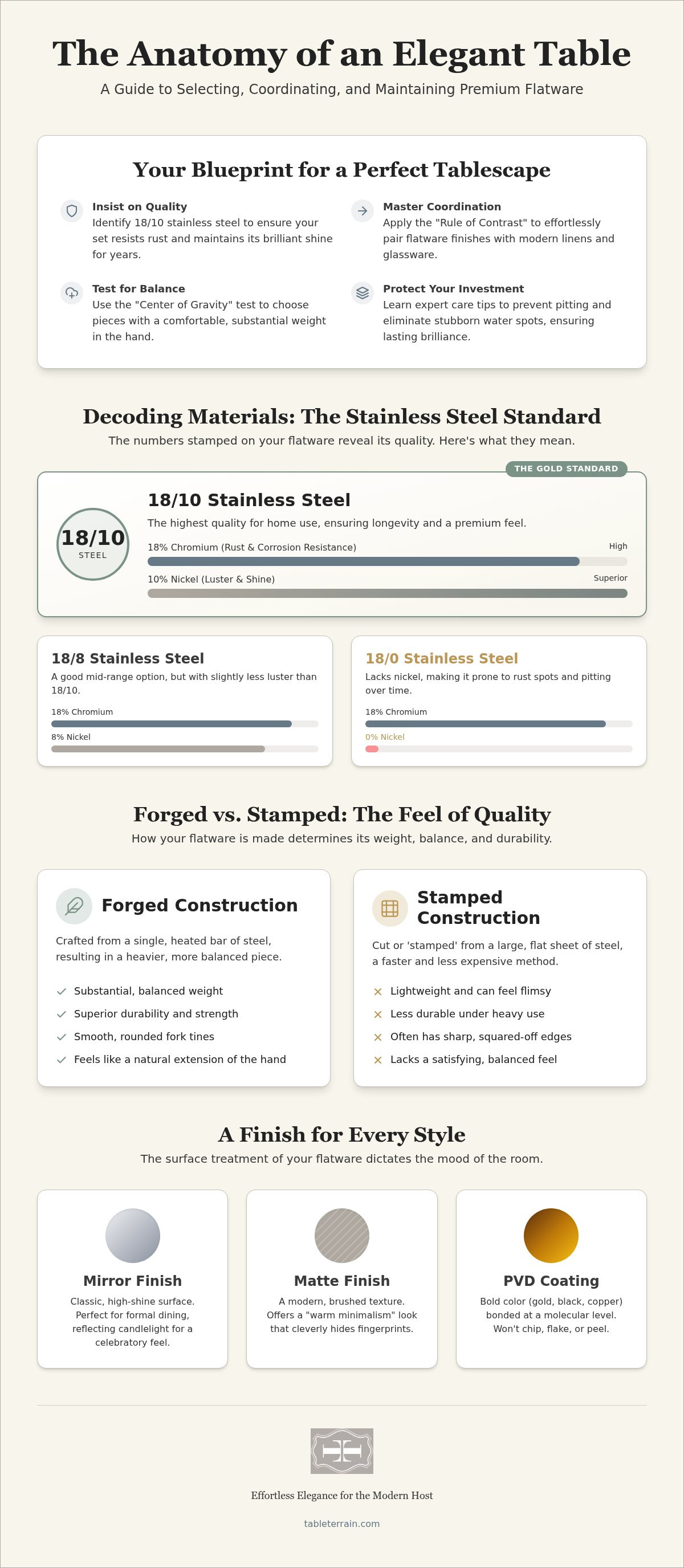
When you shop for high-end dining tools, you'll see numbers like 18/10 stamped on the back. These aren't just random digits. They represent the chemical makeup of your flatware. The first number, 18, refers to the percentage of chromium. This is what makes the metal resistant to rust and corrosion. The second number, 10, indicates the nickel content. Nickel is the secret ingredient that provides that deep, silver-like luster. It prevents the metal from feeling dull or "tinny" over time.
Choosing 18/10 means you're investing in the best quality stainless steel available for home use. While 18/8 and 18/0 options exist, they offer less protection. 18/0 is often cheaper because it lacks nickel entirely. This makes it lighter and far more susceptible to pitting or orange rust spots after a few cycles in the dishwasher. If you want your table to maintain its brilliance for years, the 10% nickel content is non-negotiable. It ensures your pieces feel substantial and look professional.
Finishes and Coatings: Mirror, Matte, and PVD
The finish you choose determines how your table reflects light. Mirror finishes are the classic choice. They offer a high-shine surface that complements formal crystal and fine china perfectly. If you prefer a modern, "warm minimalism" look, a matte finish is excellent. It features a brushed texture that cleverly hides fingerprints and water spots. For those who want bold color, look for PVD (Physical Vapor Deposition) coatings. This isn't a surface paint that will flake off. It's a vacuum-sealed process that bonds color to the steel at a molecular level. This ensures your gold, copper, or black sets don't chip or peel during a busy dinner party.
Forged vs. Stamped Construction
Quality is also about how the metal is shaped. Forged pieces are created from a single, thick bar of steel that's heated and molded. This results in a heavier, more durable utensil with a clear center of gravity. Stamped pieces are cut from a flat sheet. They're thinner and often feel flimsy in the hand. You can spot the difference by looking at the tines of a fork. Forged tines are rounded and smooth. Stamped tines often have sharp, squared-off edges that feel unfinished. Investing in forged flatware and serving items ensures your collection feels as expensive as it looks. Each piece should feel like a natural extension of your hand.
Ergonomics and Hand-Feel: The Science of Comfortable Dining
High-quality flatware isn't just about the material; it's about the physical sensation of dining. You've likely held a fork that felt clumsy or a knife that refused to sit still in your palm. These frustrations stem from poor design. A heavy utensil isn't automatically superior. True quality lies in the balance. When you hold a piece, it should feel like a natural extension of your hand, not a tool you're fighting to control. This tactile comfort is what separates a professional gathering from a standard meal.
The "Center of Gravity" test is the quickest way to judge a piece. Rest the neck of the utensil on your index finger. It should stay relatively level. If the handle drops instantly, the head is too light. If the head tips, the handle lacks substance. This balance is vital for the ergonomics of flatware design, ensuring guests don't feel fatigued during a multi-course meal. A well-balanced knife should sit comfortably in your palm without rolling to the side when you apply pressure.
Pay close attention to the tines of your forks. They should be smooth, tapered, and polished, never sharp or jagged against the mouth. The handle profile also plays a role in your grip. Round handles offer a classic, organic feel that's easy to hold. Flat handles provide a modern, stable grip that prevents the utensil from spinning when resting on the edge of a plate. Choose a shape that feels secure and intuitive for all your guests.
The Psychology of Weight in Dining
Weight plays a silent but powerful role in how guests perceive your hospitality. A substantial piece subconsciously signals that the meal is high-quality and the host is attentive. It adds a sense of occasion to the table. However, you must find the "Goldilocks" weight. It should feel significant but not tiring to hold over an hour of conversation. Ensure this weight is consistent across your entire set. A heavy dinner fork paired with a light, flimsy soup spoon creates a disjointed experience that breaks the table's harmony.
Testing for Ergonomic Excellence
Before committing to a full collection, perform the "Scoop and Cut" test. Use the spoon to mimic eating soup; it should enter and exit the mouth without hitting your teeth. Use the knife to simulate a cutting motion; the handle should fill your palm comfortably without digging into your skin. Check for "burrs" or sharp manufacturing edges on the sides of the handles. These small defects are common in budget sets but absent in premium collections. Ergonomic balance is the harmony between handle weight and head size.
How to Coordinate Flatware with Linens and Glassware
Creating a professional tablescape requires more than just matching colors. It demands a thoughtful approach to visual balance. One of the most effective techniques is the Rule of Contrast. If you’ve selected high-shine, crystal goblets, pair them with matte flatware. This juxtaposition prevents the table from looking overly glitzy and adds a layer of modern sophistication. Conversely, mirror-finish utensils provide a necessary spark when placed against textured, organic linens. Layering textures for a sophisticated tablescape is the secret to achieving that high-end, designer look without feeling stiff.
Color coordination is your next pillar of design. Warm metals like champagne gold or brushed bronze pair beautifully with earthy, ochre, or teal linens. These combinations lean into the "warm minimalism" trend of 2026. For a classic aesthetic, sleek stainless steel remains the perfect partner for crisp white or cool grey runners. Don't forget proportion. Ensure the size of your utensils matches the scale of your placemats. Large, oversized placemats can swallow standard-sized forks, while petite linens might feel overwhelmed by heavy, forged pieces.
Styling by Occasion
Your choice of hardware should shift with the event's energy. For a casual brunch, embrace an eclectic vibe. Mix different finishes or patterns to keep the atmosphere relaxed and inviting. Formal dinners require more precision. Coordinate your mirror-finish sets with matching napkin rings to create a sense of intentionality. During the holidays, your serving items can act as central decor pieces. Use a large, hammered gold cake server or a set of brushed bronze salad hands to pull the entire theme together.
Mixing Metals and Textures
The modern trend for 2026 is a move away from perfectly matched sets. Mixing silver and gold creates a curated, worldly look that feels collected over time rather than bought in a box. Try pairing sleek stainless steel with organic textures like wicker placemats or heavy linen napkins. Use your utensils to pull specific colors from your centerpiece. For example, bronze handles can highlight the mossy tones in your floral arrangement or complement your green goblets. This level of detail makes your table feel truly unique. Explore our full collection of curated flatware and serving items to find your next favorite combination.
Caring for Your Flatware to Ensure Lasting Brilliance
Investing in high-quality flatware is only the first step. To maintain that designer luster, you need a consistent care routine. Many brands claim their sets are "dishwasher safe," but this label is often a simplification. While the metal survives the heat, the drying cycle frequently leaves behind unsightly mineral deposits. Hand-drying is the true secret to a spot-free finish. Use a soft cloth immediately after the wash cycle ends to lock in that professional shine and prevent streaks from forming.
Avoid the temptation to soak your utensils overnight. Long exposure to water leads to "pitting," which manifests as tiny, permanent holes in the steel's surface. This is especially true if you've served salty or acidic foods. These substances act as catalysts for corrosion. Steer clear of harsh detergents. Avoid anything containing bleach or citrus extracts, as these chemicals can strip the protective chromium layer from your 18/10 steel. Stick to mild, non-abrasive soaps to protect the integrity of your collection.
Proper storage is just as vital as cleaning. When you toss pieces into a crowded drawer, they rub together. This creates micro-scratches that dull mirror finishes and can damage delicate PVD coatings. Consider using a lined tray or individual dividers. This keeps your "table jewelry" organized and pristine for your next gathering. Taking these extra seconds during cleanup ensures your investment remains a highlight of your home for years to come.
Routine Maintenance for 18/10 Steel
Rinse your utensils immediately after use. Salt, vinegar, and tomato-based sauces are surprisingly aggressive if left to sit. When loading the dishwasher basket, place forks and spoons with the handles down. Don't let them "nest" together. If the heads of the spoons touch, the water cannot circulate properly, leaving behind food particles and streaks. Before you set the table, give each piece a final buff with a clean microfiber cloth. This small step ensures every fork and knife catches the light perfectly.
Restoring Shine and Removing Spots
If you notice stubborn hard-water spots, don't reach for a scouring pad. A simple solution of one part white vinegar to three parts water usually does the trick. Dampen a cloth with the mixture and gently rub the affected areas. For older sets that have lost their factory glow, a dedicated stainless steel polish can work wonders. Tarnish is a surface reaction that can be prevented with immediate drying. By following these professional care steps, you ensure your flatware remains as striking as the day you bought it.
Master the Art of the Modern Table
Your choice of flatware is the final, tactile touch that defines your guest's experience. By prioritizing high-quality 18/10 stainless steel, you ensure a lasting luster and resistance to the rigors of frequent hosting. True elegance lies in these functional details. Focus on ergonomic balance to keep your guests comfortable; then, use the Rule of Contrast to coordinate your hardware with premium linens and glassware. These intentional choices transform a simple meal into a curated event.
Ready to build your dream tablescape? At Table Terrain, we've done the hard work of selection for you. Our pieces are curated for sophisticated hosting, featuring durable 18/10 stainless steel options that pair perfectly with our designer linens. We provide nationwide shipping for all your table essentials, making it easier than ever to achieve a professional look at home. Discover the curated Flatware & Serving collection at Table Terrain and start planning your next unforgettable gathering today. We can't wait to see the beautiful environments you create for your loved ones.
Frequently Asked Questions
What is the difference between flatware and silverware?
Flatware is the general term for all eating utensils like forks, spoons, and knives. Silverware specifically refers to pieces made of sterling silver or silver plating. Most modern hosts prefer high-quality stainless steel for its durability and easier maintenance. It offers the same sophisticated look without the need for frequent polishing or special storage.
Is 18/10 stainless steel really worth the extra cost?
Absolutely. The 18/10 designation means your set contains 10% nickel, which is the secret to a silver-like luster. This grade offers the highest resistance to rust and corrosion. It feels heavier and more substantial in the hand than cheaper 18/0 alternatives. Investing in 18/10 ensures your table remains polished and professional for years.
Can I put gold or black PVD flatware in the dishwasher?
You can, but hand-washing is the best way to keep the finish pristine. PVD coatings are incredibly tough and won't chip like paint. However, the high heat and harsh chemicals in many dishwasher detergents can dull the brilliance over time. If you do use a machine, skip the high-heat dry cycle and remove them immediately to hand-dry.
How many place settings of flatware should I realistically own?
Realistically, you should own 12 full place settings. This number ensures you can host a dinner for 8 to 10 people with ease. It also provides a buffer for extra courses or a few unwashed pieces in the sink. Having a dozen settings means you're always prepared for a spontaneous gathering or a formal holiday meal.
Why does my stainless steel flatware have rust spots?
These spots are typically caused by "pitting" or mineral deposits from hard water. They often appear when flatware is left soaking in the sink or when acidic foods aren't rinsed off. To prevent them, avoid citrus-based detergents and dry your pieces with a soft cloth immediately after the wash cycle ends. This simple habit preserves the metal's integrity.
What is the best way to store flatware to prevent scratching?
Use a dedicated drawer organizer with soft-lined compartments. Storing pieces loosely in a drawer causes them to bump into each other, leading to micro-scratches. This is particularly vital for mirror-finish or colored sets. A curated storage solution keeps your collection organized and protects the delicate surfaces from unnecessary wear during daily use.
Should I buy a complete set or individual place settings?
Start with a complete set to establish your base. Once you have the essentials, add individual serving items to personalize your collection. This approach lets you mix textures and finishes for a more curated look. It's the easiest way to ensure your flatware reflects your evolving aesthetic while maintaining functional harmony across the entire table.
How do I know if a flatware set is well-balanced?
A well-balanced piece should feel stable when you rest its neck on your index finger. It shouldn't tip toward the handle or the head. This balance ensures the utensil sits comfortably in the hand without rolling. Good ergonomics make the dining experience feel effortless for your guests. Always test the "hand-feel" before committing to a full collection.