
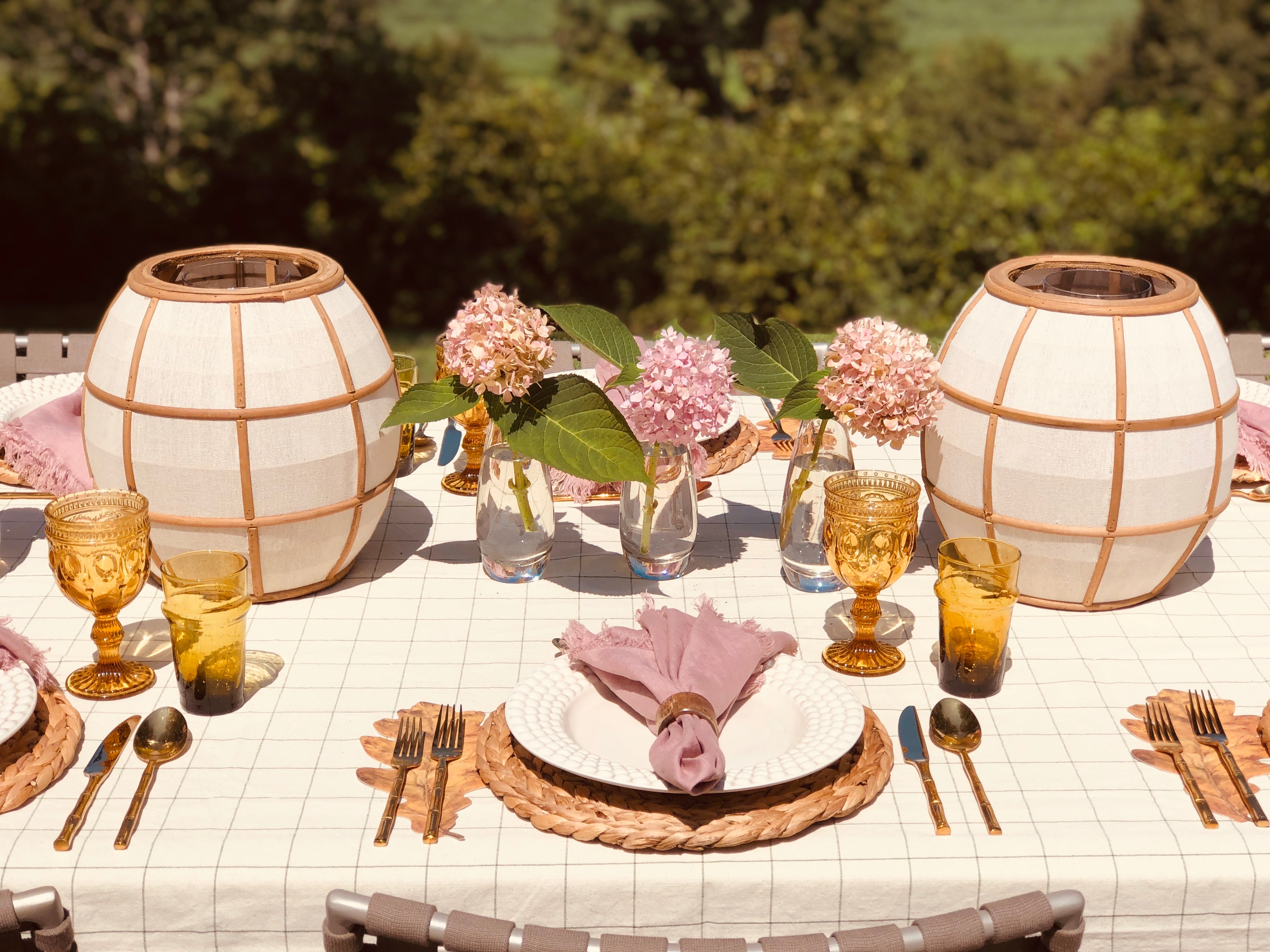


A napkin fold can make a place setting both polished and practical. Choose a pouch or envelope fold to hold flatware or a menu, a bishop’s hat for a sculptural touch, or a simple utensil holder when function comes first. These napkin folding techniques for dinner parties help set the mood without adding fuss.
An impressive table doesn’t require elaborate folds. A few clear steps can create a beautiful result. Choose a fold based on what you want the napkin to do and the feeling you want to create at the table.
This guide walks you through folds for flatware and menu cards, a bishop’s hat, and other utensil holders. You’ll also find ideas for matching each fold to the occasion, from a relaxed gathering to a formal dinner. Start with the look you want, then follow the steps to bring it to your table.
Key Takeaways
- Choose a diamond or envelope-style fold to turn a napkin into a neat holder for flatware or a menu card.
- Match the fold to the setting: a crisp shape can suit a formal table, while a relaxed fold brings ease to a casual gathering.
- Create a bishop’s hat with a few simple folding and shaping moves for a distinctive place-setting detail.
- Use a pocket or cone fold when you want utensils gathered neatly and ready at each place.
Diamond folds with a pouch for flatware or menus
Choose a silverware pouch to gather utensils or a diamond-style pocket to present a menu. These napkin folding techniques for dinner parties combine useful place-setting details with a tidy finish.
Forming a Silverware Pouch
- Fold the napkin in half to form a rectangle, with the open end facing you. Fold it into quarters, aligning the corners before moving to the next crease. Bring the right side inward by one-third of the way to create the pouch’s layered front.
- For a diagonal pouch napkin fold, fold the napkin diagonally, then bring its wide end toward the point. Smooth each crease with your palm and keep the fabric centered. This creates a simple pocket suited to contemporary or casual settings.
Folding a Pocket for Flatware or Menus
- Shape a diamond fold when you want to hold flatware, a menu, dried flowers, or another small accent. Slide the chosen item into the front pocket, then adjust it so the fold stays neat. An envelope variation can hold a menu card, place card, or small surprise.
- For a fan fold, fold the napkin diagonally, then pleat it from the wide end toward the point. Keep the pleats even as you gather them, and hold the layers while positioning the fan. This decorative shape is not a utensil pouch.
- To keep folds crisp, smooth the napkin before folding and press each crease firmly by hand. Align the corners at each stage, then handle the finished shape by its edges. Among napkin folding techniques for dinner parties, careful alignment helps create consistent place settings.
Choose a fold according to its purpose: a silverware pouch gathers utensils, while a diamond or envelope pocket frames a menu. Repeat the same fold and orientation at each place setting for a cohesive table.
Matching napkin folds to table settings and occasions
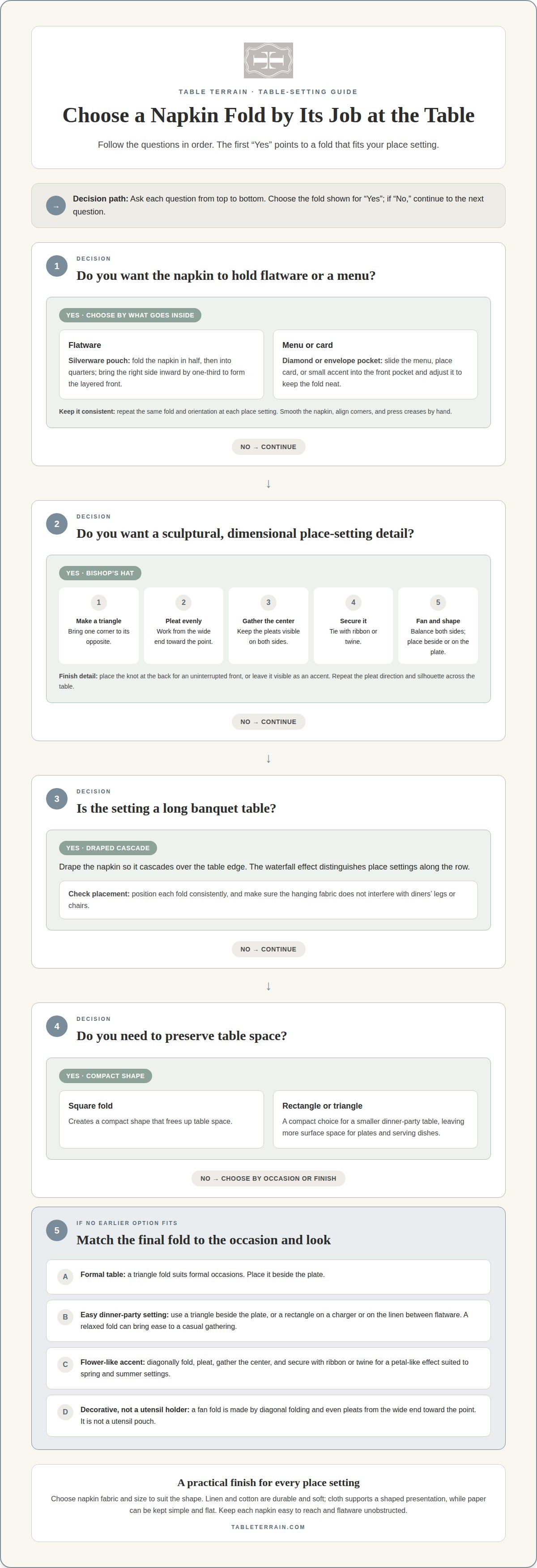
Choose a fold that suits the table layout, the occasion, and the napkin’s purpose. A triangle, rectangle, layered fold, or draped cascade can each give a place setting a distinct look.
Choosing Folds for Dinner-Party Tables
- For an easy dinner-party fold, make a triangle and place it beside the plate. Add a menu or escort card for a clear, coordinated detail. A rectangle also works simply, either on a charger plate or on the linen between flatware.
- Match the napkin’s fabric and size to the finished shape. Linen and cotton are popular for their durability and softness; choose a napkin large enough to fold without bulky layers. Cloth supports a shaped presentation, while paper can be kept simple and flat.
- Arrange each napkin consistently: place the triangle beside its plate, or set the rectangle on the charger. There’s no single required decorative fold; keep the place setting practical, with the napkin easy to reach and flatware unobstructed.
Using Draped Folds on Banquet Tables
- For a banquet table, drape the napkin so it cascades over the table edge. This waterfall effect distinguishes individual place settings along a long row. Position each fold consistently, and check that the hanging fabric doesn’t interfere with diners’ legs or chairs.
- Use the draped shape when you want the napkin itself to mark each place. On a smaller dinner-party table, a compact rectangle or triangle may preserve more surface space for plates and serving dishes.
Folding Rose and Decorative Shapes
- For a flower-like accent, fold the napkin diagonally, pleat it, gather the center, then secure it with ribbon or twine. This creates a decorative floral shape suited to spring and summer settings. A precise rose shape isn’t needed to achieve a gathered, petal-like effect.
- Keep the gathered center secure, then place the finished shape beside the plate. For a softer look, let the pleats open slightly; for a neater setting, arrange them evenly before tying.
Bishop's hat napkin fold
Create this sculptural fold by starting with a diagonally folded napkin, then pleating and gathering it. Ribbon or twine secures the center and defines the finished shape.
- Lay the napkin flat and smooth it before folding. Bring one corner to the opposite corner to form a triangle. Align the edges carefully; uneven corners can make the pleats harder to shape evenly.
- Starting at the triangle’s wide end, fold the fabric into even pleats toward its point. Keep the folds similar in width, and hold the layers together as you work. Consistent pleats create a balanced base for the bishop’s hat.
- Gather the pleated napkin at its center. Hold the gathered fabric with one hand while adjusting the folds with the other. Keep the center secure and the pleats visible on both sides.
- Tie ribbon or twine around the gathered center to hold the shape. Knot it firmly enough to secure the fabric without crushing the pleats. Position the knot at the back for an uninterrupted front.
- Fan out the pleated sections and shape them into a balanced silhouette. Adjust one side at a time, keeping the gathered center in place. If a pleat slips, ease it back into alignment rather than pulling the whole fold apart.
- Place the finished napkin beside or on top of a plate, then check its balance from the front. Conceal the tie or make it a visible accent. Repeat the pleat direction and silhouette across the table for a coordinated setting.
Choose ribbon for a soft decorative detail or twine for a more relaxed finish. The bishop’s hat turns a folded napkin into a dimensional focal point without needing a separate ornament.
Other styles offer alternatives when you want a different silhouette or to save space. For a pyramid fold, fold the napkin diagonally in half to make a triangle. A triangle napkin fold starts the same way, then folds the triangle in half again; it suits formal occasions. A square fold creates a compact shape that frees up table space, while a knotted fold can be positioned with the knot at the center or toward one end.
Folding napkins to hold utensils
Choose a pocket style that suits the utensils and place setting. Among napkin folding techniques for dinner parties, cone and pocket folds keep flatware gathered and easy to arrange.
- Lay the napkin flat and smooth it before folding. Choose a rectangular or square pocket for a compact holder, or a cone for an open-top shape. Match the style to the utensils you plan to place inside.
- For a cone, fold the bottom third upward, bringing the bottom corner to the middle. Press the crease and keep the corners aligned as you shape the holder.
- For a single pocket, fold the napkin into a rectangle, then bring a top layer down to create an opening. Tuck the lower edge beneath the layers. Slide in a fork, knife, and spoon, keeping their handles even.
- To separate utensils, make narrow folds across the front for a triple-pocket style. Tuck the bottom edge underneath, then place one utensil in each channel. Keep each opening wide enough for guests to remove utensils easily.
- Set the holder beside or on top of the plate, with the handles facing the same direction at every setting. For a simpler presentation, roll or fold the napkin into a rectangle and secure it with a napkin ring.
- Lift the holder gently from its base to see whether utensils stay in place. If one slips, tighten the pocket or reposition it. Napkin folding techniques for dinner parties can also include a finishing touch, so explore napkin rings for your table.
Pocket napkin folds include rectangular, square, single-pocket, and triple-pocket styles. Choose one based on the place setting’s shape and how you want the utensils grouped. A rectangular or square fold gives you a straightforward outline, while a single pocket keeps utensils together and a triple pocket lets you arrange them separately. Before setting the napkin down, check that each fold lies flat and the pocket opening remains accessible.
Keep the finished fold consistent across the table, and position utensils so guests can grasp their handles without pulling apart the napkin. If the fabric shifts as you arrange it, smooth it and adjust the fold before adding the utensils. A neat holder should look orderly and remain easy to use.
Table Terrain: Table Linens & Napkin Rings
Table Terrain brings together table linens and napkin rings to help finish your place settings. Use a napkin ring to secure a simple roll, or pair linens with a folded napkin for a cohesive tabletop. Flatware and serving items can complete the setting, while goblets add another considered detail.
Once you’ve chosen your napkin fold, bring the rest of the table together with coordinating linens, rings, and serving details. These pieces can create a consistent look across place settings, whether you’re hosting a casual dinner or a formal gathering.
Contact Table Terrain to explore table linens and napkin rings for your gathering.
Make the next gathering your own
Let your next table reflect the feeling you want guests to remember. A relaxed supper might call for a softer, less formal mood, while a celebratory dinner can invite a more sculptural touch. Choose one detail to guide the setting, then let the other choices support it rather than compete for attention. These napkin folding techniques for dinner parties offer a starting point; your colors, textures, and seasonal accents make the result personal.
Table Terrain offers Table Linens & Napkin Rings, Flatware & Serving Items, and Vases & Containers to help bring your details together. Consider how each piece will work with the table’s overall look, from the napkin’s finish to a vase’s shape.
Contact Table Terrain for table-setting help, and take the next step toward a gathering that feels distinctly yours.
Frequently Asked Questions
Which napkin folds suit formal versus casual table settings?
For a formal setting, choose a neat triangle fold beside each plate, leaving room for an escort card or menu. For a casual dinner, use a relaxed gather secured with a napkin ring or a simple fold that keeps utensils handy. Let the available table space guide placement, and keep every napkin easy for guests to pick up.