


What makes elegant serving bowls worth choosing: the way they complement your table, or how easily they serve the food? The best choice does both. Product photos can make it hard to judge scale and shape, so check dimensions, capacity, depth, and care details before buying.
A decorative bowl should still suit what you serve, feel comfortable to use, and fit the way you host. Start with your regular menu, the number of people you typically serve, and the style of your table. Those details are more useful than choosing a piece based on appearance alone.
This guide offers a practical framework for comparing bowl shapes, proportions, materials, and features. You’ll learn how to choose a bowl for different foods and gatherings, balance visual impact with serving and care, and mix pieces thoughtfully rather than relying on a perfectly matched set.
Key Takeaways
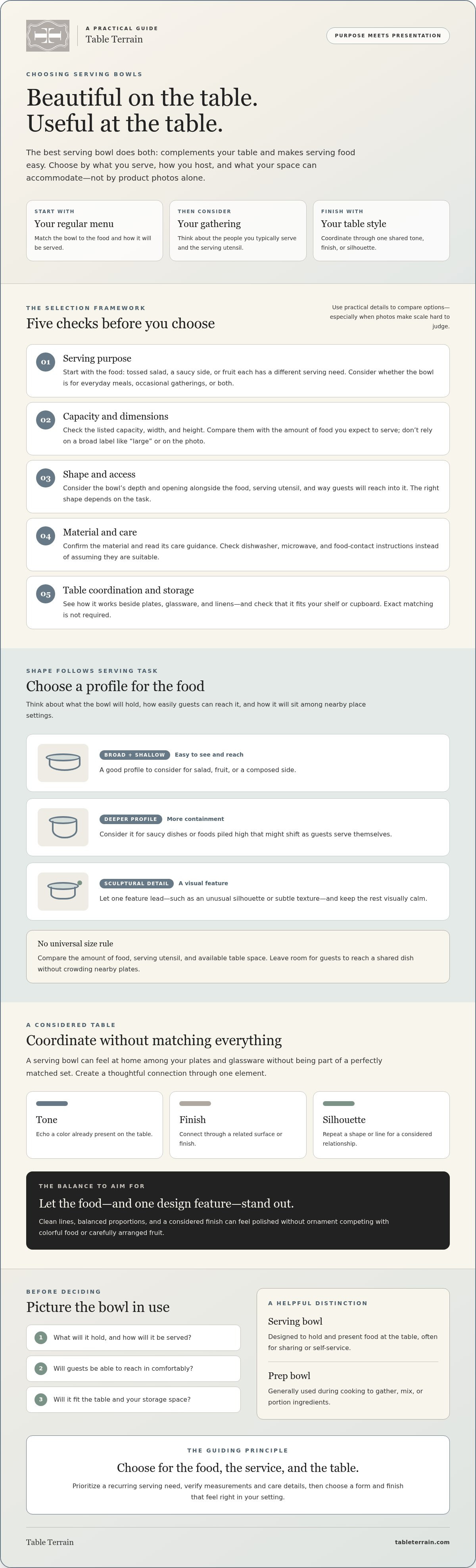
- Elegant serving bowls balance presentation with a clear purpose, so choose for both the food and the look you want.
- Use five buying checks to compare options, and verify dimensions and capacity rather than relying on photos alone.
- Compare shallow, deep, and sculptural shapes by serving task, visual effect, and care details.
- Bring elegant serving bowls into harmony with your table by matching one element, such as tone, finish, or silhouette.
- Before choosing, check purpose, measurements, material care, style fit, and storage, then prioritize a recurring serving need.
Elegant Serving Bowls: What Makes a Bowl Beautiful and Useful?
An elegant serving bowl is designed around a specific serving need. It holds food securely, makes it easy to reach, and looks at home among your plates and glassware. Elegance doesn’t depend on ornament. Balanced proportions, a considered finish, a graceful silhouette, or a pleasing connection to the rest of the table can make a bowl feel special.
A useful definition for shoppers: an elegant serving bowl combines a clear serving purpose with a form and finish that complement the food and table. Start by asking what you’ll serve and where the bowl will sit. A shared side dish has different needs from fruit displayed on a counter. The history of bowls reflects their varied uses across cultures; at your table, the same principle applies: form follows purpose.
Serving bowls are intended to hold and present food at the table, often for sharing or self-service. Prep bowls, by contrast, are generally used during cooking to gather, mix, or portion ingredients. A prep bowl may also be brought to the table, but its intended role is different. When choosing a serving piece, consider how it will frame the food and work in its place on the table, not just how it looks empty.
Which serving bowl belongs on which part of the menu?
Match the shape to the food and serving method. Broad, shallow forms make salad, fruit, or a composed side easy to see and reach. Deeper forms help contain saucy dishes or foods piled high that might shift as guests serve themselves. There’s no universal size rule: consider the amount of food, the serving utensil, and the available table space. Leave room for guests to reach into a shared dish without crowding nearby plates.
What makes a serving bowl feel elegant?
Look for clean lines, balanced proportions, and a finish that suits both the food and your table. A restrained detail can add interest, while a highly decorative surface may compete with a colorful salad or carefully arranged fruit. Let one feature lead, such as an unusual silhouette or subtle texture, and keep the rest visually calm. That balance can feel polished at a relaxed family meal as well as a more formal gathering.
Before browsing, picture the bowl in use: what it will hold, how it will be passed, and how it will sit alongside your tableware. That quick check helps you distinguish a piece that is simply attractive from elegant serving bowls that earn their place through presentation and practical service.
How to Choose Elegant Serving Bowls: Five Buying Checks
Use these five checks to narrow your options by what you serve, how you host, and what your table can accommodate. They help you compare product listings using practical details, not just an appealing photo.
- Serving purpose: Start with the food. A bowl for tossed salad, a saucy side, or fruit should suit how the dish is presented and served. Think about how often you’ll use it and whether it needs to work for everyday meals, occasional gatherings, or both.
- Capacity: Consider your usual menu and the number of people you typically serve, but don’t rely on a broad label like “large.” Check the listed capacity and measurements, then compare them with the amount of food you expect to serve.
- Shape: Consider how the bowl’s depth and opening work with the food and serving utensil. A broad opening can make contents easy to access; a deeper profile may better contain a dish. The right choice depends on the serving task, not a universal rule.
- Material and care: Confirm the material and read its care instructions before deciding. A finish may appeal visually, but everyday use also depends on whether its maintenance fits your routine.
- Table coordination: Look at the bowl beside your plates, glassware, and linens. It doesn’t need to match exactly; a shared tone, finish, or silhouette can create a considered connection.
How should you assess size, depth, and serving capacity?
Picture the bowl filled and in use. Will guests serve themselves with a large spoon, tongs, or another utensil? Compare the stated width, height, and capacity with the dish you plan to serve, then check that the bowl will fit without crowding place settings. Measure your shelf or cupboard space too. Photos can disguise scale, so use the listed dimensions as your guide.
Which material and care details should you check?
Confirm what the bowl is made from, then review the product’s care guidance. Look specifically for dishwasher, microwave, and food-contact instructions rather than assuming these uses are suitable. Design research on understanding material potential in design connects a material’s qualities with how a product looks and functions. In practice, care requirements matter too: a piece that needs extra attention may suit occasional hosting better than frequent use.
Before deciding, consider purpose, capacity, shape, care, table fit, and storage together. If you’re coordinating the rest of your setting, browse Table Terrain’s serving items alongside the other pieces on your table. Check each listing for its current product details before making a specific choice.
Serving Bowl Materials, Shapes, and Sets: How to Compare Your Options
Compare serving bowls by how they work at the table, not by appearance alone. Shape affects access and presentation, while material influences the look and may affect care. Use this guide as a starting point, then confirm the details on each product listing.
| Shape | Serving task | Visual effect | Details to verify |
|---|---|---|---|
| Shallow, wide | Foods guests should see and reach easily, such as salad or a side dish | Open, generous presentation | Rim width, depth, capacity, and space needed on the table |
| Deep | Dishes that need more containment, such as saucy or piled servings | Compact presentation that draws attention to the contents | Opening width, listed capacity, utensil access, and storage height |
| Sculptural | A serving task suited to the bowl’s specific contours | A distinctive focal point or a subtle design accent | Whether the shape is stable, practical to serve from, and simple to clean |
How do bowl shapes change presentation and serving?
A wide opening gives guests a clear view of the food and room to serve, while a deeper profile can help keep contents together. Neither shape suits every menu. Sculptural forms add visual character, but check that unusual curves or an uneven rim won’t make serving awkward. With any shape, consider how it sits beside other dishes and whether a serving utensil can reach the food comfortably.
Material is another design choice, but appearance alone doesn’t tell you how a bowl should be used or cleaned. If a listing identifies porcelain, glass, wood, or another material, review its stated care guidance and food-use instructions. Verify dishwasher or microwave suitability directly rather than inferring it from the material or finish. That extra check helps you choose elegant serving bowls that fit your routine as well as your table.
Should you buy a serving bowl set or individual pieces?
A coordinated set can simplify hosting if you regularly serve several dishes and want a consistent look. Individual bowls offer more flexibility when you’re filling a specific gap or adding to tableware you already own. Before choosing a set, check how many pieces it includes, whether their dimensions suit your menu, and what uses the listing describes. A matching appearance is only useful if the pieces work for the food you serve and fit your storage space.
Let your habits guide the decision. If you host often and need coordinated serving pieces, a set may be practical. If your needs vary or your table already mixes finishes and forms, one well-chosen bowl can add function without making everything match.
Matching Elegant Serving Bowls to Your Table Style
A bowl should feel at home on your table without disappearing into it. Start with scale: a generously sized bowl can dominate a compact setting, while a small piece may look lost among larger plates and glassware. Consider visual weight too. A substantial silhouette or bold finish draws the eye, so balance it with simpler surrounding pieces and leave enough room for guests to reach the food comfortably.
For an easy mix-and-match approach, repeat one visual element. Tie a bowl to your plates through a shared tone, echo a glassware finish, or choose a silhouette that relates to another shape on the table. Keep the rest varied but restrained. Texture adds interest, but too many competing patterns and finishes can make the setting feel busy. For more ideas, consult Layering Textures for a Sophisticated Tablescape and Elegant Table Settings: 2026 Guide to Hosting.
How do you coordinate bowls with linens and glassware?
Choose one relationship to repeat, such as a soft color connection between a bowl and runner, or a simple curve echoed in the glassware. Let linens and glasses support the serving piece instead of crowding it with competing detail. Check that the bowl remains visible and easy to reach, especially where a runner or layered placemats take up table space. For complementary linen guidance, see The Ultimate Guide to Table Linens and Napkin Rings.
How can one serving bowl work for more than one occasion?
Let the surrounding details set the mood. For an everyday meal, pair the bowl with uncomplicated plates and relaxed linens. For a special gathering, use it with more considered place settings, glassware, and table accents. The food changes the presentation too: a colorful dish can add a lively focal point, while a simple side lets the bowl’s shape or finish stand out.
If you want a bowl for different gatherings, look for a style that sits comfortably with several parts of your tableware. A quieter tone or familiar silhouette may be easier to coordinate than a highly distinctive feature, though the best fit depends on what you already own. Check the individual listing for care and use details rather than assuming a bowl will suit every occasion. Elegant serving bowls can bring a table together while leaving room for personal style.
Build a coordinated setting with pieces that complement one another without matching exactly. Explore Table Terrain’s tabletop assortment for serving items, linens, glassware, placemats, and runners to consider alongside your table style.
Choose Your Elegant Serving Bowls and Finish the Table with Confidence
You’ve weighed serving purpose, shape, visual impact, and practical use. Before settling on elegant serving bowls, make one final check of the details. A quick review can prevent a beautiful choice from becoming an awkward fit for your menu, cupboard, or table.
- Purpose: Does the bowl suit a dish you serve regularly?
- Measurements: Have you checked its stated dimensions and capacity against your serving needs and available table space?
- Material and care: Is the material confirmed, and do the care instructions fit your routine?
- Style fit: Does the bowl complement your existing tableware without needing to match every piece?
- Storage: Will it fit where you plan to keep it?
A simple rule: choose the bowl that serves a recurring need and complements the tableware you already own. Before ordering, confirm current product details and availability on the relevant listing. Check the stated capacity, dimensions, material, care instructions, and, if buying a set, how many items are included. Review the product’s return details there as well, so you understand the terms before purchasing.
How can serving bowls complete a thoughtfully set table?
Think of the bowl as one part of the table’s balance. Its scale should suit the plates and available space; its finish or silhouette can echo another element without making the setting feel overly matched. A considered bowl can bring the food into focus while serving a practical role. For a broader look at putting the entire table together, explore Mastering the Art of Stunning Table Scapes: A 2026 Guide to Elegant Hosting.
Table Terrain offers flatware and serving items, along with linens, glassware, placemats, runners, vases, and containers that can help shape a cohesive setting. Check current listings to see which serving pieces are available. Explore Table Terrain’s flatware and serving items and consider how they might complement the pieces already on your table.
Choose Serving Pieces That Work Beautifully on Your Table
The best elegant serving bowls balance presentation with the job they need to do. Start with the food and serving style, then compare listed dimensions, capacity, shape, material, care instructions, and storage fit. A bowl that suits your regular menu is more likely to earn a place at everyday meals and special gatherings.
Style comes down to thoughtful balance, not a perfectly matched set. Consider how a bowl’s scale and visual weight sit beside your plates, glassware, and linens. Repeat one detail, such as tone, finish, or silhouette, to create a coordinated table while leaving room for contrast.
Table Terrain’s curated tabletop assortment includes flatware and serving items, along with table linens, glassware, placemats, runners, vases, and containers. Check current listings for available products. Explore Table Terrain’s serving and tabletop selections for pieces to consider as you bring your table together. Choose with purpose, trust your eye, and enjoy setting a table that feels welcoming and distinctly yours.
Frequently Asked Questions
What makes a serving bowl elegant?
An elegant serving bowl balances practical proportions with a considered shape, finish, or detail. It should present food attractively without making serving awkward or overwhelming the table. The right choice depends on the dish, surrounding tableware, and your personal style. Before buying, check the bowl’s dimensions, material, and care instructions. Product photos can suggest its look, but they may not show its scale or how it should be maintained.
How do I choose the right size serving bowl?
Choose a size based on the food, how many people typically share it, and the space available on your table. Compare the listed dimensions and capacity with a bowl you already use for a similar dish. A broad, shallow shape may suit foods that benefit from easy access, while a deeper profile may contain other dishes more easily. Check the product details, since no single size works for every menu.
What is the best material for a serving bowl?
There’s no universally best material; choose according to the look you want, how often you’ll use the bowl, and the care you’re comfortable providing. Different materials can have different handling and maintenance needs, so confirm the specific product’s material, care instructions, and food-use guidance. Don’t assume a bowl is dishwasher- or microwave-safe based on appearance or material alone. Rely on the listing’s stated instructions before using or cleaning it.
Can serving bowls be used for everyday meals and special occasions?
Yes, a versatile bowl can suit everyday meals and special gatherings if its shape works for foods you serve regularly and its style coordinates with your tableware. Change the mood with linens, glassware, or other surrounding accents rather than replacing the bowl. Before choosing a piece for frequent use, review its care requirements. A balance of function and appearance can make a serving bowl useful across different settings.
Should serving bowls match the rest of my dinnerware?
No, serving bowls don’t have to match your dinnerware exactly. Create cohesion by repeating one element, such as color, finish, or shape, while letting other pieces differ. If your plates have strong patterns or colors, a simpler bowl can provide visual balance. For a more restrained table, a distinctive bowl can add a focal point. Choose a connection that feels intentional without requiring a fully matching set.
Is it better to buy serving bowls individually or as a set?
Choose a set if you want a consistent appearance or need several pieces for your usual serving needs. Individual bowls may suit you better if you’re filling a specific gap or coordinating with tableware you already own. Compare the number of pieces, dimensions, and listed uses before deciding. Also consider your menu and storage space. The best choice is the one that fits your hosting habits and works with the rest of your table.
What details should I check before buying a serving bowl online?
Review the listed dimensions, capacity, material, care instructions, and number of pieces included. Compare the measurements with your table and storage space, and read the product description for intended uses. Photos can help you assess style, but they may not communicate scale accurately. Before ordering, confirm current availability and review the applicable purchase and return details on the product page. This final check helps ensure the bowl suits both your needs and your home.