


The tallest, most dramatic vase isn’t always the right centerpiece. The best ceramic table vases suit the table’s proportions, leave room for place settings, and let guests see one another. A vase can be beautiful on its own and still feel out of place beside your flowers, linens, and glassware, so consider the whole setting before choosing one.
Start with your table, the stems you like, and the way you host. This guide explains how to compare proportion, shape, and practical use, then style a ceramic vase without crowding the table. You’ll find ideas for fresh flowers, simple branches, or displaying a vase on its own, along with ways to coordinate its color and texture with the rest of your tablescape.
Key Takeaways
- Compare earthenware, stoneware, and porcelain by the look and feel you want, rather than assuming one material is best for every table.
- Consider the vase’s height and footprint alongside your table’s dimensions and seating layout to judge how much space the centerpiece can use.
- Style ceramic table vases in a few steps: clear the center, position the vase, add stems, then remove anything that feels crowded.
- Coordinate a ceramic finish or color with linens, runners, and glassware without trying to match every piece.
- Balance visual impact with arrangement flexibility and the dining space you want to preserve.
Ceramic Table Vases: What Makes One Work on a Dining Table?
A ceramic table vase is a decorative centerpiece or accent that shares space with diners, place settings, and serving pieces. It can add height, color, and texture, but should leave room for the meal and conversation. The right fit depends on your table’s dimensions, how you host, and whether you plan to display fresh flowers, branches, or the vase on its own.
Choose a table vase by scale, silhouette, and function: it should suit the table, support the arrangement, and leave dining essentials within easy reach. Ceramic comes in a wide range of forms and surfaces shaped by different materials and making techniques. For broader context on the medium, explore Ceramic art.
How is a table vase different from a general decorative vase?
A table vase is seen at close range and from several seats, so its shape and arrangement matter from every side. It also shares space with plates, glasses, flatware, and serving dishes. A vase that works as an accent on a sideboard or vintage chest—like those highlighted by The Mid Century Design Co.—may feel too large or visually busy at the center of a dining table, where people need room to eat and serve.
Check stability as well as appearance. The vase should sit securely, and its arrangement should not feel top-heavy or spread into diners’ space. A low, compact display can suit an everyday table. For a hosted meal, a more expressive arrangement can work if it leaves clear sightlines and room to serve.
Which table settings benefit from a ceramic centerpiece?
Ceramic’s tactile surface can add visual weight and a grounded note to a setting. It may contrast with smooth glassware or complement a linen runner, depending on the piece. A glossy vase catches light, while a matte or patterned surface draws attention through its finish. Consider the surrounding pieces before choosing a prominent shape or finish.
For everyday dining, choose a vase that is easy to live with and does not claim more space than the table can spare. For a hosted meal, use it to set a mood, perhaps echoing a color in the linens or adding a focal point among goblets and serving pieces. Keep the setting cohesive rather than crowded. The vase should contribute to the gathering, not interrupt it.
Ceramic Vase Materials, Shapes, and Finishes: Know What You’re Choosing
Material gives a vase its basic character; shape and finish determine how it looks on the table. Earthenware, stoneware, and porcelain each have a different visual quality, while glaze and surface texture can make a piece feel understated or expressive. For a reminder of ceramics’ practical roots, the University of Washington traces the history of functional pottery vessels.
A vase’s silhouette sets its presence, while its finish determines how that presence works with the rest of the table. Consider both alongside your flowers and tabletop pieces. The right combination can feel relaxed, refined, or artfully layered without competing with linens and glassware.
How do earthenware, stoneware, and porcelain differ?
Earthenware often has an earthy, handmade character and a warm, substantial look. Stoneware commonly has a grounded appearance, with natural variations that suit casual or layered settings. Porcelain is often associated with a finer, smoother look that feels crisp and refined. These are broad visual cues, not guarantees about an individual vase’s finish or performance.
Choose according to the mood you want. Earthenware can complement relaxed linens and natural textures; stoneware can add a grounded note to a mix of materials; porcelain can sit neatly beside polished glassware. Cleaning and handling depend on the piece’s surface and construction. Follow its care guidance, especially if you plan to use it with water or handle it often.
Which ceramic vase shape and finish fit your style?
A rounded body can accommodate a fuller, loosely gathered arrangement. A narrow neck holds stems closer together, giving a few branches or blooms a defined outline. Sculptural silhouettes can make an impact with a sparse arrangement or stand on their own. Let the display you have in mind guide the shape, rather than choosing by appearance alone.
Matte finishes soften the look beside crisp linens, while glossy surfaces catch light and can echo the shine of glassware. Textured finishes add tactile contrast. Patterned ones introduce another visual element, so they often pair best with simpler surrounding pieces. For ideas on bringing those elements together, explore the guide Mastering the Art of Stunning Table Scapes.
Build a coordinated setting by pairing your vase with complementary table linens, runners, glassware, and serving pieces. Explore vases and tabletop accents to see how different materials, shapes, and finishes can work together.
How to Compare Ceramic Table Vase Size, Shape, and Centerpiece Impact
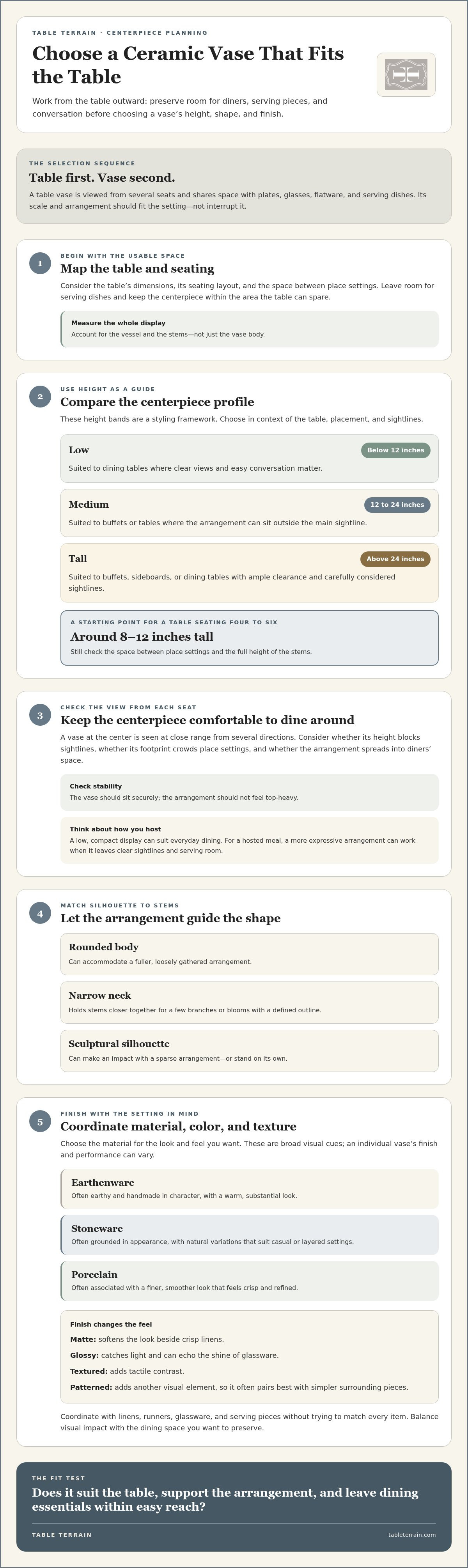
Start with the table, not the vase. A long table can carry a stronger centerpiece than a compact one, while a narrow surface has less room for a broad base or spreading stems. Seating matters, too: a vase centered between guests should preserve sightlines and leave room for serving dishes. Use the comparison below as a styling framework, not a product-specific specification.
| Profile | Typical height | Best suited to |
|---|---|---|
| Low | Below 12 inches | Dining tables where clear views and easy conversation matter |
| Medium | 12 to 24 inches | Buffets or tables where the arrangement can be placed outside the main sightline |
| Tall | Above 24 inches | Buffets, sideboards, or dining tables with ample clearance and carefully considered sightlines |
For a table seating four to six, a vase around 8 to 12 inches tall is a useful starting point. Measure the space between place settings and account for the stems as well as the vessel. The history of ceramics reflects the material’s long connection to useful and decorative forms; for a modern centerpiece, practical scale is part of the appeal.
How tall should a centerpiece vase be?
A low arrangement generally makes it easier for guests to see across the table. Taller displays can suit a buffet, or a dining table where the design sits above seated eye level without crowding the setting. Check the full arrangement, not just the vessel, because flowers and branches add height. Before settling on a spot, view it from seated positions around the table.
What vase shape works best with different arrangements?
How does table size change the visual scale?
On a small or narrow table, a wide vase can take up valuable serving space even if it is not especially tall. A longer table may have room for more visual presence, but the centerpiece still needs to suit the seating layout. Consider the vase’s footprint as well as its height, and leave clear areas for plates, glassware, and shared dishes.
How to Style a Ceramic Table Vase Without Crowding the Table
A polished centerpiece does not need to take over the table. Let the vase create a focal point while place settings, serving dishes, and sightlines remain clear. Use this sequence to build the arrangement, then edit it with the meal in mind.
- Clear the center. Move serving pieces and other décor aside so you can see how much room is available.
- Place the vase. Set it where it will not compete with plates or interrupt conversation.
- Add stems. Begin with a few, then check their spread and height from around the table.
- Edit. Remove anything that feels crowded, top-heavy, or difficult to see around.
For a coordinated place setting, consider the full scene, including the guidance in Elegant Table Settings: 2026 Guide to Hosting. Keep the centerpiece’s footprint modest enough for guests to reach shared dishes with ease.
How do you coordinate a ceramic vase with table linens and glassware?
Start with one point of connection, such as a color echoed in the runner or a texture that complements the napkins. There is no need to match every piece. A softly colored ceramic vase can balance patterned linens, while a textured or patterned vase may look best beside quieter surfaces. Consider how its finish sits alongside the shine of goblets and wine glasses.
How can flowers and branches complement a ceramic vase?
Let the vase opening guide the arrangement. A narrow neck naturally gathers a few stems; a wider mouth can accommodate a fuller spread. Aim for proportion: the arrangement should suit the vase, not reach into place settings or block seated guests’ views.
Choose seasonal flowers or branches to suit the mood, or leave a sculptural vase unfilled. Trim stems gradually and turn the arrangement as you go, checking how it looks from different seats. Ceramic table vases can anchor a setting with their shape and texture, but the surrounding table still needs room to function.
Bring the whole setting together with vases and tabletop accents, then style around the pieces you already love.
How to Choose a Ceramic Table Vase You’ll Enjoy Using
The right vase should look at home on your table and work for the way you use it. Picture its place among your usual linens, glassware, and serving pieces. Then decide what matters most: a noticeable focal point, flexibility to change the arrangement, or as much open dining space as possible.
What should you check before choosing a table vase?
Use this checklist to narrow your options:
- Location: Identify where the vase will sit and how much table space is available around place settings and shared dishes.
- Silhouette: Choose a shape that suits the arrangement you have in mind, or looks complete displayed on its own.
- Finish and color: Consider the linens, runner, glassware, and other tabletop pieces you already use. A complementary tone or texture can tie them together without making everything match.
- Intended use: Decide whether you’ll style it with fresh flowers, branches, or no stems. Follow the vase’s care guidance for your intended use.
- Dining space: Make sure the vase and its arrangement leave practical room for plates, serving pieces, and conversation.
Each choice involves a trade-off. A vase with more visual presence can become a focal point, while a simpler profile may make it easier to change the arrangement. A fuller display can feel generous but take up more room. Choose the balance that suits your table and hosting habits, not just the vase by itself.
How can a ceramic vase work beyond one tablescape?
Think of the vase as a steady anchor and the stems as a flexible seasonal layer. Refresh its look with flowers or branches that suit the moment, or leave it empty when its form and finish are enough. This lets one piece work across different settings without rebuilding the whole tablescape.
If its scale and shape suit the space, move it from the dining table to a sideboard or another display for a change. Before relocating it, consider whether its proportions feel right there and whether the surface can accommodate it safely. Ceramic table vases can connect dining décor with the wider home, especially when their color or texture complements other pieces. When designing an intentional aesthetic that flows from room to room, curated boutiques like FORMA offer helpful guidance on layering unique, globally sourced accents throughout your home.
Table Terrain brings vases and containers together with linens, glassware, flatware, and serving pieces, making it easier to consider the whole setting as you choose. Explore vases and containers to find a piece that fits your table and the way you like to gather.
Make Your Table Feel Complete
The right ceramic table vase brings color, texture, and a focal point to your setting while leaving space for dining and conversation. Choose a scale that suits your table, a silhouette that works with your arrangement, and a finish that complements the linens and glassware you already enjoy.
Keep your hosting style in mind, too. A vase that can stand on its own or welcome changing seasonal stems gives you flexibility from everyday meals to special gatherings. Thoughtful choices in proportion and placement can make the whole tablescape feel more considered.
Table Terrain brings together curated tabletop décor and dining accessories, including vases and containers, linens, glassware, and serving pieces. Explore vases and containers to find a piece that feels right for your table. A thoughtful centerpiece is a lovely place to begin.
Frequently Asked Questions
What size ceramic vase is best for a dining table?
Choose a vase that leaves room for place settings and serving dishes while fitting the table’s proportions. For a table seating four to six, a vase around 8 to 12 inches tall is a useful starting point. Also consider its footprint: a broad base can crowd a narrow table, even if the vase is low. Measure the available centerpiece space and account for any stems you plan to add.
How tall should a centerpiece vase be so guests can see each other?
For clear conversation across a dining table, choose a centerpiece below 12 inches or above 24 inches, and check its full height with flowers or branches included. An arrangement in the middle range may sit directly in guests’ sightlines. Before serving, view the centerpiece from seated positions on different sides of the table. A taller display may work better on a buffet or sideboard, where it will not interrupt conversation.
Can you use a ceramic vase as a centerpiece without flowers?
Yes. A ceramic vase can serve as a sculptural centerpiece on its own, letting its shape, color, and surface bring interest to the table. This works especially well when you want a composed look with minimal styling or need more space for dining. Place the vase where it feels intentional, then keep nearby linens, glassware, and serving pieces simple enough to let its form stand out.
Which ceramic vase shape works best for fresh flowers?
The best shape depends on the flowers and arrangement. A narrow opening gathers a few stems into a defined outline, while a wider mouth gives fuller bouquets room to spread. A rounded vase can support a relaxed, generous arrangement. Keep the stems in proportion to the vessel, and trim or adjust them so the display feels balanced without reaching into place settings or blocking views.
Are stoneware and porcelain vases different?
Yes. Stoneware often has a grounded, substantial look, while porcelain is commonly associated with a smoother, finer appearance. Either can suit a table, depending on the mood you want and the vase’s particular finish and form. These broad descriptions do not guarantee how an individual piece will look or perform. Compare the actual surface, shape, and care guidance, especially if you plan to use the vase with water or fresh flowers.
How do you style a ceramic vase with a table runner?
Set the vase on the runner as a focal point, but leave room for place settings and serving dishes. Create a connection through a shared color or texture rather than matching every detail. For example, a smooth, neutral vase can balance a patterned runner, while a textured vase may complement a simple linen. Check the arrangement from seated viewpoints, and edit extra décor if the table starts to feel crowded.
How do you clean a ceramic table vase?
Follow the care instructions for the specific vase, since cleaning needs can vary by material, glaze, and finish. For routine care, handle it gently and use a soft cloth to wipe the exterior. If it holds fresh flowers, empty and rinse it after use, then dry the inside and outside as appropriate. Not every ceramic vase is watertight, so take care around water-sensitive surfaces and avoid leaving moisture underneath the vase.