


The most refined flatware isn’t always the best fit for your table. A beautiful finish matters, but so do comfort, care requirements, and how each piece works with what you already own. Choosing luxury flatware sets is an everyday-use decision as much as a visual one, so it helps to compare materials, set contents, and handling before you buy.
You shouldn’t have to choose between an elegant table and a practical routine. This guide explains how to compare stainless steel grades, finishes, construction details, weight and balance, place-setting counts, and care instructions. You’ll also find ways to coordinate flatware with linens, glassware, and serving pieces without making every part of the table match.
Key Takeaways
- Look beyond a premium label and compare materials, construction, comfort, and suitability for frequent use.
- Check each listing’s finish, dimensions, included pieces, and care instructions before choosing luxury flatware sets.
- Choose a number of place settings that suits your household, typical guests, storage space, and replacement preferences.
- Coordinate flatware with linens and tabletop pieces through complementary finishes and textures, not exact matches.
- Balance everyday practicality with the polished look you want for entertaining.
What Makes a Luxury Flatware Set Worth Choosing?
Luxury flatware sets earn their place at the table through more than an elevated price or polished presentation. Look for a considered design, clear material information, comfortable handling, and details suited to repeated use. A premium label alone can’t tell you whether the pieces will feel right or work for your routine.
Start with the product details. Check the material, finish, included pieces, and care instructions. Then consider how the design works in practice: Is the handle comfortable to grip? Does the balance feel natural? Do the proportions and edges feel comfortable for the people who’ll use the flatware? Appearance and function should support each other. A refined silhouette can bring polish to a place setting without making dinner feel formal or fussy.
Be clear about what you’re buying. A coordinated flatware set groups pieces designed to work together, but its contents vary by listing. Individual replacement pieces can fill gaps in an existing assortment. Serving utensils are intended for shared dishes rather than each diner’s place setting, and may be sold separately. For background on cutlery terms and pieces, see this overview of Cutlery.
What should you expect from luxury flatware?
Expect a thoughtful balance of visual appeal and everyday function, not one particular weight, finish, or material. Handle shape, grip, proportions, and edges are partly matters of personal comfort, so review the product details and, where possible, assess how a piece feels in hand. Treat claims about origin, craftsmanship, or durability as facts only when the product listing supports them.
Is luxury flatware practical for everyday dining?
It can be, if the material, finish, handling, and care requirements suit your household. Consider who will use the pieces, how often they’ll be used, and whether the stated care instructions fit your routine. A finish you love may require more attention than you prefer; a comfortable shape may matter most when the set is used at every meal. Compare your priorities with the listing rather than assuming “luxury” means effortless upkeep.
Decide whether you’re choosing for daily meals, special gatherings, or both. A versatile design can suit either setting when it complements your table and its care requirements fit your habits. Once you know what matters most, you can compare materials and finishes with a clearer idea of what to look for.
Which Materials, Finishes, and Details Should You Compare?
Product descriptions can use broad terms such as “stainless steel,” but that label alone doesn’t tell you the grade, finish, feel, or care routine. Compare the details listed for each set before deciding which qualities matter most. For context on the range of materials for flatware, Britannica offers an overview; for a specific purchase, rely on that item’s product information.
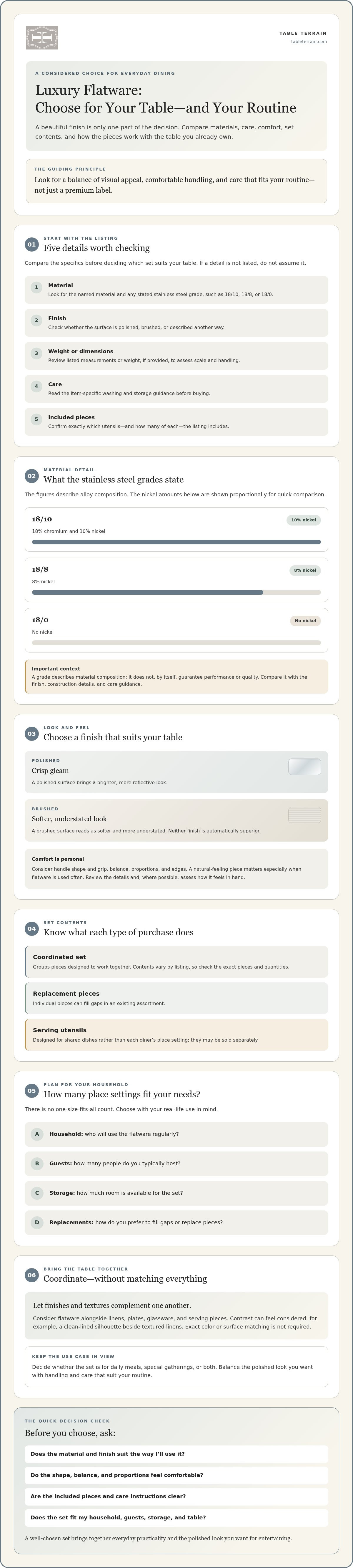
Compare material, finish, weight or dimensions, care instructions, and included pieces first. Use this checklist to make the details easy to review:
| Specification | What to check |
|---|---|
| Material | Look for the named material and, for stainless steel, any stated grade such as 18/10, 18/8, or 18/0. |
| Finish | Note whether the surface is polished, brushed, or described another way. |
| Weight or dimensions | Check listed measurements or weight, if provided, to assess scale and handling. |
| Care | Read the item-specific washing and storage guidance before buying. |
| Included pieces | Confirm exactly which utensils and how many of each are included. |
How do flatware materials affect use and care?
Stainless steel grades show why specific details matter. The numbers describe alloy composition: 18/10 contains 18% chromium and 10% nickel, while 18/8 contains 8% nickel and 18/0 contains no nickel. These figures describe the material, but a grade alone doesn’t guarantee performance or quality. Compare it with the product’s finish, construction details, and care guidance. If the listing doesn’t specify a material or grade, don’t assume one. Follow the product-specific instructions for washing and storing the flatware.
How should you choose a flatware finish and silhouette?
Finish and shape help set the table’s mood. A polished surface brings a crisp gleam; a brushed finish reads softer and more understated. Neither is automatically superior. Consider handle shape and proportions alongside your plates, linens, glassware, and serving pieces. Flatware can complement a table through contrast, such as a clean-lined silhouette beside textured linens, without matching every color or surface. For more ideas on bringing tabletop elements together, explore this guide to elegant table settings.
As you compare luxury flatware sets, keep the listing details and the look of your existing table in view. You can also explore Table Terrain’s flatware and serving items alongside tabletop pieces to help complete your setting.
How Many Place Settings and Pieces Do You Really Need?
Choose a set size based on how your table works most often, not an idealized gathering. Count the people who regularly dine at home, then consider how many guests you typically host at once. Extra flatware can make setting the table for visitors easier, but only if you have storage space and expect to use it.
Set labels and piece counts can be confusing. A place setting generally means the utensils intended for one diner, while a larger set groups multiple place settings together. Serving utensils are for shared dishes and may or may not be included. Individual replacement pieces can fill a gap in an existing collection without requiring you to buy another full set. Don’t assume a set contains a particular utensil or serving piece based on its total count.
What pieces are typically included in a flatware set?
Place-setting pieces commonly include a dinner fork, knife, and spoon, and some assortments may include additional forks or spoons. These are general categories, not a promise about any specific set. Check the listing for the exact piece count and names, including whether serving utensils are included. A clear inventory helps you compare options and avoid expecting pieces that aren’t part of the set.
For another perspective on what reviewers consider across different options, browse Food Network’s expert-recommended flatware sets. Use reviews as a starting point, then confirm the contents of the specific listing you’re considering.
Should you buy a set for everyday use or entertaining?
For daily meals, start with the people who regularly sit at your table. If you host often, consider whether having consistent settings for extra guests would make serving easier. You might choose enough place settings for your household plus the guests you most often welcome, rather than buying more for a rare occasion.
Storage matters. A larger set can be convenient, but it needs a practical home in your kitchen. Also consider replacement: if a piece goes missing or gets damaged, can you add individual pieces that coordinate, or would you prefer to replace a complete set? These questions help narrow your choices among luxury flatware sets without buying more than your routine calls for.
Before you choose, confirm the number of place settings, each included utensil and quantity, any serving pieces, and whether the set fits your storage and replacement plans.
How Can You Choose Flatware That Coordinates and Holds Up?
A polished table feels cohesive when each piece suits both the occasion and your routine. Use this six-step check to choose flatware that works with your existing tabletop pieces and is practical to care for.
- Choose the use. Decide whether the flatware is mainly for everyday meals, special gatherings, or both.
- Check the material. Review the product listing for specific material information rather than relying on a broad label.
- Pick a finish. Consider how its sheen or texture will sit alongside your plates, glassware, and linens.
- Confirm the contents. Check the exact utensils and quantities included so the set suits your needs.
- Read the care guidance. Follow the instructions for washing, drying, and storing that particular item.
- Assess the whole table. Think about color, visual weight, and the pieces you already own.
Let flatware complement, not compete with, the rest of the setting. A simple, smooth finish can balance a richly textured runner, while a detailed handle might bring interest to understated linens. A coordinated table doesn’t require every piece to share the same color or texture. For ideas on choosing linens and finishing touches, read this table linens and napkin rings guide.
How do you coordinate flatware with linens and glassware?
Start with the pieces you already use. If your glassware has an ornate profile, a quieter flatware silhouette can keep the table balanced. With neutral linens, a contrasting flatware finish may add definition without repeating the linen color. Consider the occasion, too: a relaxed meal may call for an understated mix, while a celebratory table can carry more visual detail. Explore more ideas in this guide to layering tablescape textures.
How should you care for premium flatware?
Care depends on the specific product and finish. Follow the listing’s washing and drying guidance, then store the pieces as directed. Don’t assume that a material label means every item can be washed the same way. Avoid treating any finish as scratch-proof, tarnish-proof, or maintenance-free unless the product information explicitly supports that claim.
Ready to bring your choices together? Explore flatware and serving items alongside tabletop pieces for a considered setting.
Find Luxury Flatware Sets That Fit Your Table and Routine
The right choice looks at home on your table and works for the way you dine. Before ordering, bring together the practical details: intended use, stated material and finish, exact set contents, care instructions, and visual fit. Reviewing these details can help you avoid choosing a set that looks lovely online but doesn’t suit your household or hosting habits.
What should you check before placing an order?
Read the individual listing closely. Confirm the stated material, finish, dimensions, piece count, and care guidance instead of relying on assumptions about a product category. Check the number and types of utensils against the people who regularly dine with you and the guests you typically host. Then picture the flatware with your existing linens and glassware. If a detail isn’t listed, don’t treat it as confirmed. Product descriptions and availability can change, so base your decision on the current listing.
Before you order, confirm:
- The listed material, finish, dimensions, and care instructions.
- The number of place settings and the exact pieces included.
- That the set suits your regular meals, typical gatherings, and storage space.
- How its shape and finish will complement your existing tabletop pieces.
How can you build a polished table around your flatware?
Let the flatware guide a few considered choices, rather than dictate a fixed look. Pair a streamlined silhouette with expressive linens, or use glassware with a distinctive shape to add interest beside simpler pieces. You might echo a finish elsewhere on the table or use contrast for a relaxed, collected feel. A coordinated setting can feel polished without matching every color or texture exactly.
Explore complementary tabletop categories at Table Terrain, including flatware and serving items, table linens, placemats, runners, goblets, and wine glasses. As you browse luxury flatware sets, check each current listing for specifications and availability, then choose the pieces that feel right for your table and routine. Explore Table Terrain’s tabletop assortment for ideas to bring your setting together.
Choose Flatware That Makes Every Table Feel Like Yours
The right luxury flatware sets bring together more than a refined look. They suit the way you dine, feel comfortable in hand, and fit your care routine. Before choosing, compare the listed material and finish, confirm exactly what’s included, and choose a number of place settings that works for your household and the guests you typically welcome.
Then consider how the flatware will sit alongside pieces you already own. Complementary finishes, shapes, and textures can create a polished table without making everything match. A few thoughtful choices can make everyday meals feel considered and special gatherings feel welcoming.
Table Terrain offers flatware and serving items alongside linens, placemats, runners, goblets, and wine glasses. Check individual listings for current specifications and availability, then explore Table Terrain’s curated tabletop collection for ideas to bring your table together. Choose the pieces that feel right for your home and enjoy setting the table your way.
Frequently Asked Questions
What makes a flatware set luxurious?
Judge luxury flatware sets by verifiable details, not a premium label alone. Check the material description, finish, design, feel, and care requirements in the product listing. Then consider whether the pieces suit your meals and gatherings. Comfortable handling and care that fits your routine matter as much as how the flatware looks on the table.
Is stainless steel flatware a good choice for everyday use?
Stainless steel flatware can suit everyday dining, but check the specific product details before deciding. Listings may differ in stated grade, finish, dimensions, and care guidance, so the material name alone doesn’t tell you exactly how a set will perform or feel. Follow the manufacturer’s washing and storage instructions. Consider whether the pieces feel comfortable in your hand and work with your existing tableware.
How many pieces should a luxury flatware set include?
Choose the set size based on how many people regularly dine at home, how often you host, and whether you want spare pieces. First check the listing’s exact place-setting count and inventory. Included utensils and serving pieces can vary, so don’t infer the contents from the total piece count alone. Also consider where you’ll store the set and whether individual matching replacements are available if a piece goes missing.
Can luxury flatware be used every day?
A particular set may work for both daily meals and special occasions if its specifications and care needs fit your routine. Review the listed material, finish, handling details, and instructions before choosing. Think about who’ll use the pieces and how often. A design that complements your existing tableware can transition from weekday meals to a polished setting for guests.
How do I choose a flatware finish that matches my table?
Compare the finish with your plates, linens, and glassware, then decide whether you want a harmonious look or a little contrast. Exact matching isn’t necessary. A simple finish can balance patterned linens, while a complementary tone can connect flatware to details in your glassware. Check the finish description in the listing, too. Screen images can look different from the item in person, so use them alongside product details.
How should I care for luxury flatware?
Follow the care instructions for the specific set, since washing, drying, and storage guidance can vary with its material and finish. Check the listing for care details before purchase, and don’t assume flatware is dishwasher-safe or maintenance-free based on its appearance or material name. Care for and store the pieces as directed to keep them ready for everyday meals and special gatherings.