


A centerpiece bowl doesn’t need flowers to feel finished. The most polished arrangements often use a few thoughtfully chosen objects rather than a jumble of fillers. If you’re wondering what to put in a centerpiece bowl besides flowers, consider seasonal fruit, natural textures, sculptural accents, or small pieces with personal meaning. Choose a clear direction, then give each item room to stand out.
A simple approach helps prevent a mix from looking cluttered or too tied to one season: match the filler to the bowl, vary textures, and keep colors and shapes in balance. Explore 20 ideas, from pinecones and decorative orbs to citrus and collected keepsakes, along with practical tips for choosing options that suit your bowl and occasion. A few easy swaps can refresh the centerpiece over time and help it feel at home with the rest of your table.
Key Takeaways
- Find fresh alternatives when deciding what to put in a centerpiece bowl besides flowers, from natural textures to edible accents and personal keepsakes.
- Choose fillers that suit your bowl’s shape and depth, then edit the arrangement so each piece has room to stand out.
- Use color, texture, and a single focal point to make a flower-free centerpiece feel considered rather than cluttered.
- Connect the bowl to your table linens, placemats, runner, or glassware for a cohesive tablescape.
- Keep the centerpiece flexible by refreshing its contents or shifting the bowl aside when serving dishes need more room.
Why a Centerpiece Bowl Works Beautifully Without Flowers
A flower-free centerpiece doesn’t have to feel like a placeholder. It can be a composed arrangement of objects held within a bowl or placed around it, with the vessel giving the display shape and purpose. A useful definition is simple: a bowl centerpiece is a composition of objects arranged at a considered scale to create a focal point while respecting the table’s function.
That function changes from day to day. An everyday arrangement may stay in place through meals, so choose contents that are easy to dust, move, and live around. For a dinner or holiday, make the display more specific to the occasion, then clear or refresh it afterward. Centerpieces have long taken forms beyond floral arrangements; this overview of the history and types of centerpieces offers broader context.
A bowl also solves a common styling problem: small objects can look scattered when placed separately on a tabletop. Gathered inside one vessel, they read as a single focal point. A defined rim creates a visual boundary, helping even simple contents feel deliberate. The bowl gives you a contained starting point, not a reason to fill every inch.
What makes a bowl centerpiece feel intentional?
Start with a considered selection rather than a pile of unrelated pieces. Repetition creates rhythm, such as several objects with a similar shape or finish. Contrast adds interest, perhaps a smooth surface beside something rough or matte. Then leave negative space. A glimpse of the bowl between objects gives the eye a place to rest and makes each piece easier to notice.
Scale matters, too. A deep bowl can visually swallow small objects, while a shallow one may make tall or bulky pieces feel precarious. Choose fillers that are visible from a seated position and proportionate to the vessel, then stop before the display feels crowded. The bowl’s outline should still contribute to the composition.
When are flower-free centerpiece ideas especially useful?
Flower-free ideas suit everyday dining when you want a finished-looking table without tending fresh stems. They’re also useful when flowers aren’t your preference or when you want the centerpiece to stay in place between gatherings. Durable decorative objects can be easier to keep tidy and refresh. Swap one accent rather than rebuilding the whole display.
Keep the table usable. For meals, a centerpiece should sit low enough to preserve comfortable conversation and leave practical room for plates and serving dishes. A compact bowl near the center can define the table without taking over. For a special occasion, adjust the contents or remove the arrangement when the meal calls for more space. The best choice is not simply what looks attractive on its own, but what suits the moment and the way the table is used.
Natural and Edible Things to Put in a Centerpiece Bowl Besides Flowers
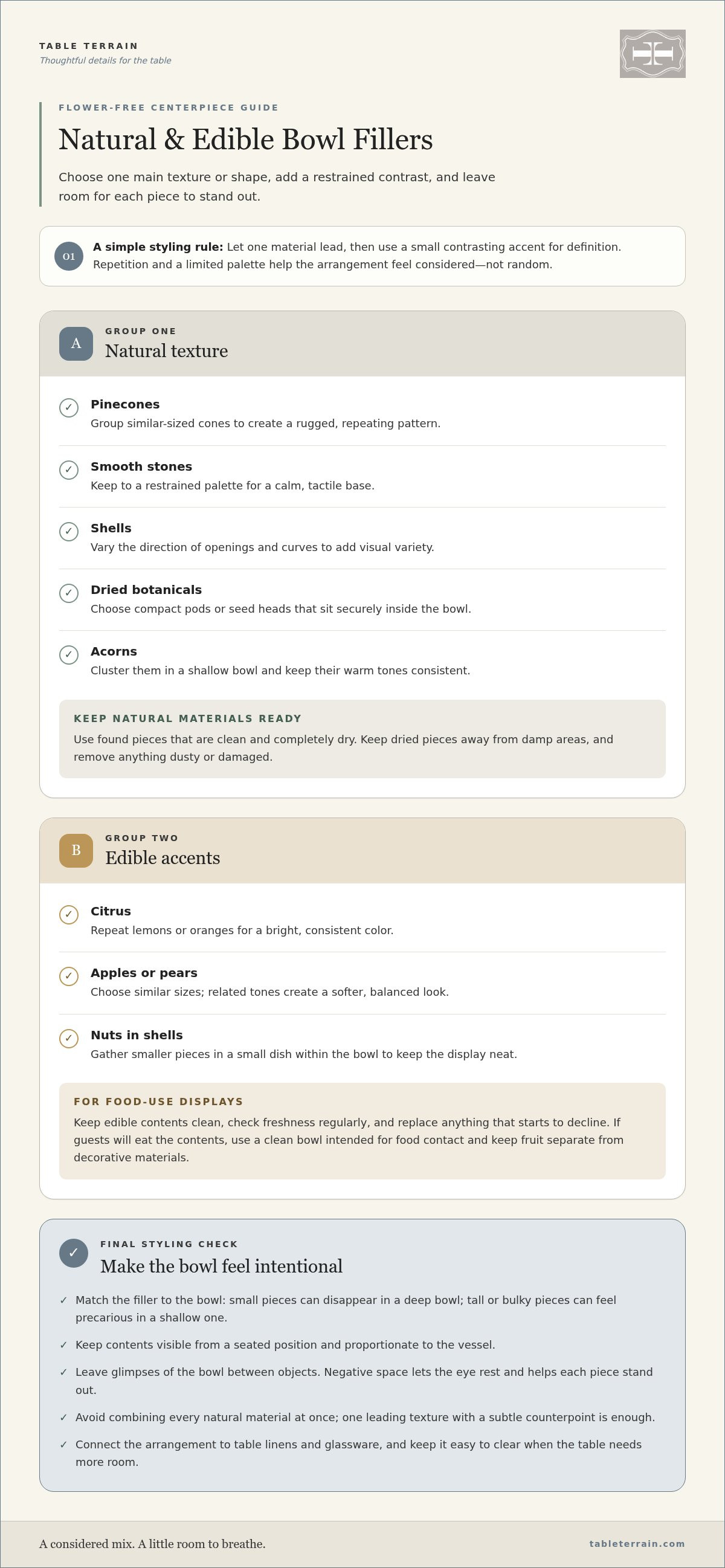
Natural materials bring variation you can see and feel, while fruit adds color and a practical everyday touch. To keep either approach polished, choose one dominant material or shape, then add a smaller contrasting accent. A bowl of pinecones, for example, might need only a few smooth stones to break up the rough texture. Repeating a shape or staying within a limited palette helps the arrangement feel connected rather than collected at random.
These ideas can help answer what to put in a centerpiece bowl besides flowers when you want a relaxed, organic mood. For more inspiration on styling without fresh blooms, explore these benefits of floral-free centerpieces, then adapt the ideas to your bowl and table.
Natural bowl fillers for organic texture
Each natural filler has its own character. Pinecones add layered, rugged shapes; smooth stones create a quiet, rounded surface; shells offer curved forms and a coastal feel; dried botanicals bring fine lines and airy height. Let one texture lead, with a small contrasting element for definition. Before styling, make sure found materials are clean, completely dry, and suitable for indoor display.
- Pinecones: Group a few similar-sized cones for a rustic, repeated pattern.
- Smooth stones: Use a restrained palette for a calm, tactile base.
- Shells: Arrange them with openings or curves facing different directions for visual variety.
- Dried botanicals: Choose compact pods or seed heads that sit securely inside the bowl.
- Acorns: Cluster them in a shallow bowl, keeping their warm tones consistent.
Avoid mixing every natural material at once. One main texture, plus a subtle counterpoint, gives the contents room to read clearly. Keep dried pieces away from damp areas, and remove any that become dusty or damaged.
Edible centerpiece bowl ideas for a fresh, useful display
Fruit works best in a shallow, accessible layer, where each piece stays visible and easy to lift. Choose citrus for a bright, consistent color, or combine apples and pears in related tones for a softer look. Nuts in their shells offer another natural option, especially when grouped in a small dish within the bowl. Keep edible contents clean, check them regularly, and replace anything that shows declining freshness.
- Citrus: Repeat lemons or oranges for a lively, simple display.
- Apples or pears: Select similar sizes so the arrangement feels balanced.
- Nuts in shells: Contain smaller pieces in a dish to keep the bowl neat.
Decide whether the contents are display-only or intended to be served. If guests will eat them, use a clean bowl intended for food contact and keep the fruit separate from decorative materials. For a coordinated finish, pair the natural colors with your table linens and glassware, then keep the arrangement easy to clear when the table needs more room.
Decorative Bowl Fillers for a Polished, Personal Centerpiece
Decorative objects can make a bowl feel refined, playful, or distinctly personal. The best choice depends on the effect you want: reflective finishes catch the light, sculptural forms give the display a clear silhouette, and tactile materials add warmth. If you’re considering what to put in a centerpiece bowl besides flowers, begin with one main visual quality, then add a small accent rather than mixing several competing ideas.
Relate the bowl’s contents to your existing tableware without matching every piece. For example, polished metal accents can echo the gleam of flatware, while matte ceramic spheres can sit comfortably beside glassware. Repeating one color or finish is often enough to make the arrangement feel connected.
| Filler | Mood | Styling consideration |
|---|---|---|
| Decorative spheres | Clean and sculptural | Vary size slightly, but keep the finish or palette consistent. |
| Polished stones | Calm and reflective | Use a shallow layer so their surface remains visible. |
| Small keepsakes | Personal and collected | Choose a few related pieces instead of a mixed assortment. |
| Ornaments | Festive and seasonal | Limit colors or shapes to keep the display composed. |
Sculptural and tactile objects for a lasting display
Decorative spheres are easy to arrange and rearrange. A small group creates a simple rhythm, while a single abstract or carved object can act as the focal point. Pair a smooth, reflective form with a matte or textured surface for quiet contrast. Odd-numbered clusters can feel balanced, but they’re a flexible styling option, not a rule. Let the bowl’s shape and the objects’ proportions guide you.
Small keepsakes add character without requiring a full collection. A few vintage keys, buttons, or bottle stoppers can make a display feel personal when they share a material, tone, or story. Leave some of the bowl visible so each piece has room to register.
Seasonal accents that are easy to swap
Use seasonal details as a light touch, not a theme that overwhelms the table. Ornaments can bring a festive glint for a gathering, while natural textures offer a quieter transition between seasons. Keep the bowl’s base arrangement simple, then swap one or two accents as the mood changes. That small edit refreshes the centerpiece without requiring a complete restyle.
For a polished result, choose accents that work with the bowl’s material and surrounding tableware. A reflective object can brighten a matte vessel; a tactile piece can soften a glossy one. Remove anything that feels too large, visually busy, or unrelated. A clear palette and a little breathing room help decorative fillers look intentional, personal, and easy to live with.
How to Style a Centerpiece Bowl Without Flowers
A balanced bowl centerpiece starts with a few deliberate choices, not a search for more things to add. Let the vessel guide the scale, choose one focal filler, and check the arrangement from the places where people will sit. A useful rule is: keep the bowl in proportion to the table, the fillers large enough to see, and enough clear space for dining.
- Choose the bowl. Consider its opening, depth, shape, and finish. A wide, shallow bowl shows a visible layer of smaller objects; a deeper bowl can hold a mix of shapes without everything spilling over the rim.
- Select a focal filler. Decide what should catch the eye first, such as one sculptural object or a repeated group of smaller forms. Keep the palette limited, and draw a color or texture from nearby linens, glassware, or serving pieces.
- Edit the contents. Add only what supports the focal point. Remove pieces that compete for attention or hide the bowl’s shape.
- Check placement. Set the arrangement on the table and view it from seated height. Adjust its position and height so guests can see one another and reach shared dishes comfortably.
Match the bowl, filler, and table scale
Think about how the bowl’s opening affects visibility. Small objects may disappear in a deep vessel unless they’re raised or grouped, while a shallow bowl needs fillers that form an attractive layer without looking crowded. The table matters, too: a broad surface can carry a more substantial focal point, while a smaller dining table often benefits from a compact arrangement. Test the bowl in place before adding more. A few objects can look different once they’re surrounded by place settings.
Keep nearby details in mind without trying to match everything. A neutral bowl might pick up a color from a runner, or a textured filler might complement the surface of placemats. One shared quality is enough. If you’re refining the rest of the setting, explore tabletop linens and glassware to find pieces that support the bowl without competing with it.
Edit the arrangement for everyday dining
For a centerpiece that stays out between gatherings, make upkeep part of your styling choice. Remove excess pieces until the arrangement reads clearly from across the table, then check sightlines from each seat. Dust durable objects as needed, handle fragile pieces gently when cleaning, and promptly replace edible or other perishable contents as their freshness declines. Keep the arrangement easy to lift or shift when serving dishes need more room.
Wondering what to put in a centerpiece bowl besides flowers? Let the bowl’s scale and your daily routine narrow the options. Once the display feels composed and the table still works comfortably, stop. Browse coordinated tabletop pieces to bring a considered finish to the setting around your centerpiece.
Finish the Tablescape with a Flower-Free Centerpiece Bowl
A centerpiece feels most at home when it shares a detail with the rest of the table. Look for one color, finish, or texture to repeat: a warm tone from the runner, a smooth surface echoed in glassware, or a natural texture that complements woven placemats. The connection can be subtle. The bowl should remain the focal point, while napkins, linens, and serving pieces support the overall look without competing for attention.
For a more formal gathering, use the bowl to reinforce the mood of the place settings rather than introducing a separate theme. The guide to elegant table settings for dinner parties offers additional ideas for creating a cohesive setting. Use a few consistent details, such as a repeated color or finish, to tie the table together without making every piece match.
Coordinate the centerpiece with the rest of the table
Start with the pieces already in place. If your linens have a noticeable pattern, let the bowl’s contents stay simple. If the table is mostly neutral, a repeated accent color in the fillers can add a gentle point of interest. You might pair a matte bowl with the soft texture of a runner, or use a reflective detail that picks up light from nearby goblets. Aim for a visual link, not a perfect match.
Give supporting accents room to play their part. A folded napkin, placemat, or serving piece can frame the centerpiece, but none should crowd it. Step back and check whether the bowl still draws the eye first. If several elements compete, pare back the extras or simplify the filler palette. For ideas on balancing layers and focal points across a table, use the linked guides as starting points, then tailor the arrangement to the occasion and the pieces you own.
Refresh the centerpiece for a gathering
An everyday bowl can shift into gathering mode with a small edit. Swap one or two fillers to introduce a seasonal color or a more polished finish, while keeping the main arrangement intact. This keeps the centerpiece familiar and makes refreshing it manageable. Before guests sit down, check the full table with place settings and serving dishes in position. Leave clear space around the bowl so shared dishes can be set down and passed comfortably.
If serving requires more room, move the bowl temporarily to a sideboard or another nearby surface. A centerpiece should make the table feel considered, not get in the way of the meal. Once you’ve decided what to put in a centerpiece bowl besides flowers, make sure it works with the whole setting and the way you’ll use the table.
Explore Table Terrain’s tabletop decor and dining accessories, from linens and glassware to vases and containers, to find pieces that help bring your table together.
Make the Centerpiece Your Own
Let your bowl evolve with the way you use your table. Keep a dependable base, then change a small detail when the season shifts or a gathering calls for a different mood. That flexibility makes choosing what to put in a centerpiece bowl besides flowers less about finding one perfect arrangement and more about creating a look that feels right today.
As you refine the setting, consider how the vessel itself contributes to the composition. Its shape, finish, and presence can anchor the table, even when the contents are minimal. A thoughtful pairing with the pieces around it can make an everyday meal feel more considered without making the table harder to use.
Bring your next idea to life with Table Terrain’s curated tabletop decor and dining accessories, including vases and containers. Explore tabletop decor and dining accessories and find inspiration for a table that feels welcoming, personal, and ready to gather around.
Frequently Asked Questions
Can I use fruit in a centerpiece bowl?
Yes. Choose firm fruit that can sit securely without bruising, such as apples, pears, or citrus. Handle it with clean hands and place it in a clean bowl intended for food contact. If the fruit is only for display, keep it separate from food you plan to serve. Check it regularly and replace pieces that soften, develop spots, or otherwise lose freshness so the arrangement stays pleasant and tidy.
Is it safe to put candles in a centerpiece bowl?
Only use a candle in a bowl designed to hold one, with a stable, heat-resistant surface and enough clearance between the flame and the bowl’s sides or nearby objects. Decorative bowls may crack, scorch, or tip when exposed to heat. If you’re unsure about the vessel, place the candle in a separate, suitable holder beside the bowl instead. Never leave a lit candle unattended, and extinguish it before leaving the room.
What can I put in a bowl centerpiece for a dining table with limited space?
Choose a compact, low arrangement that stays within the bowl’s footprint, such as a small group of smooth stones or a few low-profile decorative objects. Avoid pieces that spread across the table or rise into seated guests’ sightlines. Before setting the table, place the bowl where it won’t compete with plates or shared dishes. If serving space gets tight, move it to a nearby surface until the meal is finished.
How do I keep small centerpiece bowl fillers from looking cluttered?
Limit the arrangement to a small number of materials and repeat a shape, finish, or color so the contents read as one composition. Add fillers gradually, checking the bowl from a few steps back after each addition. If the pieces blur into a busy mass, remove some rather than searching for another accent. The question of what to put in a centerpiece bowl besides flowers is often easiest to answer by editing down to a clear focal point.
Can I mix natural and decorative objects in one centerpiece bowl?
Yes. Unite the materials with a shared detail, such as a warm neutral palette, a similar matte finish, or repeating rounded shapes. For instance, a few polished decorative spheres can sit alongside dry seed pods if one category clearly leads and the other remains a small accent. Keep the combination stable and avoid placing delicate natural pieces where heavier objects could crush or damage them.
How often should I change the contents of a centerpiece bowl?
Durable objects can stay in place as long as they remain clean and suit the table. Check the bowl during your usual tidying routine for dust, chips, loose pieces, or anything that needs attention. Refresh seasonal accents when you want a different mood, and replace perishable contents as soon as freshness declines. A quick check before guests arrive helps catch anything that looks tired or could get in the way.