


A beautiful round table doesn’t need layers of decor in every open spot. The best tablescape ideas for round dining table styling start with one clear focal point, then leave each place setting room to shine.
A circular layout brings guests together, but it can make centerpiece placement feel tricky. Too much height or too many layers may crowd the table and interrupt conversation. Choose a focal piece that suits the table, then add only details that support it.
Explore five adaptable looks, from warm natural textures to tonal layers and bolder color. Each offers inspiration for different occasions, with practical ways to combine linens, placemats, vases, glassware, and serving pieces. The aim is a polished style that feels personal and leaves comfortable space for diners and the meal.
Key Takeaways
- Explore five tablescape ideas for round dining table styling, with adaptable palettes and centerpiece approaches for different moods and occasions.
- Choose a tablecloth, placemats, or a runner to shape the look while keeping place settings comfortable.
- Build the table in a practical order, from the occasion and palette to the final edit.
- Bring a chosen look together with considered details, such as glassware, a vase, or serving pieces.
- Balance decorative layers with the space guests need to dine and converse comfortably.
Why round dining table tablescapes need a clear, shared focal point
A round-table tablescape brings together linens, place settings, a centerpiece, and smaller accents. Unlike a long table, it has no obvious end to anchor the eye, so the center naturally draws attention. A vase or a compact arrangement of seasonal elements can connect each seat and give the setting a sense of unity. Echo one of its colors or textures in a few supporting details.
A round-table tablescape works best when its centerpiece creates a shared focal point without taking space away from dining, serving, or conversation. That balance adds personality without making the table feel crowded. Start with the principles of table setting, then consider how decorative layers will work with the meal and the people around the table.
What makes round-table styling different?
Every seat faces the central styling area, so guests see the arrangement from different angles. Check the centerpiece from the side and across the table, not just from the doorway. A vase or greenery should look balanced from each seat and leave clear sightlines for conversation.
Coordination doesn’t mean filling every open spot. A tablecloth, placemats, napkins, centerpiece, and accents can share a palette or material without competing. For example, a textured runner and simple napkins may provide enough detail around a compact centerpiece. A crowded collection makes it harder to fit plates, glasses, and serving dishes. Let each piece earn its place.
Start with the gathering, not the decorations
Before choosing accents, consider the occasion, number of diners, and how the meal will be served. A relaxed meal with shared dishes needs clear space for serving pieces to move between guests. A more formal dinner may call for a defined place setting at every seat, with decorative details kept near the center. Style the table for the way people will eat, not just for how it looks before they sit down.
Prioritize conversation, serving access, and clear place settings. If guests need to reach across the centerpiece or move decor to set down a dish, edit the arrangement. A low, compact focal point suits a lively shared meal; a taller, more sculptural piece can work for a quieter occasion if it doesn’t interrupt sightlines. Choose a few colors, textures, or materials to establish the mood, then repeat them with restraint. Linen napkins, a vase, or glassware can each add a small note of color or texture without turning the table into a display.
Use these principles as a starting point for tablescape ideas for round dining table styling. The strongest look feels intentional from every seat and leaves guests room to settle in, serve themselves, and enjoy the gathering.
Five round dining table tablescape ideas, from relaxed to polished
Use these looks as starting points, not fixed recipes. Each pairs a mood and palette with a central gesture and a supporting detail. Adapt the pieces to your occasion, then leave open tabletop between the centerpiece and each place setting. That breathing room keeps a round table inviting and ready for the meal.
Relaxed natural and crisp tonal looks
Begin with texture or color, then let one element lead. A restrained palette can still feel layered, while natural details add warmth without requiring a collection of decorations.
- Relaxed natural: Create an easy, grounded mood with warm neutrals, soft greens, and natural-looking textures. Center a simple vase of loose greenery and keep its shape compact. Textured napkins or a simple serving piece can support the look. The mix of surfaces provides enough interest, so skip extra center ornaments.
- Crisp tonal: For a polished, quiet setting, layer shades from one family, such as ivory, cream, or soft gray. Choose a low ceramic vessel or a small arrangement in a related tone, then add a linen napkin with a different texture. This subtle contrast makes the table feel considered without adding more colors or objects.
Colorful, candlelit, and occasion-ready looks
For a stronger mood, concentrate color and height near the center rather than spreading decorative objects around the table. Keep glassware and candles in proportion to the place settings. For a more formal gathering, follow practical table setting etiquette while protecting serving access and sightlines.
- Colorful glassware: Let tinted goblets or wine glasses bring a lively accent to quiet linens in white, sand, or another neutral. Repeat the glass color once in a small floral detail or napkin accent. A low, simple vase keeps attention on the color without crowding plates.
- Candlelit: Set a warm, intimate mood with a deep palette, such as plum, burgundy, or forest green, balanced by calmer linens. Group candles near the center rather than scattering them by the settings, and keep them low enough for easy conversation. A folded napkin in a complementary tone is a sufficient supporting detail. Choose unscented candles so fragrance won’t compete with the meal.
- Occasion-ready: For a celebratory dinner, choose a palette inspired by the season or gathering, then make a compact floral arrangement the centerpiece. Keep stems contained rather than spreading them wide, and echo one color with a napkin ring or glassware. A handwritten place card adds a personal touch without using serving space.
Choose one look and borrow only the details that suit your table. A few coordinated table linens and glassware can set the direction; you don’t need every layer in the example.
How to choose a centerpiece, linens, and accents for a round table
Choose each layer by how it works on a circular surface, not just by how it looks on its own. The centerpiece sets the visual weight, linens shape the area around each place setting, and repeated details tie the arrangement together. When exploring tablescape ideas for round dining table styling, consider the meal’s serving needs as well as the mood you want to create.
Centerpiece shape, height, and visual weight
Round forms echo the table’s outline and create a soft, unified effect. A cluster of small objects can add texture, but keep it compact so it reads as one focal point rather than several competing stops. A narrow, linear element, such as a simple runner arrangement, adds direction and structure against the table’s curve.
Low arrangements work well for meals where guests will talk across the table or pass shared dishes. They keep the view open and leave room to serve. Taller arrangements create a more formal, dramatic mood, but make height a sightline decision: check whether guests can see one another and whether the arrangement gets in the way of serving. A small, airy arrangement may work better than a dense one of the same height.
Keep the centerpiece within the open central area, leaving clear space between it and the place settings.
Choose a linen foundation and supporting layers
A tablecloth creates a continuous backdrop, giving the composition one color or texture to build on. It can make a setting feel polished or soften the table’s surface. Placemats define each diner’s space and follow the curve as individual accents. Choose them when you want the tabletop to remain visible or each setting to have a clearer boundary.
A runner is optional, not a required layer. On a round table, use it as a visual path toward the centerpiece, and make sure its ends and surrounding space don’t compete with plates or serving dishes. If it feels too dominant, try placemats alone or let a tablecloth provide the foundation.
Once you’ve chosen the linens, echo one of their colors or textures in a small supporting detail. Pair a softly textured napkin with simple glassware, for example, or pick up a muted accent in the goblets and keep flatware understated. Napkin rings add a neat finish without introducing another broad layer of pattern. Aim for repetition, not exact matching: one accent carried through two or three details feels cohesive, while unrelated colors and finishes can make the table feel busy.
Before guests arrive, place the centerpiece and linens, then set out the plates, glasses, and serving items you’ll use. This dry run shows whether there’s enough usable room. Remove a layer if diners would need to move it to enjoy the meal.
A simple step-by-step method for styling a round dining table
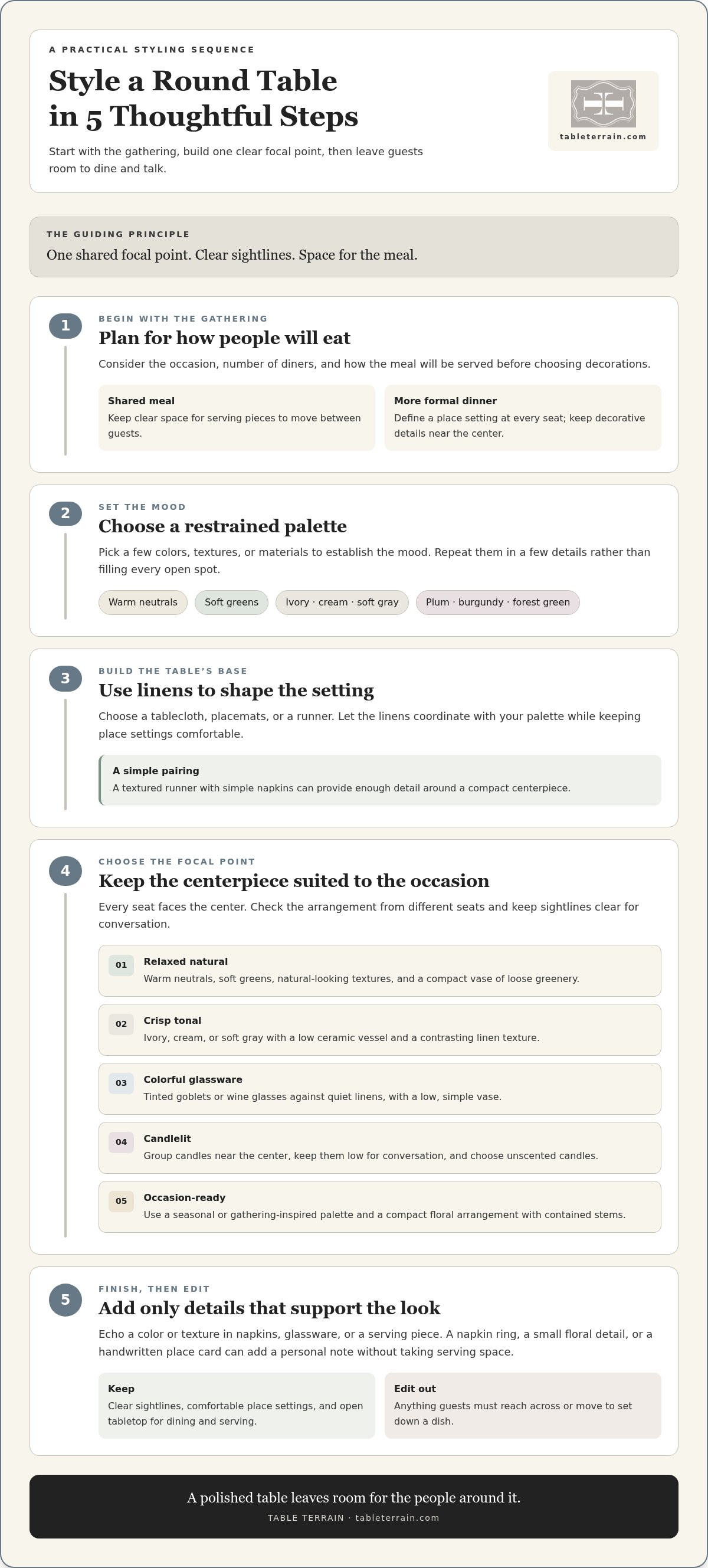
A repeatable order makes tablescape ideas for round dining table settings easier to put into practice. Start with the gathering, build from the table surface inward, then test the finished arrangement with the pieces you’ll actually use. Follow the same sequence for a weekday meal or a hosted dinner, adjusting the layers to suit the occasion.
Build the setting from foundation to focal point
- Decide on the mood and palette. Consider the meal, the people gathering, and the feeling you want at the table. Choose a restrained direction, such as warm neutrals with greenery or a soft, single-color palette. Start with pieces you own and let one color or texture guide your choices.
- Lay down the foundation. Choose a tablecloth, placemats, or a runner as your starting layer. For an everyday meal, placemats may be all the structure you need. For a special gathering, a tablecloth can make the setting feel more composed. Don’t add layers just because you have them; the foundation should help the place settings feel connected.
- Arrange the place settings. Space each setting evenly around the table, following the curve rather than forcing a straight-line arrangement. Add the plates and flatware you’ll need, then position glasses where they’re easy to reach. Check that every setting has enough room and feels equally considered.
- Place the centerpiece. Begin with one central focal piece, such as a vase or compact arrangement. View it from several seats. It should feel balanced from different angles, not just from where you styled it. If it blocks faces or takes over the center, scale it back.
Edit for serving, comfort, and occasion
- Add a few supporting details. Bring the look together with glassware, napkin details, or a serving piece that echoes the chosen palette or texture. For example, let colored goblets repeat an accent already present in the napkins. Keep the connection subtle; repeating one detail is often enough.
- Test how the table works. Place serving dishes where they’ll be used and check that diners can reach them without shifting the centerpiece or moving someone’s glass. Look across the table from seated height, too. Remove any accent that competes with the focal point or makes a place setting feel cramped.
- Adjust for the gathering. For a casual everyday meal, keep the arrangement simple and easy to clear. For a hosted dinner, add a considered napkin ring or a more expressive vase while protecting space for the meal. The same palette and foundation can take on a different mood with one thoughtful change.
Coordinated linens, glassware, and serving accents can help you build a look from pieces you’ll use in different ways. Explore tabletop pieces for your setting and choose details that suit your table and occasion.
Bring your round dining table tablescape together with thoughtful finishing pieces
Finishing pieces should clarify the look, not add layers for their own sake. Once you’ve chosen a mood and centerpiece, select one or two tabletop categories that support it. Linens add color or texture; glassware, flatware, and serving pieces bring useful detail. For tablescape ideas for round dining table settings, give each addition a role: does it define a place, echo an accent, or help serve the meal?
Choose finishing pieces that reinforce the look
Start with the part of the table that needs the most definition. If the surface feels bare, linens or placemats can add texture and give each setting a clear boundary. A runner creates a visual path toward the centerpiece, while napkins offer a smaller way to repeat a color without covering more of the table. Choose a foundation that leaves comfortable room for plates and serving dishes.
Then consider the pieces guests will use. A few coordinated details can make the arrangement feel complete without requiring a full matching set:
- For a soft, relaxed mood: Pair textured linens with simple glassware, and let the fabric carry most of the visual interest.
- For a brighter accent: Use colored goblets or wine glasses against a quieter foundation. Echo that color once in a napkin detail rather than repeating it everywhere.
- For a more polished setting: Let flatware and serving pieces add a considered finish while keeping other accents restrained.
- For a seasonal focal point: Choose a vase or container that suits the occasion, then keep the arrangement compact enough to leave the settings and serving area clear.
These are options, not a checklist. If the linens already bring pattern and texture, simple glassware may be all the table needs. If the centerpiece is the statement, choose supporting pieces that let it remain the focus.
Make the final edit feel personal
Look for one detail to repeat: a color in the napkins and glassware, a rounded shape echoed in the vase, or a similar texture across linens and placemats. This small connection helps the table feel cohesive while leaving room for pieces you already enjoy. Personal style can come from a favorite color or a meaningful serving piece, not from adding more decor.
Now make a final edit. Remove anything that competes with the centerpiece, crowds a place setting, or gets in the way of passing food. The table should feel finished before guests sit down and still work once the meal begins. Keep what supports the mood and the gathering, and let the open space be part of the design.
Choose details that feel like you, then bring them together in a setting made for sharing. Explore tabletop pieces for your next gathering.
Let Your Next Gathering Set the Table
Give your next meal a creative starting point: choose one detail you love, then let it guide the rest of the table. It could be a favorite color, a meaningful vase, or linens that feel right for the season. Build from what you already have and let the setting evolve with the people and occasion. That’s the pleasure of exploring tablescape ideas for round dining table styling: each gathering can feel fresh without needing a completely new setup.
As you prepare, imagine the table in use, not just arranged. Leave space for food, conversation, and the easy moments that make people want to linger. A thoughtful setting doesn’t need to be elaborate to feel personal.
Bring your next table vision to life with Table Terrain’s tabletop pieces. Choose a detail that suits your gathering and make the setting your own.
Frequently Asked Questions
What is the best centerpiece for a round dining table?
A low, compact centerpiece is a versatile choice because it keeps the center visible without dominating the surface. For an everyday look, try a small bowl of seasonal fruit or a vase with a few stems. For a special meal, choose a more sculptural vessel, then check that guests can still see across the table.
Can you use a table runner on a round dining table?
Yes. A runner can add a defined line and draw the eye toward the table’s center. Lay it across the diameter rather than trying to trace the circular edge, and make sure its ends don’t interfere with chairs or diners. For a meal with shared serving dishes, place the dishes on the runner as a test before guests arrive. If the runner makes the center feel crowded, use placemats instead.
How do you choose the right tablecloth size for a round dining table?
Measure the tabletop’s diameter, then add twice the drop you want on each side to find the cloth diameter. A longer drop creates more drape; a shorter one gives a tidier everyday fit. Check the finished drape with chairs in place, since a cloth that brushes laps or catches chair arms can be awkward during dinner.
How many place settings fit around a round dining table?
The number depends on the table’s diameter, chair width, and the size of the plates and glasses you plan to use. Instead of relying on a generic seating count, set out the actual chairs and place settings before hosting. Leave enough elbow room and space for glasses beside each setting. If serving dishes will sit on the table, include them in the test and reduce the number of settings if needed.
Are round or square placemats better on a round dining table?
Both shapes can work; choose based on the look and available space. Round placemats echo the tabletop and create a softer outline around each setting. Square placemats add crisp corners and a more structured feel. Before deciding, place one of each on the table with a plate and glass. The better fit defines a setting without overlapping its neighbors.
How can you decorate a round dining table for everyday use?
Keep everyday styling easy to clear and reset. Choose placemats or a small tablecloth, then add one useful focal detail, such as a low vase or a bowl for fruit between meals. Keep the rest of the surface open for dishes, drinks, and daily tasks. For a touch of color, repeat it in napkins or glassware rather than adding several decorative objects.
What flowers work well in a round dining table centerpiece?
Choose flowers that suit the season and can be arranged compactly, such as tulips, roses, or a few branches of flowering greenery. A loose, airy shape helps the centerpiece feel light, while a tightly packed bouquet can take up more visual space. Trim stems to suit your vase and avoid spreading blooms toward the place settings. For a relaxed look, mix a few flower stems with foliage in a simple container.