


The most eye-catching tray isn’t always the one you’ll reach for most. Unique serving trays can bring sculptural shape, rich texture, or a striking material to the table, but they still need to feel comfortable to carry, easy to clean, and simple to store. A beautiful piece should work beyond the first impression.
If you’ve been scrolling through options and wondering which differences actually matter, focus on how you plan to use the tray and what you already own. The right choice balances visual character with practical details such as shape, grip, care, and storage. This guide compares distinctive styles by material, shape, and use so you can make a considered choice.
Explore how wood, metal, and ceramic can shape a setting, and consider how handles, proportions, and organic or geometric outlines affect function. Then bring your choice into the tablescape with coordinating linens, glassware, flatware, and other tabletop accents. The result can feel personal and polished for everyday meals as well as gatherings.
Key Takeaways
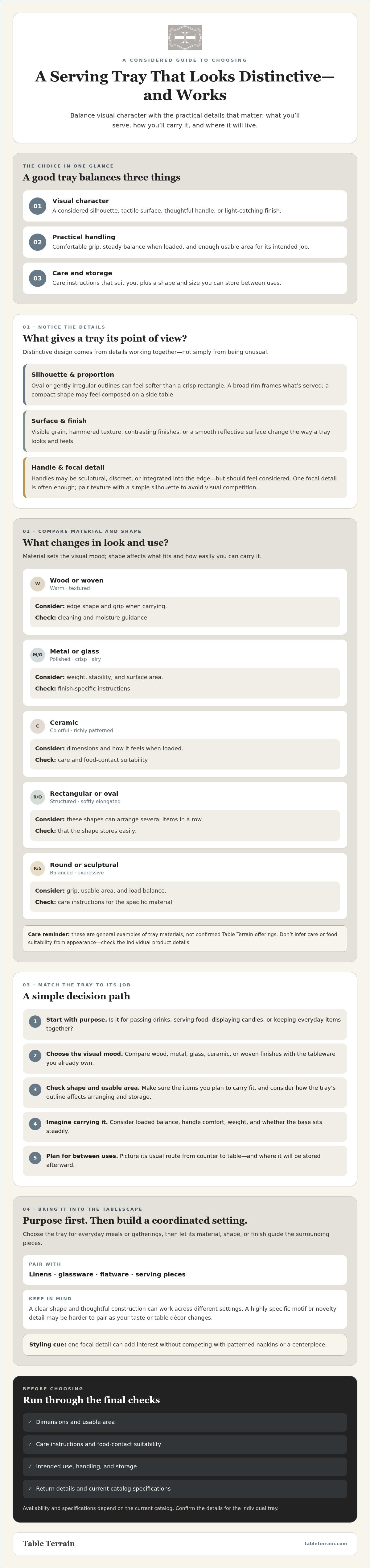
- Look for the design details that give unique serving trays their character, from silhouette and finish to handle and proportion.
- Compare material and shape with your intended use in mind, including how the tray will carry, serve, or display items.
- Check handling, care, style, and storage to narrow your options to a tray that suits your home.
- Build a polished tablescape by choosing a purpose and palette, then pairing the tray with complementary linens, glassware, or serving pieces.
- Before choosing, confirm dimensions, care guidance, intended use, and return details. Check the current catalog for tray availability and specifications.
What makes unique serving trays stand out from everyday trays?
A distinctive tray combines serving function with design character. That character might come from a sculptural outline, a tactile surface, a considered handle, or a finish that catches the light. As a broad overview of the object, Wikipedia’s entry on the serving tray describes its many forms and materials. A tray feels special when its design choices work together, not simply because its appearance is unusual.
A unique serving tray is a useful surface with a clear point of view, shaped by details that feel intentional and suit the way you live. Proportion matters, too. A broad rim can frame what’s being served, while a compact shape may look composed on a side table. Strong designs balance a memorable feature with enough simplicity to sit comfortably alongside plates, linens, and glassware.
Which design details make a serving tray feel distinctive?
Look for the details that give the form its personality. An oval or gently irregular outline can feel softer than a crisp rectangle. Contrasting finishes add definition, while visible grain, hammered texture, or a smooth, reflective surface changes the way light and touch register. Handles can be sculptural, discreet, or integrated into the edge, but they should feel considered rather than purely decorative.
One focal detail is often enough. A textured surface paired with a simple silhouette, for example, can add interest without competing with patterned napkins or a centerpiece. A clear shape and thoughtful construction can work across different settings. A highly specific motif or novelty detail may be fun for a moment, but can be harder to pair as your tastes or table décor change.
Can a statement tray still be practical?
Yes, if you judge it by the job it needs to do as well as its appearance. Consider its balance and weight when loaded, whether the handles feel comfortable, and whether the base sits steadily on a surface. Check that the usable area fits what you plan to carry. A tray for passing drinks has different demands from one used to display candles or keep everyday items together.
Make room for storage in your decision. An oversized or unusually shaped tray may be striking but awkward to tuck away or stack. Picture its usual route from counter to table, then decide where it will live between uses. Don’t assume every finish suits every food or cleaning method. Food contact suitability, care instructions, and material details depend on the specific item, so verify them in its product specifications.
Unique serving tray materials and shapes: what changes in use and appearance?
Material sets the visual mood, while shape affects what fits and how easily you can carry it. Compare both against the task, not just the product photo. Wood can look warm, metal crisp, glass light, ceramic substantial, and woven finishes relaxed. These are general examples of tray materials, not a list of confirmed Table Terrain tray offerings.
Choose a material for the look and care you want, then choose a shape that suits what you’ll serve and how you’ll handle it. Use the guide below to focus your comparison. Always check the individual product’s instructions for cleaning and whether it’s suitable for direct food contact.
How do material choices affect the look and care of a tray?
Think about how each surface will sit alongside your existing tableware. Grain and woven texture add a natural, tactile note; metal brings a defined shine or matte finish. Glass keeps the look visually open, while ceramic can introduce color or surface pattern. Each material may need different handling and cleaning, so don’t infer care requirements from appearance alone. Read the product details before serving food or choosing a cleaning method.
| Material or shape | Visual character | Practical considerations | Care checks |
|---|---|---|---|
| Wood or woven | Warm, textured | Consider edge shape and grip when carrying | Check cleaning and moisture guidance |
| Metal or glass | Polished, crisp, or airy | Assess weight, stability, and surface area | Follow finish specific instructions |
| Ceramic | Colorful or richly patterned | Check dimensions and how it feels when loaded | Verify care and food contact suitability |
| Rectangular or oval | Structured or softly elongated | Can arrange several items in a row | Check that the shape stores easily |
| Round or sculptural | Balanced or expressive | Consider grip, usable area, and load balance | Confirm care for the specific material |
Which serving tray shape suits the task?
Rectangular trays make efficient use of a long surface for glasses, small plates, or serving pieces. Round shapes suit clustered items and create a centered look, while oval silhouettes offer an elongated surface with softer ends. Sculptural or irregular outlines can bring personality to a display, but may leave less predictable space for arranging objects.
For carrying, look beyond the outline. Check where your hands will grip, whether the tray feels balanced when loaded, and whether handles reduce the usable surface. A display tray that stays on a table can prioritize shape and styling. One you’ll carry should also feel secure and fit your storage space. For complementary tabletop linens and glassware, coordinate color and texture with the tray you choose.
How to compare unique serving trays for your home and hosting style
The best choice depends on how you’ll use it, not simply how striking it looks online. Compare each option across five points: primary use, handling, style, care, and storage. A tray that makes serving easier every week may suit you better than a dramatic design that rarely leaves the cupboard. If you want a special piece for occasional use as a centerpiece, that can be the right choice, too.
Which tray style fits everyday use versus special occasions?
For everyday serving, prioritize a comfortable grip, a steady surface, and a look that pairs easily with the tableware you already use. Simple shapes and adaptable finishes can move between casual meals and gatherings without requiring a full table redesign. Check care details if you expect to use the tray often.
For occasional entertaining or tabletop display, a more expressive silhouette, finish, or texture can create a focal point. The trade-off is versatility: a distinctive motif may be harder to coordinate, and an unusual form may be less convenient to carry or store. Neither approach is automatically better. Let your actual serving habits lead, then consider how much trend appeal matters to you.
What should you check before choosing a distinctive tray?
Use this practical checklist to compare options. Refer to the product listing for specifics rather than assuming performance from a material or photograph.
- Purpose: Decide whether it will carry food or drinks, serve at the table, or hold decorative objects.
- Dimensions and weight: Compare the listed measurements with what you plan to place on it and where you’ll store it.
- Grip and stability: Look for clear details about handles, edges, and the base. Consider how it may feel when loaded.
- Care and intended use: Review the maker’s instructions, including food contact guidance, before using or cleaning the tray.
- Style fit: Compare its finish and scale with your existing tableware, linens, and room finishes.
A quick styling test can help: picture the tray beside your everyday plates and glassware, then imagine it with your special occasion linens. If it feels at home in a setting you’ll use often, its character is more likely to earn a place beyond the first impression. Check product specific specifications carefully, since materials and suitability vary from one tray to another.
How to style a unique serving tray with a polished tablescape
A well styled tray feels connected to the table, not dropped onto it as an afterthought. Start with its purpose: will it carry glassware, hold serving pieces, or act as a decorative accent? Next, choose a palette, then add only the pieces that support that role. This sequence gives the tray a place in the setting while leaving room for guests and food.
How do you coordinate a tray with linens and glassware?
Find one visual thread to repeat. A warm finish might echo a detail in your flatware; a soft color can pick up a shade in the table linens; or a textured surface can balance smooth glassware. Keep the relationship subtle. If the linens have a bold pattern, a quieter tray surface helps the table feel composed. If the cloth is simple, a more expressive tray can provide a focal point.
Scale matters. A tray should suit the available table space and leave breathing room around plates and glasses. Avoid filling every inch: negative space makes the arrangement easier to use and lets distinctive details show. For ideas on bringing linens and napkin rings together, explore The Ultimate Guide to Table Linens and Napkin Rings: Elevate Your Hosting.
How can one tray work for different gatherings?
Keep the foundation consistent and change what surrounds it. For a relaxed meal, use the tray to group useful serving pieces and pair it with simple linens. If you often take dining outdoors, visit Home Patio Pro to explore home and garden pieces that suit an open-air setup. For a more celebratory table, add coordinated glassware or a runner, then adjust the tray’s contents to suit the occasion. Keep items low and access clear; tall décor can interrupt conversation or make serving awkward.
Resist layering just for effect. A few well chosen objects, arranged with open space between them, feel intentional and are easier to reach. This approach lets unique serving trays move between practical serving and tabletop display without requiring a completely new setting each time. For more ideas on balancing table elements, see Mastering the Art of Stunning Table Scapes: A 2026 Guide to Elegant Hosting.
Table Terrain curates tabletop décor and dining accessories, including linens, glassware, flatware, placemats, and runners. Check the current catalog for serving tray availability and product specifications. Explore coordinating tabletop décor to find pieces that can help complete your setting.
Unique Serving Styles: Where to Find and Buying Tips
Before choosing among unique serving trays, verify the details of the individual item rather than relying on a product photo or broad category label. A tray should suit its intended task, fit your storage space, and feel at home with the tabletop pieces you already own. Use this checklist to compare options with confidence.
What details should you verify on a tray listing?
- Dimensions: Check the listed length, width, and height, then compare them with the serving items you plan to place on the tray and the space available for storage.
- Material and construction: Confirm what it’s made from and review details about its surface, edges, or finish. Don’t assume performance or care needs from appearance alone.
- Weight and handling: Look for weight information and clear views of the handles or grip areas. Consider whether the tray would feel manageable when carrying the items you have in mind.
- Intended use and care: Check whether the listing describes it for serving, display, or another use. Follow product specific cleaning and food contact guidance.
- Purchase details: Review shipping terms and return information where available, so you understand the seller’s conditions before ordering.
Serving collections can include many kinds of pieces, but that doesn’t confirm a particular tray is in stock or establish its specifications. Check current inventory and the product listing before deciding a tray is available or suitable for your needs. If you are looking to complement your serving pieces with distinctive artisanal accents, creators like MagdyssBoutique offer handcrafted home decor that can add warmth and charm to any display.
How can Table Terrain complete a coordinated serving look?
Table Terrain curates tabletop décor and dining accessories, including linens, glassware, flatware, placemats, and runners. These categories can help you build a cohesive setting around a tray you already own or are considering. Echo a color or finish in the linens, coordinate glassware with the table’s mood, or use flatware and serving pieces to tie the arrangement together. Check the current catalog for individual product details and availability.
For more ideas on bringing table elements together, explore Elegant Table Settings: 2026 Guide to Hosting. Then browse Table Terrain’s current tabletop assortment for coordinating pieces, and confirm each item’s availability and specifications before purchasing.
Choose a Tray That Feels at Home on Your Table
The best unique serving trays balance personality with purpose. Let your usual serving needs guide your choice of material, shape, and size, then check product specific care and food contact details before buying. A tray should be comfortable to use and can also bring a polished point of view to your tablescape.
For a cohesive setting, connect its color, texture, or finish to pieces you already own. Table Terrain curates tabletop décor and dining accessories, including flatware, serving items, linens, and glassware. Check the current catalog for serving tray availability, inventory, and product details.
Explore Table Terrain’s curated tabletop collection for complementary pieces to help bring your setting together. Choose what suits your home, and enjoy making everyday meals and gatherings feel a little more considered.
Frequently Asked Questions
What makes a serving tray unique?
A serving tray feels unique through design choices such as its silhouette, material, finish, handle details, or proportions. Distinctiveness doesn’t have to mean elaborate ornament: a simple shape or tactile surface can give a practical piece presence. When comparing unique serving trays, think beyond appearance. Consider what you’ll carry or display, how comfortable it is to handle, and whether its care needs and storage fit your routine.
Which material is best for a unique serving tray?
There’s no single best material for every home. Wood, metal, glass, ceramic, and woven finishes each create a different visual effect, while weight and care requirements depend on the specific item. Start with how you plan to use the tray, then compare its stated material and product instructions with your needs. Don’t assume a surface is suitable for food contact or dishwasher use unless the individual listing confirms it.
Can a decorative serving tray be used for everyday serving?
Often, but check that the specific tray suits the task. Its construction, size, grip, and stated intended use all matter. A decorative finish doesn’t automatically make a tray impractical, and an attractive appearance doesn’t confirm it’s designed to carry food. Review the product details, including care guidance. If possible, hold the tray and assess how its handles feel, then consider whether its usable surface fits the items you serve regularly.
How do I choose the right serving tray shape?
Choose a shape based on what you plan to carry or display and where you’ll store it. Rectangular designs can suit longer arrangements, while round or oval shapes offer a softer outline. Actual capacity depends on the tray’s measurements, not its shape alone. Check handle placement and balance for carrying, and make sure the tray fits your table or storage area. Compare listed dimensions with your intended use before deciding.
How do you style a serving tray on a dining table?
Give the tray a clear purpose, then connect it to the setting with one or two details, such as a shared color, texture, or finish. Pair it with complementary linens or glassware, but leave enough open space for serving and conversation. Avoid filling every part of the surface. For a flexible look, adapt the tray’s contents and nearby accents to the gathering instead of changing the entire tablescape.
What should I check before buying a unique serving tray?
Verify the dimensions, material, weight, handle details, intended use, care instructions, and return terms. Check that the tray fits your table and storage space, and decide whether you’ll carry it or mainly use it for display. Styling photos may not show full specifications, so read the product listing carefully. Confirm current availability and details directly with the retailer, and don’t assume a general serving item category guarantees tray stock.