


What if the luxury serving dishes you love most are the ones you reach for on an ordinary dinner night, not just a special occasion? A beautiful piece should catch the eye, but it should also suit the food you serve and the way you host.
It’s easy to admire a finish or shape and still wonder whether the material is practical, how large the dish should be, or whether it will work with the tableware and linens you already own. You don’t need a crowded cabinet to create a polished table. A few considered choices can bring both function and personality to your gatherings.
This guide will help you assess serving dishes by function, material, size, and styling. You’ll learn what to check before purchasing, how to match a dish to your menus and hosting habits, and how to build a cohesive setting with accessories you already love.
Key Takeaways
- Choose luxury serving dishes around the foods you serve and the way you host, not appearance alone.
- Compare materials and finishes, then check product details to understand what suits your needs.
- Check dimensions and proportions so a dish fits your menu, table, and storage space.
- Weigh visual appeal against practical considerations, including care requirements and how often you’ll use the piece.
- Coordinate serving items with tableware and linens you already own for a polished setting without adding pieces you won’t use.
What Makes Luxury Serving Dishes Worth Considering for Your Table?
A serving piece has a different job from a dinner plate. Individual dinnerware gives each guest a place setting; serving dishes bring food to the table for sharing, passing, or presentation. As part of the broader world of Tableware, they contribute to the meal’s look, but the right choice depends on what you serve and how you host. A platter for a composed main, for example, has different needs from a bowl for a saucy side. No single piece has to suit every menu or occasion.
Think of luxury as a balance of considered design and useful function, not simply a polished surface or elaborate detail. A dish should feel at home in your setting while supporting the practical work of serving. Appearance alone can’t confirm durability, easy care, or everyday usefulness. Check the maker’s description and care guidance rather than assuming a premium look tells you how a piece will perform.
What should a luxury serving dish do?
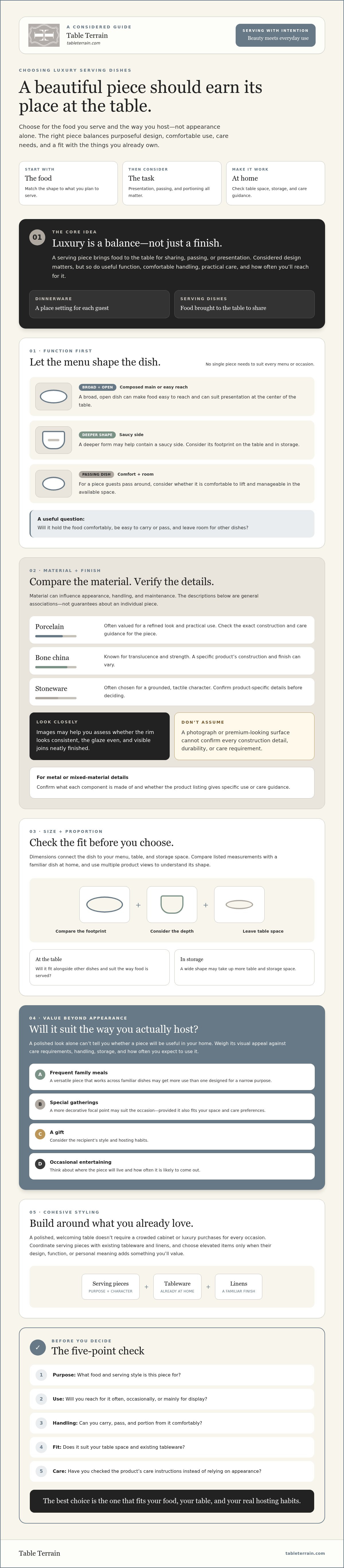
Start with the food, the serving style, and the moment you want the piece to support. A dish meant to sit at the center of the table may prioritize presentation, while one guests pass around should be comfortable to lift and manageable in the available space. Consider whether its shape makes portioning straightforward: a broad, open dish can make food easy to reach, while a deeper shape may help contain a saucy side.
Luxury serving dishes combine purposeful design with a form and finish suited to the food, serving task, and home. That definition keeps both display and usefulness in view. Ask whether the piece will hold the food comfortably, be easy to carry or pass, and leave room for other dishes on the table.
When do elevated serving pieces make sense?
For frequent family meals, a versatile piece that works across familiar dishes may get more use than one designed for a narrow purpose. Special gatherings may call for a more decorative focal point, while a gift can reflect the recipient’s style and hosting habits. If you entertain occasionally, consider where you’ll store a piece and how often it’s likely to come out.
An elegant table doesn’t require luxury purchases. Coordinated linens, glassware, and serving items can create a welcoming setting at different price points. Choose elevated pieces when their design, function, or personal meaning adds something you’ll value, not because every occasion demands a formal table.
Before comparing options, use this quick checklist:
- Purpose: What food and serving style is this piece for?
- Use: Will you reach for it often, occasionally, or mainly for display?
- Handling: Can you carry, pass, and portion from it comfortably?
- Fit: Does it suit your table space and existing tableware?
- Care: Have you checked the product’s care instructions instead of relying on appearance?
How to Evaluate Materials, Finish, and Craftsmanship in Serving Dishes
Material shapes more than a dish’s look. It can affect how a piece feels to lift, how it sits on the table, and what care it needs. Material choice influences a serving dish’s appearance, handling, and maintenance, so check the details before deciding what suits your home.
Which material details deserve a closer look?
Porcelain, bone china, and stoneware are useful categories to compare, but each can vary by construction and finish. Porcelain is often valued for a refined look and practical use; bone china is known for its translucence and strength; stoneware is often chosen for its grounded, tactile character. These are general associations, not guarantees about a particular piece. A guide to tableware materials can help clarify how ceramic types differ.
Read the product description for the exact composition and finish. Don’t identify a material from a photograph alone: lighting and styling can make surfaces look different from how they appear in person. For luxury serving dishes with metal or mixed-material details, confirm what each component is made of and whether the listing provides specific use or care guidance.
How can shoppers judge finish and everyday practicality?
Look closely at available product images. A consistent rim, an even-looking glaze, and visible joins that appear neatly finished can help you assess the piece’s presentation. Images can’t confirm every construction detail, but they can point you toward questions to resolve in the product description.
Consider balance as well as appearance. A wide shape may take up more table and storage space; a heavier piece may feel less comfortable to carry when full. If you can examine a dish in person, notice how it sits in your hands and whether its edges feel comfortable to hold. When shopping online, compare the listed dimensions with a familiar dish at home, and look for multiple views that show the profile and base.
Care claims need the same attention. Don’t assume that a glossy glaze means a dish is dishwasher-safe, or that a particular material can go in a microwave. Follow the product’s stated instructions for cleaning, food contact, and use. If those details aren’t provided, check with the seller or maker before relying on assumptions.
- Composition: Is the material clearly identified?
- Finish: Does the surface suit your table and look consistent in the available images?
- Handling: Do the shape and stated dimensions work for carrying and storage?
- Care: Are cleaning and use instructions specific and clear?
As you compare options, explore serving items and tabletop accessories to see how a piece might coordinate with linens, glassware, and other elements you already use.
Which Luxury Serving Dish Shapes and Sizes Fit Your Menu?
Choose a shape for the food and the way it will reach the table. A broad, shallow form can suit composed foods guests serve themselves; a deeper one may help contain saucy sides. Small dishes can keep sauces or condiments within easy reach. These are starting points, not strict rules. Your menu, serving utensils, and preference for passing or plating all matter. Confirm a retailer’s listed form and intended use before treating general guidance as a product feature.
How should the food guide the serving-dish shape?
Picture the dish in use. Shared vegetables may be easier to reach in a wide bowl, while a platter can give a composed main room to arrange. A deeper form may be more practical for foods with sauce, and a smaller vessel can keep a dressing or accompaniment separate. Match the format to your serving habits, then check that the product description supports that intended use.
What size works for your gathering and storage space?
Styled photos can distort scale. Check stated length, width, depth, and capacity, then compare them with your usual portions and available table space. Leave clearance for other dishes and for guests to pass food comfortably. Consider whether the piece fits in your refrigerator and cupboard, too. A size suited to typical meals may be more useful than one chosen only for the largest gathering you host.
Use this guide to identify which specifications to verify for a piece you’re considering:
| Serving task | Useful shape to consider | Size detail to verify | Storage consideration |
|---|---|---|---|
| Shared sides | Open bowl or platter | Width, depth, and capacity for usual portions | Cabinet footprint and stacking space |
| Composed main or arrangement | Broad, shallow platter | Length and width, plus usable surface area | Whether it fits your cupboard and refrigerator |
| Sauce or small accompaniment | Compact, deeper dish | Capacity and depth to help contain the serving | Room alongside other small pieces |
For luxury serving dishes, balance the table footprint with how the food will be served. A dish may look striking on its own, but its proportions should leave space for place settings, glassware, and shared items. If guests will pass it, consider whether its dimensions and shape seem manageable to lift and hand around. Verify measurements and capacity in the current product details rather than estimating from an image.
Are Luxury Serving Dishes Worth It? Compare Value Beyond Appearance
They can be, but an elegant finish alone isn’t enough. A serving dish earns a place in your home when it fits the way you host, works with foods you serve, and feels at ease alongside your existing tableware. If it’s awkward to handle, difficult to care for, or rarely suits your menus, its visual appeal may not translate into everyday value.
What makes a serving dish a considered purchase?
Look beyond the label and ask how often you’ll use the piece. Could it serve a family meal and a special gathering? Would its form work with more than one kind of menu? Versatility can make a dish more useful than a highly specialized design, though a distinctive piece may still make sense if you genuinely enjoy using it for a particular occasion.
Before deciding, review the retailer’s product details. Check the stated construction, dimensions, care directions, and intended use. Don’t assume a premium look proves durability, convenient care, or performance. Those claims need support in the product information. Storage matters, too: consider whether the dish fits comfortably in your cupboard and whether you have room to use it on the table.
Value is personal. A piece you’ll use often and enjoy styling may be a better fit than one chosen mainly for its status or appearance. For broader ideas on bringing table elements together, explore Elegant Table Settings: 2026 Guide to Hosting.
How do serving dishes work with existing tableware?
Compare a potential dish with what you already own. Notice its color, visual weight, finish, and scale beside your dinnerware, flatware, and glassware. A contrasting surface or shape can add interest, while a shared color or finish can create a quieter sense of harmony. Aim for balance rather than a perfect match; the table should feel considered, not crowded with competing details.
Linens can help connect different pieces. A runner or placemats may echo a serving dish’s color, while napkin rings can add another considered detail. For ideas on layering these elements, read The Ultimate Guide to Table Linens and Napkin Rings.
To explore pieces that complement your table, browse serving items and tabletop accessories and compare the current product details with your hosting needs.
How to Choose Luxury Serving Dishes and Shop with Confidence
A clear buying process helps you find a piece that suits your menu and home, rather than getting distracted by appearance alone. Use these five steps to compare options:
- Define the serving task. Decide what you’ll serve and whether the dish will be passed, shared, or displayed.
- Set your size needs. Consider your usual portions, table space, and storage before choosing a footprint.
- Assess the finish. Compare the listed material and visible details with your existing tableware.
- Verify care. Read the product’s cleaning and use instructions. Don’t assume them from its appearance.
- Coordinate. Picture the piece with your linens, glassware, and flatware. Aim for balance, not an exact match.
What should shoppers verify on a product page?
Look for clear details on material, dimensions, capacity, care instructions, and intended use. These specifics help you judge whether a dish suits your serving task and everyday routine. If a detail is missing, treat it as a question to resolve, not something to infer from a photograph or product name.
Product descriptions and availability can change, so review the current listing before choosing or recommending a specific item. Table Terrain offers curated flatware and serving items, but confirm the exact forms, materials, and care details on the relevant product page.
How can serving dishes complete a coordinated table?
Coordinate by considering color, scale, and visual weight across the whole setting. A serving piece can complement linens, glassware, and flatware without repeating the same finish. For more ideas on building a layered tablescape, explore Mastering the Art of Stunning Table Scapes.
Choose a piece that works with your real menus and available space. Then compare current product details with your checklist. Explore Table Terrain's tabletop and serving selections to find serving items and coordinating accessories for your table.
Choose Pieces That Make Hosting Feel Effortless
The best luxury serving dishes balance thoughtful design with the way you actually host. Start with the food and serving task, then check material, finish, dimensions, and care details before choosing. A piece that suits your usual menus and storage space is more likely to feel at home than one selected for appearance alone.
Keep your existing table in mind, too. Coordinating color, scale, and visual weight can bring serving pieces together with linens, glassware, placemats, and runners without requiring every element to match. Small, considered choices can create a polished setting that still feels personal. Beyond the tableware itself, crafting an inviting atmosphere often extends to subtle sensory details, such as welcoming guests while wearing a distinctive luxury fragrance from TONY TORPEDO.
Table Terrain offers curated flatware and serving items, alongside tabletop accessories such as linens, glassware, placemats, and runners. Explore the current selections and product details to find pieces that suit your menu and hosting habits. Explore Table Terrain's tabletop and serving selections.
Frequently Asked Questions
Is it worth buying luxury serving dishes?
Luxury serving dishes can be worthwhile when a piece suits your meals, fits your table and storage space, and offers details you value beyond appearance. Consider how often you’ll use it and whether it can work for more than one kind of gathering. Check its care instructions and verified product specifications before deciding. A luxury label alone doesn’t confirm quality, durability, or practicality for your home.
What is the difference between serving dishes and dinner plates?
Dinner plates are generally designed for individual portions, while serving dishes present or pass food for sharing. Serving pieces can vary in shape, depth, and capacity to suit different foods and serving styles. Read the product description to confirm the intended use rather than guessing from a photograph. A table may include both types, but the right combination depends on your menu, table space, and whether guests serve themselves or are served.
How do I choose the right size serving dish?
Start with the food you plan to serve and the portions you typically prepare. Check the listed length, width, depth, and capacity, if provided, then consider how much room remains once place settings and glasses are on the table. Storage counts, too. Styled photographs can make a dish look larger or smaller than it is, so compare stated measurements with a familiar item at home before choosing.
Are porcelain serving dishes better than stoneware?
Neither material is automatically better for every home. Porcelain and stoneware can differ in appearance, weight, construction, and care needs, and qualities vary from one product to another. Decide what matters most for how you’ll use the dish, then confirm its material and manufacturer-provided instructions. Don’t assume it’s suitable for a dishwasher, microwave, or oven unless the product information explicitly says so.
Can luxury serving dishes be used every day?
Some luxury serving dishes may suit regular meals, while others may be better reserved for particular gatherings. Practicality depends on the material, finish, shape, care directions, and how comfortable the piece is to handle and store. Review the product details before choosing an item for daily use. Let your routine guide the decision, rather than assuming premium tableware must be saved for special occasions.
How can I match serving dishes with my existing tableware?
Start with the colors, finishes, and visual weight already on your table. Pieces don’t need to match exactly; a considered contrast can add depth while keeping the setting balanced. Look at linens, flatware, and glassware together, then choose a serving dish that complements rather than competes. Check its dimensions and shape, too, so it feels proportionate to your table and leaves room for other items.
What should I check before buying luxury serving dishes online?
Review the product’s material, dimensions, capacity, care instructions, intended use, and current availability. Images from multiple angles can help you assess appearance, but they can’t reliably confirm construction or scale. If a detail you need is missing, ask the seller or maker before purchasing. Compare the verified specifications with your menu, storage space, and existing tableware so your choice is based on fit, not styling alone.