


Why do some dinner parties feel like a curated gallery event while others feel like a rushed Tuesday night? The secret isn't just the menu; it's the tactile foundation of your table. Most hosts have experienced the frustration of setting out beautiful glassware only to have the entire look fall flat because of thin, uninspired linens. You want a table that feels warm and intentional, not a collection of pieces that look cheap or clash under the dining room lights. High-quality fabric placemats serve as the essential canvas for your entire 2026 tablescape, grounding your design with texture and quiet sophistication.
We understand that choosing the right materials can feel overwhelming, especially when you're worried about accidental spills or tricky pattern mixing. This guide simplifies the process by showing you how to select premium fabrics that offer both elegance and longevity. You'll learn to coordinate textures like a professional stylist, ensuring your goblets and napkin rings shine against a perfect backdrop. We're diving into the best 2026 material trends, stain-resistant secrets, and layering techniques that turn any meal into a sensory experience. Get ready to host with total confidence and create a space where guests feel truly invited to linger.
Key Takeaways
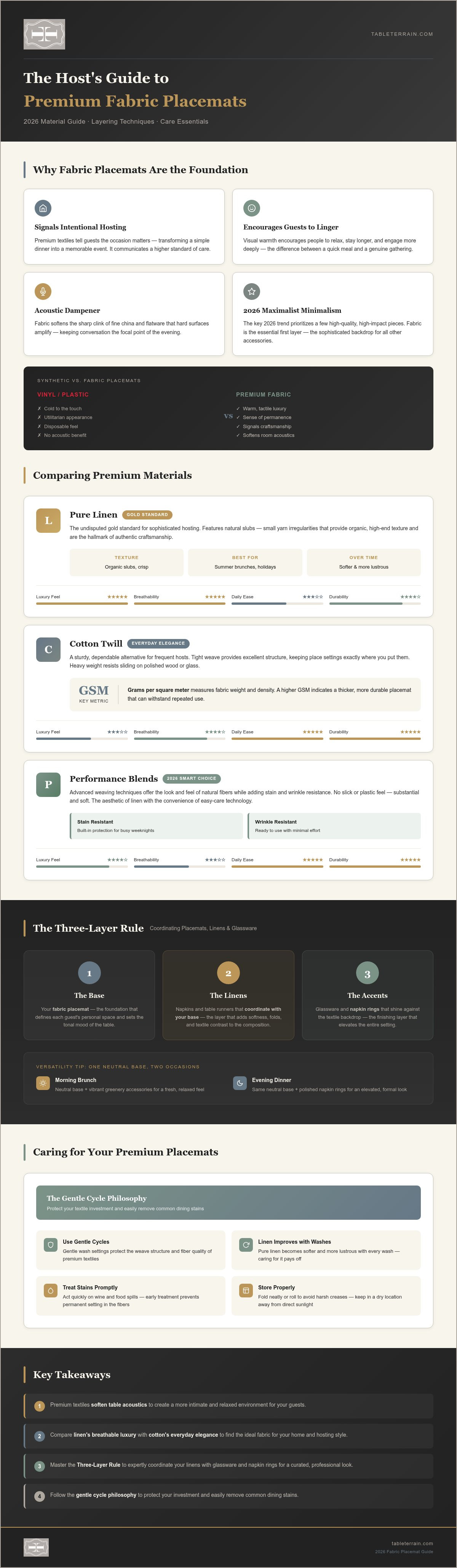
- Discover how premium textiles soften table acoustics to create a more intimate and relaxed environment for your guests.
- Identify the ideal fabric placemats for your home by comparing the breathable luxury of linen with the everyday elegance of cotton.
- Master the "Three-Layer Rule" to expertly coordinate your linens with glassware and napkin rings for a curated look.
- Follow our gentle cycle philosophy to protect your investment and easily remove common dining stains.
Why Fabric Placemats are the Foundation of Elegant Hosting
Elegant hosting starts before the first course is served. It begins when a guest brushes against the table or sets down their wine glass. While many focus solely on the centerpiece, the true foundation of a sophisticated 2026 dining experience is the choice of linens. Move beyond the "disposable" feel of vinyl or plastic. It's a vital step for any host who values quality. Synthetic materials often feel cold and look utilitarian. In contrast, fabric placemats offer a sense of permanence. They provide a level of craftsmanship that immediately signals a higher standard of care. This sensory shift transforms a simple dinner into an event.
A well-dressed table has a profound effect on guest comfort. When you use premium textiles, you tell your guests that the occasion matters. It creates an environment that feels intentional rather than accidental. This visual warmth encourages people to relax, stay longer, and engage more deeply with one another. It's the difference between a quick meal and a memorable gathering. A soft, inviting surface suggests a home that is ready for genuine connection.
The Acoustic and Tactile Benefits
Sound plays a massive role in the atmosphere of a room. Hard surfaces like marble or wood amplify the "clink" of fine china and the sharp strike of flatware. Fabric acts as a natural acoustic dampener. It softens these sharp sounds, allowing conversation to remain the focal point of the evening. Beyond sound, the tactile luxury of the material sets a high standard. A heavy, well-woven linen feels substantial and provides a sensory anchor for the meal. High-quality weight influences how guests perceive the entire experience, offering a more curated feel than thin, flimsy alternatives.
Setting the Scene for 2026 Gatherings
In 2026, the trend of "maximalist minimalism" prioritizes a few high-quality, high-impact pieces. Fabric is the essential first layer for this look. It acts as the sophisticated backdrop for your other accessories. Whether you're styling a minimalist brunch or a lush feast, your fabric placemats define the boundaries of each guest's personal space. Transition easily from morning to night by simply swapping accessories. A neutral base works perfectly with vibrant greenery for brunch and polished napkin rings for dinner. It’s the ultimate tool for the host who values time and aesthetic harmony.
Comparing Premium Materials: Linen, Cotton, and Performance Blends
Choosing the right material for your fabric placemats isn't just about color. It's about how the textile behaves when a guest rests their hands on the table or when a stray drop of wine hits the surface. While some suggest materials like velvet for their visual depth, they often fail the practical test of a busy dinner party. In 2026, we prioritize fibers that balance tactile beauty with real-world resilience. The right fabric acts as a silent partner in your hosting, providing a reliable foundation for every course.
The Case for Pure Linen
Pure linen is the undisputed gold standard for sophisticated hosting. It features natural slubs, which are small irregularities in the yarn that provide an organic, high-end texture. These aren't flaws; they're the hallmark of authentic craftsmanship. Linen is incredibly breathable and actually becomes softer and more lustrous with every wash. It's the perfect choice for sun-drenched summer brunches or grand holiday dinners where you want an air of effortless luxury. Because it's a natural fiber, it handles heat beautifully and provides a crisp look that never goes out of style.
Cotton and Blends for Daily Use
For those who host frequently, cotton twill offers a sturdy, dependable alternative. It has a tight weave that provides excellent structure, ensuring your place settings stay exactly where you put them. GSM, or grams per square meter, measures the fabric's weight and density; a higher GSM indicates a thicker, more durable placemat that can withstand repeated use. Heavy-weight cotton feels substantial under flatware and resists sliding on polished wood or glass surfaces.
Modern performance blends are the smart solution for 2026. These textiles use advanced weaving techniques to offer the look and feel of natural fibers while adding a layer of stain and wrinkle resistance. They don't have the slick or plastic feel of old-fashioned synthetics. Instead, they feel substantial and soft, making them a favorite for hosts who refuse to compromise on style during busy weeknight gatherings. They provide the aesthetic of linen with the convenience of easy-care technology.
The finish on your fabric placemats defines the final mood of the room. A classic hemstitch edge offers a refined, architectural look that suits formal environments and traditional settings. If you prefer a more relaxed or global aesthetic, fringed edges add a touch of movement and playful texture. Explore our curated selection of table linens to find the perfect material and finish for your next gathering.
The Art of Layering: Coordinating Placemats with Linens and Glassware
Layering is the secret language of high-end hosting. While basic sets might feel easy, they often lack the depth and personality of a curated table. Use fabric placemats as your starting point to build a sensory experience that feels both lush and organized. By following the "Three-Layer Rule" for professional-grade table scapes, you create a visual rhythm that guides the eye. This rule involves a base layer like your placemat, a middle layer of dinnerware, and a top accent such as the napkin and ring. Each layer should offer a slight shift in height and texture to keep the design dynamic.
Your choice of base also serves to anchor bold napkin rings and designer flatware. Without a substantial placemat, these smaller items can look lost on a large wooden or glass surface. Think of color theory as your roadmap. Complement your other table linens by choosing a placemat that shares a common undertone. If your runner features a warm cream, look for placemats in a sandy beige or a muted terracotta to maintain harmony throughout the setting.
Creating Contrast with Texture
Visual interest thrives on contrast. Pair the organic, rough-weave of linen placemats with the smooth, reflective surface of green goblets. This juxtaposition makes the glass appear more brilliant and the fabric more tactile. When styling elegant table settings, use the placemat to bridge the gap between a decorative runner and your functional dinnerware. A well-chosen textile base highlights the sparkle of premium glassware by providing a matte surface that doesn't compete for light. It's a simple way to make every piece on your table feel more intentional.
Placemats as a Design Anchor
Beyond aesthetics, placemats serve a psychological purpose. They define the personal space for each guest, creating clear visual borders that make a large table feel intimate. Scale is critical here. Ensure your napkin rings and vases don't overwhelm the fabric placemats. A good rule of thumb is to leave at least two inches of fabric visible around the plate. This allows the material to act as a frame for the food. Don't be afraid to swap fabrics as the seasons change. A heavy cotton twill feels grounded for autumn, while a light, fringed linen keeps the room feeling airy during the spring months.
Choosing the Right Shape and Size for Your Table Setting
Selecting the correct dimensions for your fabric placemats is a decision that balances engineering with artistry. While the material sets the mood, the shape and size dictate the physical flow of the meal. A common mistake is assuming that one size fits all. Modern dining trends for 2026 favor larger, more substantial settings that accommodate oversized dinnerware. If your placemat is too small, your table looks cluttered. If it's too large, your guests feel disconnected. Finding the "sweet spot" ensures your table feels both generous and intimate.
Matching Placemat Shape to Table Geometry
Geometry influences the energy of the room. Rectangular placemats are the most versatile choice for both formal and casual gatherings. They provide a structured, architectural look that aligns perfectly with the edges of a standard dining table. However, placing rectangular mats on a round table often feels cramped and awkward. The corners overlap or hang over the edge, disrupting the visual circle. For circular tables, round or oval shapes are essential. They echo the table’s curve and soften the sharp angles of a dining room, creating a more inclusive and flowing atmosphere. Conversely, using round mats on a rectangular table is a clever way to break up linear monotony and add a touch of whimsy to a traditional setting.
Sizing for Practicality and Aesthetics
Standard sizing has evolved. While a 12"x18" mat was once the baseline, many hosts now prefer a 14"x20" oversized option. This shift accommodates modern 11-inch plus dinner plates and the popular use of charger plates. A charger plate needs a substantial border of fabric to frame it properly. Without that extra two inches of material, the setting looks pinched. To calculate your ideal layout, aim for 2-4 inches of space between each guest's place setting. This prevents elbows from bumping and allows your curated accessories to breathe.
Don't forget the "Spill Zone." Your placemats should sit roughly one to two inches from the table's edge. This positioning protects the surface from spills while providing a comfortable resting place for wrists. If you're working with a smaller table, stick to the standard 12"x18" size to avoid a crowded look. Measure your table before you buy to ensure you have enough room for a centerpiece without overlapping the place settings. Browse our collection of premium placemats to find the ideal size and shape for your 2026 hosting needs.
Caring for Your Premium Fabric Placemats
Maintaining your fabric placemats shouldn't feel like a chore. It's an act of preservation that protects your investment and ensures your table always looks curated. High-quality linens are remarkably resilient when treated with the right techniques. You don't need professional dry cleaning for every minor spill. With a proactive approach, you can keep your table settings looking pristine and ready for your next 2026 gathering. Proper care extends the life of your linens and keeps the colors vibrant through years of hosting.
Immediate Stain Response
Speed is your greatest ally when a spill occurs. Always blot the liquid with a clean, white cloth to lift the pigment away from the fibers. Never rub the fabric. Rubbing forces the stain deeper into the weave and can damage the delicate slubs of pure linen. For red wine, a 2026 favorite is the immediate application of a salt mound followed by a splash of sparkling water to lift the tannins. It's vital to use cold water for protein-based food stains like dairy or egg to prevent the proteins from setting permanently into the material. For oil-based spills, a small drop of clear dish soap can break down the grease before it hits the wash.
Adopt a "Gentle Cycle" philosophy for all your luxury linens. Use a mild, liquid detergent and avoid harsh chemicals. Bleach is far too aggressive for premium cotton or linen blends. It will eventually turn your whites yellow and weaken the natural fibers. To achieve that crisp, professional "hotel" look at home, iron your placemats while they're still slightly damp. This allows the heat to smooth out every wrinkle without scorching the material. If you prefer a more relaxed look, air drying and a light steam will highlight the natural texture of the weave.
Longevity and Storage
How you store your linens between seasonal uses determines their lifespan. Avoid folding your fabric placemats into tight squares. This creates deep, stubborn creases that can eventually lead to fiber breakage over time. Instead, store them flat in a cool, dry place. If you're short on drawer space, consider a dedicated linen hanger. For a flawless finish on the day of your event, try steaming your placemats directly on the table once your dinnerware is in place. This quick step removes any minor ripples and ensures your tablescape looks polished and inviting. Taking these small steps protects the craftsmanship of your collection and keeps your home ready for any occasion.
Transform Your 2026 Dining Experience
Your table is more than just a place to eat. It's where connections happen and memories are made. By choosing high-quality fabric placemats, you've already laid the groundwork for a sophisticated dining environment. Remember that the right material serves as the essential canvas for your entire tablescape. Layering these textiles with your favorite glassware and flatware creates the professional, curated look that guests will admire. It's about creating a space that feels intentional, warm, and inviting for every guest.
Maintaining that flawless finish is simple with the right care techniques. This ensures your collection stays beautiful for years of future gatherings. If you're ready to start building your own professional-grade setting, Explore the Curated Placemat Collection at Table Terrain. We offer sophisticated designs for the modern host using premium materials like luxury linen and cotton. We also provide fast national shipping across the United States to help you prepare for any event. Take the stress out of hosting and embrace the art of gathering with total confidence. Your next beautiful table is just a few curated pieces away.
Frequently Asked Questions
Are fabric placemats better than plastic or vinyl?
Fabric is superior for hosts seeking a sensory dining experience. Unlike vinyl, fabric placemats absorb the clatter of flatware and create a warm, inclusive atmosphere. They offer a level of craftsmanship that plastic simply cannot replicate. While synthetic options prioritize utility, fabric focuses on the art of gathering. It transforms your table from a functional surface into a curated design statement that makes guests feel genuinely welcomed and comfortable.
How do I choose the right fabric for an everyday placemat?
Prioritize weight and weave for daily use. A heavy cotton twill or a modern performance blend provides the best balance of durability and style. Look for a higher GSM to ensure the mat stays in place during casual family meals. These materials resist wrinkling and handle frequent washing better than delicate fibers. They offer a crisp, clean look that stands up to the rigors of everyday life without sacrificing your home’s aesthetic.
Can you use fabric placemats with a tablecloth?
Layering placemats over a tablecloth is a professional styling secret. This technique adds depth and allows you to introduce secondary colors or textures to your setting. It also provides an extra layer of protection for your primary linens during the meal. Choose a placemat that contrasts with the tablecloth to make each place setting pop. This approach creates a rich, multi-dimensional look that feels both luxurious and highly intentional for any 2026 event.
What is the standard size for a fabric placemat in 2026?
The standard for 2026 has shifted toward larger dimensions to accommodate modern dinnerware. While 12"x18" remains a classic choice for smaller tables, the 14"x20" oversized mat is now the preferred size for hosting. This larger footprint provides enough room for 11-inch plates and decorative chargers without looking cramped. It ensures your fabric placemats frame your setting perfectly, leaving ample space for flatware and glassware to sit comfortably within the border.
How do you get stubborn food stains out of linen placemats?
Treatment begins with immediate action. Blot the spill with a clean cloth to lift the pigment, then apply cold water for protein-based stains like gravy or cream. For red wine, a mixture of salt and sparkling water works wonders on natural fibers. Avoid using bleach, as it weakens the weave and causes yellowing over time. Ironing the linen while it is still slightly damp helps remove stubborn creases and restores that professional, crisp finish.
Should placemats match the napkins exactly?
Exact matching can often look dated or overly formal. Instead, aim for a coordinated look that uses complementary tones or varying textures. Pair a solid linen placemat with a patterned napkin to add visual energy to the table. You can also use a common accent color to bridge the two pieces together. This curated approach feels more modern and worldly, suggesting you have personally selected each item rather than buying a pre-packaged set.
Is it okay to use round placemats on a rectangular table?
Using round mats on a rectangular table is an excellent design choice. It breaks up the long, linear lines of the furniture and introduces a sense of softness to the room. This juxtaposition creates a more dynamic and interesting 2026 tablescape. Round shapes are also practical for tight corners where rectangular mats might overlap. It is a simple way to experiment with geometry while maintaining a sophisticated and balanced look for your guests.
How many placemats should I have in a standard set?
A standard set should typically include 8 to 12 pieces. This ensures you can fully set a standard dining table while keeping several spares on hand for larger parties. Having extras is also vital for replacing a mat if a guest experiences a significant spill mid-meal. Investing in a larger set allows you to maintain a consistent look across the table without worrying about mismatched settings when your guest list grows during the holidays.