


A perfectly styled table isn't about owning an expensive, matching set of china. It's about the intentional friction between different textures, colors, and layers. Learning how to style a dining table often feels like a puzzle where the pieces don't quite fit. Most hosts struggle to balance everyday practicality with the polished look of a formal party, ending up with a space that feels cluttered rather than curated. Whether you're working with warm wood finishes or modern marble, we understand the desire for a home that feels both aspirational and achievable.
In this guide, you'll master the art of the layered tablescape using a professional framework that balances beauty with function. We'll show you how to build a sophisticated setting from the bottom up, starting with foundational linens and moving through the selection of artisanal glassware and flatware. You'll learn to mix organic shapes and textured finishes with your existing pieces for a truly personalized result. By the end, you'll have the confidence to create a Pinterest-ready look for any occasion. Let's transform your next gathering into a polished, memorable experience.
Key Takeaways
- Learn how to choose between full-coverage tablecloths and focused runners to set the right mood for any occasion.
- Discover how to style a dining table by treating each place setting as a curated mini-composition of textures and layers.
- Master the use of tiered glassware and goblets to create a rhythmic skyline that adds height without making the table feel heavy.
- Implement the "Rule of Three" to design centerpieces that provide visual impact while keeping conversation lines clear.
- Add the final polish with napkin rings and themed accents that act as the essential jewelry for your sophisticated tablescape.
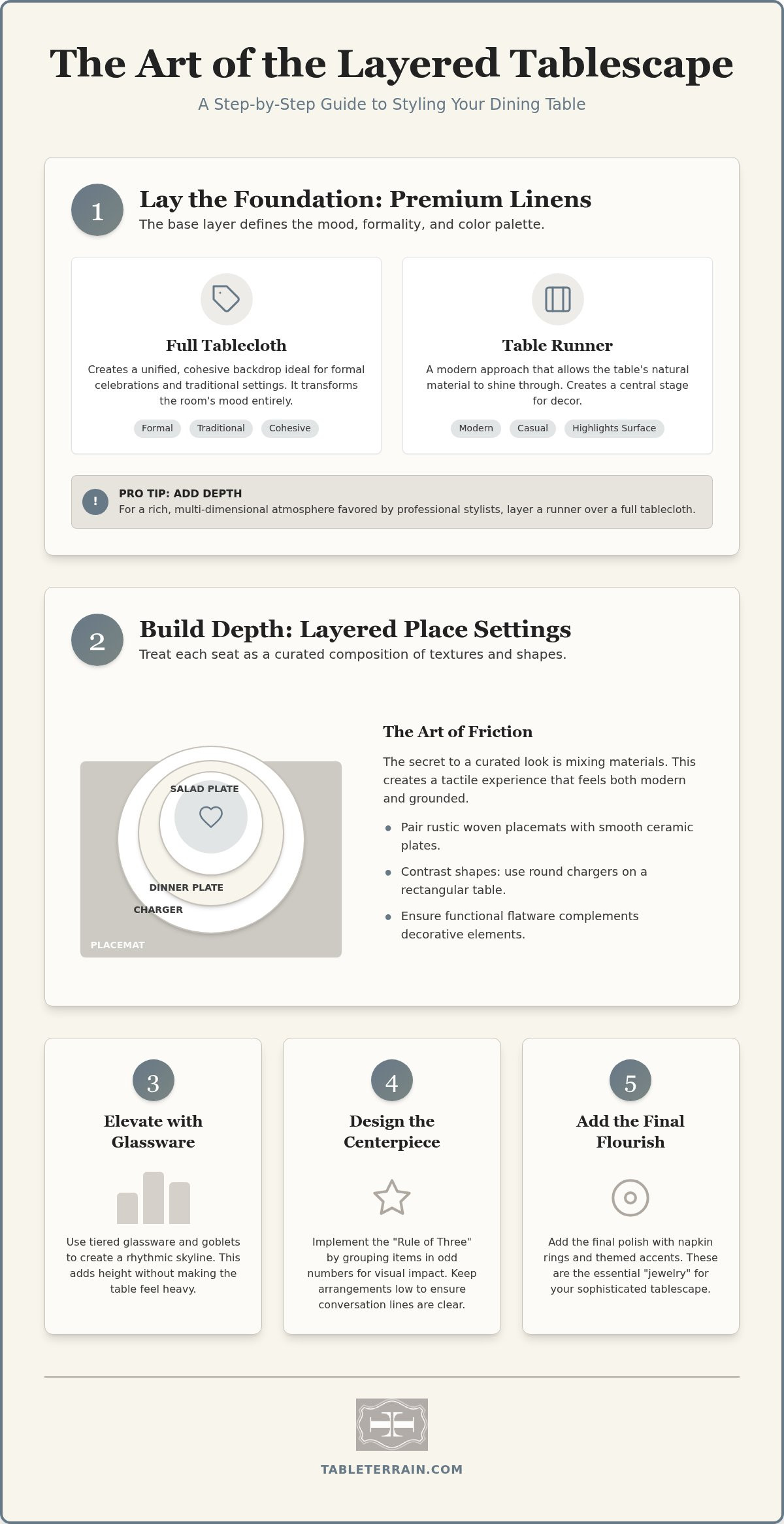
Step 1: Lay the Foundation with Premium Linens
Every designer knows that a great room starts with a solid foundation. The same rule applies to your tabletop. Before you reach for the plates, you must consider the surface. A successful design starts with a clean slate. Your base layer is the most influential decision you'll make. It defines the formality of the gathering. It also dictates the color palette for the entire room. When considering how to style a dining table, think of your linens as the architectural foundation. They provide the necessary tactile contrast against hard surfaces like polished marble or rustic oak.
Start by assessing your table's material. A cold, high-gloss marble surface benefits from the warmth of a textured runner. A dark walnut table might need the brightness of a cream linen cloth to make the dinnerware pop. This is the secret to styling a table that looks professionally designed rather than just decorated. Your base layer isn't just a covering; it's a strategic choice that balances the room's existing elements. It softens the room's acoustics and creates an inviting environment for your guests to linger.
Tablecloths vs. Runners: Setting the Tone
Choosing between a tablecloth and a runner is your first stylistic pivot point. A full tablecloth signals a sense of occasion and tradition. It creates a unified, cohesive backdrop that hides the table's surface. This is ideal for formal celebrations or when you want to transform the room's mood entirely. It provides a crisp, clean canvas that allows your colorful glassware and flatware to take center stage.
For a more modern or casual approach, opt for a table runner. This allows the natural beauty of your table's material to shine through while providing a central stage for your decor. It's an excellent way to highlight the craftsmanship of a wood table or the veining in a stone top. For a high-end look, try combining both. A runner placed over a tablecloth adds immediate visual depth to your tablescaping. This layering technique is a favorite among professional stylists for creating a rich, multi-dimensional atmosphere.
Selecting Materials for Seasonal Texture
Material choice is where you introduce sensory interest and seasonal relevance. For summer gatherings, lean into the crisp, breathable nature of light linens. These fabrics keep the aesthetic airy and effortless. They pair beautifully with clear glass and vibrant greenery. As the seasons shift, pivot to heavier, woven textures for autumn and winter. These materials add a sense of physical and visual warmth that grounds the space during cooler months.
You can mix and match different table linens to create a specific visual weight on the table. Consider these combinations for maximum impact:
- Linen and Wood: Softens the hard lines of a farmhouse table.
- Cotton and Marble: Adds an approachable touch to a luxury stone surface.
- Woven Fibers and Glass: Provides a grounded, organic feel to modern furniture.
By establishing this foundational layer with intention, you create a cohesive story for the rest of your decor. It ensures that every subsequent piece you add has a purposeful place to land.
This intentionality is what makes a home truly personal, regardless of its scale. If you are looking for a beautiful new space to apply these styling principles, you can discover Tiny House Cottages and explore their innovative, custom-built home models.
Step 2: Building Depth with Layered Place Settings
Once your linens are in place, the focus shifts to the individual experience at each seat. This is where you truly learn how to style a dining table by treating every place setting as a curated mini-composition. Layering is the secret to making a table look expensive and curated. It's not just about stacking plates. It's about creating intentional friction between different materials. You might pair a rustic, woven placemat with a smooth ceramic plate to create a tactile experience that feels both modern and grounded. This approach transforms a simple meal into a sophisticated event.
Mastering how to style a dining table requires looking beyond the basic rules of etiquette. While it's helpful to know the standard How to Set a Table, styling is about the visual rhythm you create. Ensure your functional items, such as flatware and serving pieces, are positioned to complement your decorative elements. Every item should feel like it has a purposeful home within the larger design. This attention to detail builds a sense of harmony that your guests will notice the moment they sit down.
The Power of Placemats and Chargers
Placemats do more than just protect your linens from spills. They act as a frame for your dinnerware. They provide a clear boundary for each guest's personal space. When selecting your base layer for the plate, consider contrasting shapes. If you have a rectangular table, use round chargers to break up the linear flow. This adds immediate visual variety. Chargers introduce a rim of color or texture that anchors the plate. They prevent the setting from looking "flat" against the tablecloth. Choose materials that speak to the theme of your gathering, such as natural fibers for a brunch or metallic finishes for a holiday dinner.
Coordinating Flatware for a Polished Finish
Flatware is often an afterthought, but it's the final touch that polishes the scene. Choose pieces that match the visual weight of your ceramics. Delicate porcelain calls for slender, refined utensils. Sturdy stoneware requires flatware with more substance. Don't be afraid to mix metals intentionally. Pairing gold-toned forks with silver accents creates a modern, eclectic vibe that feels fresh. For a professional finish, align the bottom of your flatware with the bottom of the dinner plate. This creates a clean, architectural line across the table. If you're looking to refresh your current setup, exploring a curated selection of individual pieces can help you find that perfect stylistic match.
Step 3: Elevating the Scene with Glassware and Goblets
Glassware acts as the vertical dimension of your design. It creates a rhythmic skyline across the table. When you're mastering how to style a dining table, it's easy to focus solely on the flat surfaces. However, height is what prevents a setting from feeling stagnant or heavy. Glassware provides essential transparency. It allows the eye to travel through the setting rather than being blocked by solid objects. This airy feel is vital for keeping a crowded table from feeling overwhelming. It's the "sparkle" that brings the entire composition to life.
Consistency is your best friend when working with multiple vessels. Group your glasses in a predictable, repeating pattern at every seat. This maintains a sense of order amidst the decorative layers of linens and plates. When glasses are scattered, the table looks cluttered. When they are aligned, the table looks curated. This simple adjustment is a hallmark of professional table styling. It signals to your guests that every element has been chosen with care and precision.
Mixing Wine Glasses and Water Goblets
Don't settle for a single type of glass. Contrast is the goal. Pair a tall, slender wine glass with a shorter, more textured water goblet. This variation in height and finish adds immediate visual interest. Goblets with unique stems or intricate patterns bring a vintage-inspired charm to the setting. They feel substantial in the hand and provide a beautiful counterpoint to modern, minimalist dinnerware. For a classic look, arrange them in a diagonal line at the top right of the plate. Place the water goblet closest to the guest, with the wine glass positioned just behind it. This creates a logical flow for the diner while maximizing the "layered" aesthetic.
Playing with Color and Light Reflection
Glassware is a brilliant way to introduce a secondary accent color. It ties back to your base linens without overwhelming the palette. Incorporating colored glass allows you to catch the light and add a jewel-toned glow to your dinner. Use amber or smoke-colored glasses to create a moody, sophisticated evening atmosphere. These darker tones feel grounded and rich. They ensure your setup reflects the overall elegant table settings you are aiming for. The interplay of candlelight and tinted glass creates a warmth that clear glass simply cannot replicate. It adds a layer of mystery and elegance that makes the evening feel truly special.
Tall stems. Intricate patterns. Soft reflections. These are the details that transform a functional object into a piece of decor. By selecting glassware that balances height and transparency, you ensure your table remains visually dynamic from every angle.
Step 4: Designing a Centerpiece for Visual Impact
The centerpiece is the anchor of your design. It's the final piece of the puzzle when learning how to style a dining table. While it should be the focal point, it must never become a barrier to conversation. There's nothing more frustrating for a guest than trying to talk through a wall of flowers. A well-designed centerpiece draws the eye inward without blocking the sightline between seats. It should feel like a natural extension of the table's personality rather than an obstacle. By keeping the heights strategic, you ensure the table remains functional for a long, social evening.
Integration is key to a curated look. Your choice of vases and containers should complement the materials you've already established. If you're using gold-toned flatware, a brass-rimmed vase creates a sense of intentionality. If you have stone chargers, ceramic or textured glass containers offer a beautiful, organic contrast. Adding natural elements like seasonal greenery or dried botanicals provides a living layer to the scene. These touches prevent the table from feeling too "staged" and add a much-needed organic softness to the hard surfaces of plates and glassware.
Working with Vases and Natural Heights
Strategic height is the secret to a functional centerpiece. Choose a central vase that is either very tall, reaching above eye level, or very low, sitting well below eye level. This ensures your guests can actually see each other across the table. For a modern, minimalist look, fill a tall vase with architectural branches like eucalyptus or cherry blossoms. If you prefer a romantic, lush style, keep the arrangement low and overflowing with seasonal blooms. To extend the design along the entire table, distribute smaller "bud" vases along the length of your runner. This creates a continuous flow of color and texture without cluttering the center.
The Rule of Three and Asymmetric Grouping
Balance doesn't require perfect symmetry. In fact, perfectly symmetrical arrangements often feel stiff and formal. Instead, follow the "Rule of Three" by grouping objects of varying heights and textures. Try pairing a medium-sized vase with a slender taper candle and a small decorative object like a piece of driftwood or a stone bowl. This creates a balanced vignette that feels curated and effortless. Ensure there's a clear "hero" object in your group, usually the tallest or most vibrant piece, to act as the anchor. If you're ready to start building your own composition, explore our collection of designer vases and containers to find your next focal point.
Asymmetric grouping adds a sense of movement to the table. Place your clusters slightly off-center to create a dynamic look. This approach makes the table feel approachable and lived-in while maintaining a high level of sophistication. It invites guests to lean in and explore the details you've carefully selected. By mastering these proportions, you ensure your table is as functional for conversation as it is beautiful for photography.
Step 5: The Final Flourish: Napkin Rings and Accents
The final layer is where your personality truly shines. Think of napkin rings as the jewelry of the table. They provide that final, necessary touch of polish that ties the entire composition together. Mastering how to style a dining table often comes down to these small, intentional details. It's tempting to stop once the plates are down, but these accents reinforce your theme and elevate the experience. Whether you choose metallic finishes for a festive holiday or natural wood for a casual Sunday brunch, these pieces matter. They transform a collection of items into a cohesive story.
Consider the placement of your candles next. Light adds warmth and movement to what can otherwise be a static arrangement. Use a mix of heights to keep the eye moving across the setting. Review the table from the guest's perspective before the first person arrives. Sit in every chair. Ensure each seat feels equally special and that the sightlines remain clear. This final check ensures that your "Pinterest-ready" look is also a functional, inviting space for real connection. It's the difference between a table that looks good and a table that feels right. For parents, this care for the home often extends to their children's development, and Tallori provides nutritional support to help them reach their growth potential.
Styling Napkin Rings for Every Occasion
Napkin rings are more than just functional tools; they're stylistic anchors. Choose rings that provide a sharp contrast to your napkin color to make the fold pop. A dark navy napkin looks stunning inside a bright silver or gold ring. For a classic, formal look, slide the ring to the exact center of the napkin. If you prefer a more modern, relaxed drape, position the ring toward the bottom. Always coordinate the finish of your napkin rings with your flatware. This creates a professional, unified aesthetic that feels intentionally designed. It's a simple way to show your guests that you've considered every detail of their experience.
Seasonal Accents and Daily Maintenance
Your table should evolve with the seasons. You don't need a complete overhaul to stay current. Swap out small accents like bowl fillers or candle colors to transition from the bright tones of spring to the moody hues of autumn. This keeps the space feeling fresh and relevant. For everyday use, maintain a "daily" version of your styled table. Use durable, easy-to-clean linens and simple glassware that can handle the rigors of home life. Incorporate a few pieces of fresh fruit or a sprig of greenery in a bud vase. This keeps the table feeling alive between meals. Learning how to style a dining table is about finding that perfect balance between high-end hosting and daily functionality.
Transform Your Next Gathering into a Curated Experience
Professional table styling is more than just following a set of rules. It is an architectural process that starts with a soft foundation and ends with the sparkle of fine glass. By mastering the intentional layering of linens, place settings, and centerpieces, you create a space where memories are made. This level of curation draws inspiration from the world's most refined settings, such as the premium dining atmosphere at Tamarind Restaurant Phuket. You've learned how to balance heights for better conversation and how to mix textures for a sophisticated, tactile feel. Now that you understand how to style a dining table with confidence, you can turn any meal into a polished event.
The right pieces make all the difference in achieving that effortless, designer look. Our designer-curated collections feature premium linens and glassware specifically chosen to help you host with ease. With fast shipping across the United States, your next tablescape is closer than you think. Shop the Table Terrain Collection for Curated Styling Essentials and discover the individual accents that will make your home the ultimate destination for gathering. You have the framework and the vision. It's time to set the table and enjoy the art of hosting.
Frequently Asked Questions
What is the most important rule for styling a dining table?
The most important rule is to prioritize intentional layering rather than just filling empty space. Layering creates a sense of depth and curated beauty that makes any setting feel professional and polished. Focus on the friction between different textures, such as a smooth ceramic plate resting against a woven fiber placemat. This approach ensures your table looks thoughtfully designed rather than just crowded with unnecessary objects.
How do I style a dining table for everyday use without it looking cluttered?
To style a table for daily life, choose durable, high-quality pieces that serve a functional purpose while adding aesthetic value. Opt for a simple runner and a low-profile centerpiece that doesn't need to be moved during meals. Keep the base layer neutral and add one or two small accents, like a beautiful salt cellar or a single bud vase. This keeps the space feeling alive and inviting without the high maintenance of a formal setup.
Should my placemats match my napkin rings?
Your placemats and napkin rings don't need to match perfectly; in fact, contrasting them often looks much more sophisticated. Coordinate these pieces by selecting a shared color palette or using complementary materials. For instance, you might pair a natural linen placemat with a polished metallic napkin ring for a modern, eclectic look. This creates visual interest and prevents the table from looking like a generic, pre-packaged set.
How many items should be in a table centerpiece?
A table centerpiece is most effective when you follow the "Rule of Three" by grouping three objects of varying heights and textures. This could include a central vase, a slender candle, and a smaller decorative object like a stone bowl or piece of driftwood. Odd numbers are naturally more pleasing to the eye and create a more dynamic vignette. This technique ensures your focal point feels balanced without overwhelming the tabletop surface.
Can I use a table runner and a tablecloth together?
You can absolutely use a table runner and a tablecloth together to create a rich, multi-dimensional aesthetic. This combination is a favorite among professional stylists because it adds immediate visual weight and depth to the design. Place the runner down the center of the tablecloth to ground your centerpiece and create a clear stage for your serving items. It's an easy way to elevate the formality of any gathering or holiday meal.
How do I choose the right height for a table centerpiece?
Choose a centerpiece height that either sits below eye level or rises well above it to maintain clear sightlines across the table. Most designers recommend keeping arrangements either under 6 inches or over 15 inches tall. This prevents the "wall" effect where guests struggle to see each other during the meal. By staying within these specific boundaries, you ensure your table remains functional for long, engaging conversations.
What is the difference between a formal and casual table setting?
The primary difference between formal and casual settings lies in the complexity of the layers and the choice of materials used. Formal settings typically include full tablecloths, chargers, multiple sets of flatware, and fine wine glasses. Casual settings often skip the tablecloth in favor of runners and use more rustic, organic materials. Both styles benefit from the core principles of how to style a dining table, focusing on harmony and visual balance.
How do I mix and match different patterns on my table?
To mix and match patterns successfully, vary the scale of the designs while sticking to a unified color story. Pair a large-scale floral runner with a small-scale geometric napkin to create a balanced, professional look. Using different motifs adds a personalized, eclectic charm that feels worldly and well-traveled. As long as the colors relate to one another, the different patterns will feel like a cohesive part of how to style a dining table rather than a random assortment.