
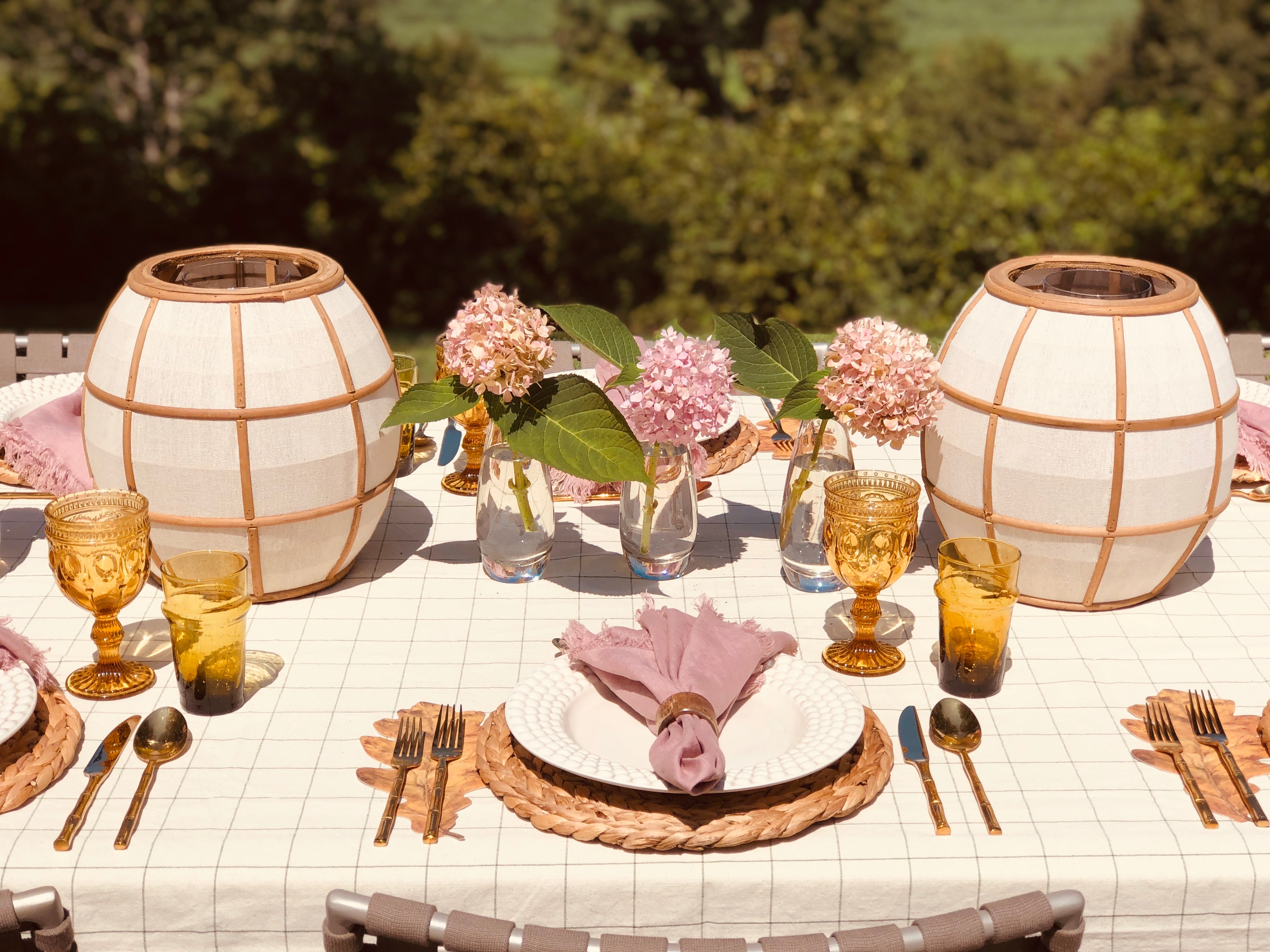


The tallest vase isn’t automatically the right one. Choose elegant flower vases in proportion to the stems and setting: low arrangements keep sightlines clear at a dining table, while taller, slimmer shapes give long stems room to rise. Aim for a size that feels balanced with both the flowers and the surface.
It’s easy to focus on color or shape first, but a vase also needs to work with your flowers, setting, and plans for the table. This guide will help you choose a practical size and material, compare affordable glass options for event centerpieces, and style vases with fresh flowers or as standalone decor. You’ll find simple ways to create a polished look without letting a centerpiece overwhelm the gathering.
Key Takeaways
- Match the vase material to the look and use you want: glass keeps arrangements visible, while ceramic, stoneware, and metal bring distinct texture and presence.
- For event centerpieces, compare glass shapes and multipacks to create a coordinated table setting without overwhelming it.
- Choose a vase size by considering stem length, arrangement shape, and the space guests need across the table.
- Style a vase as a standalone accent or add fresh flowers; its shape and finish can make the display feel complete either way.
Which material is best for flower vases?
Choose a vase material by considering its texture, finish, and role in the room. Glass, ceramic, stoneware, and metal each create a different effect, whether the vase holds flowers or stands alone.
Stoneware, Metal, Ceramic, and Glass
Stoneware brings an earthy, substantial look, while ceramic offers finishes from smooth glaze to hand-painted detail. Metal creates a reflective accent in gold or silver, and glass keeps stems and water visible. Consider the arrangement, too: a clear glass vase suits loose stems, while opaque ceramic can conceal stems and support a sculptural display. Compare shape and finish alongside material.
For delicate vases, wash by hand with warm water, mild soap, and a soft cloth. Rinse carefully and dry with a lint-free towel. Avoid abrasive pads, which can scratch glass, glaze, or metallic finishes.
Vase styles range from glass cylinders and fishbowls to ceramic jars, bud vases, and metal urns. Each shapes the display: a cylinder shows stems, while a jar gives a compact arrangement a grounded silhouette. When comparing prices, assess similar pieces by material, size, and decorative detail rather than treating unlike styles as equivalent.
Versace and Rosenthal collections illustrate how porcelain vases can work as statement pieces, even without flowers. Consider each design’s scale, pattern, and color before pairing it with other table details. A bold motif can anchor a simple setting; a quieter finish leaves room for patterned linens or serving pieces.
Colors and Materials for Vase Selection
Start with the colors already in the room or tablescape. Clear glass blends easily with vivid blooms, while white ceramic gives saturated flowers a crisp backdrop. Silver metal adds a cool reflective note; warm metallic finishes create a richer accent. For a coordinated look, repeat one color in another object, such as a vase and a serving detail.
Finish matters as much as color. Glossy glaze reflects light, while matte ceramic and textured stoneware create a softer effect. Choose one focal detail, such as ribbed glass or a painted ceramic motif, and keep nearby colors restrained. This gives the vase a clear role without competing with the flowers.
Affordable glass vases for event centerpieces
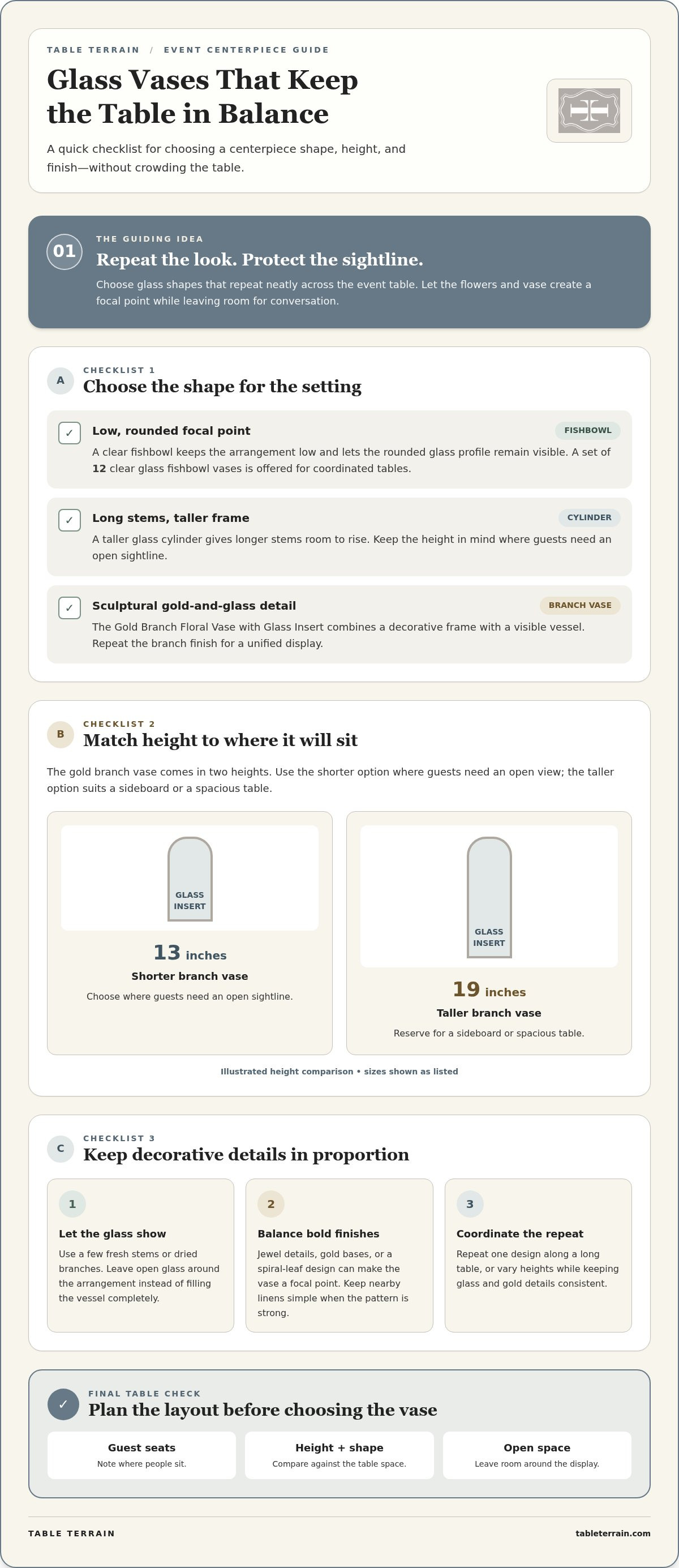
For an event table, choose glass shapes that repeat neatly without blocking conversation. A clear fishbowl vase creates a low focal point, while a taller glass cylinder suits longer stems. Multipacks can make a coordinated arrangement easier: a clear glass fishbowl vase is offered as a set of 12. Compare the set quantity, silhouette, and table space together. That helps you plan a consistent centerpiece without assuming every table needs the same height.
Gold branch floral vases with glass inserts combine a sculptural frame and a visible vessel. The Gold Branch Floral Vase with Glass Insert comes in 13-inch and 19-inch sizes. Use the shorter size where guests need an open sightline; reserve the taller one for a sideboard or a spacious table. For a unified display, repeat the branch finish across the room rather than mixing several metallic accents.
Jewel details and gold bases add shine even before flowers go in. A glass vase with a jewel flower design and gold base creates a decorative focal point, while a gold spiral leaf design gives an arrangement a more linear outline. Keep nearby linens simple when the vase has a strong pattern. The contrast lets the centerpiece stand out without crowding the table.
Glass can make botanicals part of the composition. Place a few fresh stems in a clear vessel, or use dried branches to emphasize their shape. In a fishbowl form, a compact grouping keeps the rounded profile visible; in a taller vessel, choose stems whose lines suit its height. Leave open glass around the arrangement instead of filling the vessel completely.
Before choosing, sketch the table layout and note where guests sit, then compare vase height, shape, and finish. Repeat one design across a long table, or vary heights while keeping glass and gold details consistent. Explore a glass vase selection to find a style that suits the centerpiece and the overall setting.
What size flower vase do I need?
Start with the stems and the shape you want the arrangement to take. Compare the vase’s height and opening width with the flowers, then consider how much surface space the display needs.
A ceramic vase can support a compact bouquet or become a focal point on its own. The cream modern boho ceramic gold bow vase stands 9.3 inches tall, while the Origami ceramic vase with ribbon is 7.9 inches tall. These examples show how a modest height difference changes the vase’s presence. Choose a taller form for stems that need a rising silhouette; a shorter one suits a close, gathered arrangement.
Opening width matters as much as height. A narrow neck gathers stems into a defined cluster, while a wider mouth gives branches and fuller bouquets room to spread. Check the opening against your arrangement before adding water. With opaque ceramic, focus on the bloom shape and the balance between the flowers and rim.
White ceramic vases and lidded jars offer different styling options. A white ceramic vase with a gold leaf design adds a decorative surface to a floral display. A white ceramic jar with gold chain details has a covered form that works well on its own. Match the silhouette to the setting: a taller vessel adds vertical emphasis, while a jar creates a compact accent.
Clear glass makes stem length and water visible, so it suits arrangements where those details contribute to the look. A clear glass fishbowl measures 4.7 inches in diameter and 3.8 inches tall. By contrast, the Column Glass Vase measures 4 inches in diameter and 15 inches tall. These shapes support distinct displays: one keeps flowers low and rounded, the other gives stems a tall, narrow frame.
To choose a vase, set it where it will sit and hold the flowers beside it. Check the proportions and make sure the arrangement leaves usable space around the display. Compare ceramic and glass shapes, then select one that frames the stems without dominating the table.
Vases as standalone decor or for fresh flowers
For a centerpiece, choose a vase that keeps sightlines open; for a mantel, balance its height with nearby objects. In either setting, the vase can stand alone or hold fresh flowers.
Standalone Vase Decor
Without blooms, shape, color, and finish take center stage. A sculptural ceramic vase adds a solid accent to home decor, while clear glass keeps a display visually light. Choose one standout piece for a small shelf, or group contrasting styles on a console. Repeating a finish, such as gold, helps different shapes feel connected.
Try a lidded jar beside framed art or a tall vase beside a lamp. Each placement gives the decorative piece a clear role.
Vases for Fresh Flowers
Fresh flowers need a vessel that supports their stems and suits their arrangement. A glass vase makes stems visible, while opaque ceramic keeps attention on petals and foliage. Choose a narrow opening to gather a few stems or a wider mouth for branches that need room to spread. Leave space around the blooms so their shape remains clear.
An artificial hydrangea arrangement in a glass vase measures 4 inches in diameter and 14 inches tall. Its proportions offer a useful visual example for a compact display.
Centerpiece and Mantel Choices
For a centerpiece, compare the vase’s height with seated guests’ sightlines. A low, rounded shape keeps the arrangement contained; a taller vase suits a side table or open console. On a mantel, assess the vase alongside frames, candles, or art. One focal vessel can anchor the display, while a pair creates balance across the shelf.
Choose styles that connect with the room’s palette, then vary their shapes for interest. Vases add structure even when flowers aren’t in season.
Explore decorative vases and containers to choose a piece for fresh flowers or a styled shelf.
Table Terrain: Table Linens & Napkin Rings
Table Terrain helps bring your vase choice into a complete tablescape. Explore its selection when coordinating flowers with linens, place settings, or serving pieces. Pair a glass centerpiece with Table Linens & Napkin Rings for a layered table, or add Flatware & Serving Items and Goblets to complement the setting. Vases & Containers offer pieces for fresh arrangements or decorative displays. Repeat a color or finish from the vase elsewhere to keep the palette cohesive. For a relaxed look, balance a statement centerpiece with simpler linens; for a more polished setting, echo metallic accents in nearby details.
Visit tableterrain.com to explore table pieces for your setting.
Set the scene for your next gathering
Let your next tablescape begin with one detail you love. A vase can inspire the palette, mood, and finishing touches, whether you’re arranging fresh blooms or creating a quiet accent at home. Choose elegant flower vases that suit your space, then build around their shape and finish.
For a coordinated setting, Table Terrain offers Vases & Containers alongside Table Linens & Napkin Rings and Flatware & Serving Items. These pieces can connect a floral focal point with the rest of the table, from the cloth beneath it to the serving details nearby. Start with the atmosphere you want to create, then choose pieces that support it without competing for attention.
Ready to bring your table idea together? Contact Table Terrain to explore pieces for your setting. A thoughtful detail is all it takes to make the next gathering feel distinctly yours.
Frequently Asked Questions
What materials are best for elegant flower vases?
The best material depends on whether the flowers or the vessel should lead the display. For elegant flower vases holding mixed bouquets, consider how the color and finish interact with varied petals. A neutral surface lets bright blooms stand out, while a patterned vessel can become the main feature. Also consider the placement and whether you can easily reach inside to clean it.
What sizes and shapes suit different flower arrangements?
Match the vase opening to how you want the stems to sit. A single branch or a few long stems can look intentional in a narrow-necked shape; a loose mixed bouquet needs more room to spread. For flowers with broad heads, choose a form that feels balanced rather than top-heavy. Check the arrangement from the side and its main viewing angle before deciding where to place it.
Prioritize a shape that suits your flowers, then compare the listed price with your budget. Simple detailing keeps attention on the arrangement rather than ornament. A single well-placed vase can also make a considered accent without requiring a larger display.
Which brands make high-quality elegant flower vases?
Versace and Rosenthal are two named brands with porcelain vase collections. To assess a particular piece, look at its finish, pattern, and proportions, then decide whether it suits your room as a standalone accent or flower holder. A distinctive design can make a strong focal point, while a quieter motif may blend more easily with existing decor. Choose according to the role you want the vase to play.
How do glass, ceramic, crystal, and metal vases compare?
Glass and crystal suit displays where clarity and light are part of the look; ceramic offers a solid surface for color or pattern, while metal adds a reflective accent. Consider the setting first: a busy table may call for a simpler finish, while a quiet shelf can showcase more detail. Compare the vase’s visual weight with nearby objects before arranging the space.