
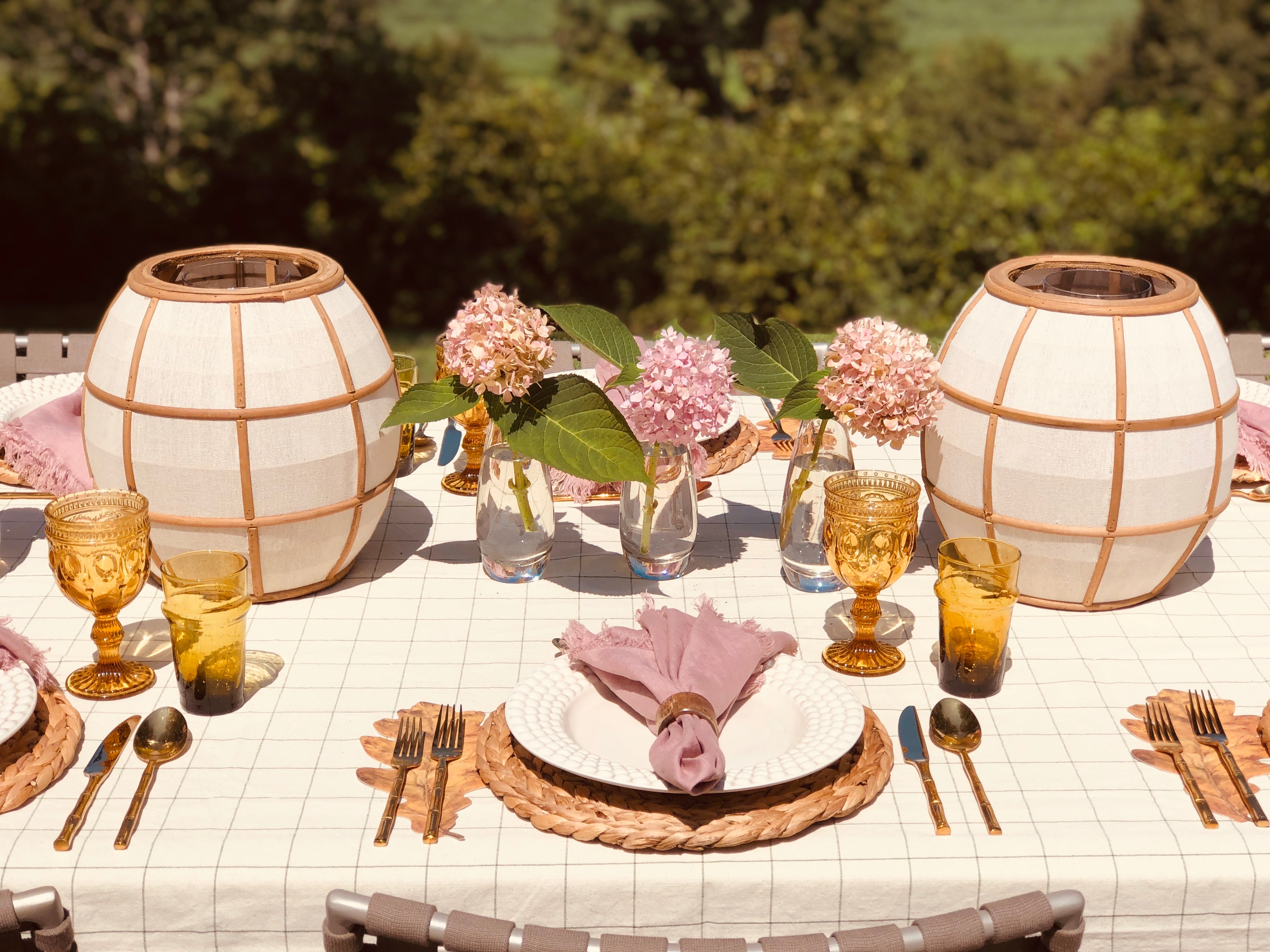


A runner brings a table together without covering its entire surface. For a balanced fit, choose cotton table runners about one-third the width of your table, then select a length that suits its proportions and provides the end drop you prefer. Fabric and pattern help set the mood, too.
It’s easy to focus on color or print first, but a runner looks best when its size feels in harmony with the table. Cotton and linen offer relaxed, textured options for a tablescape, whether you’re dressing the table for everyday meals or a gathering.
Use this guide to explore runner styles, compare fabric choices, and work out the length, width, and overhang that suit your table. A few simple measurements can help you choose a runner that feels considered, not crowded.
Key Takeaways
- Start with the occasion and the colors already in your room to narrow down runner shades and patterns.
- Aim for a runner about one-third the width of your table, then consider how much surface you want it to cover.
- Choose cotton or linen based on the texture and mood you want to create in your tablescape.
- Measure the table before selecting a length, and account for the drop you want at both ends.
- Use stripes, checks, plaid, or tartan to add pattern, keeping the scale in balance with your table and other linens.
Want some table runner ideas?
Start with the occasion, then choose a color and pattern that complement your tableware. A mustard-and-magenta print feels different from a green botanical design, even on the same table.
Runner Colors for Different Occasions
For a holiday meal, choose deep garnet, forest green, or warm wheat tones. These colors bring seasonal richness to white plates and clear glassware. For a spring brunch, try fresh greens or soft pinks with simple flowers. A red-and-white check can make a casual summer lunch feel relaxed and lively.
Match the runner’s color to the mood and the pieces already on your table. White and natural shades create a quiet base for everyday dining, while mustard or magenta adds energy for a birthday meal. For a dinner party, let one strong color take the lead. Keep napkins and dishes calmer for a coordinated look.
Consider the room as well as the occasion. A green runner can echo leafy plants nearby, while garnet can warm a dining space with wood furniture. If your plates have a colorful pattern, choose a runner in one of its shades. This simple choice connects the pieces without making the table feel busy.
Patterns and Colorful Designs
Runner patterns range from stripes and checks to floral prints, toile, and embroidered details. A blue floral print on white creates a classic look; gingham brings a picnic-inspired touch. Choose a pattern scale that suits the table: small motifs feel subtle, while large flowers or bold color blocks draw the eye.
Colorful designs can combine shades instead of relying on a single solid tone. Examples include mustard with magenta, olive with fig, and moss with mauve. Repeat one shade in a napkin, vase, or flower arrangement to make the palette feel intentional.
Use contrast to keep a patterned runner easy to appreciate. Set plain plates over a busy floral print, or pair a striped design with solid napkins. If your centerpiece has vivid flowers, choose a quieter runner. With a simple centerpiece, a lively print can provide the table’s main visual interest.
Before choosing, lay out the plates, napkins, and centerpiece you plan to use. Compare the runner with those pieces in the room’s lighting. This quick styling step shows whether its colors complement the setting or compete with it.
Choosing runner length and width
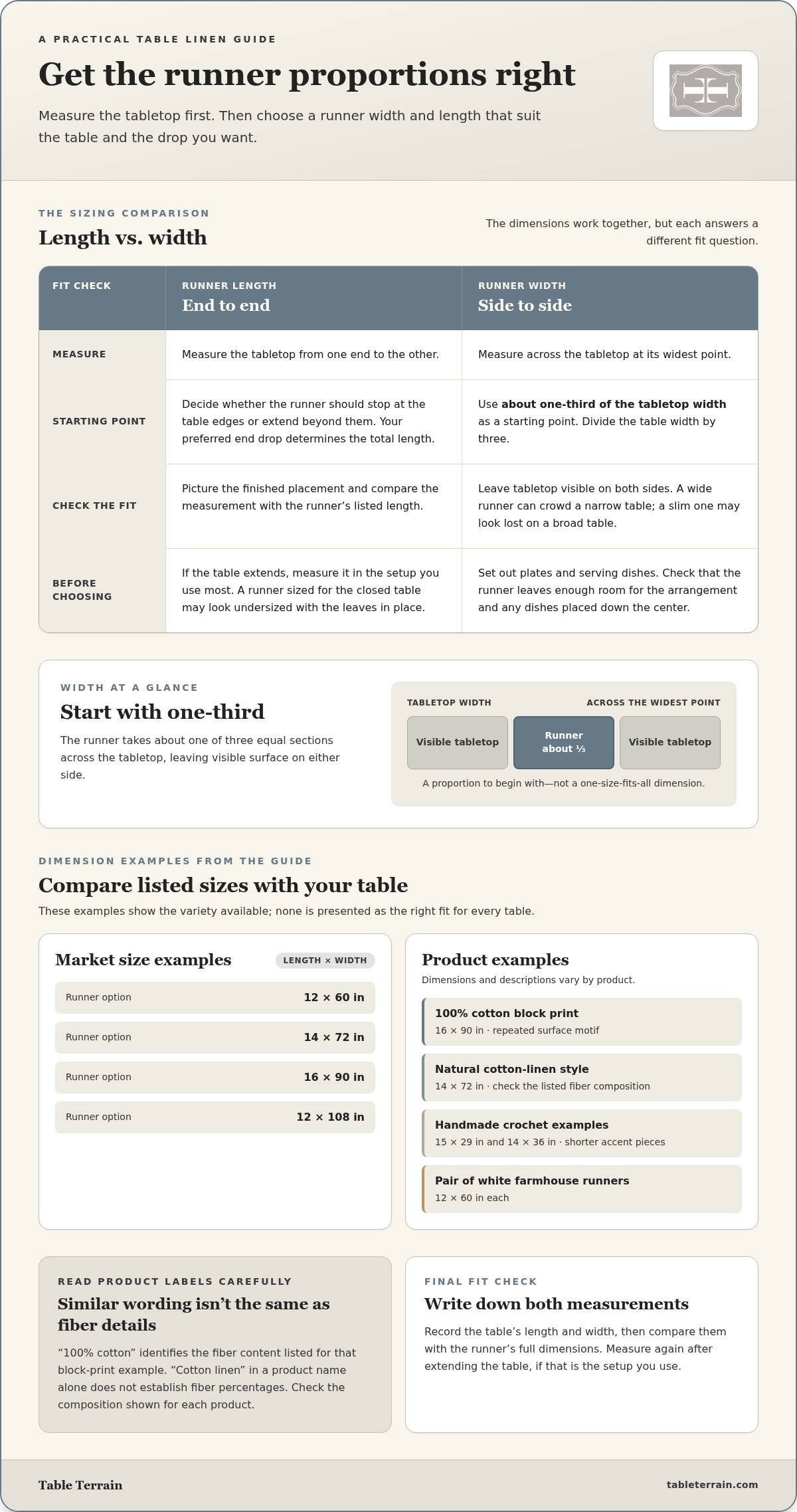
Measure the tabletop before choosing a runner, then compare its length and width with the available fabric dimensions. A simple proportion gives you a useful starting point for width.
Runner Length Selection
Runner length depends on the table’s measured length and the end drop you want. Measure from one end of the tabletop to the other, then decide whether the runner should stop at the edges or extend beyond them. Your preference determines the total length needed, so picture the finished placement before selecting a size.
Compare that measurement with the runner’s listed dimensions. Examples on the market include 12-by-60-inch, 14-by-72-inch, 16-by-90-inch, and 12-by-108-inch runners. These sizes show how available lengths vary, not which one fits every table. A 72-inch runner, for instance, won’t create the same look on a compact table as on a longer one.
For cotton table runners, check the full dimensions rather than relying on labels such as “short” or “long.” If your table extends, measure it in the configuration you use most often. A runner chosen for the closed table may look undersized with the leaves in place.
Runner Width Selection
Use one-third of the tabletop’s width as a starting point for runner width. Measure across the table at its widest point, then divide by three. This proportion leaves space visible on both sides and helps the runner sit comfortably within the tabletop’s outline.
Check the runner’s actual width before deciding. Market examples include a 12-inch-wide runner, a 14-inch-wide option, and a 16-inch-wide design. On a narrow table, a wider runner can take up too much dining space. On a broad table, a slim strip may appear lost between the place settings.
Set out plates and serving dishes to test the available surface. A runner should complement their placement without competing for space needed during a meal. If you serve dishes down the center, consider how much room they take up across the runner. For a simple setting with plates at each place, a narrower design keeps more tabletop visible.
Before buying, write down the table’s length and width, then compare both numbers with the runner dimensions. For example, a 14-by-72-inch runner provides a clear reference for checking fit. Measure again after extending the table, and choose dimensions that suit the setup you’ll use.
Cotton and linen table runner products
Product descriptions can reveal how a runner suits your table and setting. Compare the fabric, listed dimensions, construction, and finish before choosing. For example, a 100% cotton block-print runner measures 16 by 90 inches. A natural cotton-linen runner measures 14 by 72 inches. Their different dimensions and surface patterns create distinct looks, even before styling.
Cotton table runners come in varied constructions, from printed fabric to embroidery and crochet. An embroidered style adds raised detail, while a block print gives the surface a repeated motif. Crochet lace creates an open, decorative texture. Examples include handmade crochet runners measuring 15 by 29 inches and 14 by 36 inches. These shorter pieces suit smaller surfaces or focused accents better than a long dining-table runner.
Check the fabric wording carefully. “100% cotton” identifies the listed fiber content for the 16-by-90-inch block-print example. “Cotton linen” appears in the name of a 14-by-72-inch natural-style runner, but that wording alone doesn’t establish its fiber percentages. Compare the exact composition shown for each product instead of assuming two similar labels mean identical fabric.
Size options also shape how versatile a runner feels. A pair of white farmhouse runners measures 12 by 60 inches each, while a listed pack contains 12 runners measuring 12 by 108 inches apiece. Those dimensions serve different table lengths and styling plans. Use the measurements from the previous section to see whether a particular size fits your table.
Look beyond fiber and length to the finish. A smooth printed runner creates a crisp patterned layer; embroidery adds visual texture, while crochet lace feels more open. White farmhouse designs offer a restrained base, while a block print introduces a stronger motif. Match the finish to the plates and centerpiece you plan to display.
Care instructions matter, especially for textured or embellished fabric. Read the product label before washing and follow its directions to protect the finish. Cotton and linen products may have different care needs. When comparing runners, consider the listed fabric, dimensions, construction, and care guidance together. These details help you choose a piece that suits both your table and your routine.
Price is another point to compare alongside fabric, dimensions, construction, finish, and care guidance. These details help you assess different styles, but they do not replace reading each product’s full information. Consider which design and material best suit your table, then weigh the listed price against the features that matter to you.
Read product pricing carefully: a price listed “from” gives a starting figure, while a single listed price provides a specific amount. Compare prices alongside measurements and fabric descriptions rather than choosing by appearance alone. This makes it easier to balance the style you want with the practical details that determine whether a runner fits your table and routine.
Overhang and table proportions
Overhang is the length of runner extending beyond each end of the table. Measure the tabletop first, then decide how much fabric should fall at either end. The right drop depends on the table’s proportions, the runner’s purpose, and how much end space feels comfortable. A centered runner with little drop looks neat and tailored; more overhang feels softer and more decorative.
Recommendations vary with the finish you want. A 6-to-8-inch drop at each end creates a modest extension. An 8-to-16-inch drop gives the runner a more noticeable drape. These are styling ranges, not one rule for every table. Consider the table height and nearby chairs, too. A longer drop can feel generous, while a shorter one keeps fabric closer to the tabletop.
Use the table’s length to calculate the runner length. Add your chosen drop at both ends to the tabletop measurement. For example, a 72-inch-diameter round table with a 16-inch overhang at each end calls for a 104-inch runner. The calculation is 72 inches across, plus 16 inches at each end. This example helps translate a preferred look into a product dimension.
Keep the drop in proportion to the table. A drop shorter than 4 inches may look skimpy. A drop longer than 10 inches may get in the way or feel overwhelming. These points help identify extremes, but they don’t replace your preferred style. For everyday dining, consider how the extended fabric sits near chairs and laps. For a decorative setting, a more visible drop can frame the table.
Round tables need the same careful measurement as rectangular ones. Measure across the diameter where the runner will lie, then account for the overhang at both ends. A runner passes over the tabletop rather than following its circular edge, so its length should suit that straight path. The 72-inch round-table example shows how a 104-inch length creates a substantial, even drop.
Before choosing, use this sequence:
- Measure the tabletop along the runner’s path.
- Choose a preferred drop, such as 6 to 8 inches or 8 to 16 inches.
- Add that drop twice to the table measurement.
- Compare the result with the runner’s listed length.
- Picture the ends beside the chairs and serving space.
This method ties the runner’s overhang to the table’s proportions. For instance, a 72-inch tabletop and a 6-to-8-inch drop require a shorter runner than the 104-inch example. Let the desired drape guide the final choice, while keeping fabric clear of the places where diners sit.
Striped, checked, plaid, and tartan designs
Linear patterns give a runner direction and structure. Stripes can make a table feel orderly, while checks create a more casual rhythm. Plaid combines crossing lines and varied color blocks. Tartan is a type of plaid associated with repeating, intersecting bands. Knowing the differences helps you choose a pattern that suits your setting.
For a crisp look, choose stripes in colors already present in your plates or napkins. A narrow stripe adds detail without dominating a simple tablescape. Wider stripes make a stronger statement, especially with plain dinnerware. Consider the direction of the lines, too. Lengthwise stripes emphasize the table’s length, while crosswise bands create visible breaks.
Checks bring a relaxed, familiar feel to casual meals. Small gingham can suit a breakfast setting, while larger checks feel bolder. Pair the check’s colors with one or two solid accents. For example, neutral dishes can balance a red-and-white check. Avoid adding several competing prints beside a strong, high-contrast design.
Plaid offers more color interplay than a simple check. Intersecting lines can vary in width, spacing, and shade, creating a layered effect. Choose a restrained plaid palette if your plates already feature decoration. Tartan can feel especially seasonal, with deep bands that complement warm-toned dishes and simple greenery.
Pattern scale affects how a runner reads across the tabletop. Fine lines and small checks create a quieter surface; broad bands attract attention. Compare the design with the scale of nearby plates, napkins, and centerpiece details. For example, a large floral centerpiece may pair better with a clean stripe than dense plaid.
Color can shift the mood of the same pattern. Blue-and-white stripes feel fresh and composed, while red checks suggest a picnic-inspired table. Green-and-cream plaid can complement leafy arrangements. Keep the rest of the setting simple when the runner carries several colors. Repeat one shade in a napkin or flowers to bring the look together.
Before choosing, spread out your tableware and compare its patterns with the runner design. Notice whether the lines and checks remain clear around plates and serving pieces. Then explore runner designs that suit your table’s mood and existing palette.
Table Terrain: Table Linens & Napkin Rings
Table Terrain offers table linens and napkin rings to finish a coordinated setting. Once you’ve chosen your runner’s fabric, pattern, and fit, explore pieces that complement its color and texture. Flatware and serving items can complete the place setting, while vases and containers add a focal point. Goblets can carry the table’s palette into your glassware.
When you’re ready to bring the elements together around your chosen runner, explore Table Terrain’s collection of linens, napkin rings, and tabletop accents. Find pieces that suit the look you’ve planned and the gathering you’re hosting.
Make Your Table Setting Your Own
Let your runner be the starting point for a tablescape that changes with the season, menu, or gathering. Keep a few favorite pieces, then refresh the atmosphere with flowers, folded napkins, or a different centerpiece. Cotton table runners add texture and color to the mix, while surrounding details make the setting feel personal.
As you refine your table, consider which accents will complement your runner. Table Terrain offers table linens and napkin rings, flatware and serving items, and vases and containers for a considered setting. Choose pieces that suit your style and the way you like to host.
Ready to explore options for your table? Contact Table Terrain about table runners. A thoughtful starting point can make your next gathering feel distinctly yours.
Frequently Asked Questions
Is it okay for a table runner to be shorter than the table?
Yes, a runner can be shorter than the table and still look intentional. Center it as a decorative accent, leaving tabletop visible at both ends. This approach works well on a small dining table, console, or sideboard. Balance it with the centerpiece and position both ends evenly so the shorter length feels like a deliberate styling choice.
What sizes are cotton table runners available in?
Sizes vary by design and construction. Examples include crochet runners measuring 15 by 29 inches, natural cotton-linen styles measuring 14 by 72 inches, and longer designs measuring 16 by 90 inches. Some listings also show 12 by 108 inches per runner. These are examples, not a standard size range. Read each product’s dimensions to compare its actual length and width.
How do I choose the right size for my table?
Measure the tabletop along the direction the runner will sit, then compare that measurement with the runner’s listed length. Decide whether you want the ends to stop on the tabletop or extend past it. For an extendable table, measure it both closed and open. If you use both configurations, choose a size that looks balanced in your most common setup.
What runner colors, patterns, and styles are popular?
Popular options include solid white or natural tones, stripes, checks, plaid, tartan, floral prints, and block prints. White cotton table runners offer a restrained base for patterned dishes, while colorful designs can become the table’s focal point. Echo one shade in napkins or flowers for a coordinated look. If your tableware already has a bold print, choose a simpler runner to balance the setting.
What types of cotton are used to make table runners?
Examples include a 100% cotton block-print runner and handmade cotton crochet lace runners. Cotton runners also come in embroidered and printed constructions.
How do cotton table runners compare with linen, polyester, and other materials?
Cotton and linen both offer relaxed, textured options for a tablescape. Compare each product’s listed fabric composition, construction, dimensions, and care instructions. Polyester isn’t covered in this comparison.
How do I wash and care for a cotton table runner?
Read the product label and follow its washing directions to protect the finish. Cotton and linen products may have different care needs.