
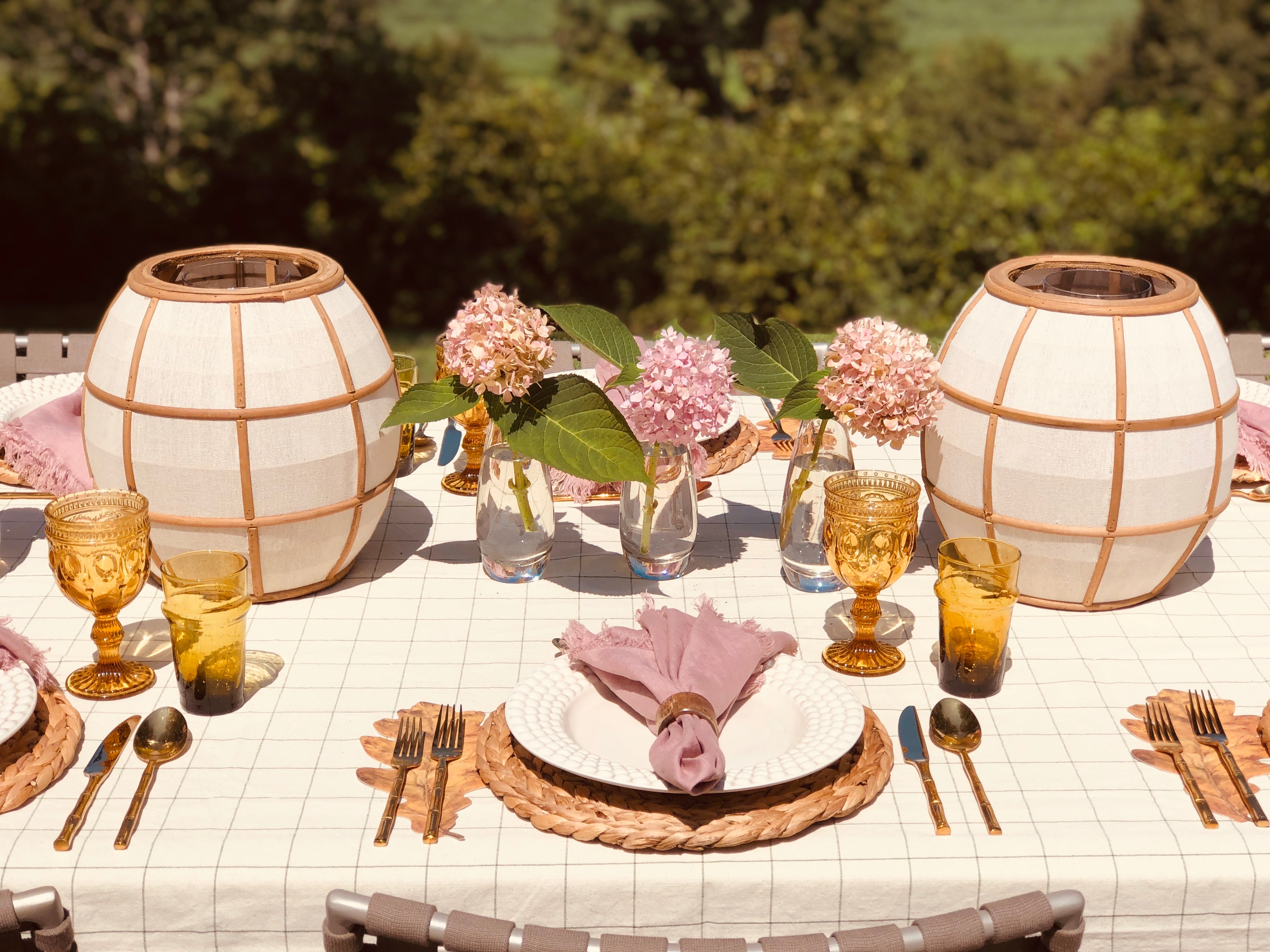


The most inviting table arrangement often comes from keeping each vase simple. For bud vases for tables, choose a petite shape that holds a single stem or a little greenery, then vary the heights or glass finishes to add depth without crowding the setting. Examples range from 3.5-inch bottle vases to a 7.5-inch decorative vase.
A thoughtful tablescape doesn’t need a large centerpiece to feel polished. The right scale balances flowers with place settings while keeping the table comfortable for conversation.
Learn how to choose vase sizes and shapes, pair clear or colored glass with your table’s palette, and match flowers and greenery to the look you want. We’ll also explore simple arrangement ideas, from a single seasonal bloom to a loose mix of stems. Use these practical details to create a table that feels considered, welcoming, and easy to enjoy.
Key Takeaways
- Group petite vases in a loose cluster, mixing heights and silhouettes for a centerpiece with visual depth.
- Choose vase height and opening shape to suit the table’s scale and the stems you want to display.
- Use clear glass for a light, versatile look or colored and textured finishes to bring another layer to your palette.
- Pair each vessel with a single flower or a small touch of greenery, letting the stem’s shape guide the arrangement.
Bud vase arrangement inspiration
Build a centerpiece around one idea: color, shape, or season. Bud vases for tables create an airy look without crowding place settings. For a spring brunch, group clear glass with tulips. For an autumn dinner, try amber glass with leafy stems. Keep the display low enough for easy conversation.
How much do bud vases and arrangements cost? The cost depends on the number and type of vases, their finish, and whether flowers are included. A single-stem display needs fewer blooms than a mixed arrangement.
How many bud vases should you use per table? Let the table’s size, place settings, and serving space guide the arrangement. Start with a small group in the center, then adjust the spacing so guests can reach shared dishes.
Choose bud vases for tables in a consistent finish for a calm effect, or mix silhouettes for more movement. A 6-inch optical glass mini urn comes in a set of four. Place different vase shapes between serving pieces instead of clustering every item at the center.
- Fresh and airy: Pair clear cylinders with tulips or ranunculus. Leave space between blooms for a light spring setting.
- Warm and layered: Add leafy stems to 4.5-inch green square bottle vases. Their color contrasts nicely with neutral linens.
- Polished and festive: Try 5.25-inch gold-rimmed glass vases with small seasonal flowers. Echo the gold in a napkin ring.
For an easy setup, place the tallest vase near the center and arrange shorter shapes nearby. Keep flowers below seated eye level and leave clear paths for serving. Before guests arrive, view the arrangement from each chair. Move any stem that interrupts conversation, and make sure each place setting has comfortable space.
Bud vase sizes and shapes
A vase’s height and opening shape affect how a stem sits and looks. Compare each vase with your flowers and tableware before arranging.
Bud Vase Sizes
Choose height based on the stem and the setting. A 3.5-inch tiny bottle suits a short, compact bloom, while a 6.5-inch clear bottle gives taller stems more room. Sets vary in quantity: tiny bottle vases come in sets of four, while clear bottle vases come in sets of six. Check the vase height beside your place settings, too.
Varying heights adds dimension, but keep the tallest pieces from dominating the table. For example, place 4-inch dark amber bottles beside 5.25-inch clear medicine bottles. The rise creates a gentle rhythm without relying on a single large centerpiece.
Bud Vase Shapes
Shape changes how a stem is supported and displayed. A narrow bottle opening holds one stem upright, while a pleated bottle adds texture around a simple flower. A 4.25-inch Malaga brown luster glass holder has a compact profile and comes as a set of two. Compare its silhouette with the flowers’ natural lines.
Use consistent shapes for a tailored arrangement, or combine bottle forms for a collected look. A clear pleated bottle vase measures 5.25 inches and comes in a set of four. Pair its ridged surface with smooth glass bottles to create contrast without introducing another color.
Before filling the vases, place them empty along the table’s center. Leave space for plates and serving dishes, then adjust the group until each shape feels balanced. A 6.5-inch bottle with a cork can add a distinct outline beside a clear cylinder. Keep cork-topped pieces grouped together for a deliberate accent, rather than scattering them randomly.
- For a uniform line: Repeat clear medicine bottles, each 5.25 inches tall, for a consistent profile.
- For varied silhouettes: Combine 4-inch dark amber bottles with 6.5-inch cork-topped bottles.
- For serving comfort: Arrange vases around, not on top of, the space needed for flatware and serving pieces.
Glass colors and finishes
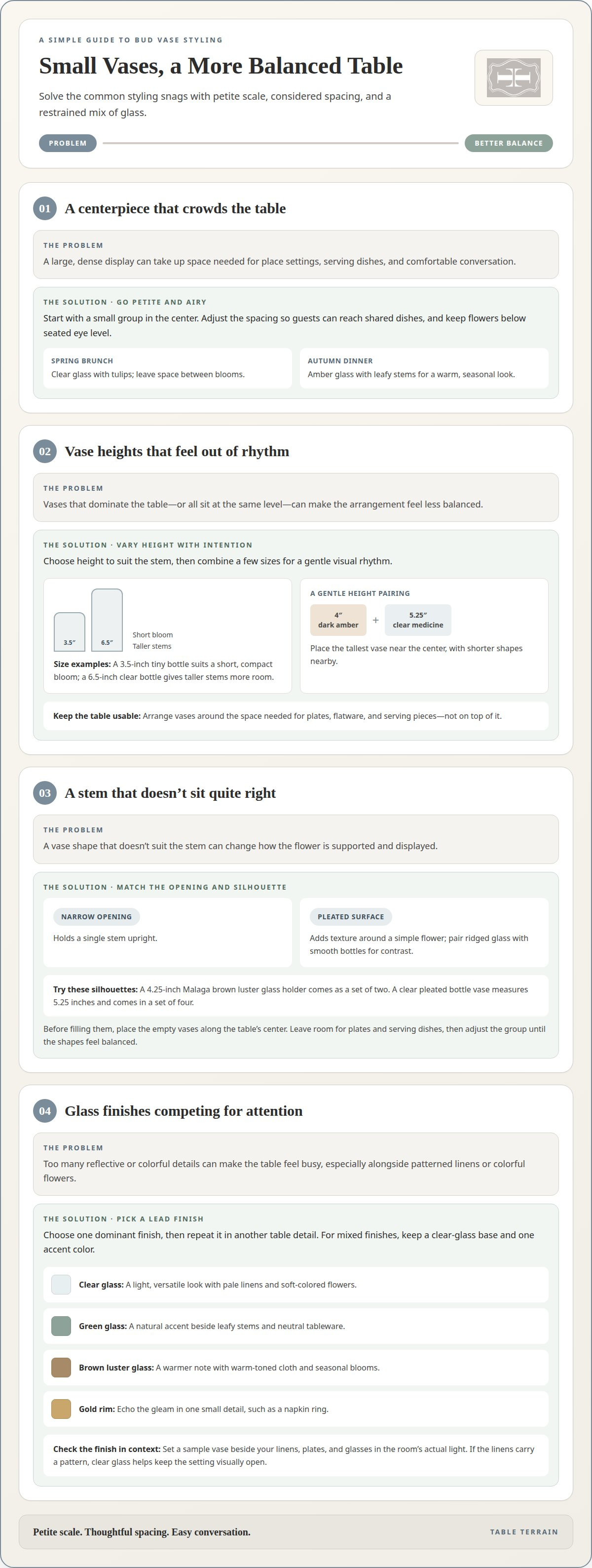
Glass color sets the table’s mood before you add flowers. Clear glass keeps the setting visually light and works with varied palettes. Green glass adds a natural accent beside white or cream linens. Brown luster glass brings a warmer, more grounded note. Choose one dominant finish, then repeat it in another table detail.
For a subtle contrast, compare transparent glass with textured surfaces. A 7.5-inch hand-blown clear vase has a decorative profile, while a 6.25-inch ice-look crystal vase offers a cooler, more crystalline appearance. These finishes create different impressions, even beside similar flowers. Set both against your table linen before choosing, and notice which one complements its texture.
Metallic details can connect glass to other table elements. Gold-rimmed glass adds a fine gleam, which you can echo with a napkin ring or flatware accent. Keep the remaining finishes simple. Too many competing reflective details can make the table feel busy, especially beside patterned linens or colorful flowers.
- For an airy setting: Choose clear glass with pale linens and soft-colored flowers.
- For a botanical palette: Use green glass beside leafy stems and neutral tableware.
- For a cozy table: Pair brown luster glass with warm-toned cloth and seasonal blooms.
- For a polished accent: Repeat a gold rim in one other small detail.
Check the finish in the room’s actual light. Daylight can make clear glass feel crisp, while warm evening lighting emphasizes amber and brown tones. Place a sample vase beside the plates and glasses you plan to use. A colored vase can coordinate with wine glasses, but matching every piece isn’t necessary. One repeated tone is often enough to make the table feel intentional.
For mixed finishes, limit the palette to a clear base and one accent color. Arrange the glass pieces first, then add linens and tableware. If the vases provide strong color, choose quieter cloth. If the linens carry the pattern, let clear glass keep the setting visually open. This simple sequence helps each finish earn its place.
Pairing vases with flowers and greenery
Match each stem to the vase opening and overall silhouette. Glass bud vases suit single-stem flowers or grasses, keeping each bloom distinct. A tulip’s smooth stem, for example, looks clean in a narrow bottle. A curved branch of greenery can bring movement to a simple cylinder. Start with the flower, then choose a vessel that supports its natural shape.
For a balanced display, trim stems at different lengths before arranging. Place the tallest bloom in a taller vase, then use shorter flowers nearby. A 6.5-inch clear bottle can hold a longer stem, while a 3.5-inch bottle suits a compact flower. Keep the flower head comfortably above the rim, without letting it overwhelm the vase.
- Single-stem flowers: Try a tulip, ranunculus, or small rose in a narrow-necked bottle. One bloom makes its color and outline the focus.
- Grasses: Set a slender grass stem in a clear cylinder. Its fine lines add height and texture without a dense flower head.
- Greenery: Use a small leafy sprig in a bottle-shaped vase. Turn the leaves outward to create a soft, open profile.
For a coordinated table, repeat one flower type across several vases. Try white tulips for a crisp look, or use green stems to echo nearby foliage. For more variety, alternate a flower with a grass stem. Keep the colors connected, even when the shapes differ. Clear glass keeps stems visible; colored glass adds another accent, so choose blooms that complement it.
Prepare the arrangement in stages. First, place empty vases along the table. Next, add water and trim each stem to fit. Finally, turn each bloom toward the room and check the view from every seat. Remove leaves that sit below the waterline, and keep stems separated where possible. Select glass vases for your table to give each flower or grass a simple, considered setting.
Table Terrain: Table Linens & Napkin Rings
Table Terrain helps bring your vase arrangement into a cohesive setting with table linens and napkin rings. Choose linens that complement the glass color, then repeat a small detail, such as the napkin ring finish, to connect the display. For a complete tablescape, pair the arrangement with flatware and serving items, goblets, or vases and containers.
Choose these pieces after settling on the flowers and vase style. A patterned cloth can balance clear glass, while simpler linen lets colored vases stand out. Coordinated details make the table feel thoughtfully composed without competing with the blooms.
Explore table linens and napkin rings to finish your setting, or visit Table Terrain to browse the collection.
Make the next gathering your own
Let the table reflect the occasion, not just the flowers. A birthday brunch might call for playful color, while a quiet dinner could feel more intimate with a restrained palette. When choosing bud vases for tables, think beyond one event: select pieces and details you’ll enjoy styling again with fresh seasonal stems.
Table Terrain brings the setting together with Table Linens & Napkin Rings, Flatware & Serving Items, and Vases & Containers. Choose a starting point, such as the vase or table linen, then build around its color and character. A considered mix makes hosting feel personal without requiring every detail to match.
Ready to shape a table that feels like yours? Contact Table Terrain to plan your table and explore the pieces that can bring your next gathering to life.
Frequently Asked Questions
What size bud vases work best for table centerpieces?
The best size supports the stem without taking over the centerpiece. Match the vase opening to the flower’s stem, then consider its footprint beside plates, glasses, and serving dishes. For a narrow dining table, choose compact vessels that leave room for shared dishes. On a broader table, vary vase proportions for a more layered display.
What flowers are best for bud vases?
Choose flowers with sturdy stems and a shape that looks complete on its own. Sweet peas bring a soft, airy feel, while anemones offer a bold focal point. Cosmos add a relaxed garden character, and a small herb sprig gives the arrangement a fresh, fragrant accent. Pick blooms that suit the occasion and hold their form in a simple vessel.
How do you arrange flowers in a bud vase?
Start with a clean vase and remove leaves that would sit below the waterline. Add fresh water, then trim the stem at an angle so it fits the vessel without crowding the opening. Place the bloom, turn its face toward the room, and check its balance from different seats. Add another stem only if both have room to move.
What vase heights keep table arrangements from blocking conversation?
Choose a height that keeps the flower head below the sightline between seated guests. Test the arrangement with the chairs pulled into place instead of judging it while standing. If a bloom interrupts a clear view across the table, trim its stem or move it to a lower vessel. Check the whole cluster, since several tall flowers can create a visual barrier.
How do you style bud vases for weddings, dining tables, or events?
For a wedding, repeat a restrained color palette along the table while letting each arrangement feel individual. At home, coordinate the flowers with linens or glassware already in use. Seasonal blooms can make a celebratory dinner feel personal. Keep the arrangement clear of place settings, and repeat a small color or texture for a thoughtfully collected look.