


Your dining table isn't just a piece of furniture; it's a canvas for your most memorable gatherings. While many fear that embroidered table linens feel like a dusty relic from a grandmother’s attic, the 2026 aesthetic proves otherwise. Today, these intricate pieces act as the "jewelry" of the dining room. They provide the tactile depth and artisanal soul that modern minimalism often lacks.
It's natural to worry that intricate stitching feels like an outdated heirloom or that a single wash might ruin a delicate investment. You want a setting that looks curated and professional, not fussy. This guide shows you how to select, style, and care for premium embroidered linens that transform any dinner party into a sophisticated, gallery-worthy experience. We'll explore the nuances of cotton versus linen, durability secrets, and the exact steps to coordinate artisanal threads with sleek, modern flatware. Get ready to create a tablescape that serves as the ultimate conversation starter and reflects your unique style with ease.
Key Takeaways
- Learn why modern embroidered motifs are the essential tactile layer for 2026 hosting, moving far beyond traditional heirloom styles.
- Discover why 100% linen is the gold standard for embroidered table linens and how to coordinate these patterns with your favorite glassware.
- Master the art of professional layering by using embroidered runners to ground your centerpiece and create a curated, gallery-worthy look.
- Get the definitive checklist for sizing and maintenance, including the ideal "drop" for runners and how to keep delicate threads pristine.
- See how choosing curated motifs ensures aesthetic harmony and turns your table into a natural conversation starter for any gathering.
The Renaissance of Embroidered Table Linens in Modern Hosting
Table settings are evolving into a form of personal expression. In 2026, embroidered table linens have moved far beyond the stiff, formal associations of the past. They now serve as a vital tactile layer, adding a sense of depth and personality that plain fabrics simply cannot achieve. While traditional styles often felt like untouchable museum pieces, modern motifs embrace a whimsical or minimalist spirit. This shift allows hosts to bridge the gap between a relaxed Sunday brunch and a high-stakes formal dinner with a single textile choice.
The history of embroidery shows us that threadwork has always been a mark of care; however, today’s version is defined by intentionality rather than excess. These pieces act as a natural focal point for the eye. They draw attention toward the center of the table without overwhelming the conversation. By choosing linens with thoughtful stitching, you signal to your guests that every detail was considered for their comfort and enjoyment. It is a quiet way to elevate the atmosphere without feeling over-decorated.
Why Detail is the Ultimate Hosting Hack
Artisanal details do the heavy lifting for you. When your linens feature intricate patterns or raised textures, you don't need to spend hours over-engineering a floral centerpiece. The fabric itself provides the visual interest. Psychologically, guests perceive a table with hand-finished details as more welcoming and intimate. It creates an atmosphere of warmth that feels both curated and personal. Ultimately, embroidered linens are the functional art of the modern dining room.
Embroidered vs. Printed: The Texture Difference
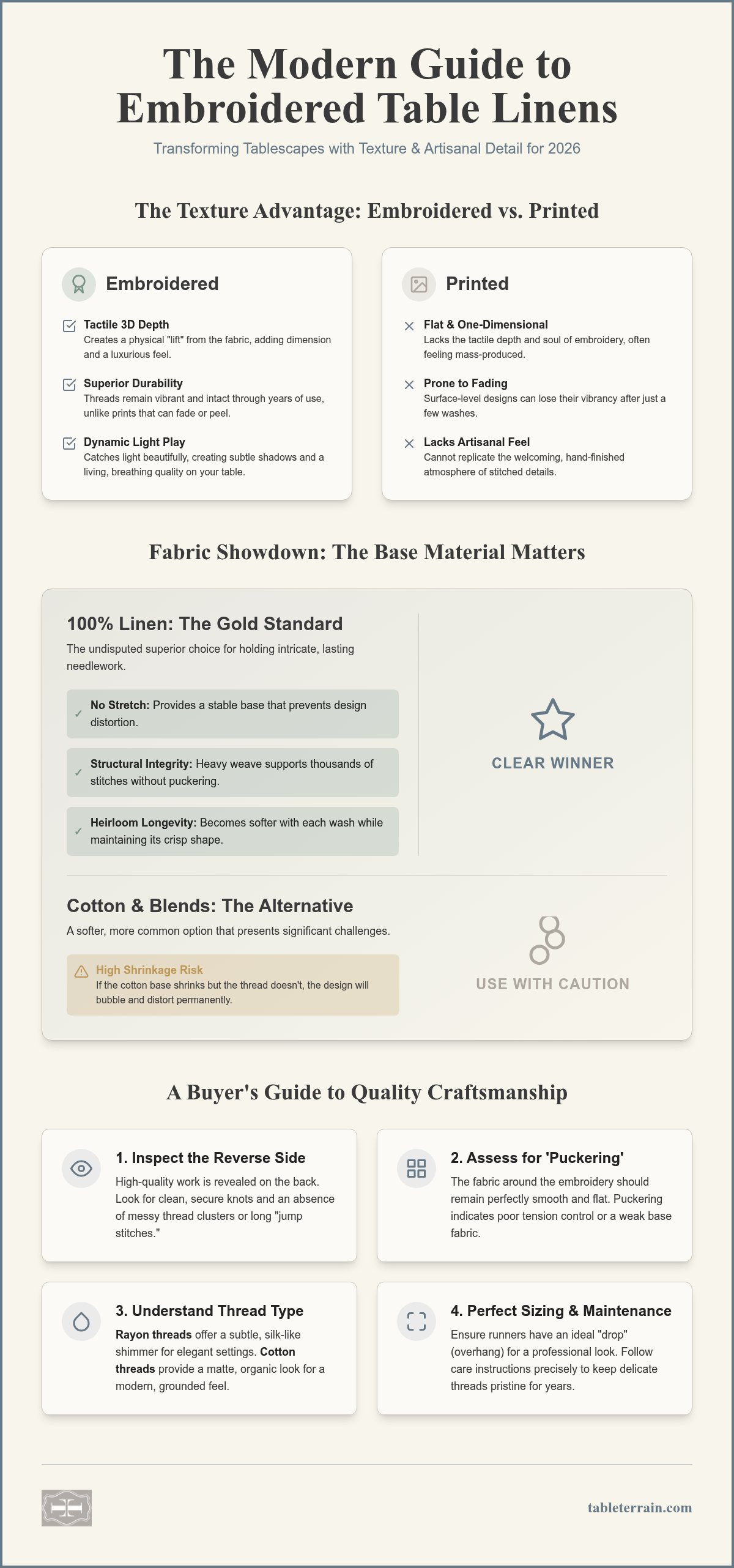
Texture is the secret ingredient of a professional tablescape. Prints are flat. They often feel one-dimensional under evening light. In contrast, embroidery offers a physical "lift" from the fabric base. This creates tiny shadows and a subtle play of light that gives your table a living, breathing dimension. From a practical standpoint, high-quality stitching is significantly more durable than surface-level prints. Printed designs can fade or peel after a few washes, while thread remains vibrant and intact.
To spot high-quality work, look at the reverse side of the cloth. Clean, secure knots and a lack of messy thread clusters indicate professional craftsmanship. Superior thread density ensures the fabric won't pucker or pull. This maintains a crisp silhouette through years of celebrations and family gatherings.
Materials and Techniques: A Buyer’s Guide to Quality
Quality begins with the base. For embroidered table linens, 100% linen is the undisputed gold standard. Its stable, heavy weave provides the necessary structural integrity to support thousands of needle penetrations without losing its shape. Unlike synthetic blends that can warp under the tension of a needle, pure linen stays flat and crisp. This ensures your intricate patterns look as sharp after ten dinners as they did on the first night.
Thread density is another critical factor to consider. High-quality pieces feature a tight, consistent stitch count that prevents the fabric from "puckering." Puckering occurs when the embroidery thread is too heavy or the tension is poorly calibrated, causing the surrounding fabric to bunch up. When you browse for curated table linens, look for designs where the fabric remains perfectly smooth around the edges of the motif. This level of precision is often the result of hand-guided embroidery. While industrial machines produce thousands of identical items, hand-guided work allows an artisan to adjust tension in real-time, giving the finished piece more soul and dimension.
Linen vs. Cotton: Which Fabric Wins?
Linen is superior for holding intricate needlework because it doesn't stretch. It provides a sophisticated, slightly textured backdrop that highlights the sheen of the thread. Cotton is a popular alternative because of its soft hand-feel, but it presents a specific challenge: shrinkage. If the cotton base shrinks during washing but the embroidery thread does not, the design will bubble and distort. Blends can offer a practical middle ground for frequent hosters who want easier ironing, but they rarely match the heirloom longevity of a pure linen runner or napkin.
Evaluating the Stitch: What to Look For
To find a high-end piece, you must look at the back. A clean reverse side, free from messy thread nests or long "jump stitches," indicates professional craftsmanship. The type of thread used also changes the entire mood of the table. Rayon threads offer a subtle, silk-like shimmer that catches candlelight beautifully. Conversely, cotton threads provide a matte, organic look that feels grounded and modern. Avoid linens with loose threads or uneven tension, as these are red flags that the embroidery will likely unravel after a few cycles in the wash. Premium linens also utilize high-quality backing materials that stabilize the design without making the fabric feel stiff or scratchy to the touch.
Styling Embroidered Linens for a Sophisticated Tablescape
Think of your table as a curated landscape rather than just a flat surface. Embroidered table linens provide the essential topography for this vision. Start by using an embroidered runner to ground your centerpiece. This piece acts as a visual anchor, drawing the eye along the length of the table while providing a decorative path for your vases and candles. By layering textures, you create a sense of professional styling that feels both effortless and intentional.
Mixing patterns is the secret to a table that looks collected over time. Pair your embroidered napkins with solid, heavily textured placemats to create contrast. If your napkins feature a delicate vine motif, a rustic seagrass or stone-washed linen placemat provides a grounded backdrop that makes the needlework pop. This prevents the setting from looking too "matchy-matchy" or dated. Transitioning between seasons is equally simple. Swap bright botanical threads for moody geometric styles in café noir or champagne gold to instantly shift the mood from a spring garden to a cozy winter feast.
Balance is everything when coordinating with glassware. If your linens feature organic, swirling motifs, echo those curves with your choice of stems. For example, pairing botanical embroidery with green goblets creates a lush, cohesive look. The colored glass pulls the earthy tones from the thread, making the entire setting feel like a single, unified art piece. This layering of color and texture is what transforms a simple meal into a gallery-worthy experience.
Matching Linens with Napkin Rings
The right ring acts as a frame for your embroidery. Avoid "over-crowding" your setting by pairing busy, multi-colored stitching with minimalist napkin rings. A simple gold or silver band allows the artisanal detail of the cloth to remain the star of the show. For more styling rules, check out The Ultimate Guide to Table Linens and Napkin Rings. Remember to fold your napkins in a way that showcases the motif rather than tucking it away inside the ring.
Coordinating with Flatware and Glassware
Contrast is your best friend when selecting flatware. Organic, hand-guided embroidery pairs beautifully with modern, matte flatware. The sleek lines of brushed black or copper cutlery provide a contemporary counterpoint to the soft, tactile nature of the thread. Use your embroidered motifs to mirror the shapes in your glassware. If your napkins have sharp, geometric stitching, choose goblets with clean, angular silhouettes to maintain a consistent design language across the entire "terrain" of your table.
The Practical Buyer’s Checklist: Sizing and Maintenance
A beautiful table is an investment in your home’s atmosphere. To ensure your embroidered table linens remain gallery-quality for years, you need to master the basics of sizing and care. Many hosts hesitate to use fine linens for fear of a single red wine spill or a laundry mishap. However, with the right approach, these pieces are surprisingly resilient. Practicality doesn't have to sacrifice style.
Start with the perfect fit. For an embroidered runner, aim for a "drop" of 6 to 10 inches on each side of the table. This length provides a sense of formal weight without interfering with guests' laps. Napkin size also dictates the mood. Lunch gatherings typically use 18-inch squares, while formal dinner parties require 22-inch napkins. These larger dimensions give you more fabric to work with. This allows you to showcase the intricate motifs without the fold feeling cramped or messy.
Laundering is simpler than you might think. While hand-washing is the safest route, most high-quality linens can handle a machine's gentle cycle. Use a mesh laundry bag to prevent the delicate threads from snagging on the machine’s drum. Use cold water and a mild, bleach-free detergent to keep the colors vibrant and the fibers strong. Store your linens in a cool, dry place away from direct sunlight. Avoid plastic storage bins, which can trap moisture and cause yellowing. Instead, wrap them in acid-free tissue paper or cotton bags to prevent thread snagging and allow the fibers to breathe.
Maintenance and Longevity
Pre-treating stains is a delicate art. Blot the area immediately with a clean, white cloth. Never rub, as this can fray the embroidery threads. For ironing, always work on the reverse side of the fabric. Placing a soft towel underneath the linen while ironing the back pushes the embroidery forward. This preserves its three-dimensional "lift." Air-drying is non-negotiable. High heat from a dryer can cause the base fabric to shrink at a different rate than the thread, leading to permanent distortion of the design.
Building Your Collection Over Time
You don't need to buy everything at once. Start with a versatile set of four napkins to elevate your everyday meals. Once you're comfortable with the care routine, invest in a runner that complements your existing flatware. A runner offers more styling flexibility than a full tablecloth. It allows you to show off the natural beauty of your table's surface. You can even mix modern embroidered table linens with vintage heirloom finds for a look that feels uniquely yours. Ready to start your journey? Explore our curated selection of runners and linens to find your next conversation piece.
Elevate Your Home with Table Terrain’s Curated Linens
Table Terrain acts as your creative partner in the art of gathering. We do the hard work of selection so you don't have to. Our embroidered table linens feature unique motifs designed to spark interest without overwhelming your guest list. Every piece is chosen for its ability to act as a natural conversation starter, whether you are hosting a quiet breakfast or a grand celebration. By focusing on individual décor pieces that work together, we ensure your table feels both personalized and professional every time.
Buying from a curated shop guarantees aesthetic harmony across your entire collection. You don't have to worry if your runner will clash with your glassware or if the embroidery feels too busy for your dining room. We have already tested these combinations for you. Our linens pair seamlessly with modern table settings, allowing you to layer textures with absolute confidence. We prioritize quality materials that stand the test of time, ensuring your investment remains a staple of your hosting toolkit for years to come.
The Table Terrain Difference
Our designs intentionally avoid the cluttered, heavy look of traditional embroidery. Instead, we focus on sophisticated, breathable patterns that allow your table’s natural character to shine through. These pieces are built for professional-level layering, giving you the freedom to mix and match without the fear of a design mishap. Table Terrain simplifies the art of the sophisticated table by providing the essential building blocks for a gallery-worthy experience. We believe that beauty should be achievable, not just aspirational.
Ready to Host?
It is time to move from inspiration to implementation. Hosting should be a joy, not a stressor. With the right curated tools, you can create a professional-level tablescape in minutes rather than hours. Don't let the fear of "getting it wrong" stop you from creating a beautiful environment for your loved ones. We invite you to explore our full collection of linens, glassware, and flatware to find the perfect match for your unique style. Visit our shop today to browse the latest embroidered arrivals and start planning your next memorable gathering with ease.
Set Your Most Memorable Table Yet
Embracing the artistry of embroidered table linens doesn't have to be intimidating. By focusing on premium materials like 100% linen and mastering the simple rules of layering, you can create a dining experience that feels both professional and deeply personal. These pieces are more than just fabric; they are the tactile foundation of your home’s most important gatherings. Whether you are coordinating delicate motifs with modern glassware or following a crisp maintenance routine, you are building a collection that will serve as a conversation starter for years to come.
Hosting is an art form, but you don't have to be an expert to get it right. We have done the hard work of curating sophisticated designs that avoid the clutter of the past. This allows you to focus on the joy of the gathering itself. Our pieces are designed for longevity and effortless styling, acting as the creative partner you need for every occasion. Shop Table Terrain’s Curated Collection of Embroidered Linens today to find the perfect pieces for your next event. We can't wait to see the beautiful landscapes you create.
Frequently Asked Questions
Are embroidered table linens too formal for everyday use?
No, embroidered table linens are not restricted to formal holidays. In 2026, the trend of intentional luxury encourages using artisanal pieces for everyday gatherings like Sunday brunch. These textiles add a tactile soul to your table that plain fabrics lack. Pair them with simple flatware to keep the mood relaxed. It's about making daily meals feel like a special occasion without the stiffness of traditional etiquette.
How do I wash embroidered napkins without ruining the stitching?
You can safely wash your linens by using a gentle machine cycle and a mesh laundry bag. The bag prevents threads from snagging on the drum or other garments. Always use cold water and a mild, bleach-free detergent to preserve the thread's color and strength. If you're dealing with very intricate hand-guided work, hand-washing in a basin is the safest choice. Air-drying is essential to maintain proper stitch tension over time.
What is the best fabric for embroidered table runners?
100% linen is the gold standard for embroidered runners because of its structural stability. Unlike cotton or synthetic blends, pure linen doesn't stretch or warp under the tension of thousands of needle penetrations. This prevents the fabric from bunching or puckering around the design. Linen also provides a sophisticated, textured backdrop that makes the sheen of the embroidery thread stand out. It is a durable, heirloom-quality choice for any modern host.
Can I mix different embroidery styles on the same table?
Mixing embroidery styles is a brilliant way to create a curated, collected-over-time aesthetic. The secret to success lies in maintaining a consistent color palette across different motifs. For instance, pair geometric runners with botanical napkins if they share similar earthy tones like sage or terracotta. This creates visual harmony while allowing each unique piece to serve as a conversation starter. Avoid mixing too many high-contrast colors to keep the tablescape looking professional.
How do I choose the right size runner for my dining table?
Choose a runner that allows for a 6 to 10 inch drop on each end of your table. This specific length provides enough weight to look intentional without interfering with your guests' comfort. Measure your table's total length and add 12 to 20 inches to find your ideal size. A runner that is too short can look like a placemat, while one that is too long feels messy and overwhelming in a modern setting.
Do embroidered linens require special storage?
Proper storage is vital to prevent thread snagging and fabric yellowing. Wrap your linens in acid-free tissue paper or place them inside breathable cotton bags. Avoid plastic bins, as they trap moisture and can lead to mildew or permanent stains. Store them in a cool, dark, and dry environment. If you're storing them for a long period, refold them occasionally to prevent permanent creases from weakening the fibers or the embroidery.
What should I look for to ensure embroidery is high-quality?
High-quality embroidered table linens are defined by their back and their tension. Flip the fabric over to check for clean knots and a lack of messy thread clusters. The surrounding fabric should be perfectly smooth, not puckered or bunched. Look for high thread density in the motif itself, as sparse stitching often indicates lower-end production. Professional hand-guided work will feel substantial and show a subtle play of light and shadow across the design.
How do I iron embroidered linens without flattening the design?
Always iron your linens on the reverse side to protect the three-dimensional lift of the stitching. Place a thick, soft towel on your ironing board before laying the linen face-down. As you press the back of the fabric, the towel allows the embroidery to sink in rather than being flattened. This technique pushes the design forward, making the motifs pop. Use a steam setting for stubborn wrinkles, but never press the iron directly onto the front.