


A stunning table isn't born from a perfectly matched set; it's built through the intentional layering of textures and tones. You’ve probably felt that familiar hesitation while trying to find the right table runner and placemat combinations for your next gathering. It’s easy to worry that a bold pattern will overwhelm the room or that a neutral palette will simply look flat and uninspired. You want a home that feels curated and worldly, not a table that looks like it came straight out of a plastic bag.
We understand that the art of hosting should be joyful, not a design dilemma. This guide provides a foolproof framework to help you mix and match your linens with the ease of a seasoned stylist. You'll gain the confidence to pair rich fabrics with artisanal textures, creating a professional-grade tablescape for any occasion. We will walk you through color theory basics, texture layering techniques, and how to use your runners as a foundation for elegant glassware and vases. It is time to turn your dining room into an inspiring space for connection.
Key Takeaways
- Define your table's visual hierarchy by using the runner as a central anchor and placemats as individual frames for each guest.
- Explore proven design formulas for table runner and placemat combinations, from sophisticated monochromatic layers to striking complementary color pairings.
- Elevate your tablescape by mixing materials, such as pairing smooth, high-quality linens with woven textures for an organic, professional look.
- Transition seamlessly between occasions by mastering specific linen palettes and weights, whether hosting a breezy brunch or a formal evening dinner.
- Learn to treat your textiles as a foundation for the rest of your decor, ensuring your glassware, goblets, and vases harmonize with your chosen linens.
The Foundation of Style: Why Runner and Placemat Combinations Matter
Your dining table is more than a piece of furniture; it's the stage for your most memorable gatherings. Treating this surface as a canvas allows you to practice the art of tablescaping. This isn't just about decoration. It's about creating a "terrain" that guides the eye and sets a specific energy for the meal. The most successful table runner and placemat combinations establish a visual hierarchy that feels both intentional and effortless.
Think of the runner as your table's anchor. It provides a central spine that connects every guest and draws attention to your curated centerpieces or vases. In contrast, placemats act as individual frames. They give each guest their own dedicated space, making the setting feel deliberate and personalized. When these layers work in harmony, they create visual weight. This prevents your table from looking flat or unfinished. Instead, it looks professional and inviting.
The psychological impact on your guests is significant. A well-set table communicates care. It tells your friends and family that their presence is a special occasion worth the extra effort. By mastering these combinations, you transform a simple meal into an immersive experience that feels both polished and welcoming.
The Functional Benefits of Layering
Layering textiles isn't only about beauty. It serves several practical purposes that enhance the dining experience:
- Surface Protection: Quality linens act as a barrier against heat, moisture, and scratches without hiding the table's character entirely.
- Personal Boundaries: Placemats define the physical space for each guest. This creates a sense of comfort and order, especially at a crowded table.
- Acoustic Comfort: Soft layers dampen the sound of flatware and glassware. This reduces background noise and fosters a more intimate atmosphere for conversation.
Setting the Mood with Textiles
The choice of material dictates the vibe of your event. High-quality linen offers a sophisticated, organic feel that works for both elevated casual lunches and formal dinners. Cotton provides a crisp, approachable look for daily use. Use your runner to lead the eye toward your focal points, such as seasonal floral arrangements in elegant containers. Meanwhile, placemats ground your place settings. They provide a stable, textured base for your goblets and wine glasses, ensuring the entire table feels cohesive and curated. Choosing the right table runner and placemat combinations ensures that every element, from the largest cloth to the smallest fork, has a place in your design story.
Design Formulas for Perfect Linen Pairings
Professional styling moves away from the "matching set" mentality. It embraces a curated approach instead. Mastering specific table runner and placemat combinations allows you to build a look that feels uniquely yours. Rather than buying pre-packaged linens, use these design formulas to create depth and visual interest on your dining surface.
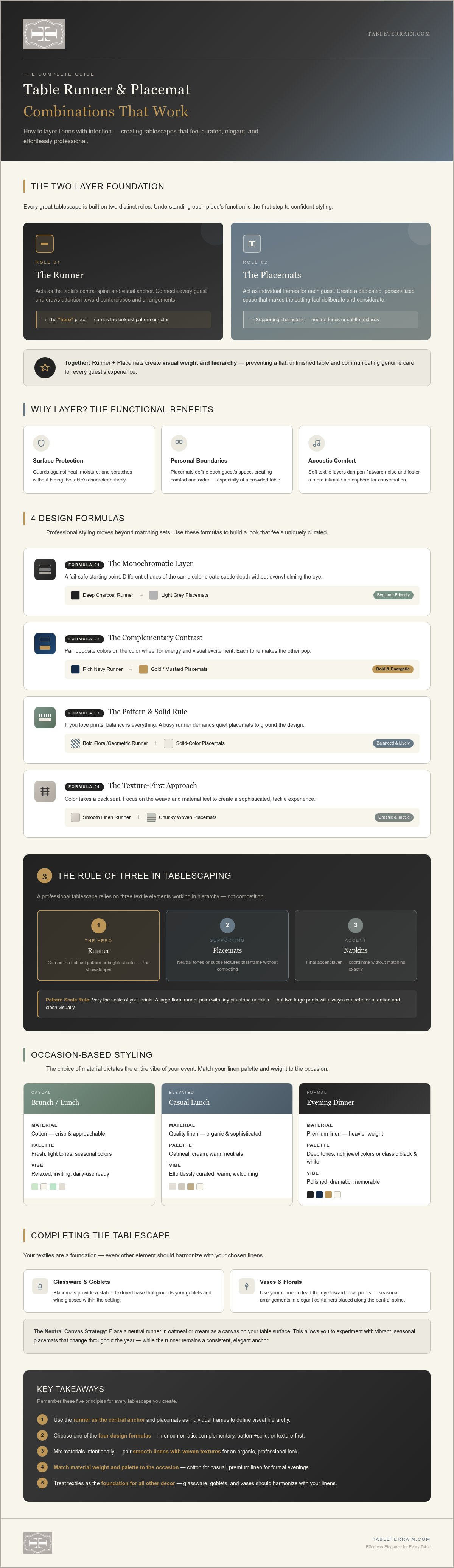
- The Monochromatic Layer: This is a fail-safe starting point. Pair a deep charcoal runner with light grey placemats. Using different shades of the same color creates subtle depth without overwhelming the eye.
- The Complementary Contrast: For those who love energy, pair opposite colors on the wheel. Try a rich navy runner with gold or mustard yellow placemats. These tones make each other pop.
- The Pattern and Solid Rule: If you enjoy prints, balance is key. Pair a busy floral or geometric runner with solid-colored placemats to ground the design.
- The Texture-First Approach: This method focuses on the weave rather than the color. Pair a smooth, high-quality linen runner with chunky, woven placemats for a sophisticated, tactile experience.
The Rule of Three in Tablescaping
A professional tablescape often relies on a trio: the runner, the placemats, and the napkins. To avoid visual clutter, choose one "hero" piece to carry the boldest pattern or brightest color. The other two elements should act as supporting characters. If your runner is the hero, keep your napkins and placemats in neutral tones or subtle textures. Vary the scale of your patterns as well. If the runner has a large floral print, a napkin with a tiny pin-stripe can work, but two large prints will always compete for attention.
Balancing Color and Neutrality
Your table surface itself is part of the color story. A rich walnut or sleek marble table serves as a natural base. Use a neutral runner in oatmeal or cream as a canvas. This allows you to experiment with vibrant placemats that change with the seasons. If you want to make a bold statement, use a vibrant, high-contrast runner and keep the rest of the setting minimal. This directs all focus to the center of the table where your conversation and food happen. You can find inspiration for these curated pairings in our collection of premium table linens. This balanced approach ensures your table looks intentional, not accidental.
Texture Play: Mixing Materials for a Sophisticated Look
A table that looks flat often lacks one critical element: texture. While color draws the eye, texture invites the touch. It creates a three-dimensional experience that moves beyond simple decoration into the territory of professional design. Mastering your table runner and placemat combinations requires a keen eye for how different materials interact. By layering varied surfaces, you build a "terrain" that feels rich, curated, and intentional. This tactile approach prevents your setting from looking like a showroom floor and instead makes it feel like a lived-in, sophisticated home.
The secret lies in the contrast between soft and hard surfaces. A smooth linen runner provides a fluid foundation, while a structured placemat adds necessary "height" to the place setting. This physical lift separates the dinnerware from the table surface, making each guest’s spot feel like a framed piece of art. When you combine these textiles with the reflective surfaces of wine glasses and the weight of designer flatware, you create a sensory balance that feels complete.
The Elegance of Premium Linen
Linen is the undisputed gold standard for high-end dining. Unlike synthetic fabrics that can look stiff or shiny, premium linen possesses a natural weight and a graceful drape. It feels substantial to the touch and grows softer with every wash. One of the most beautiful aspects of high-quality table linens is the subtle, natural "imperfections" in the weave. These tiny variations catch the light differently than flat cotton. They signal a level of craftsmanship and authenticity that elevates the entire room. To ensure your runners last for years of hosting, always follow care instructions carefully. Proper storage and gentle laundering preserve the fiber's integrity and its signature sophisticated luster.
Incorporating Woven Elements
To achieve an organic, professional look, pair your smooth fabrics with woven textures. Woven placemats, perhaps made from seagrass or sturdy jute, introduce a rustic or coastal energy that grounds the setting. This combination works beautifully because it plays with opposites. The refinement of a linen runner balances the raw, earthy feel of the woven fibers. You can extend this theme by using wicker vases or containers as centerpieces. These pieces complement soft textiles and provide a cohesive aesthetic thread. This layering technique creates a rich sensory experience for your guests. It encourages them to linger at the table, enjoying the visual and tactile harmony of your carefully chosen table runner and placemat combinations.
Occasion-Based Styling: From Casual Brunch to Formal Dinner
Your table should evolve with the clock and the calendar. The beauty of versatile table runner and placemat combinations lies in their ability to shift the mood of a room with a single swap. For a weekend brunch, lean into airy textures and light, sun-drenched colors. A simple, off-white linen runner paired with sage or sky-blue placemats creates a relaxed atmosphere. It feels fresh and inviting. As the sun sets, transition to a formal dinner palette. Rich, darker fabrics like charcoal or deep navy add instant drama. Layering heavy linen placemats over a dark runner creates a sophisticated, professional look that anchors the evening.
Seasonal transitions don't require an entirely new collection of linens. You can refresh your look simply by swapping your runner while keeping your neutral placemats as a constant base. For holiday hosting, focus on integrating themed accents through your centerpieces or napkin rings. This allows you to celebrate the season without your table becoming kitschy or cluttered. A high-quality, neutral foundation remains timeless regardless of the occasion.
The Art of the Everyday Table
Daily dining doesn't have to be dull. Create a "daily" set that balances durability with aesthetic appeal. High-quality linens are surprisingly resilient; they handle frequent use while maintaining their beautiful texture. Simple table accents, such as a small ceramic vase or a curated set of flatware, elevate the space instantly. Placemats are your best friend for quick, stylish clean-ups. They protect your table surface from daily wear while allowing you to reset the scene in seconds. This approach ensures your dining room always feels like a designed space, even during a busy Tuesday night dinner.
Special Event Layering
Celebrations demand a bit more "jewelry" for the table. This is where you can truly master the art of layering. Start with a premium runner as your anchor. Add coordinated placemats to frame each guest’s setting. Introduce napkin rings as the finishing touch. These small pieces act as the jewelry of the table, tying the textiles together. For large groups or long tables, consistency is key. Repeat your combination down the length of the table to create a cohesive visual flow. Complete the look with designer goblets and wine glasses that catch the light. You can browse our curated table runner and placemat combinations to find the perfect foundation for your next landmark event. This level of detail transforms a simple gathering into an immersive experience.
Curating Your Terrain: Completing the Tablescape
Styling a dining table like a pro requires a holistic view of the entire surface. Once you have selected your table runner and placemat combinations, you must consider the hard elements that sit atop them. These pieces provide the contrast necessary to make the soft textiles truly stand out. From the glint of polished flatware to the transparency of fine crystal, every item should contribute to a cohesive visual story.
Vertical interest is often the missing ingredient in home styling. Vases and containers allow you to break up the horizontal plane of the table. By varying the height of your centerpieces, you create a dynamic environment that keeps the eye moving. Choose vessels that echo the craftsmanship of your linens, such as artisanal ceramic or textured glass, to maintain a sense of curated harmony.
Integrating Glassware and Metals
Glassware acts as the light-catcher of your tablescape. Your choice of color can either blend into the background or serve as a vibrant accent. For instance, green water goblets are a remarkably versatile choice. They harmonize beautifully with earthy linen tones and provide a fresh contrast to neutral runners.
Pay attention to the visual weight of your pieces. If you've chosen heavy, woven placemats, pair them with substantial goblets that feel grounded. Conversely, delicate wine glasses suit smooth, light-weight runners. Don't forget the metallic elements. Coordinate your flatware finishes with your napkin rings to create a polished, jewelry-like effect. This level of coordination signals a professional touch that guests will notice immediately.
Final Touches: The Table Terrain Way
The goal of a well-set table is to foster connection. By using elegant table settings, you create a memorable guest experience that feels both aspirational and achievable. It isn't about cluttering the space with unnecessary items. Instead, focus on curated simplicity. Every piece should have a purpose and a place.
This methodical approach to design ensures that your table never feels overwhelming. Instead, it feels like a thoughtfully prepared terrain ready for a shared meal. When your table runner and placemat combinations are supported by the right glassware, flatware, and vases, the result is a sophisticated environment that reflects your personal style. Ready to begin your next design project? Explore our curated collections of runners and placemats at Table Terrain to find your perfect match.
Elevate Every Gathering with Intentional Layering
You now have the tools to transform your dining room from a functional space into a curated sanctuary. By mastering diverse table runner and placemat combinations, you've learned that professional styling is about building layers of texture and tone. Whether you are leaning into monochromatic depth or experimenting with organic woven materials, your table now tells a story of craftsmanship and care. It is a terrain designed for connection.
Completing your tablescape is about more than just linens. It's about the harmony between your fabrics, designer glassware, and polished flatware. At Table Terrain, our collections are curated by expert stylists to ensure aesthetic harmony with minimal effort. Explore our selection of premium linen and designer glassware to find pieces that resonate with your style. We provide nationwide shipping on all luxury dining accessories, bringing sophistication directly to your door. Discover the perfect foundation for your next gathering at Table Terrain.
Don't be afraid to experiment with new textures. Start with a single piece and build your collection over time. Your next memorable meal begins with that first beautiful layer.
Frequently Asked Questions
Should my table runner and placemats match exactly?
Your table runner and placemats don't need to match exactly. In fact, a curated mix usually looks more professional and modern. Try pairing a solid linen runner with textured or patterned placemats to create visual depth. This approach avoids a flat, "store-bought" look. Instead, focus on a shared color palette or complementary textures to tie the setting together. It's about finding balance rather than perfect uniformity.
What is the standard size for a table runner and placemat combination?
Standard runners are 12 to 14 inches wide, while placemats typically measure 12 by 18 inches. For the best look, your runner should be long enough to hang 6 to 12 inches over each end of the table. Ensure your placemats don't overlap the runner. This spacing creates a clean visual frame for each guest's setting and maintains the table's organized hierarchy.
Can I use a table runner on a round table with placemats?
You can absolutely use a runner on a round table. Place a single runner across the center to act as a focal point for your centerpiece. For a more creative look, use two runners to form an "X" shape. Pair these with round or wedge-shaped placemats. These shapes follow the table's natural curve and prevent the setting from feeling cramped or cluttered.
How do I choose a runner for a very long dining table?
For exceptionally long tables, prioritize the length of the drop. Aim for at least 6 inches of overhang on each side. If you can't find a single runner long enough, consider using two identical runners end-to-end, hiding the seam under a central vase or container. Alternatively, place several runners across the width of the table to define individual seating pairs for a unique, structured look.
Is it okay to use placemats on top of a tablecloth and a runner?
It's perfectly acceptable to layer placemats over both a tablecloth and a runner. This triple-layer technique is a hallmark of formal tablescaping. The tablecloth acts as a canvas, the runner provides a central anchor, and the placemats frame the individual settings. This creates maximum visual weight and a sense of luxury. Just ensure the colors and textures coordinate to avoid a cluttered or overwhelming appearance.
What are the best materials for easy-to-clean yet stylish table linens?
Premium linen and high-quality cotton are the best materials for style and longevity. Linen is particularly prized because it's durable and actually improves with age and laundering. It offers a sophisticated, organic drape that synthetic fabrics simply cannot match. For easy cleaning, choose linens with a tight weave. These materials provide a professional foundation for various table runner and placemat combinations while remaining practical for frequent hosting.
How many placemats should I use with a 72-inch runner?
A 72-inch runner is ideal for a table that seats six people. You should use six placemats, with three positioned on each side of the runner. Ensure there is at least an inch of space between the edge of the placemat and the runner. This prevents the table from looking crowded. It also allows the beauty of your table surface to peek through between the layers.
How do I coordinate my napkin rings with my runner and placemat set?
Coordinate your napkin rings by treating them as the finishing jewelry for your table. Match the material of the rings to your flatware or the textures in your table runner and placemat combinations. For example, use wooden rings to complement woven placemats or metallic rings to match designer goblets. This small detail ties the entire terrain together, ensuring a polished and cohesive look for your guests.