


An expensive-looking dinner table rarely comes from matching everything. If you’re wondering how to make a dinner party table look expensive without buying a complete new set, start with what you already own. A thoughtful mix of linens, glassware, and flatware can feel more polished than a perfectly matched table when the pieces work together.
It’s easy to second-guess the details. Which colors belong together? How much layering is enough? And how do you add a centerpiece without crowding the table? Start with a simple palette, build a few useful layers, and choose one focal point. Then edit anything that competes with the setting or takes up space guests need.
This guide covers linens, place settings, glassware, lighting, and centerpieces, with practical ways to leave guests room to dine comfortably. The goal is a cohesive, welcoming table made from considered details and pieces you may already have, without relying on a matching set or costly purchases.
Key Takeaways
- Learn how to make a dinner party table look expensive by balancing repeated colors, thoughtful layers, and open space.
- Use a simple styling order to bring linens, place settings, and glassware together with intention.
- Choose a centerpiece and lighting that set the mood while preserving sightlines and room to serve.
- Follow a five-step plan that starts with the pieces you already own and helps you decide whether an accent is needed.
- Add a personal finishing touch, such as a runner, napkin rings, or distinctive glassware, for a table that feels considered.
What Makes a Dinner Party Table Look Expensive?
Polish comes from considered choices, not simply expensive-looking objects. A table feels elevated when its colors connect, its pieces are in proportion, and each layer has room to be appreciated. Too many decorations or an attempt to match every item can make the setting feel crowded or stiff instead of thoughtfully composed.
An expensive-looking table is a balanced arrangement of coordinated colors, varied textures, useful layers, and open space. Your plates, linens, glassware, and flatware don’t need to come from one set. Repeating a color, material, or finish in a few places helps different pieces feel like they belong together.
The visual cues that make a table feel refined
Start with a restrained palette. Choose a few colors that work well together, then repeat them in small ways across the table. For example, set placemats in a related tone on a neutral cloth, then echo one of those colors in a vase or napkin detail. That repetition creates a visual thread from the place settings to the centerpiece.
Texture adds depth without requiring more color. Pair smooth glass with woven or softly rumpled linen, or contrast simple flatware with a tactile runner. If you include a patterned piece, let it lead and keep nearby colors quieter. This keeps the layers distinct without making them compete.
Leave breathing room, too. Open patches of tabletop are part of the design, not unfinished space. Guests need room to set down a glass, reach for serving dishes, and enjoy the view across the table. If the centerpiece dominates the place settings, reduce its size or move it. Edit until each detail has a purpose.
Why expensive-looking does not have to mean formal
An elevated table can still feel relaxed. Formal place settings have their own traditions and components, as this overview of the history and styles of table settings illustrates, but a dinner party doesn’t need rigid symmetry or a full matching service to look considered. Comfort matters as much as appearance: keep sightlines clear, leave practical space for serving, and position glassware where guests can reach it easily.
Mix what you already own with deliberate repetition. Use similar tones across different linens, echo a glass color in a small accent, or pair an older serving piece with simpler tableware. A runner, napkin rings, or distinctive wine glasses can add character without requiring a complete new set. The aim isn’t to make every item identical, but to make each choice feel at home.
That’s the heart of how to make a dinner party table look expensive: create cohesion, then stop before decoration gets in the way of conversation. A polished table invites guests to linger, not just admire it from a distance.
Build a Polished Tablescape with Color, Texture, and Layers
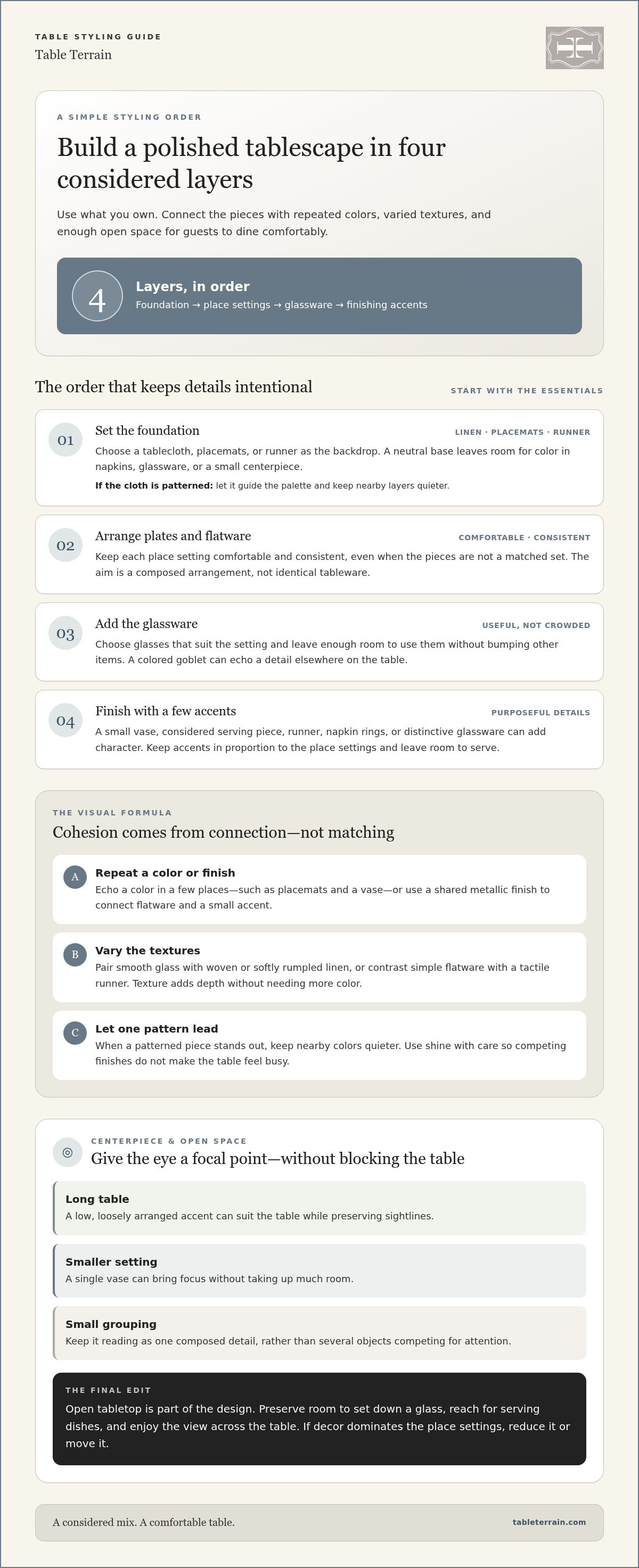
A clear order makes styling easier and helps each choice feel intentional. Start with the table’s foundation, arrange the place settings, add glassware, then finish with a few accents. This sequence keeps decorative details from taking over before the essentials are in place.
Start with a linen or runner foundation
A tablecloth, placemats, or runner sets the visual direction and gives the other pieces a common backdrop. For a flexible starting point, choose a neutral base, then introduce color through napkins, glassware, or a small centerpiece. If you already have a patterned cloth, use it to guide your palette and keep the other layers quieter. For more ideas on coordinating linens and napkin rings, see The Ultimate Guide to Table Linens and Napkin Rings.
Next, set out the plates and flatware. Keep the arrangement comfortable and consistent from place to place, even if the pieces aren’t a matched set. Then add glassware that suits the setting, leaving enough room for guests to use each glass without bumping other items.
Mix glassware, flatware, and accents with intention
One repeated color or finish can connect varied pieces. A colored goblet might echo a detail in the runner, for example, or a shared metallic finish might tie flatware to a small vase. The repetition doesn’t need to be exact; it simply gives the eye a familiar detail to follow.
Contrast between materials creates visual depth, while a restrained palette keeps the layers feeling connected. Pair linen with glass, or smooth serving pieces with a more textured placemat. If you add a pattern, let it be the standout rather than repeating bold motifs across every layer. Use shine with care, too. A reflective accent can catch the light, but several competing finishes may make the table feel busy.
Keep accents in proportion to the place settings. A small vase or a considered serving piece can add character, while oversized decor may crowd the table or displace dishes. Before guests arrive, check that there’s room to reach for glasses and pass serving items. Every layer should contribute to the look without getting in the way.
If your table needs a finishing layer, explore table linens and runners as a simple way to give existing place settings a fresh foundation.
Choose a Centerpiece and Lighting That Elevate Without Clutter
A centerpiece gives the eye somewhere to land, but it shouldn’t become a barrier between guests. Choose its scale with the table, place settings, and meal in mind. A long table may suit a low, loosely arranged accent, while a single vase can bring focus to a smaller setting without taking up much room. A small grouping can work, too, as long as it reads as one composed detail rather than several objects competing for attention.
Pick a centerpiece that suits the table and the meal
Think about sightlines first. Low flowers or greenery keep faces visible across the table, making them a natural choice for a conversation-led dinner. A vase with a few stems adds height and shape, but check that it doesn’t block eye contact. If serving dishes will sit in the center, keep the arrangement compact or leave a clear space for them.
Rule of thumb: keep the centerpiece low, compact, and easy to see around. On a table with several place settings, a broad arrangement can quickly crowd plates and glasses. On a smaller table, one vase or a pair of simple objects may be enough. Step back and view the setting from a seated position. If guests would need to move the centerpiece to talk or serve, edit it down.
Use lighting to create a welcoming atmosphere
Soft, warm light brings a relaxed glow to linens, glassware, and serving pieces. Treat it as part of the atmosphere, not a shortcut for styling. Candlelight can add gentle variation, especially when balanced with the room’s existing light. Place candles where guests can see one another and reach for dishes comfortably. Avoid clustering them so tightly with florals or other accents that the center of the table feels dense.
Balance height and visual weight. If the centerpiece has upright stems, keep nearby candles lower. If the florals are low and airy, a little candle height can add rhythm. Look at the arrangement alongside the place settings, rather than judging each item on its own. The focal point should feel deliberate, but the table must still work for the meal.
For a simple focal accent, a vase or decorative container can bring shape and color to pieces you already own. Choose one that suits the available space, then let it stand on its own rather than adding extras without a clear purpose.
Follow a Simple Step-by-Step Plan for an Elevated Dinner Table
A reliable order keeps styling manageable and helps you spot what the table actually needs. Start with the pieces you own, arrange the essentials first, then decide whether an extra accent would improve the look. This makes it easier to create a polished setting without adding details just to fill space.
Style the table in a deliberate order
- 1. Clear the surface. Remove everyday items so you can see the table’s shape and available space. Wipe it down, then decide whether it needs a tablecloth, placemats, or a runner as its base.
- 2. Choose a palette. Pick a few colors from pieces you already have, such as plates, napkins, or glassware. Repeat one color in another spot to create a visual connection.
- 3. Layer the essentials. Set out plates, flatware, and glasses before adding decor. Keep the arrangement consistent at each place setting, and leave room for guests to sit and dine comfortably.
- 4. Style the centerpiece. Add one focal accent, such as a vase or a small grouping of objects. Keep it proportionate to the table and the meal, with space remaining for serving dishes.
- 5. Edit. Step back and remove anything that feels unnecessary. Check whether the colors feel connected, the centerpiece draws the eye without dominating, and each place setting has enough room.
Make a final guest-ready edit
Before guests arrive, look at the table from a seated position. Can people see one another? Can they reach shared dishes without shifting decor? Are glasses and flatware easy to use? If something blocks a sightline or crowds a setting, move it or take it away. Repeating a color, material, or finish in a small detail can bring the arrangement together without adding another major layer.
That final check turns a collection of useful objects into a composed table. The best answer to how to make a dinner party table look expensive is often to begin with what’s already on hand, then add only a piece that brings needed color, texture, or shape. A runner or a distinctive vase can make an existing setting feel newly considered.
Ready to add a thoughtful finishing touch? Explore thoughtfully curated tabletop accents to find a piece that works with the tableware you already own.
Finish Your Dinner Party Table with Thoughtful, Personal Details
The finishing touch is often the detail that makes a table feel like yours. Choose one personal, seasonal, or conversation-starting element, such as a small keepsake, a handwritten place card, or a color that reflects the occasion. Keep it connected to the rest of the setting by repeating its color or material in a napkin, runner, or glass. One thoughtful note feels intentional; several unrelated themes can make the table feel busy.
Add personality without losing cohesion
You don’t need a full matching set to give your table character. Napkin rings can bring a small accent to simple linens, a runner can introduce a seasonal color, and distinctive goblets or wine glasses can add interest alongside familiar plates. Let one piece lead, then echo a detail elsewhere. For example, pair a colored glass with a similar shade in the napkins rather than introducing several new colors at once.
For more ideas on creating a welcoming gathering, explore Elegant Table Settings: 2026 Guide to Hosting. Keep the final choices personal but practical. A decorative detail should complement the place settings, not take up the space guests need for food, drinks, and conversation. Thoughtful editing helps the table feel polished while staying warm and easy to use.
Use a short checklist before guests arrive
Take a final look around the table from a guest’s seat. This quick check helps catch small distractions before anyone sits down:
- Does each place setting feel complete and comfortable, with its colors in harmony with the rest of the table?
- Can guests see one another and reach shared dishes without moving the centerpiece?
- Is there room for serving pieces, glasses, and the meal itself?
- Does one personal detail stand out, with a color or material echoed somewhere else?
- Can you remove one last object to make the setting feel more relaxed?
That final edit matters. A table doesn’t need to display every beautiful piece you own. Leave space for the meal and the people gathered around it, and let a few considered details do the work. The result feels polished without losing its welcoming spirit.
Find tabletop pieces to make your next gathering feel special, from a distinctive runner or napkin rings to glassware that adds a personal finishing touch.
Set a Table That Feels Polished and Personal
Now you know how to make a dinner party table look expensive without relying on a matching set or filling every inch with decor. Start with a balanced palette, build layers in a deliberate order, and choose a centerpiece that leaves room for conversation and serving. A few repeated colors or textures can make pieces you already own feel connected.
The final touch should feel personal, not complicated. A runner, distinctive glassware, or considered serving piece can add character while keeping the table welcoming and comfortable. Edit as you go, and let each detail earn its place.
For a finishing piece that works with your existing tableware, explore Table Terrain’s curated tabletop pieces, including linens, glassware, flatware, serving items, and vases. Build around what you love, make space for your guests, and enjoy bringing everyone together around a table that feels like you.
Frequently Asked Questions
How do you make a dinner party table look expensive on a budget?
Use what you own, then add only a detail that improves the overall look. Start with a simple linen, placemats, or runner, and choose a small color palette that connects your plates and glassware. Arrange place settings neatly, then add one focal accent, such as a vase. Thoughtful editing, clear space, and a repeated color can make the table feel polished without buying a complete matching set.
What makes a table setting look expensive?
A table setting looks expensive when its pieces feel balanced and intentional, not because each item is costly. Repeat a few colors, vary textures, and keep proportions in check. For example, pair smooth glassware with tactile linens, then leave enough open space around each place setting. A clear focal point and consistent arrangement help the eye read the whole table as composed rather than crowded or assembled at random.
Can you mix and match dinnerware and glassware for an elegant table?
Yes, mixing dinnerware and glassware can create an elegant, collected look. Keep the combination cohesive by repeating a color, material, or finish. For instance, use varied glasses alongside simple plates, then echo one glass color in a napkin or runner. Balance is key: let one pattern or distinctive piece stand out, and keep nearby items quieter. The place settings should feel related without needing to match exactly.
How do you decorate a dinner party table without making it cluttered?
Build the table around its essentials, then add only a few accents with a clear purpose. Keep the centerpiece compact, avoid stacking several decorative themes, and leave usable space for glasses and serving dishes. Check the arrangement from a seated position: guests should be able to see one another and reach shared food easily. If an object blocks conversation or crowds a place setting, remove it or move it elsewhere.
What centerpiece works best for a dinner party table?
The best centerpiece suits the table’s size and keeps conversation and serving comfortable. A low arrangement is a good choice when guests need clear sightlines; a single vase can add focus without taking up much space. A small grouping of objects also works if it reads as one accent. Before settling on it, sit at the table and check that guests can see across it and reach serving dishes without shifting the decor.
How do you make a dinner table look elegant but not formal?
Choose refined details, but keep the arrangement relaxed and practical. Use linens or a runner, set out comfortable place settings, and bring in glassware or flatware that complements the palette. You don’t need rigid symmetry or a fully matched set. Leave room for serving dishes, keep sightlines open, and include one personal touch, such as seasonal color or distinctive glasses. The table should feel cared for, not overly arranged.
Which details make a dinner party table feel more luxurious?
Considered details create a luxurious impression when they work together. A well-chosen runner, napkin rings, distinctive glassware, or a vase can add texture and character to pieces you already own. Soft lighting can bring warmth, while a repeated color or finish connects the setting. Choose one or two accents rather than adding everything at once, and make sure each detail leaves guests plenty of room to dine comfortably.