


What if the secret to a premium vintage isn't the grape, but the vessel you pour it into? Most hosts worry that high-end glassware is too fragile for frequent use or too confusing to pair correctly. You want a table that wows your guests without the stress of hosting etiquette. We agree that your dining experience should feel like a curated event every night, not a source of anxiety.
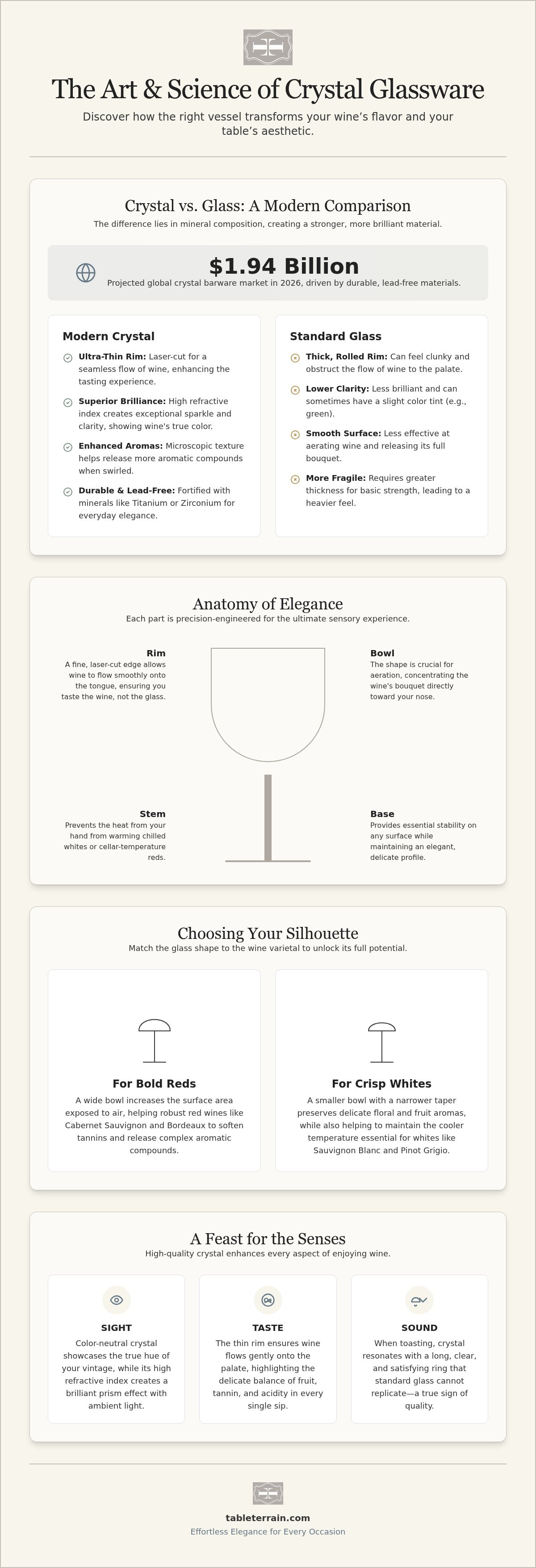
This guide reveals how the right crystal wine glasses transform both your wine’s flavor profile and your table’s aesthetic impact. In 2026, the global crystal barware market has reached $1.94 billion, driven by a shift toward durable, lead-free materials like titanium and zirconium. You'll discover how to select the perfect silhouettes that make your wine taste better and your table look professionally styled. We will walk you through the latest safety standards, modern durability, and the essential shapes every host needs to feel confident and inspired.
Key Takeaways
- Understand why the mineral composition of crystal allows for a thinner, more refined rim that enhances the sensory experience of every sip.
- Discover how specific bowl silhouettes concentrate aromas and balance acidity for both bold reds and crisp white wines.
- Learn to style crystal wine glasses alongside vibrant linens and colorful goblets to create a layered, professional-grade tablescape.
- Get practical tips for 2026 maintenance that keep your glassware streak-free and sparkling without the fear of breakage.
The Science of Sparkle: Why Crystal Wine Glasses Matter
Crystal wine glasses are the jewelry of the table. They provide a delicate brilliance that transforms a simple dinner into a curated event. The secret lies in the molecular structure of the material itself. By adding specific minerals to the molten mix, craftsmen create a substance that is denser and stronger than common glass. This allows the bowl to be spun to an almost impossible thinness while remaining surprisingly durable for your next gathering.
Crystal vs. Glass: A Modern Comparison
Traditional glass needs significant thickness to stay sturdy. This usually results in a rolled, bulky rim that can feel clunky against the lips. The mineral content in modern lead glass and its 2026 lead-free alternatives allows for a precise, laser-cut edge. These minerals, including titanium or zinc, provide the strength needed for daily elegance. You shouldn't feel pressured to save these pieces only for holidays. They are built for the rigors of frequent hosting. Crystal is also slightly more porous than standard glass. This microscopic texture creates gentle friction as you swirl, helping the wine release its aromatic compounds more effectively.
The Aesthetic Impact of High-Clarity Stemware
Clarity defines a high-end table. Quality crystal wine glasses are color-neutral, which means you see the true ruby or straw-gold hue of your vintage without distortion. The refractive index is the measure of how much light a material can capture. Because crystal has a high index, it acts like a prism for your candlelight. It catches ambient light and bends it across your linens, creating a warm glow that makes the entire room feel more inviting and sophisticated.
The sensory experience extends to sound and touch. When you toast, the resonance of crystal produces a long, clear ring that standard glass can't replicate. This clink is a hallmark of a well-set table and a sign of quality craftsmanship. Beyond the sound, the physics of a thin rim change how you taste. It allows the wine to flow smoothly onto your palate rather than bumping over a thick glass edge. This ensures the liquid hits your taste buds correctly, highlighting the delicate balance of fruit and acidity in every sip.
Anatomy of Elegance: Understanding the Parts of a Wine Glass
Think of your glassware as a precision tool for the senses. While the sparkle of crystal wine glasses catches the eye, their physical structure dictates how you experience every pour. Each component, from the rim to the base, serves a specific functional purpose. Understanding these parts allows you to host with confidence, knowing exactly why your table looks and performs so well.
The rim is the most critical point of contact. High-quality crystal features a laser-cut edge, which is ultra-thin and flat. This design allows the wine to flow smoothly onto your tongue without the interference of a "rolled" edge found on cheaper glass. Similarly, the base must provide perfect stability. A well-crafted base is wide enough to prevent tipping on textured linens but thin enough to maintain a delicate, weightless profile.
The Functional Beauty of the Stem
The stem is far more than a decorative handle. Its primary job is temperature control. By holding the glass by the stem, you prevent the heat from your hand from warming a perfectly chilled white or a cellar-temperature red. Visually, a tall, slender stem provides a necessary "lift" to your tablescape. It creates vertical interest among your flatware and greenery. For more casual gatherings in 2026, stemless options have become a popular alternative. They offer a contemporary look that feels grounded and approachable while still benefiting from the clarity of premium crystal.
Bowl Shapes and Aromatic Science
The bowl is where the wine breathes and evolves. Its shape determines the surface area exposed to air, which directly impacts oxidation. A wider bowl allows bold reds to open up, while a narrower taper preserves the delicate aromatics of a crisp white. This tapering directs the "bouquet" or scent profile straight toward your nose as you sip. When comparing Crystal vs. Glass, the microscopic texture of crystal actually helps these aromas develop more fully during a swirl.
Choosing a silhouette that feels balanced in your hand is the final step in mastering host etiquette. Our curated wine glasses are selected specifically for this harmony of ergonomics and aesthetic impact, ensuring your guests feel pampered from the first clink to the final sip. By matching the right anatomy to your varietal, you ensure the wine tastes exactly as the winemaker intended.
Choosing Your Silhouette: A Guide to Wine Varietals
Selecting the right crystal wine glasses shouldn't feel like a chemistry exam. It's about matching the physical space in the glass to the wine's personality. The silhouette you choose acts as a bridge between the bottle and your palate. In 2026, the trend has shifted toward intentionality. Hosts are moving away from massive collections in favor of a few perfectly shaped silhouettes that truly enhance the drinking experience.
The Red Wine Powerhouse
Red wines need room to breathe. A Bordeaux glass features a tall chimney and a wide opening. This design creates space between the wine and your nose, which helps tame the burn of high tannins in a Cabernet or Merlot. Contrast this with the Burgundy glass. It has a balloon-like shape with a much wider base. This silhouette is essential for delicate, aromatic reds like Pinot Noir. The large surface area allows complex floral scents to accumulate before they reach the rim. This choice is a cornerstone of elegant table settings for dinner parties, where the glassware acts as both a functional tool and a visual anchor.
White and Sparkling Precision
White wine glasses are generally narrower and more U-shaped. This smaller bowl size is practical. It maintains a cooler temperature and preserves the bright, zesty acidity of a Sauvignon Blanc or Riesling. For sparkling wines, 2026 has brought a significant change in hosting etiquette. The traditional narrow flute is taking a backseat to the tulip glass.
Vintage Champagnes and high-end sparklers benefit from a slightly wider mid-section. This allows the complex notes of brioche and fruit to develop, which a narrow flute often masks. When selecting sparkling crystal, look for a "bead" at the bottom of the bowl. This tiny, intentional etching encourages a steady, elegant trail of bubbles. It keeps the wine lively and provides a beautiful visual rhythm for your guests to enjoy.
If you prefer a minimalist approach, the "Universal" glass is a game-changer. This single, high-quality crystal shape is designed to perform well with almost any varietal. It tapers just enough to concentrate white wine aromatics but stays wide enough to let reds open up. It’s the perfect solution for the host who values both aesthetic harmony and cabinet space. By choosing one versatile silhouette, you ensure every guest has a professional-grade experience regardless of what's being poured.
Styling Crystal Glassware: Elevating Your Tablescape
To find a selection of high-end silhouettes that elevate your dining experience, you can learn more about Benjamin & Maxwell and their luxury crystalware collection.
Crystal acts as the light source for your table. While your linens provide the foundation, crystal wine glasses capture and scatter light, making the entire setting feel alive. Transparency is your best friend here. It allows the intricate patterns of your table linens to remain visible while adding a layer of sophisticated shimmer. This layering creates a sense of luxury without cluttering the visual field or distracting from the meal itself.
Mixing and matching is the modern host's secret weapon. You don't need a perfectly identical set of twelve to look professional. In fact, pairing clear, high-clarity stems with colorful accents like green water goblets adds personality and depth. This contrast prevents the table from looking too sterile or like a showroom display. It creates a lived-in elegance that invites guests to relax and enjoy the conversation.
Creating Visual Height and Depth
A professional tablescape often features what designers call a "glassware forest." This is achieved by staggering your glasses to create vertical interest and a sense of abundance. Place the water glass directly above the knife, then angle the red and white wine glasses slightly to the right in a diagonal line. Follow the "rule of three" to keep the arrangement balanced. This layering reflects the colors of your florals and candles, making the table feel lush and intentionally styled. It prevents the setting from looking flat or one-dimensional.
Ensure you coordinate the visual weight of your stems with your flatware. If you're using heavy, artisanal forks and knives, choose crystal with a slightly more substantial base. If your flatware is sleek and modern, go for the thinnest, most delicate stems possible. This harmony of weight ensures the table feels cohesive and balanced to the touch.
Seasonal Glassware Transitions
Your choice of crystal wine glasses can signal the season. Etched or deeply cut crystal feels cozy and warm for winter gatherings, as the facets glitter like ice under candlelight. For summer, smooth and minimalist silhouettes feel refreshing and light. Crystal is a neutral element that bridges different decor styles effortlessly. You can lean into a monochromatic look or use colorful glass markers to break up the transparency. This versatility makes crystal an essential investment for year-round entertaining.
Ready to build your own glassware forest? Explore our curated glassware collection to find the perfect silhouettes for your next event.
Caring for Your Crystal: Longevity and Brilliance
The biggest hurdle for many hosts isn't the price of crystal wine glasses, but the fear of breaking them. In 2026, modern engineering has made high-clarity crystal far more durable than the delicate heirlooms of the past. You don't need to save these pieces for once a year. While many contemporary designs are technically dishwasher safe, hand-washing remains the gold standard for preserving that signature sparkle. Use warm water and a mild, fragrance-free detergent. This prevents the chemical etch and soapy film that can accumulate over hundreds of machine cycles.
If you encounter cloudiness from hard water, don't panic. A quick soak in a mixture of warm water and white vinegar usually dissolves mineral deposits instantly. For stubborn spots, a gentle rub with a sliced lemon works wonders. Always rinse thoroughly with cool water afterward to ensure no acidic residue remains on the porous surface of the crystal.
The Art of the Perfect Polish
A professional, streak-free finish is easier than it looks. The secret used by top sommeliers is simple steam. Hold your clean, dry glass over a pot of boiling water for a few seconds until a light mist forms. Use two large, lint-free microfiber cloths to polish the surface. Hold the glass by the base with one hand and polish with the other. Never use a circular, twisting motion on the stem. This creates torque that can snap even the strongest crystal. Instead, use long, vertical strokes to buff the bowl and stem to a mirror-like shine. Avoid paper towels or standard cotton dish towels, as they leave behind tiny fibers that dull the refractive index we discussed earlier.
Storage and Handling Tips
How you store your glassware is just as important as how you wash it. Many people make the "rim-down" mistake, believing it keeps dust out of the bowl. However, the rim is the most delicate part of the glass. Storing them upside down puts unnecessary pressure on the edge and can lead to micro-chips. Always store your crystal wine glasses upright in a cupboard with enough space between them to avoid clinking.
When you're setting the table, handle the glasses by the base or the very bottom of the bowl. This keeps the rim free of fingerprints and oils from your skin. It ensures that the first thing your guest sees is the brilliant clarity of the wine, not a smudge. Taking these small steps preserves your investment and keeps your table looking professional for years to come. Ready to upgrade your hosting game? Explore our curated collection of wine glasses and goblets to find your next favorite set.
Host with Confidence and Brilliance
Elevating your table is about more than just aesthetics; it's about creating a sensory experience that makes your guests feel truly welcome. You now understand how the right silhouettes enhance your wine's bouquet and how to style your setting for maximum visual impact. By choosing high-quality crystal wine glasses, you invest in daily elegance that bridges the gap between functional tool and artistic centerpiece. Caring for these pieces is simpler than ever, ensuring your collection stays streak-free and ready for your next spontaneous gathering.
Don't let the fear of etiquette or fragility hold you back from hosting. Our selection process removes the guesswork, offering you high-clarity, lead-free designs that coordinate perfectly with our lines of linens and flatware. With fast national shipping, your home can be ready for its next event in no time. Shop Table Terrain’s Curated Glassware Collection today to find the perfect pieces for your 2026 table. We're here to help you make every meal feel like a special occasion.
Frequently Asked Questions
What is the difference between leaded and lead-free crystal?
Leaded crystal contains lead oxide to increase its weight and light refraction. Modern lead-free crystal uses minerals like titanium or zinc to achieve that same signature sparkle and strength without health concerns. In 2026, regulations like those in Denmark have tightened migration limits for leaded glass. Lead-free options are now the standard for daily elegance, offering brilliant clarity and increased durability for the modern host.
Can I use the same crystal glass for both red and white wine?
You can certainly use a universal silhouette for both varietals. This specific shape is designed to be a functional middle ground. It is wide enough to let medium-bodied reds breathe while remaining narrow enough to preserve the chill and acidity of crisp whites. It is an excellent solution for hosts who value minimalist storage and aesthetic harmony without sacrificing the quality of the tasting experience.
Why are crystal wine glasses so much thinner than regular glass?
Crystal is thinner because added minerals like titanium or barium increase the material's structural strength. This allows craftsmen to spin the glass thinner than standard soda-lime glass without it becoming too fragile. A thin rim is essential because it allows the wine to flow smoothly onto your palate. This lack of a bulky edge ensures you taste the wine's nuances immediately, rather than the physical barrier of the glass.
Are crystal wine glasses dishwasher safe in 2026?
Many modern crystal wine glasses are now labeled as dishwasher safe. Manufacturers use advanced coatings and mineral blends that resist the clouding once caused by high heat and harsh detergents. However, hand-washing remains the best way to prevent micro-scratches and accidental clinking. If you use a machine, ensure your glassware is spaced properly and use a delicate cycle with a fragrance-free rinse aid to maintain that signature brilliance.
How many wine glasses do I need for a basic home set?
A set of six to eight crystal wine glasses is ideal for most households. This number allows you to host a standard dinner party without running out of stemware. It is also helpful to have a few extras on hand in case of a rare breakage. Focus on versatile silhouettes that complement your existing table linens and flatware to keep your hosting setup both efficient and beautifully curated.
What should I do if my crystal glassware becomes cloudy?
Cloudy crystal is usually caused by hard water mineral deposits. To fix this, soak your glasses in a mixture of warm water and white vinegar for about fifteen minutes. The acidity breaks down the calcium and magnesium buildup effectively. For stubborn spots, use a soft cloth dipped in a paste of baking soda and water. Rinse with cool water and polish with a microfiber cloth to restore the high-clarity shine.
Why does the shape of a wine glass bowl matter for the taste?
Bowl shape dictates how much surface area is exposed to air and where the aromas concentrate. A wide bowl allows bold red wines to oxidize and soften their tannins. A narrower bowl keeps white wine cool and directs delicate floral scents toward your nose. By matching the silhouette to the varietal, you ensure the wine hits the correct part of your palate, highlighting the intended balance of fruit and acidity.
How do I properly hold a stemmed crystal wine glass?
Always hold your glass by the stem rather than the bowl. This prevents the heat from your hand from warming the wine, which is crucial for maintaining the correct serving temperature. It also keeps the bowl free of fingerprints, ensuring the clarity of the glass remains the focus of your table. Pinch the stem between your thumb and first two fingers for a secure, elegant grip that feels natural.